How the abortion lobby lost the plot
I am pro-choice. So why has the decriminalisation of abortion in England and Wales left me so cold?
Want unlimited, ad-free access? Become a spiked supporter.
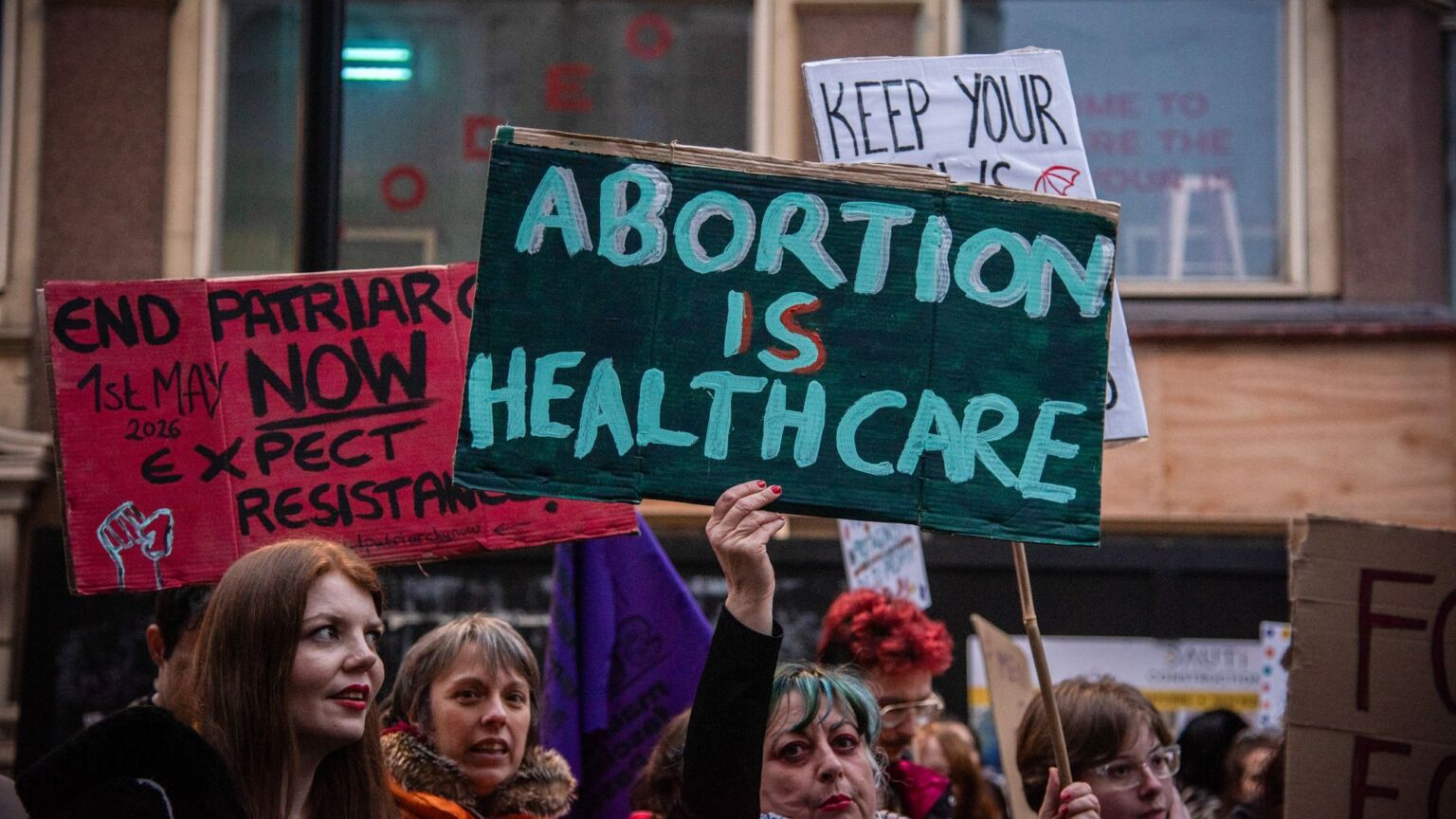
I am pro-choice. Always have been. So why do I feel so uncomfortable about last week’s vote in the House of Lords to decriminalise abortion in England and Wales? For me, that vote, and even more strikingly the discussion around it, corroborated a concern I’ve had for some time. Which is that the abortion issue is less and less one of individual autonomy and instead is morphing into yet another manifestation of the voguish misanthropy of our times. One feels compelled to ask whether abortion rights today are underpinned by a love of liberty or a fear of life.
The unelected peers of the second chamber voted in favour of an amendment introduced to the Crime and Policing Bill by Labour MP Tonia Antoniazzi last year. The amendment decriminalises abortion for women. So any woman who terminates her pregnancy outside of the legal framework – for example, after the 24-week limit – will no longer face prosecution. The bill to which this amendment was added was passed by 379 to 137 votes in the House of Commons last year. Last week, the House of Lords batted back certain peers’ worries about the abortion amendment and gave their imperious nod to the bill.
There are things here that should unsettle even people of a pro-choice persuasion. The first is the manner in which this sweeping tweak to abortion law was pushed through. The amendment is to the 1861 Offences Against the Person Act, which outlaws abortion. The 1967 Abortion Act was itself an amendment to the 1861 Act, with its stipulation that abortion is still an offence but it can be justified in certain circumstances. The new amendment, snuck in through the Crime and Policing Bill, is far more dramatic – it completely removes women from the criminal framework so that there are no circumstances in which a woman will face investigation or reprimand for self-inducing a miscarriage.
For such a substantial amendment to longstanding law to be attached to a general crime bill feels like a slap in the face to the public. You will forgive me for not celebrating the approval of an amendment none of us was ever invited to discuss by peers none of us ever voted for. It brings the pro-choice movement into disrepute when it engages in what will look to many people like an establishment stitch-up. It is not dissimilar to the ‘assisted dying’ issue – another idea Labour MPs are feverishly pursuing despite it not being in their manifesto. Perhaps us plebs are too dim to appreciate the finer moral details of questions of life.
The underhand manner in which the abortion amendment was enacted is mirrored in the intolerance of some of its advocates. Their bristling hostility towards the moral objections of Christians, traditionalists and other everyday Britons has shocked me. To infer ignorance or sexism on the part of these objectors strikes me as profoundly unfair, not to mention undemocratic. These people are not women-haters or fools – they merely disagree with you. They disagree that there should be no consequences for a pregnant woman who intentionally induces a miscarriage outside of the rules, for example very late in her gestation. They are allowed to think this. The sad thing is that there has been no forum in which such mortals have been free to air their objections.
Another concern I have is the ethical contortionism of the amendment. It only decriminalises abortion for pregnant women. Doctors and other medical professionals who assist or perform an abortion outside of the legal framework – most notably, a late abortion – could still be criminally liable. So in essence, society still says an unauthorised late abortion is a morally objectionable thing, but the woman who arranges it will be free from reprimand while the person who carries it out will not. This will feel morally illogical to many people.
Worse, it threatens to enshrine inequality in the law. It threatens to infantilise women. To absolve women of criminal culpability for a self-induced miscarriage, while maintaining criminal culpability for those who aid them, projects a childish status on to pregnant women. They are seen as less criminally responsible for the termination they have expressly sought out than the professionals who assent to that termination. So an abortion that takes place outside of the legal framework is still potentially a crime, but only for certain participants.
This brings us to what I consider to be the key problem with the amendment – does society think it is wrong to intentionally induce a miscarriage very late in pregnancy? Yes or no? Many of us accept that there are circumstances in which an abortion beyond the 24-week limit should be permissible. Unquestionably when the mother’s life is at risk. And arguably in cases of severe fetal abnormality. But I thought we had decided – collectively, democratically – that the termination of a late-gestation healthy fetus that could survive outside of the womb was unethical? Was I wrong?
If we did decide that, it seems entirely reasonable to me that the person who incites or enacts this thing that society has decreed to be wrong should face consequences. I entirely agree that compassion is preferable to incarceration. I don’t want women jailed. But it is ridiculous to deny that the decriminalisation of all self-induced terminations creates a structure of permission for behaviour that society had collectively ruled to be immoral and, until five minutes ago, criminal.
I agree with the pro-choice side when it baulks at the dystopic vision put forward by pro-lifers of women around the country terminating their pregnancies five minutes before birth. Late abortion is an incredibly traumatic thing. It is not a ‘right’ most women want. And yet there is dishonesty on both sides. Alongside the fearmongering about an epidemic of home-done infanticides, there is the other side’s unwillingness to grapple with the size of this moral shift and the unjust perversity of excluding the public from its enactment.
In a sense, the most pressing issue is not that women will abort fetuses that could very easily survive outside of the womb. It’s that they are allowed to. There will be no punishment (for them, anyway). The pro-choice side can dress this up as a mere technical tweak as much as it likes. But to many people – who are not idiots – it feels like a profound moral turn. Is it not the right of a society to say that beyond a certain point – that point being viability – you are not permitted to destroy fetal life? And more importantly, to enforce that moral judgement through law? Otherwise what is law? Decoration?
I am very liberal on a woman’s right to choose. I agree women should have the right to terminate a pregnancy prior to 24 weeks. I support women’s right to access pills-by-post for early terminations. I believe in self-government for everyone, including pregnant women. But I am going to say the thing my side is too often reluctant to say: it is morally wrong to opt to destroy a life that could survive outside of the womb. Because in such a circumstance, you are not only asking society to help you become un-pregnant, you are also asking it to do something it would never normally do: end a viable life. Our abortion framework still says such an act is wrong, and yet it will no longer punish it. So it’s not that wrong. That’s what the political class is saying. And that’s a big deal. For all of us, even those who own no ermine robes.
Here’s my chief concern – the only time the cultural establishment gets excited about ‘freedom’ these days is when it regards the end of life. They cheer ‘the right to die’. They oppose punishment for the ending of viable fetal life. The same elites who don’t trust us to vape or to say ‘Bollocks to the Koran’, who jealously police our thoughts, our speech, our consciences and our social interactions, suddenly morph into John Stuart Mill when it comes to ending or preventing human life. We are well within our rights – our real rights – to ask if this is misanthropy in the drag of autonomy. Is this pro-choice or is it anti-human? I have my thoughts.
Brendan O’Neill is spiked’s chief political writer and host of the spiked podcast, The Brendan O’Neill Show. Subscribe to the podcast here. His new book, Vibe Shift: The Revolt Against Wokeness, Greenism and Technocracy, is out now. Find Brendan on Instagram: @burntoakboy.

spiked summit 2026
10am-5pm, Saturday 27 June
Emmanuel Centre, London, SW1P 3DW
With Konstantin Kisin, Lionel Shriver, Brendan O'Neill, Katharine Birbalsingh, Toby Young, Allison Pearson, Tom Slater and more
Become a spiked supporter to get a discounted ticket
£80 or £50 for supporters
You’ve hit your monthly free article limit.
Support spiked and get unlimited access.
Support spiked and get unlimited access
spiked is funded by readers like you. Only 0.1% of regular readers currently support us. If just 1% did, we could grow our team and step up the fight for free speech and democracy.
Become a spiked supporter and enjoy unlimited, ad-free access, bonus content and exclusive events – while helping to keep independent journalism alive.
Monthly support makes the biggest difference. Thank you.





Comments
Want to join the conversation?
Only spiked supporters and patrons, who donate regularly to us, can comment on our articles.