Decriminalising abortion is nothing to fear
Changing the law will not lead to a surge in late-term abortions. Women can be trusted.
Want unlimited, ad-free access? Become a spiked supporter.
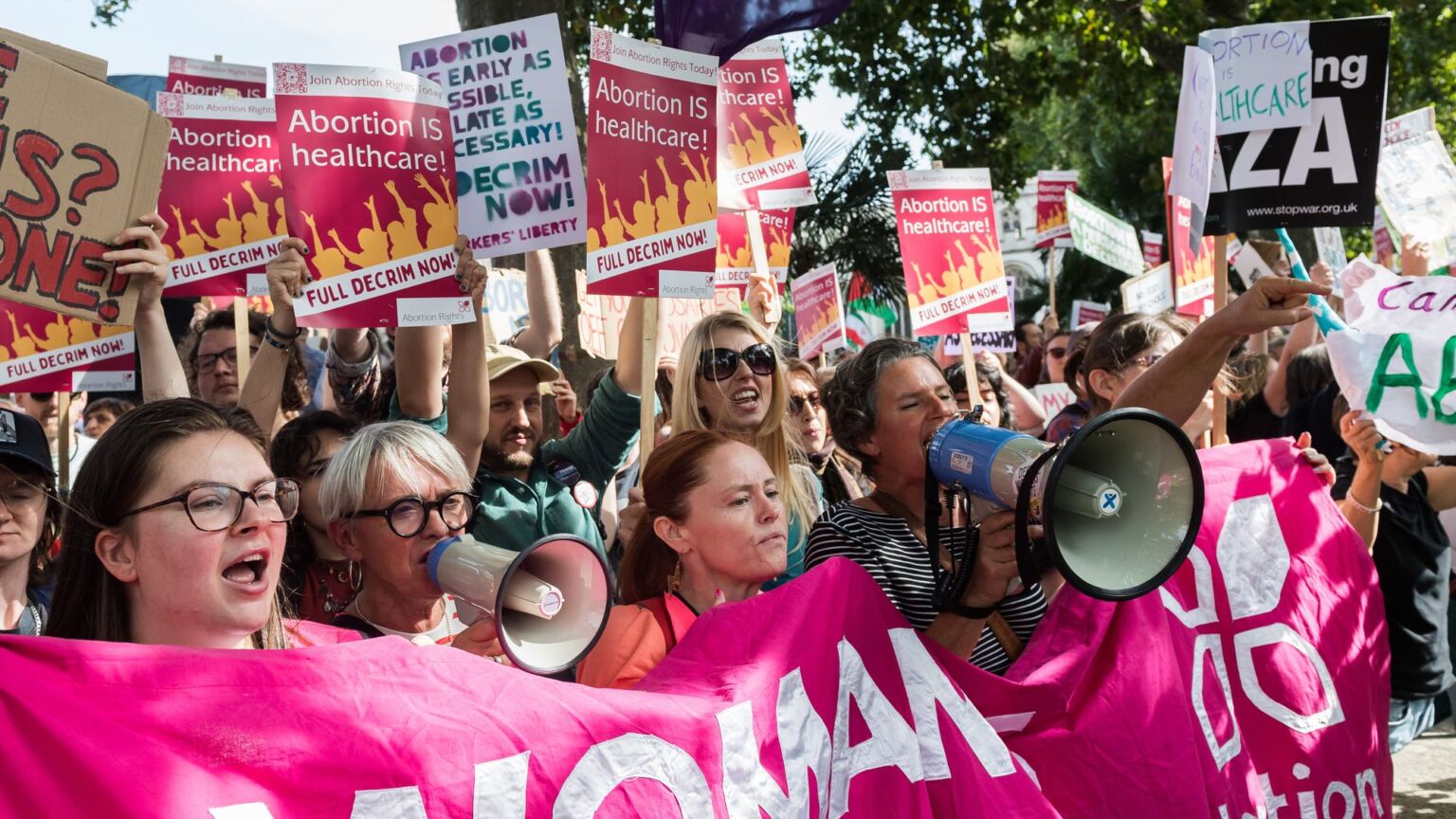
The House of Lords voted last week to back MPs’ plans for abortion reform. This reform – an amendment to the Crime and Policing Bill – would (partly) decriminalise abortion. It would take abortion out of the English and Welsh criminal law for women in relation to their own pregnancies, and would lead to a pardon for women who have been prosecuted under the existing laws governing abortion.
This is an important moment. Abortion has been criminalised ever since the Offences Against the Person Act 1861 made it a crime to procure or induce a miscarriage. It is true that during the 1950s and 1960s there was growing awareness that women needed access to abortion, which resulted in the Abortion Act 1967. But this did not decriminalise abortion. Rather, it made an exception if certain conditions were met: that a pregnancy is less than 24 weeks gestation, two doctors are willing to sanction it, and it is carried out on specially licensed premises.
Since the 1960s, abortion has become simpler and safer, with medication to end pregnancy now readily available. Medical and public opinion has changed, too. As a result, abortion law has been interpreted more liberally and medical regulations have changed, where possible under existing law.
But despite all this, criminal sanctions, a living legacy of the 19th-century Offences Against the Person Act, still haunt the provision of abortion services today. As it stands, nurses can be trained to carry out minor surgery, but not abortions, because the law prohibits it. A doctor can certify an abortion in his or her surgery, but cannot prescribe the pills to cause one, because GP surgeries aren’t licensed to do so. A midwife might give medication to assist in a miscarriage, but cannot give the same drug to bring about abortion.
The legal absurdities are especially pronounced when it comes to providing abortion pills by post – a practice that became necessary during the Covid lockdowns but has continued afterwards. So a woman’s home is now licensed as a ‘class of place’ where she can take the pills. But she still can’t get them from a GP because a GP surgery isn’t licensed as a class of place for abortion pills to be prescribed.
Given all this, surely it makes sense to support the decriminalisation of abortion? Why not allow abortion to be regulated by the same laws and standards that apply to other medical procedures?
Yet instead of focussing on what the abortion-law reform is actually about, most of the coverage of the Lords vote has obsessively zeroed in on the subject of late abortions – that is, abortions carried out weeks from birth. This is despite the fact that the number of late abortions carried out each year is vanishingly small. What’s more, it’s unlikely to be increased by changes in the law for one very good reason – namely, that women really do not want to have late abortions.
In 2023, the most recent year for which we have complete figures, there were almost 280,000 abortions in England and Wales. Of these, more than 248,000 (89 per cent) were within the first nine weeks of gestation. Less than two per cent were between 20 and 24 weeks. This shows, unsurprisingly, that only a tiny number of women request abortions in the later stages of pregnancy.

To imagine that, without a time limit, women would be aborting babies in the final months is a gruesome fantasy. It assumes that women are perverse creatures without morals or rational judgement. The isolated few cases in which women have been prosecuted for self-abortion late in pregnancy only stick in our minds because they are so exceptional.
The best person to answer the question of whether to have an abortion should be the woman who has to live with the consequences. That’s why this reform is important. The law is now set to be framed in a way that will allow women to make decisions about pregnancy for themselves and accept the consequences that come with that privilege.
If you are concerned that decriminalisation is the first step on the road to hell, please be reassured. Many countries – including Canada since 1988, and later Uruguay, Australia, New Zealand, South Korea and even Mexico (broadly considered a Catholic country) – have abortion services subject only to medical regulations and not criminal law. And none of these has descended into an infernal abortion free-for-all.
Ann Furedi is author of The Moral Case for Abortion: A Defence of Reproductive Choice.


spiked summit 2026
10am-5pm, Saturday 27 June
Emmanuel Centre, London, SW1P 3DW
With Konstantin Kisin, Lionel Shriver, Brendan O'Neill, Katharine Birbalsingh, Toby Young, Allison Pearson, Tom Slater and more
Become a spiked supporter to get a discounted ticket
£80 or £50 for supporters
You’ve hit your monthly free article limit.
Support spiked and get unlimited access.
Support spiked and get unlimited access
spiked is funded by readers like you. Only 0.1% of regular readers currently support us. If just 1% did, we could grow our team and step up the fight for free speech and democracy.
Become a spiked supporter and enjoy unlimited, ad-free access, bonus content and exclusive events – while helping to keep independent journalism alive.
Monthly support makes the biggest difference. Thank you.






Comments
Want to join the conversation?
Only spiked supporters and patrons, who donate regularly to us, can comment on our articles.