Labour is manufacturing consent for digital ID
The public is right to be suspicious of this authoritarian wheeze.
Want unlimited, ad-free access? Become a spiked supporter.
In the crass new Channel 4 show Handcuffed, hosted by Jonathan Ross, two strangers with wildly different lifestyles or views are manacled together. It invites us to wallow in the discomfort of two people who have nothing in common, and can’t get away from each other fast enough.
As political metaphors go, it’s quite brilliant. The public has found itself shackled to a Labour government it despises. Keir Starmer is the first prime minister in modern times to be met with hostile football chants. Labour now regularly polls fourth.
And the hostility is mutual: Labour holds the public in contempt, too. This is evident from small things, like the derisive messages posted in a private WhatsApp group by former MP Andrew Gwynne. ‘Dear resident, fuck your bins. I’m re-elected and without your vote. Screw you. PS: Hopefully you’ll have croaked it by the [local elections].’ Unsurprisingly, he resigned his seat after the messages were made public.
It’s even more evident in the big things, like ending inheritance tax relief for farmers, or imposing punitive expenses on pubs and small businesses, or its allergic reaction to displays of patriotism. While Labour wrapped itself in the Union Jack in the 2024 election, it now deems it a potential ‘tool of hate’ – at least according to its draft ‘social-cohesion strategy’, leaked earlier this month.
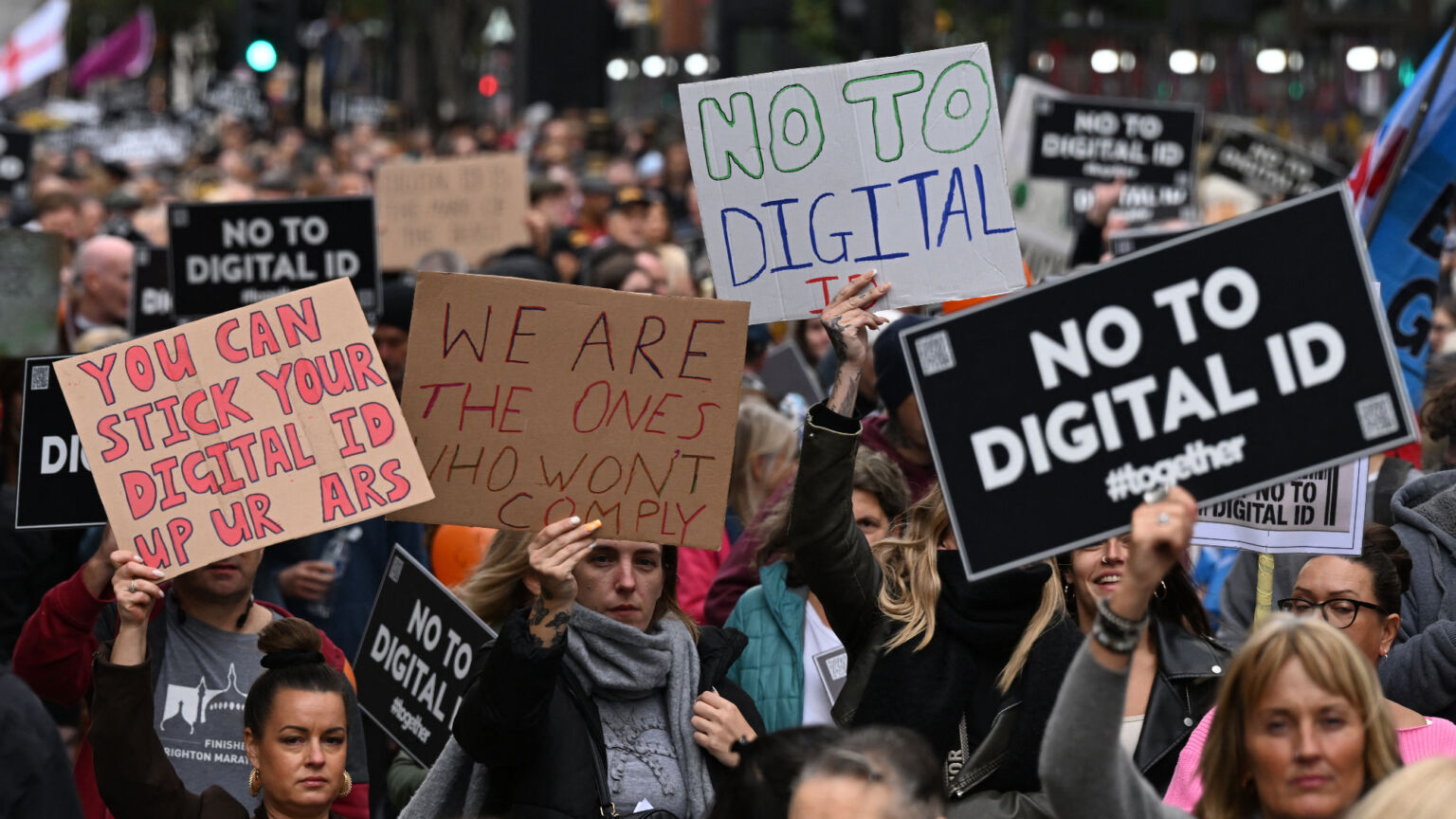
It’s most evident in all the ways Labour tries to avoid hearing from us. This week, the government finally launched a consultation into a national digital-ID scheme. This scheme entails a radical change in the relationship between the citizen and the state, and Labour’s attempt to introduce a single identifier – a plastic ID card – was scrapped in the face of huge public opposition in 2010. The fact that, this time around, Labour announced the policy first, before any consultation, is a bit of a giveaway. It doesn’t care what we think of it, as it’s going to do it anyway.
But that’s only half of it. The consultation announcement this week introduces a novel proposal. This is a ‘People’s Panel on Digital ID’, described as ‘an in-depth deliberative engagement process with a broadly UK representative sample of 100 to 120 individuals to discuss the policy in detail. Individuals will be selected through sortition (civic lottery).’
There should be no mystery about what people think about digital ID. They have already spoken: last year, almost three million signed a petition opposing it, and MPs offices have been inundated with angry emails about it. So why continue?

The reason is that Labour believes that digital ID is so self-evidently good that any opposition must be wildly irrational. In November on spiked, I called digital ID an exercise in self-deception. Labour has convinced itself that it would be easy to develop and implement the scheme and that, soon, familiarity with it would overcome long-standing principled objections. Labour imagines that, aside from some noisy conspiracy theorists, who talk about the imminent imposition of social-credit systems or the end of anonymous cash transactions, the majority will soon see how brilliant a digital identity is.
But this dismisses many profound and rationally held concerns around the state imposing a unique digital identifier. This is not some fringe concern. As critics point out, it fundamentally changes the relationship we have with the state, turning us into a ‘papers, please’ society.
All this is before we get to the well-founded security fears, also documented here on spiked, over identity theft and fraud. Questions about the One Login system, designed to help citizens access government services online, have been raised in parliament after it was revealed that parts were developed in Romania – a known hotspot for cybercrime. Nothing here inspires trust.
But back to the so-called people’s panel. The idea that a tiny, selected subset of the public should be ventriloquised to speak on our behalf is disturbing. The idea of citizens’ assemblies has been applied to another unpopular, top-down set of ideas with which we must not disagree: climate mitigation. As Ben Pile wrote in 2020 and in 2021 on spiked, these are exercises in manufacturing consent.
Incredibly, the government is seeking to go even further in distancing itself from the public to which it finds itself manacled. It is reportedly attracted to the concept of synthetic focus groups, in which opinions are generated by AI chatbots. This is an idea championed by Dominic Cummings, Boris Johnson’s former chief adviser. Indeed, Cummings’s favourite computer modeller, Ben Warner, has set up a new firm selling these machine-generated insights to marketing departments and political campaigns, called Electric Twin.
Its political appeal is tailor-made to a public that Labour finds mystifying. On its website, Electric Twin said: ‘Societies feel unknowable… leaders and teams are frequently blindsided’, although it removed the words after I drew attention to them in the Telegraph last year. Removing human feedback must be an attractive proposition for such an unpopular government.
Citizens assemblies, digital-ID workshops and synthetic focus groups are all an acknowledgement that top-down, unpopular ideas meet resistance from the public. But, such is the contempt of our elites, they want to sidestep us altogether.
‘Would it not be simpler if the government simply dissolved the people and elected another?’, asked Bertolt Brecht. Thanks to generative AI, the British government now thinks it can. But the real democratic reckoning on digital identity awaits. Labour won’t get off the hook that easily.
Andrew Orlowski is a weekly columnist at the Telegraph. Visit his website here. Follow him on X: @AndrewOrlowski.
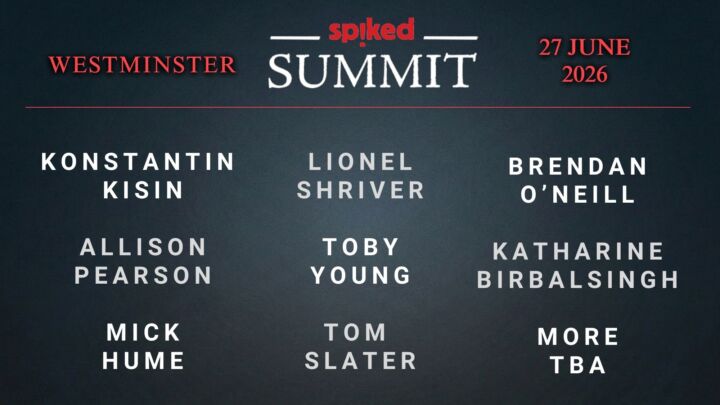
spiked summit 2026
10am-5pm, Saturday 27 June
Emmanuel Centre, London, SW1P 3DW
With Konstantin Kisin, Lionel Shriver, Brendan O'Neill, Katharine Birbalsingh, Toby Young, Allison Pearson, Tom Slater and more
Become a spiked supporter to get a discounted ticket
£80 or £50 for supporters
You’ve hit your monthly free article limit.
Support spiked and get unlimited access.
Support spiked and get unlimited access
spiked is funded by readers like you. Only 0.1% of regular readers currently support us. If just 1% did, we could grow our team and step up the fight for free speech and democracy.
Become a spiked supporter and enjoy unlimited, ad-free access, bonus content and exclusive events – while helping to keep independent journalism alive.
Monthly support makes the biggest difference. Thank you.




Comments
Want to join the conversation?
Only spiked supporters and patrons, who donate regularly to us, can comment on our articles.