The UK’s homelessness crisis is a clear sign of national decline
Rough sleeping and housing insecurity are becoming dangerously normalised in broken Britain.
Want unlimited, ad-free access? Become a spiked supporter.
What are the biggest issues facing the British people? Any pollster who asks this question invariably gets two responses: immigration and the cost of living. And not without reason: both are out of control and they are both impossible to ignore. It hasn’t escaped most people’s attention that their neighbourhood has been completely transformed in the space of a decade, or that their once manageable wage goes half as far as it used to.
But in my view, the biggest force dampening the national mood is not either of these things. It is, instead, the proliferation of homelessness and begging.
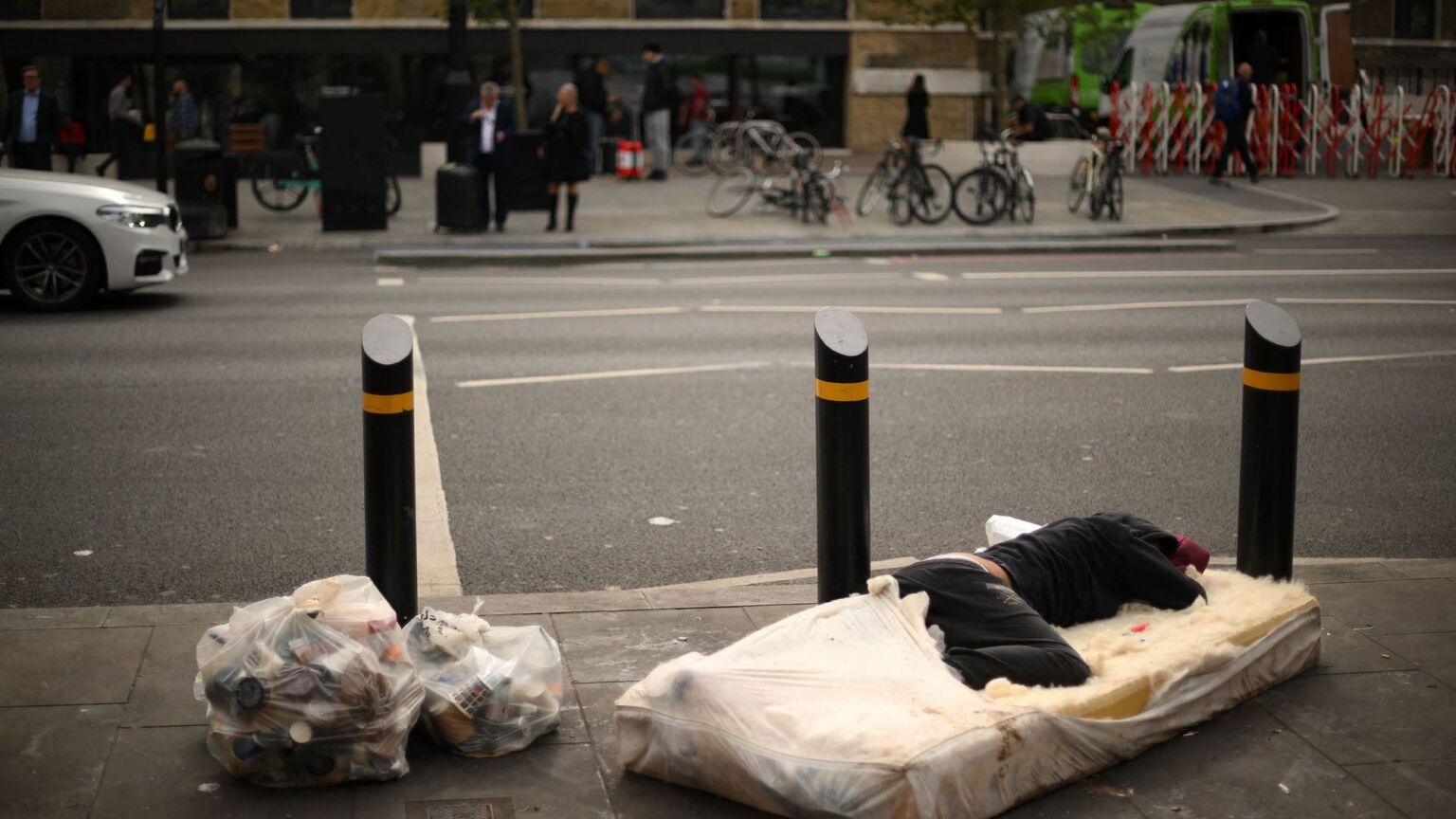
Walk through any British town centre and the evidence is in front of you. Men and women slumped in doorways, visibly unwell. Begging outside shops and cafés, all the places that ordinary people go about their daily lives. Except, nobody really says anything about it. This is how decline is embedded. People accept and adjust. They tell themselves it is just the way things are, and perhaps how they’ve always been.
The public cannot fix homelessness. It is too complex. People can also escape the temporary discomfort of seeing it by heading home, shutting the door and forgetting. They cannot escape the discomfort they feel in their own street or the stress of financial worries. This is why voters do not talk much about homelessness, but are willing to debate the migration and inflation they actually see and feel. But blocking the problem from our consciousness is what makes this our biggest issue. We are not truly desensitised. We know it is still there, on the street and in our subconscious.
Over a decade, the unthinkable has happened. We step over beggars outside Greggs and pass people sleeping rough opposite parliament like they are furniture. Tent cities are springing up in cemeteries, parks and shopping streets. No one seems angry that billions have been spent while the crisis gets worse. An incredible 380,000 are homeless on any given night, and close to 5,000 are sleeping rough in all weather. Nothing undermines confidence in a country faster than visible proof that its institutions cannot perform their most basic function: providing a roof over people’s heads.
What makes this worse is that homelessness is not just a social and moral failure. It is an economic catastrophe. The government spends over £3 billion of our money each year just keeping homeless people in emergency accommodation. Tens of thousands of families are placed each night in grotty bedsits, budget hotels and short-term lets, often miles from their communities. Children try to do homework on shared beds and cramped floors. Adults live under constant stress, unable to plan their lives, provide stability or even work. We are not fighting homelessness. We are managing its proliferation.
And this is only part of the bill. Once housing benefit, support services, healthcare, legal and administration are included, the true cost runs far higher. Even that doesn’t include the billions of pounds in lost productivity. This is what societal decline looks like. Not sudden collapse, but visible disorder becoming normal. The shocking becoming the familiar, the unacceptable becoming routine.
Homelessness removes people from the workforce, it destabilises families and it damages children’s future earning power. Adults living in chaos can’t hold down jobs and their children fall behind at school because of insecurity, not lack of ability. Put simply, a country that cannot house its own people cannot function properly.

Our homelessness problem is complex but the core cause is simple. We haven’t built enough homes for years and the resulting shortage creates two certainties: the cost of housing rises and then those with the least money, or the most troubled lives, end up on the street.
Our chronic and colossal demand-and-supply imbalance is due to political choices and cowardice. Our political class has tolerated this because fixing it requires tough decisions and potential unpopularity. Until politicians accept not just that solving homelessness requires building far more homes, but also the political consequences of doing so, things will get worse. Announcements, funding pots and initiatives will continue, but the numbers will rise.
Homelessness is not just another policy problem. It is the clearest visible sign of a country losing its grip. It tells us that our system is broken and incapable of delivering basic necessities.
People see it every day and quietly absorb it. It changes how they think, how they spend money and how they feel about their country’s future. Until political leaders decide to fix this rather than manage it, Britain will continue to decline – economically and morally.
Andy Preston was mayor of Middlesbrough from 2019 until 2023.
You’ve hit your monthly free article limit.
Support spiked and get unlimited access.
Support spiked and get unlimited access
spiked is funded by readers like you. Only 0.1% of regular readers currently support us. If just 1% did, we could grow our team and step up the fight for free speech and democracy.
Become a spiked supporter and enjoy unlimited, ad-free access, bonus content and exclusive events – while helping to keep independent journalism alive.
Monthly support makes the biggest difference. Thank you.


Comments
Want to join the conversation?
Only spiked supporters and patrons, who donate regularly to us, can comment on our articles.