Iran’s new supreme leader will stick to his father’s suicidal course
The regime Mojtaba Khamenei inherited has never looked so fragile.
Want unlimited, ad-free access? Become a spiked supporter.
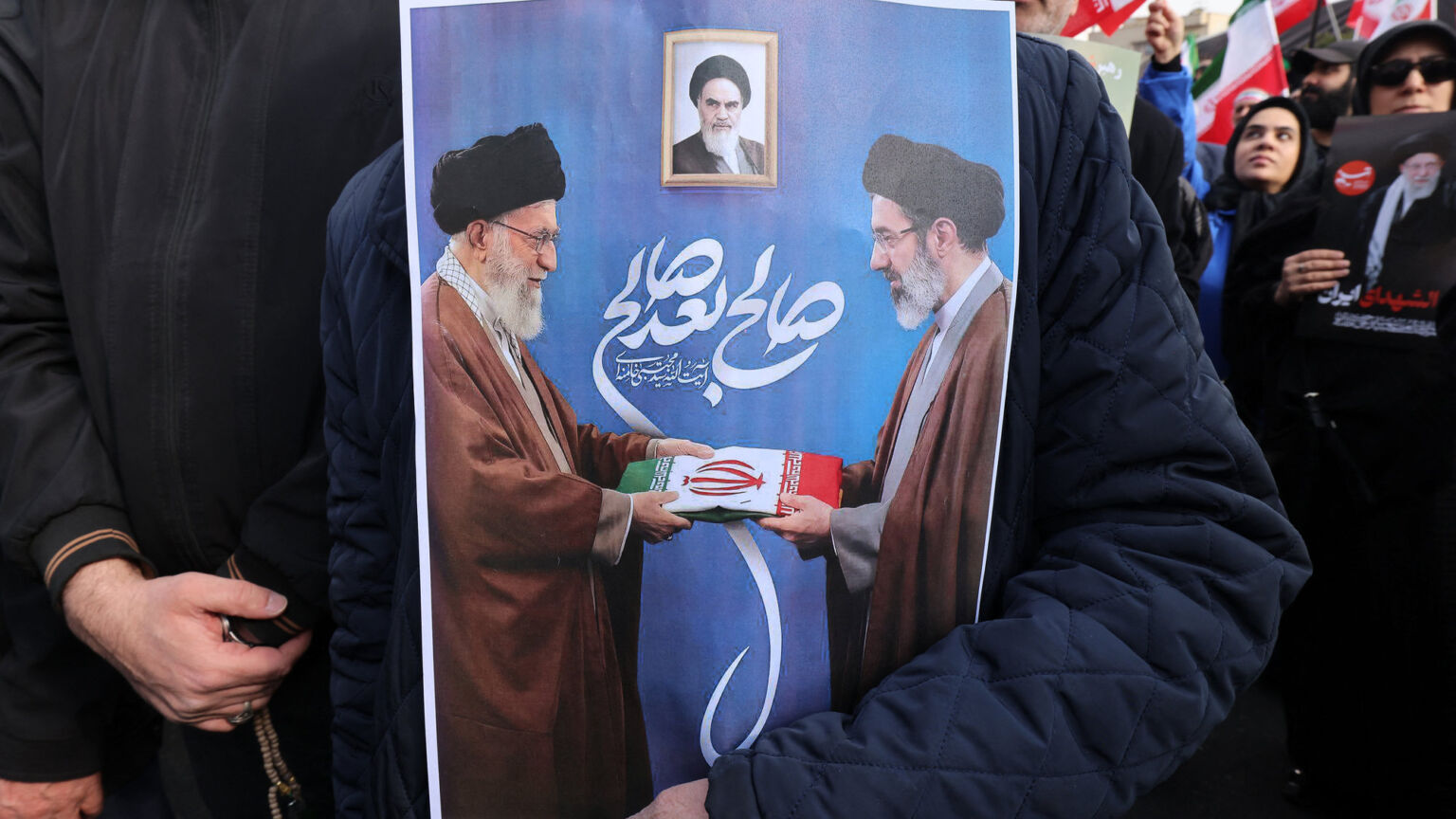
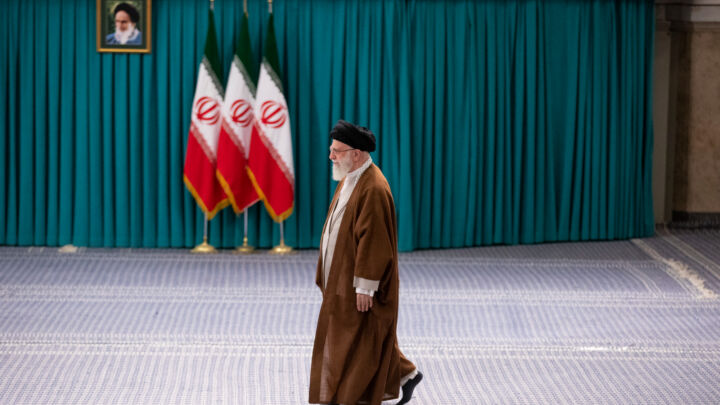
Mojtaba Khamenei was confirmed as Iran’s new supreme leader by Iran’s clerical politburo on Monday. The appointment came as little surprise. Mojtaba, the second son of Ayatollah Ali Khamenei, who was killed in an US-Israeli strike on 28 February, was the frontrunner to replace his father long before the current war. Now the Islamic Republic’s third supreme leader, he has a fight on his hands to ensure that he won’t be the last.
So far, the signs aren’t good for Khamenei junior. Donald Trump has described the younger Khamenei’s appointment as ‘unacceptable’, insisting that he ‘won’t last long’. Israeli defence minister Israel Katz has dubbed him ‘an unequivocal target for elimination’. The Islamic Republic’s traditional allies, Russia and China, have both pledged to support Mojtaba, but such words of encouragement are of little use to him now. The regime he inherited has never been in greater peril.
Unlike Iran’s first supreme leader, Mojtaba only ever established himself as a mid-tier cleric. His military experience in the Iran-Iraq War in the 1980s was also limited, having finished school just a year before the conflict ended in 1988. He only really became a notable figure in the Iranian establishment following his father’s rise to the top in 1989.
None of this is to say that the younger Khamenei is therefore a clueless nepo baby or a naif. Already by the late 2000s, American diplomatic cables were referring to him as the ‘power behind the robes’, while Ali Khamenei described him as ‘a master himself, not a master’s son’.
Most notably, he helped propel the hardline Islamist, Mahmoud Ahmadinejad, to the Iranian presidency in 2005, before contriving his reelection in 2009. This confirmed Mojtaba’s bona fides to the clerical establishment, though it hardened the public against him. Indeed, the 2009 election rigging prompted Iran’s Green Movement – at the time, the largest protests faced by the regime. It was also the first time the now-familiar cries of ‘Death to the Islamic Republic’ and ‘Death to Khamenei’, along with ‘Death to Mojtaba’, could be heard ringing throughout the streets of Tehran. He appeared to relish the task of solidifying the control of the Islamic Republic and crushing opposition to its rule.
Now, as the supreme leader, Mojtaba Khamenei is the head of the judiciary, legislature and executive. He is also the commander-in-chief of a country that is currently at war with the US, Israel and the Gulf States. So far, he has shown every indication of continuing the war with as much force and violence as the regime can muster – both on his international and domestic opponents.
Even had he not taken the reins at a time when the Islamic Republic appears to be on life support, Mojtaba’s appointment would not have come without its difficulties. By appointing a hereditary successor, Iran’s clerics are undermining their opposition to the Pahlavi dynasty they overthrew in 1979. Mojtaba has also been fast-tracked into the position of ayatollah, despite lacking the clerical qualifications for the title, compromising on his theological credentials in favour of his political prowess.
But there are factors in his favour, from the regime’s perspective at least. Glorifying martyrdom is a key component of Shia Islam, the ideology of the Islamic Republic. The Battle of Karbala in the seventh century – where Husayn ibn Ali, Muhammad’s grandson, was defeated and therefore denied his divine right to rule – is a bedrock of Shia doctrine. The ‘martyrdom’ of Mojtaba’s father – not to mention his mother, wife and daughter – in US and Israeli strikes will resonate powerfully among Iran’s regime loyalists, and attribute a quasi-divine status to his rule. With Mojtaba’s appointment, the Iranian clergy is sending a clear message to the people: prepare to fight until the final breath.
Unfortunately for the Iranian theocrats, the majority of their population is not nearly as eager to embrace martyrdom as its leaders would like them to be. They have suffered too much at the regime’s hands to be convinced of its divine authority. For more than four decades, they have seen the state brutalise not only the Iranian population, but also people across the region. On top of this, Iranians have been impoverished by a string of economic crises, exacerbated by Western sanctions imposed on the regime because of its inveterate warmongering. While all of this has been going on, the Khamenei family built a global property empire worth billions.
The celebrations of Ali Khamenei’s death on Iran’s streets were further proof that the Iranian masses do not want to become casualties of yet another war. The Iranian clerics might invoke Karbala and Islamic theology, and the global champions of jihad might sadistically urge the locals to sacrifice themselves for Islam, but a growing number of Iranians are done with living in the seventh century. Their desire for freedom will prove stronger than Mojtaba Khamenei, the ayatollahs and the Islamic Republic itself.
Kunwar Khuldune Shahid is a writer based in Pakistan.
You’ve hit your monthly free article limit.
Support spiked and get unlimited access.
Support spiked and get unlimited access
spiked is funded by readers like you. Only 0.1% of regular readers currently support us. If just 1% did, we could grow our team and step up the fight for free speech and democracy.
Become a spiked supporter and enjoy unlimited, ad-free access, bonus content and exclusive events – while helping to keep independent journalism alive.
Monthly support makes the biggest difference. Thank you.



Comments
Want to join the conversation?
Only spiked supporters and patrons, who donate regularly to us, can comment on our articles.