Why Musk is right to fight the EU’s empire of censorship
Brussels is desperate to regulate X into oblivion – and to silence the European people.
Want unlimited, ad-free access? Become a spiked supporter.
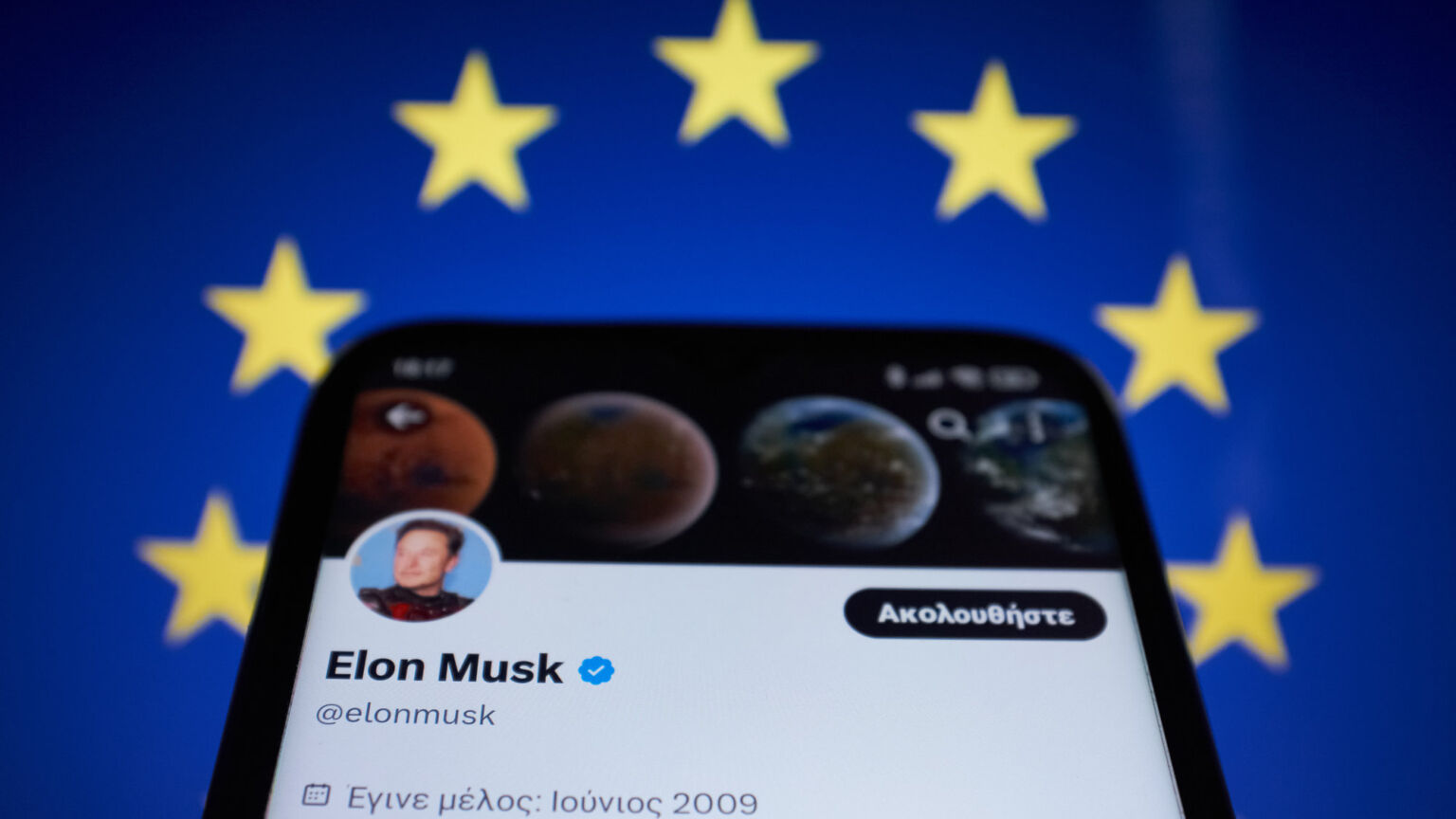
For years, Brussels has been tightening its grip on online speech in a bid to exercise control over the political narrative. The European Commission’s €120million fine in December against X under the Digital Services Act (DSA) marked a major escalation. Now, X is fighting back at the EU’s top court. In so doing, it is taking a stand in defence of free speech for all Europeans.
In X vs European Commission, Elon Musk’s platform is challenging the fine at the General Court of the European Union, with the support of Alliance Defending Freedom International. This landmark case will determine whether the EU can use its regulatory cudgels to control speech on the world’s largest online platform.
The DSA came into force in February 2024. Despite its length of 102 pages, the law is deliberately vague. The reasons Brussels gave for fining X were both strange and insignificant, ranging from the ‘deceptive design’ of X’s blue tick to the supposed ‘lack of transparency’ in the platform’s ‘ad repository’. You could be forgiven for thinking that the European Commission was simply looking for an excuse to go after Musk’s platform.
Ever since its inception, the DSA has grown bigger and meaner. In just two years, the EU has added a code on disinformation, guidelines on electoral processes, guidelines on minors and a code on ‘hate speech’. None of this expansion, it goes without saying, was voted on by the public. This is Brussels, after all.
The message from EU elites to social-media firms is unmistakable: the law is coming to get you. That means a crippling burden to comply or crippling fines – either way, it’s a shakedown.
You don’t need to be Sherlock Holmes to see that the European Commission is going after X because it is a platform that upholds freedom of expression. Indeed, some of its most senior members have hardly been subtle about its intentions to use the DSA to declare war on X. Former commissioner Thierry Breton issued a stark warning in 2023: ‘You can run but you can’t hide… fighting disinformation will be legal obligation under [the] DSA… Our teams will be ready for enforcement.’ Also in 2023, when Musk took over what was formerly Twitter and posted ‘the bird is free’, Breton responded: ‘In Europe, the bird will fly by our rules.’ Věra Jourová, then vice president of the European Commission, warned that X’s ‘actions and compliance with EU law will be scrutinised vigorously and urgently’.
X is where millions of people go to freely express their views. It’s why it has so many users worldwide, and so many detractors in Brussels. Today, it is X in the crosshairs. Tomorrow, it could be any platform, or person, that refuses to accept EU censorship.
On paper, the DSA is presented as a safety measure to curb ‘illegal content’ and reduce harm. In practice, it hands sweeping censorship powers to unelected bureaucrats and activist NGOs in thrall to elite orthodoxy.
The threat to free speech is magnified by how the DSA defines – or doesn’t define – ‘illegal content’. Anything illegal in any EU country, now or at any point in the future, can trigger enforcement. It also has a lowest-common-denominator approach to censorship, meaning the most restrictive speech laws in one European nation can set the standard for everyone.
Consider the case of Finnish parliamentarian Päivi Räsänen. In 2019, Räsänen was accused of ‘hate speech’ for posting text from the Bible, and questioning whether it was appropriate for her local church to host a Pride event. Despite being acquitted twice, Räsänen is currently awaiting her fate at Finland’s Supreme Court – such is the authorities’ desperation to convict her. Under the DSA, laws like that risk becoming the baseline as platforms seek to ‘mitigate risk’ in a desperate bid to appease their DSA overlords.
X vs European Commission is about far more than one fine or one platform. It is about whether the European Commission should be allowed to operate as the world’s online content police. It is the frontline of a global struggle over whether people can speak freely in the digital public square without fear. The court now has an opportunity to rule in favor of X, and reaffirm that free speech does not belong to bureaucrats in Brussels, but to the people.
Paul Coleman is the executive director of ADF International, which is supporting X’s legal challenge before the General Court of the European Union. Follow him on X: @Paul_B_Coleman.
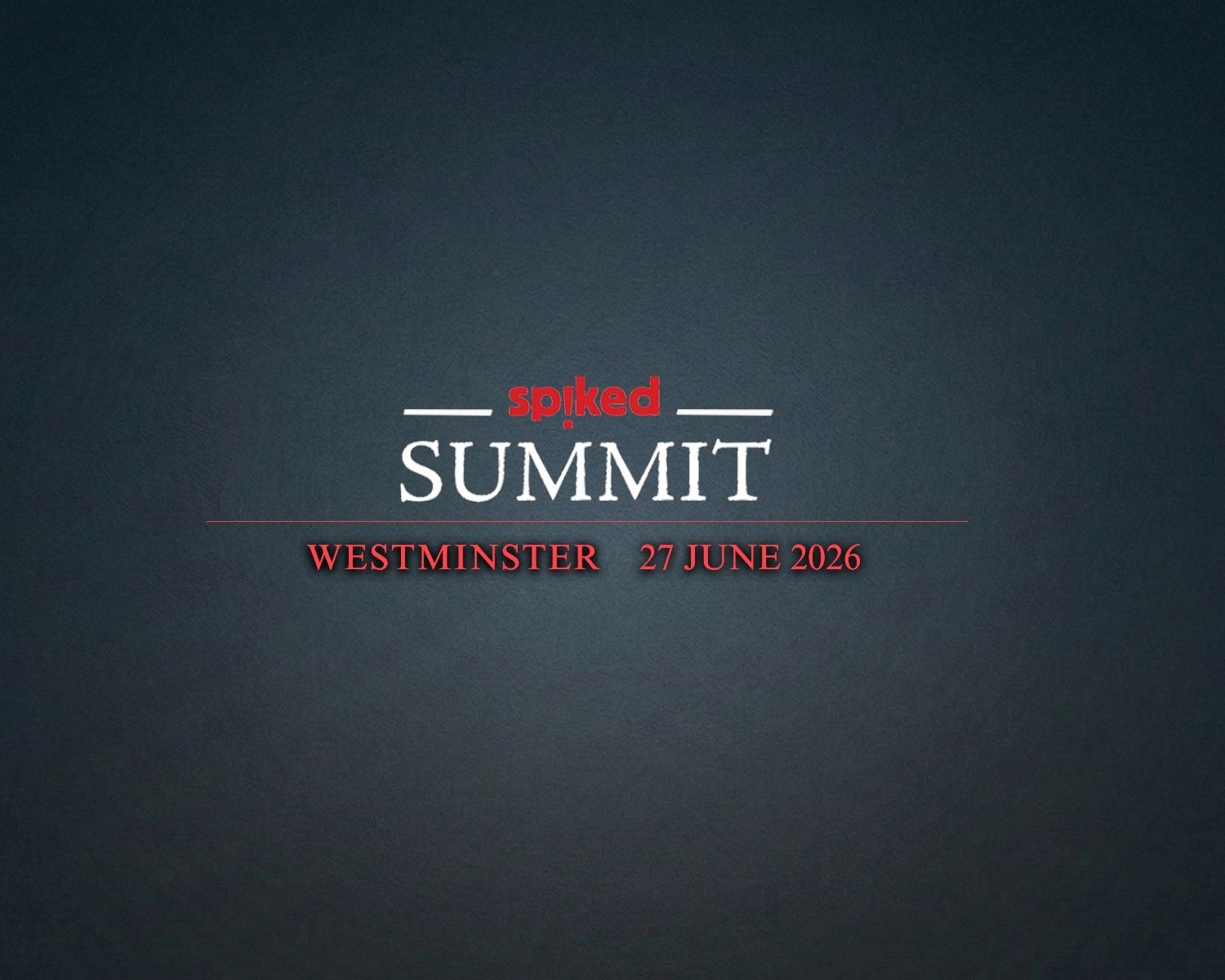
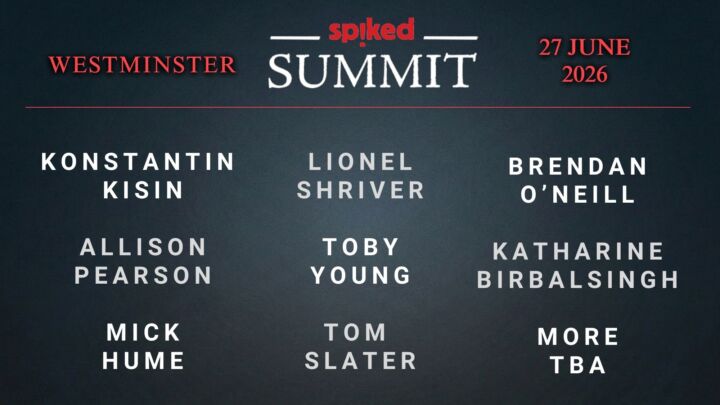
spiked summit 2026
10am-5pm, Saturday 27 June
Emmanuel Centre, London, SW1P 3DW
With Konstantin Kisin, Lionel Shriver, Brendan O'Neill, Katharine Birbalsingh, Toby Young, Allison Pearson, Tom Slater and more
Become a spiked supporter to get a discounted ticket
£80 or £50 for supporters
You’ve hit your monthly free article limit.
Support spiked and get unlimited access.
Support spiked and get unlimited access
spiked is funded by readers like you. Only 0.1% of regular readers currently support us. If just 1% did, we could grow our team and step up the fight for free speech and democracy.
Become a spiked supporter and enjoy unlimited, ad-free access, bonus content and exclusive events – while helping to keep independent journalism alive.
Monthly support makes the biggest difference. Thank you.





Comments
Want to join the conversation?
Only spiked supporters and patrons, who donate regularly to us, can comment on our articles.