Starmer can’t keep cowering behind international law
As war rages in Iran, appeals to the ‘rules-based order’ have never sounded so hollow.
Want unlimited, ad-free access? Become a spiked supporter.
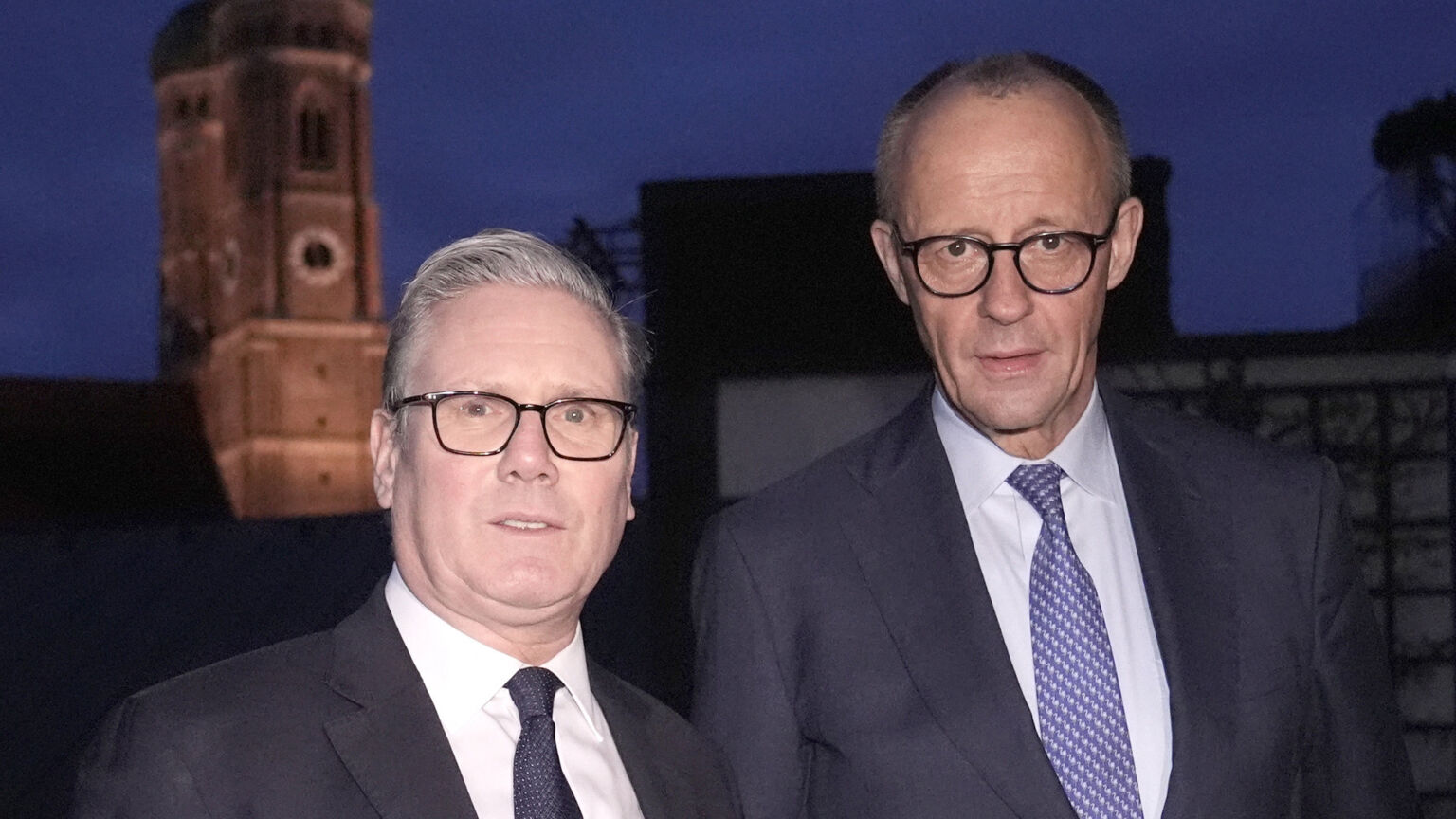
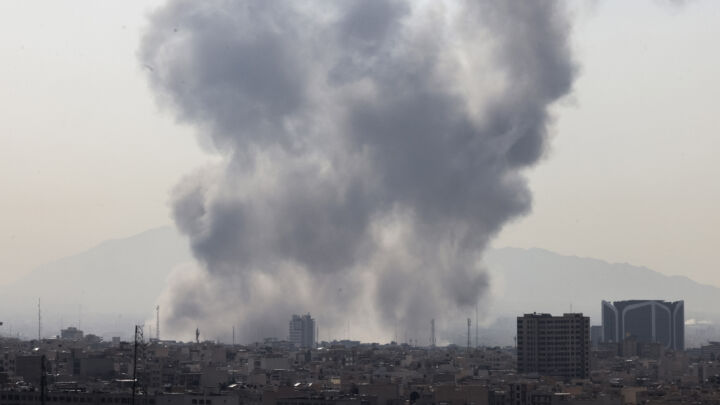
German chancellor Friedrich Merz went off script on Sunday, when he bluntly stated that Berlin would not be governed by international law when considering its response to the war in Iran. Merz said: ‘International-law classifications will have little effect on [the war] – especially if they remain largely without consequence.’ He even noted that, with respect to the Iranian regime, ‘extensive packages of sanctions have had little effect over the years and decades’.
His conversion has been swift. It was only in January that Merz, addressing EU lawmakers, said that Europe had been able to experience ‘something of the joy of self-respect’ in defending the international rules-based order, notably against US president Donald Trump’s threats to annex Greenland.
Here in the UK, however, the Labour government remains stuck in the legalistic bind that Merz has decided to break free of. Prime minister Keir Starmer, responding to Trump’s criticisms over Britain’s stance on Iran, said on Tuesday that he ‘will not commit our military personnel to unlawful action’. Darren Jones, chief secretary to the prime minister, appeared on the BBC yesterday to discuss the government’s position on the US and Israeli strikes. He said that there was no ‘legal basis’ for the UK becoming involved. Labour MPs have echoed this line. Emily Thornberry called the strikes ‘ill-advised and illegal’, which made it sound like she was discussing a tax-dodging scheme rather than a major world conflict.
It has now become de rigueur to call Starmer out for his legal cretinism. A writer for the Sun called him a ‘timid lawyer who is more attached to the enforcement of globalist judicial codes than the protection of our civilisation’. Writing in the Telegraph, Oxford theology professor Nigel Biggar said Starmer’s ‘blind obedience to international law’ has been a ‘boon to the world’s monsters’.
This criticism is understandable. Prioritising international law over the national interest has been a defining feature of Starmer’s government, long before the strikes on Iran. It is, arguably, the only feature of his government. This obsession was starkly illustrated by his decision to gift the Chagos Islands to Mauritius, a decision which appears to have been determined by a non-binding ruling of the International Court of Justice in 2019. In the words of Starmer’s attorney general, close friend and fellow international lawyer, Lord Hermer, the Chagos deal represented Labour’s promise to put international law at ‘the heart’ of its foreign policy. To everyone else, Starmer was relinquishing a vital strategic asset to a suspect country, while paying tens of billions of pounds for the pleasure.
However, reading the recent criticism, you might think that Starmer is unusual in his deference to international law as a substitute for political judgment. That would be a mistake. Only on Saturday, European Commission president Ursula von der Leyen called on ‘all parties to exercise maximum restraint, to protect civilians, and to fully respect international law’. French president Emmanuel Macron agreed. He said he ‘cannot approve’ of the American-Israeli strikes because they were ‘outside of international law’.
Appeals to international law have long been the default response of European leaders to international conflict, most recently following the invasion of Ukraine and, prior to that, military action in Syria. Merz now claiming that international law ‘should not protect Iran’ marks a departure for Germany, but it is so far an exception to the rule.

The truth is that the application of international law is, and always has been, political. International lawyer Natasha Hausdorff has defended the strikes on the basis that they are lawful, given that Iran and Israel have been in ‘armed conflict’ for decades. Others argue that the strikes were ‘unlawful’ because Iran did not pose the kind of immediate threat that would have justified pre-emptive military action. The supposed legality of military action is always shaped by political interests and differing interpretations of the conflict in question. This is what blind appeals to international law from European leaders always miss, whether from Starmer or others across the continent.
Starmer is a legalist. His appeals to international law show he has little clue how to govern in the national interest. But he is hardly alone in this regard. For too long, the invocation of ‘international law’ has masked the kind of empty foreign policy favoured by Europe’s leaders.
Merz’s Damascene conversion will mean little unless it encourages other European governments to act decisively in defence of their own interests. Keir Starmer is unlikely to be the only technocrat in Europe unfit for that task.
Luke Gittos is a spiked columnist and author. His most recent book is Human Rights – Illusory Freedom: Why We Should Repeal the Human Rights Act, which is published by Zero Books. Order it here.
You’ve hit your monthly free article limit.
Support spiked and get unlimited access.
Support spiked and get unlimited access
spiked is funded by readers like you. Only 0.1% of regular readers currently support us. If just 1% did, we could grow our team and step up the fight for free speech and democracy.
Become a spiked supporter and enjoy unlimited, ad-free access, bonus content and exclusive events – while helping to keep independent journalism alive.
Monthly support makes the biggest difference. Thank you.



Comments
Want to join the conversation?
Only spiked supporters and patrons, who donate regularly to us, can comment on our articles.