Are only white men allowed to be villains in adverts?
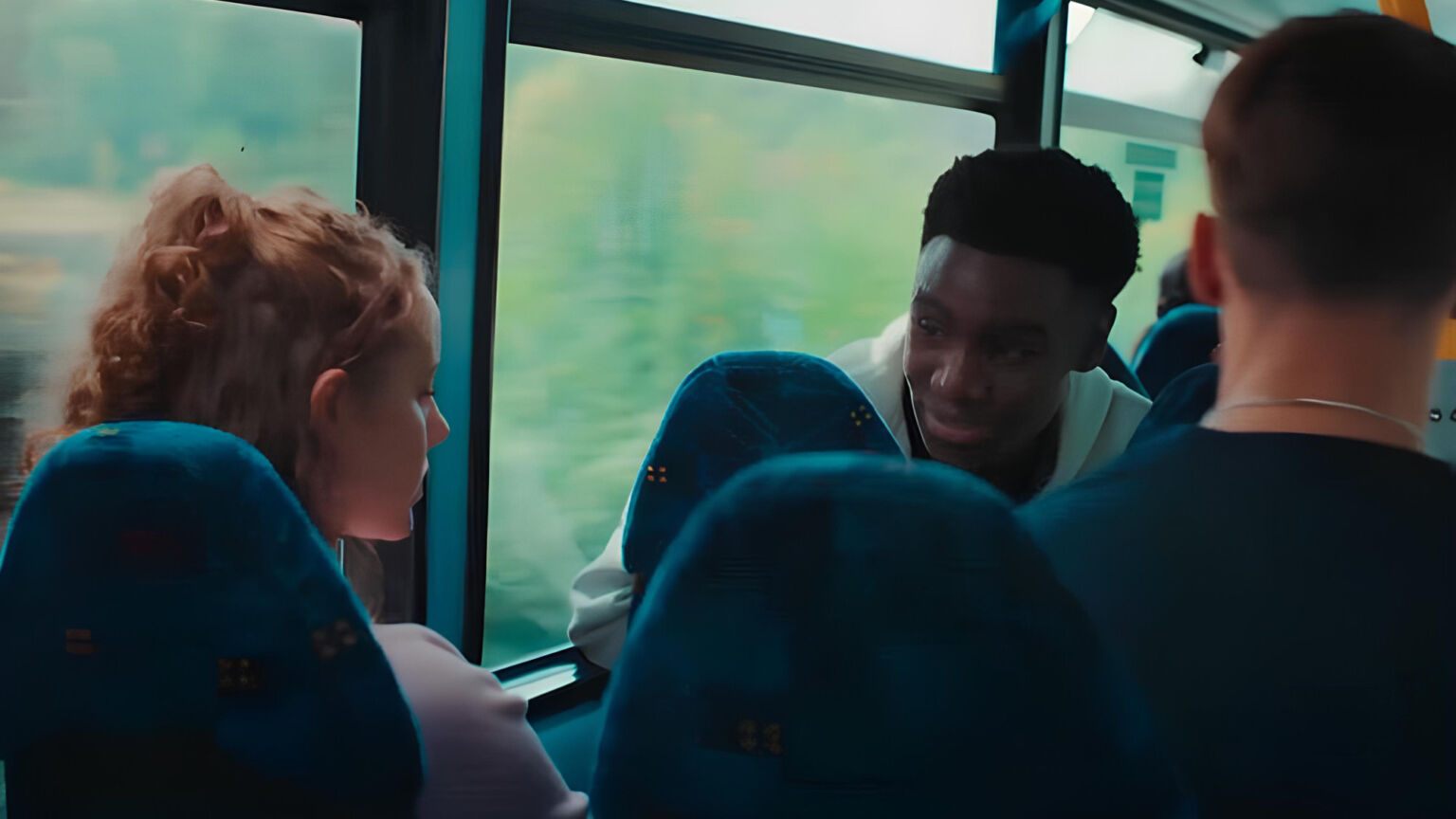
A TfL ad showing a black man harassing a white woman has been banned for failing the woke purity test.
Want unlimited, ad-free access? Become a spiked supporter.
One of the major culture-war faultlines of recent years has been the fact, increasingly obvious to a beleaguered and cynical public, that advertising has gone woke. As long-suffering spiked columnist Patrick West has been pointing out for nearly a decade, British ad execs’ ‘diversity’ obsession means that, by and large, straights and whites are out, while ethnic minorities and unconventional families are in. Meanwhile, when it comes to government information campaigns, if there is ever any unwanted or anti-social behaviour to be warned against, you can bet your bottom dollar it will be coming from whitey.
Think of the notoriously improbable British Army anti-sexual harassment poster in which a strapping black male soldier is being menacingly groped by a petite, blonde female colleague. Or the 2016 Transport for London (TfL) ‘Report It to Stop It’ campaign, where a married, middle-aged white man in a suit gropes a mixed-race woman on a crowded Tube train. Are the people behaving badly on the London Underground usually commuting office workers? One often gets the sense that such casting decisions are almost designed to be as statistically improbable and far removed from faithfully depicting everyday occurrences as possible.
So it came as little surprise last week when it emerged that a more recent TfL advert had been banned by the Advertising Standards Agency (ASA) on the grounds that it ‘had the effect of perpetuating a negative racial stereotype about black men’.
In the ad, which ran on Facebook, a black teenage boy harasses a frightened and uncomfortable white teenage girl on a bus. ‘Am I not good enough for you or something?’, he demands. ‘Why you not chatting to me?’ She looks away, but he persists indignantly. ‘Can you hear me? Look at me when I’m talking to you.’ The ad then cuts to a white teenage boy and text appears on screen, asking: ‘Would you know how to defuse incidents of hate crime, sexual offences and harassment?’ The ASA concluded that the ad ‘featured a harmful stereotype, was irresponsible and likely to cause serious offence’ and thus banned it.
The banned scenario was one of three TfL came up with as part of a campaign to encourage Londoners to ‘act like a friend’ and intervene if they witnessed sexual harassment while travelling. The two other adverts featured ‘a white male committing a hate crime against a black woman and a white male committing a hate crime against another white male’. But in accordance with all ‘representative’ multiculturalism, the campaign’s casting had taken steps ‘to reflect the diversity of London’s population’, hence why in the third of three, the perpetrator was a black kid.
It seems that in their naivety, TfL failed to realise that official guidelines about ‘diverse’ and ‘inclusive’ casting come with an unwritten rule attached: that protected groups must never be shown to be engaging in anti-social behaviour. While it was fine for white men to be the perpetrators in the other two ads, ‘The only aggressor in [the banned] ad was the black teenage boy’, the ASA noted, which is clearly verboten.
Elsewhere in the ASA’s guidance, it explains that the ‘inclusion of negative racial stereotypes is likely to cause serious or widespread offence’. But as noted in the Spectator, one problem with this is that ‘stereotypes’ can sometimes have some truth to them. Suspects for what look like grooming gangs in the capital ‘straddle the entire diverse range of London’s communities, as you would expect in a multinational city like London’, a Met official told the BBC last week. In less PC terms, there are in fact plenty of examples of non-white people in London committing sex crimes. And why wouldn’t there be?

These kinds of cultural double-standards and speech codes speak to a very serious problem that extends far beyond advertising. If it is deemed wrongthink to even consider the possibility that an ethnic-minority man might commit a sex crime against a white woman, then this will undoubtedly affect how society will react when it actually happens.
We saw this play out with the scourge of the grooming and rape gangs. For many years, the very suggestion that gangs of predominantly Pakistani-Muslim men were targeting vulnerable white girls was dismissed as racist. Many convinced themselves these horrors must have been a ‘far right’ myth. Moreover, as I have been reporting recently, prosecutors have been wilfully blind to the racial dynamics involved. Rape-gang victims have often been dehumanised as ‘white bitches’, ‘white slags’ or ‘fucking gori’ (Urdu for white). Had the races been reversed, these attacks would also have been treated as hate crimes, leading to longer sentences.
Cultural taboos against acknowledging such behaviour, whether in advertising or by the law, seriously impede justice for its victims. We need to be able to view the world as it is, not as those with woke cultural sensibilities would like it to be.
Laurie Wastell is an associate editor at the Daily Sceptic and host of the podcast, The Sceptic. Follow him on X: @l_wastell.

You’ve hit your monthly free article limit.
Support spiked and get unlimited access.
Support spiked and get unlimited access
spiked is funded by readers like you. Only 0.1% of regular readers currently support us. If just 1% did, we could grow our team and step up the fight for free speech and democracy.
Become a spiked supporter and enjoy unlimited, ad-free access, bonus content and exclusive events – while helping to keep independent journalism alive.
Monthly support makes the biggest difference. Thank you.

Comments
Want to join the conversation?
Only spiked supporters and patrons, who donate regularly to us, can comment on our articles.