Long-read
The great revolt against greenism
Across the West, working people are pushing back against the End Times environmentalism of the ruling class.

Want unlimited, ad-free access? Become a spiked supporter.
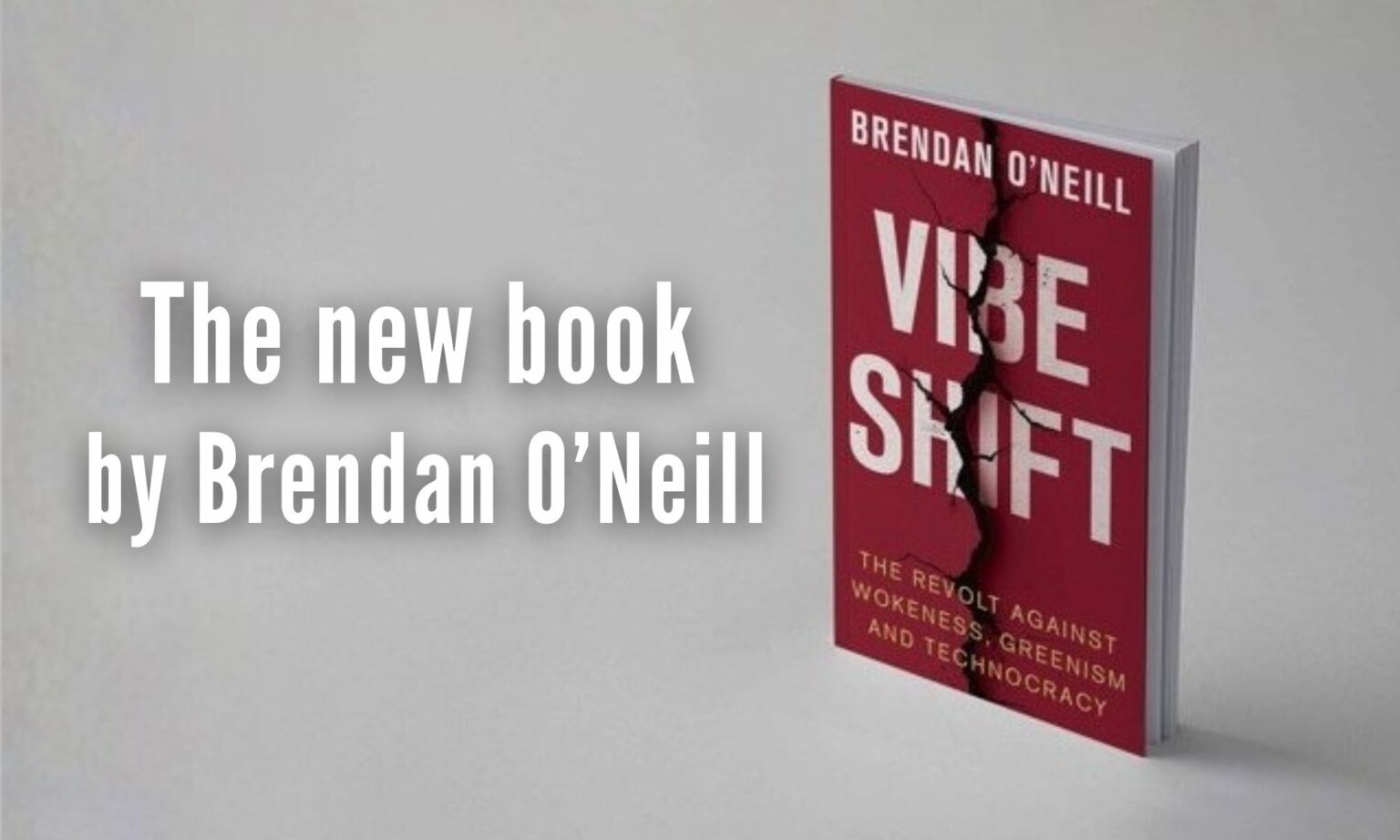
This is an exclusive extract from Brendan O’Neill’s new book, Vibe Shift: The Revolt Against Wokeness, Greenism and Technocracy, which is now available to purchase on Amazon here.
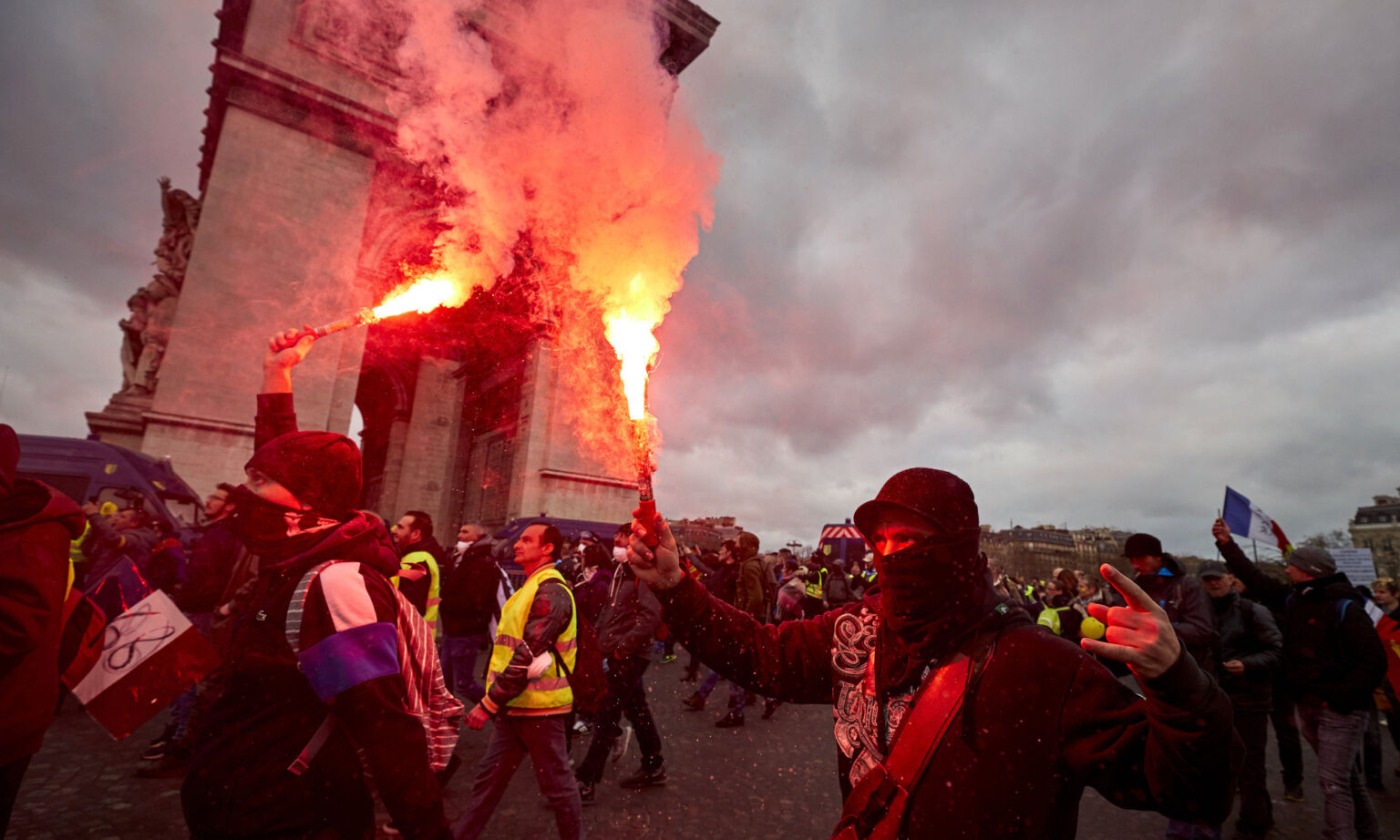
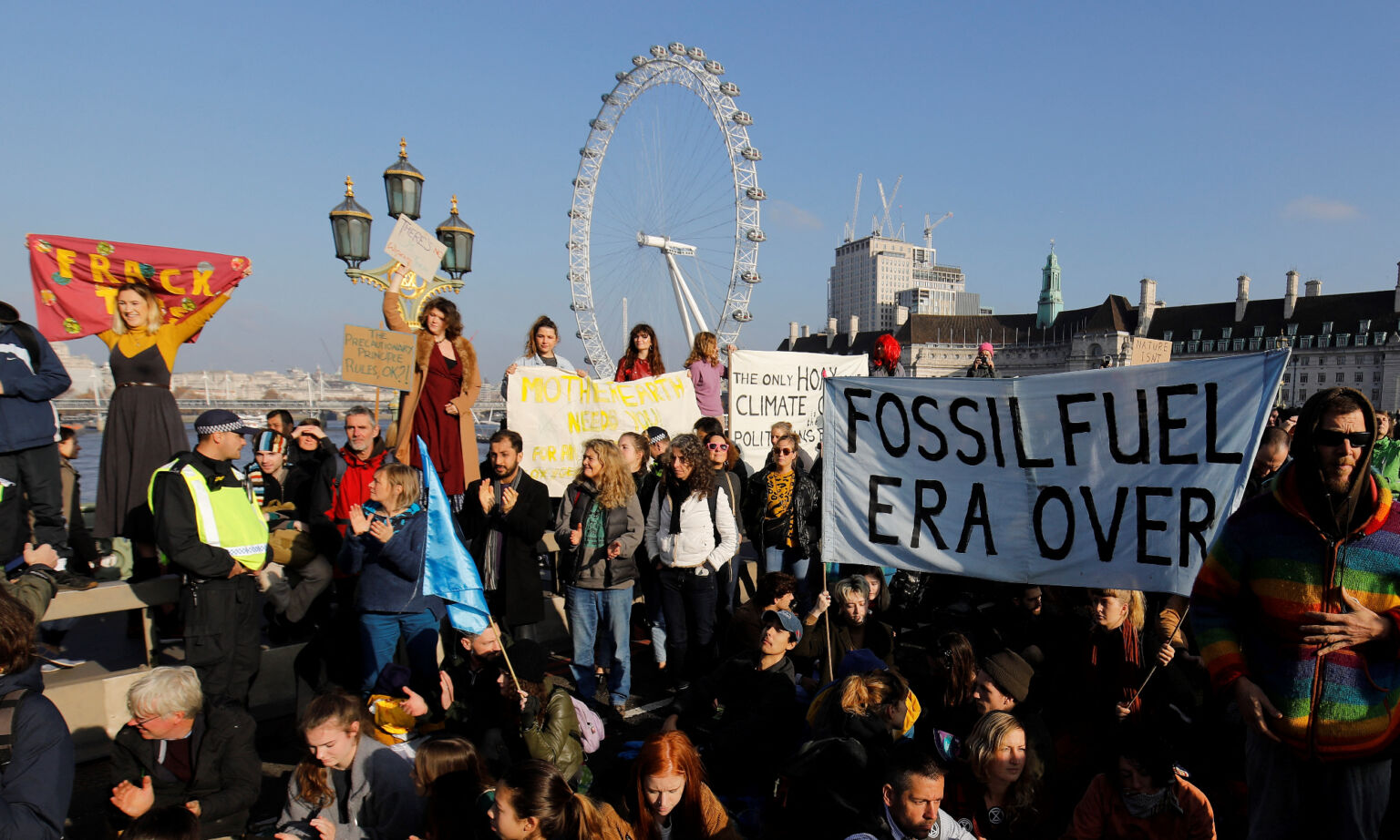
When the history of our times comes to be written, it’s possible the date of 17 November 2018 will feature prominently. For two extraordinary events rocked Europe that Saturday. Two of our most populous cities – London and Paris – were shaken by vast gatherings of citizens making noisy demands of their ruling classes. And the demands could not have been more different. One side wanted nothing less than to drag society back into the benighted hell of pre-modern, pre-industrial existence. The other demanded the right to drive and work and live well, free from the onerous eco-rules of the elites. This cross-Channel clash of moral visions may well have been the first battle in the war of the vibe shift.
Gathered in London was Extinction Rebellion, the death cult of poshos convinced Earth’s fiery end is imminent. Gathered in Paris were the gilets jaunes, that mass uprising of working men and women enraged by Emmanuel Macron’s hike in fuel taxes in the name of ‘fighting climate change’. Six thousand of XR’s doom-fearing activists swarmed London and blocked five of the bridges across the Thames, as they sang and danced and wailed, medieval-style, about the ‘billions’ of souls who will perish in the coming ‘collapse of civilisation’. It was the movement’s first-ever ‘day of rebellion’. In Paris – and more than a thousand other locations around France – a quarter of a million citizens hit the streets to slam the punitive eco-policies of their rulers. It was the gilets jaunes’ first day of rebellion, too.
That these two movements launched on the same day is a most fortunate quirk of history, for it allowed us to see with crystal clarity one of the most cavernous dividing lines in the 21st-century West. On one side, the lurid dread of the upper classes who hate industry and hold it responsible for the future apocalypse that stalks their fever dreams. On the other, the hesitant optimism of the working classes, whose clarion cry was not for the unwinding of industry but for their right to a greater share of its fruits. XR’s rallying manifesto was essentially a religious document, of the millenarian variety, foretelling the ‘annihilation’ of nature, the ‘destruction of all we hold dear’, and the ‘mass extinction’ of life on Earth as seas that are ‘poisoned, acidic and rising’ devour us in their unforgiving floods. The gilets jaunes’ manifesto was a sober, secular tract, making the case for fewer green taxes, a fairer redistribution of wealth and the ‘protection of French industry’.
London was shaken by a bourgeois howl for ever-more stringent climate policies to ‘change our present cataclysmic course’. Paris and other parts of France were brought to a standstill by what some described as the world’s ‘first rebellion against the ecological transition’. Where XR’s plummy agitators demanded even larger and more punishing ‘climate action’, the workers of France launched what some believed would be ‘the start of a worldwide revolt against climate action’.
The differing social make-up of the movements was striking too, and a glimpse of the tensions that would fuel the era of Extinction Rebellion is a thoroughly upper-class movement. One writer calls them ‘Econians’, because they’re eco-aware and a lot of them went to Eton, the high school for Britain’s richest, poshest kids. They are the scions of that ‘public-school elite’ that dominates ‘the wokerati world’. Surveys have found that XR’s dread-spreading agitators are ‘overwhelmingly middle class’ and ‘highly educated’ and the vast majority of them come from ‘below the Severn-Wash line’ – the line that separates the more privileged south of England from the working-class north.
The gilets jaunes uprising, in stark contrast, was a revolt of ‘low earners’. One study found the French rebels were predominantly men and women of ‘the working class or the “lower” middle class’. Their average age was 45. Employees, manual labourers, working-class artisans and shopkeepers were overrepresented in their ranks compared with France more broadly. To the shock of absolutely no one, ‘middle- level professionals and managers were poorly represented’ in this surging street revolt that lasted nearly two years.

Even the clashing uniforms of the two rowdy groupings told an important story. The death-speakers of London were adorned in the harem pants and tattered, tie-dye t-shirts that have become the means through which the bored rich signal their rejection of mainstream society and its sartorial rules. The gilets jaunes, as their name suggested, wore yellow vests – the hi-vis jackets that French law requires all motorists to keep in their cars in case of emergencies.
They were defining themselves as people who drive, people who work, people who don’t necessarily live in big cities where you can just jump on the Metro. As a writer for the New York Times said, it’s no accident that they picked a garment that is ‘associated with [the] industries of the working class’. It was the most ‘compelling sartorial symbol of revolt since the Sans-culottes’, she wrote, referring to the working-class radicals of the French Revolution who were named after their lack of the fashionable silk breeches worn by the nobility and the bourgeoisie.
On that Saturday, across the English Channel, we witnessed something extraordinary: a stand-off between the luxuriant apocalypticism of the elites and the irritation with climate alarmism felt by vast swathes of ‘ordinary people’. The ultimate luxury belief of the virtue-hoarders in establishment circles – namely, that the world is ending and all good people must try to save it – crashed up against the grounded, real worries of working people regarding pay, bills, transport, life. As privileged Britons enacted an am-dram apocalypse, positioning themselves as the righteous deliverers of Gaia from the suffocating smog of mankind’s hubris, the simmering low-earners of France gave voice to the concrete concerns of the reality-based masses. You obsess over ‘the end of the world’, they said to their walled-off rulers in Paris, while we worry about ‘the end of the month’.
And there it was. One of the great and now undeniable moral collisions of our time – that between the fantasy politics of comfortable elites and the pressing needs of the people they rule over. This tension between a cultural establishment bored of growth and a populace that expects growth, which needs it, had been brewing for some time. It bubbled and boiled under the surface of society’s thin consensus on climate action. Then, in 2018, on an otherwise normal Saturday, it was dragged into the open with uncommon vigour by Frenchmen and women in yellow vests. By labourers and artisans who dared to say the thing you could be damned as a sinner for saying: that ‘the end of the month’ might deserve as much attention, if not more, than that unlikely ‘end of the world’ that gives the moral clerisy such sleepless nights.

Two of the central ‘vibes’ of our times were on noisy display that day. In London, the revenge of the aristocrats against an Industrial Revolution that they blame for shattering their communion with nature; in France, the working class’s longstanding dream of greater riches and comfort. Blue bloods vs yellow vests. And if you had told me back then that the latter would leave a larger footprint on our politics than the former, I would have struggled to believe you. The luxury apocalypticism of the depressed middle classes had become such a dominant strain in the new ideology that some of us had started to wonder if it would ever be dislodged; if the material needs of working people would ever reassert themselves against the devotional needs of an elite consumed by visions of Earth’s violent demise.
And yet look where we are now. Net Zero policies are being called into question by Europe’s citizens and even some political parties. Governments across the West are toning down their ‘climate hawkery’, as one observer calls it.
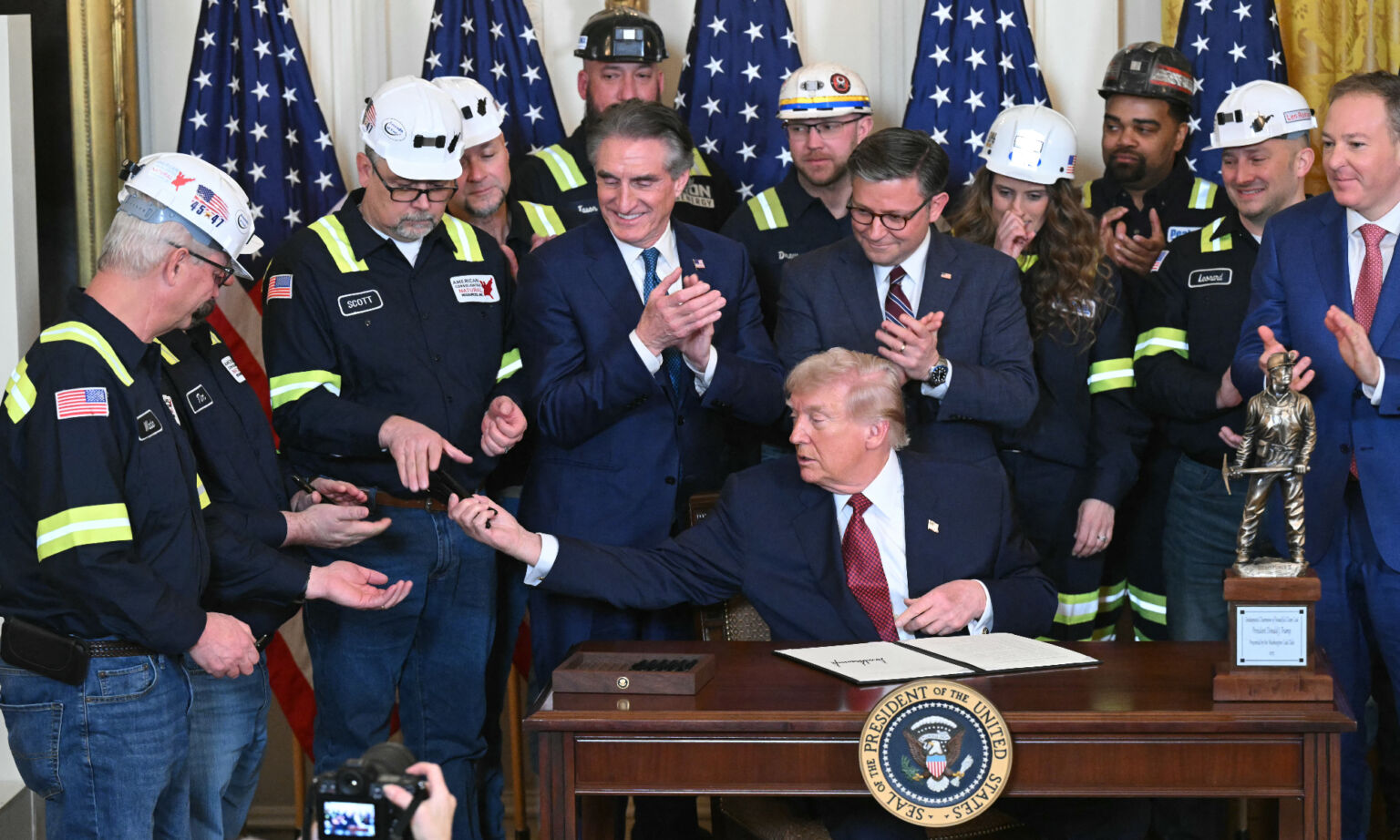
And the Trump administration is promising to haul up ever more of nature’s hidden resources and burn them for the benefit of the American people. Coming off like the swaggering industrialists of the 19th century, the Trump team says it will tear down the ‘burdensome and ideologically motivated regulations’ on America’s ability to utilise the ‘abundance of energy and natural resources’ it is so ‘blessed with’. Through our excavation of nature’s gifts, they say, we will ‘restore American prosperity, including for those men and women who have been forgotten by our economy in recent years’. Behold the creeping victory of ‘the end of the month’ over ‘the end of the world’.
That even this vibe is shifting, the vibe of elite catastrophism, is a testament to the sheer size of today’s intellectual flux. So serious and swirling is our moral tumult that it is even possible that the religion of the establishment – End Times environmentalism – will not survive it. It’s official: no ideology, not one, is safe from the vibe shift.
Whatever happened to the climate apocalypse? I can’t be the only person who has noticed its fading from the front pages. Sure, it hasn’t gone away – one scorching day in Spain is enough to get the commentariat stressing over a ‘continent on fire’ and the ‘heatwave hell’ that industrious mankind has inflicted on its stupid self. And much of the NGO world, educational industry and activist class continues to mould itself around a neo-Biblical dread of the floods and fire that will reportedly flow from humankind’s industrious arrogance. And yet environmentalism’s star is unquestionably waning. Far less ink is now spilt on that ‘ghastly future of mass extinction’ we were constantly warned about. There are far fewer newspaper columns weeping over our ‘collapsing, impoverished, diseased Earth’ and the ‘droughts, floods and wildfires’ that will ‘ravage already vulnerable populations’. Even Greta Thunberg, for so long the eco-elites’ favourite prophetess of doom, has a new hobby horse: Israel’s ‘genocide’ in Gaza. She’s gone from grieving an apocalypse that never came to inveighing against a genocide that never happened – a perfect illustration of the terrifying nothingness at the heart of luxury activism.
How does an apocalypse just slip from daily consciousness? Never forget what we were told. Scientists became doom-consumed soothsayers. They issued dire warnings of ‘some kind of hell on Earth’ if we do not ‘halt our emissions’. The ante was forever being upped. ‘The era of global warming has ended, the era of global boiling has arrived’, said the UN in July 2023. We are ‘sleepwalking to extinction’, warned celebrated hysteric George Monbiot. We face ‘the end of life as we know it’, he cried. Alexandria Ocasio-Cortez said ‘the world is going to end in 12 years if we don’t address climate change’. She said that in 2019. So we only have six years left. ‘Billions of people are going to die in quite short order’, wailed Roger Hallam of Extinction Rebellion. He offered ‘Advice to young people as you face annihilation’. The climate apocalypse will bring ‘war and violence’, he said: ‘The slaughter of young men and the rape of young women on a global scale.’
It was unrelenting. We were pushed into a constant state of dread and penance. Everything you love will burn, we were told. Curb your emissions, we were warned. So ceaseless was the alarmism that children were made unwell by it. A new malady was discovered – ‘climate anxiety’. It is ‘widespread in children and young people in countries across the world’, reported the Lancet00278-3/fulltext), to such an extent that it ‘impacts their daily functioning’. Such was the mania of that high-point of eco-doom – even the spiritual wellbeing of children was seen as a small price to pay for the self-aggrandising delusions of adults convinced they were battling End Times.
That such a child-ailing, fear-stoking, industry-hurting ideology could become all the rage in establishment circles was proof of the ruthlessness of luxury beliefs. It confirmed that where such beliefs might benefit the elites, letting them pose as the saviours of fallen humanity, they directly harm the young and the working class. The recent demotion of the climate apocalypse in the rankings of elite concerns – which may very well be a temporary demotion – is partly down to the apocalypse fatigue of the public. We have eyes and ears – we know their claims are fuelled by frenzy more than truth. The eco-religion has buckled under the weight of its own bullshit.

It cannot be said often enough that the headline cries and street shouting about ‘hell on Earth’, ‘billions dying’ and ‘mass extinction’ have no basis whatsoever in science. There is nothing in the reports of the UN’s Intergovernmental Panel on Climate Change – viewed by many as the bible of climate info – to justify such hysteria. As Ruy Teixeira says, the IPCC does not predict ‘catastrophic outcomes for humanity’. It doesn’t ‘associate climate change’ with an ‘existential [or] apocalyptic’ threat. The IPCC doesn’t even cite a numerical ‘tipping point’ of temperature after which humankind will be screwed. Instead it says ‘tipping points are not well understood’, though of course governments should keep an eye out for ‘unexpected changes’ in climate. So much for those ceaseless headlines about mankind hurtling towards a ‘catastrophic tipping point’.
Another factor in the taming, for now, of climate derangement is the West’s changing economic circumstances. As Alex Trembath of the Breakthrough Institute says, luxury beliefs are fine in luxury eras, but they tend to run aground as things get rough. It was during the ‘terminal boredom’ of the ‘decadent society’ of the 2000s and 2010s, writes Trembath, that the ‘climate hawkery’ of self-styled progressives could enjoy free rein. Despite the financial crisis, the US in particular avoided a depression, meaning easy money continued to flow, commodity prices stayed relatively low and energy demand was mostly stagnant. That’s all changed now. Commodity prices and interest rates are rising, as is energy demand. And in the wake of the Ukraine War, the West’s dependence on Russia for energy – not to mention China – is ‘considered more a vulnerability than an asset’. Reality has rudely intruded into the doom play of the West’s ‘cultural tastemakers’, says Trembath, and compelled governments to confront the storm of history outside their echo chambers of presumed virtue.
Yet alongside these objective pressures on the indulgent apocalypticism of the elites – public weariness, war, downturn – there is a crucial subjective pressure, too. The eco-religion quakes not only as a result of events, but also as a result of revolt. It isn’t only shifting circumstances that make ‘climate hawkery’ seem ever-more foolhardy – it’s the shifting thinking of ordinary people, too. In their millions, workers and voters across the Western world have committed that ultimate blasphemy – they’ve wondered out loud if the world really is ending.
The gilets jaunes uprising is the great forgotten revolt of our time. It lasted for more than 18 months, from 17 November 2018 to 28 June 2020. Hundreds of thousands of people hit the streets every weekend. There were 11 deaths. There were numerous injuries, many of them caused by police violence – five people lost their hands as a result of the police use of grenades, 23 lost their eyesight. The impact of this people’s uprising was huge. Macron ditched his green tax on fuel. More importantly, the French elites essentially extracted themselves from the global crusade against climate change, for a period anyway. As one observer of French affairs said, there was a reason Macron went into the 2022 presidential election focusing on ‘Islamism and uncontrolled immigration over the environment’ – because the people had made it forcefully clear that they would not tolerate any ‘bumptious and hectoring eco-warriors pushing through laws that punish the poorest in society’.
The gilets jaunes put manners on the French establishment. After government spokesman Benjamin Griveaux said ‘people who smoke and drive diesel cars’ are not compatible with ‘the France of the 21st century’, protesters attacked his office. He later stepped down. So reluctant was Macron to engage in displays of eco-virtue in the wake of the yellow-vest revolt that he found himself being reprimanded by an independent body for his ‘failure to meet climate targets’.
The globalist elites were horrified at the thought that the revolting men and women of the Fifth Republic might drag their nation, the world’s seventh-largest economy, out of the climate crusade. Just two weeks into the gilets jaunes revolt, the BBC fretted: ‘Where does this leave France’s fight against global warming – and what message does it send to the wider world?’ Leading greens warned that the French revolt could ‘end up harming the advances made towards a greener society’. We must not ‘turn our backs on ecology’, said one. The BBC went so far as to wonder if ‘the environment’ would be ‘the true victim’ of the French rebellion – those pesky workers, destroying life as we know it with their scandalous demands for nicer lives.
These observers recognised what was at stake on the burning streets of France – not just an unpopular tax but an entire ideology. Their ideology. The gilets jaunes revolt had a profoundly tempering impact on the climate agitation of the West’s moral clerisy. In its aftermath, virtually every ‘climate thinker’ felt compelled to at least pay lip service to the concerns of working people. Books with titles like A Just Energy Transition started to appear alongside those medieval-sounding tomes with titles like We’re Doomed. Now What? that had become the cash cow of the publishing world.
Eco-experts feared that the French uprising spoke to a broader working-class ‘greenlash’, and said that from now on the ‘impact of the green transition’ on living standards must be ‘carefully considered’. Even the Guardian, not known for its love of the working classes, said the gilets jaunes alerted us to the problem of trying to ‘balance the carbon budget’ on ‘the backs of working- and lower-middle-class citizens’. The gilets jaunes clipped the wings of the zealous sermonising of the elites, of a top-down ideology that often seemed to revel in its cruel impositions on working people. A movement whose leading thinkers once gloated that they were agitating ‘not for abundance but for austerity, not for more freedom but for less’, now felt compelled to at least think about the oiks.
But if they thought the softening of their greenism would placate unruly low-earners, they were wrong. The yellow vests were not long followed by the rebellious farmers. The EU has been rocked by farmers’ revolts these past few years. Farmers have risen up in their tens of thousands against punishing eco-measures that threaten not only to curb their income, but also to make the very act of food production that bit harder. It was one of the most astonishing spectacles of the 21st century so far – men and women fighting for their right to feed the people against an elite that cares more for cutting emissions than creating the foodstuff of life.
The first stirrings of rebellion were in the Netherlands in 2019. Even as the workers of France were in open revolt against punishing eco-taxes, the Dutch government was introducing ‘drastic measures’ to cut nitrogen emissions down to EU-approved levels. It was to all intents and purposes a declaration of war on the nation’s farmers. The Netherlands might be a small country but it is the world’s second largest exporter of food. Its farming industry is extraordinarily efficient and that is in part down to farmers’ use of nitrogen-rich fertilisers to maximise their crop yield. In slashing nitrogen use to appease the Net Zero overlords of the remote oligarchy of the EU, the Dutch government was essentially setting fire to one of its core industries. Indeed at one point it proposed buying out thousands of the most polluting farms and shutting them down. There was talk of slaughtering around half of the livestock of the Netherlands – a literal animal sacrifice to try to placate the gods of weather, or at least the gods of Brussels.
Nothing better captured the suicidal bent of the Net Zero rush than these events in the Netherlands. Here we had a nation openly engaging in self-harm in the hope that it might hold back that apocalypse the elites have been so feverishly, forlornly predicting. The fightback was furious. The farmers got organised. Then during rush hour on 1 October 2019 they hit the streets. Thousands of tractors clogged the veins of the Dutch highways. From Amsterdam to Rotterdam to Leiden, they trundled through the streets towards the seat of power at The Hague. It was the largest traffic jam in Dutch history. More than 2,000 tractors crammed into Malieveld, the park close to parliament building. The machinery of food production literally staring down a cossetted ruling class – surely one of the most striking images of rebellion of modern times.
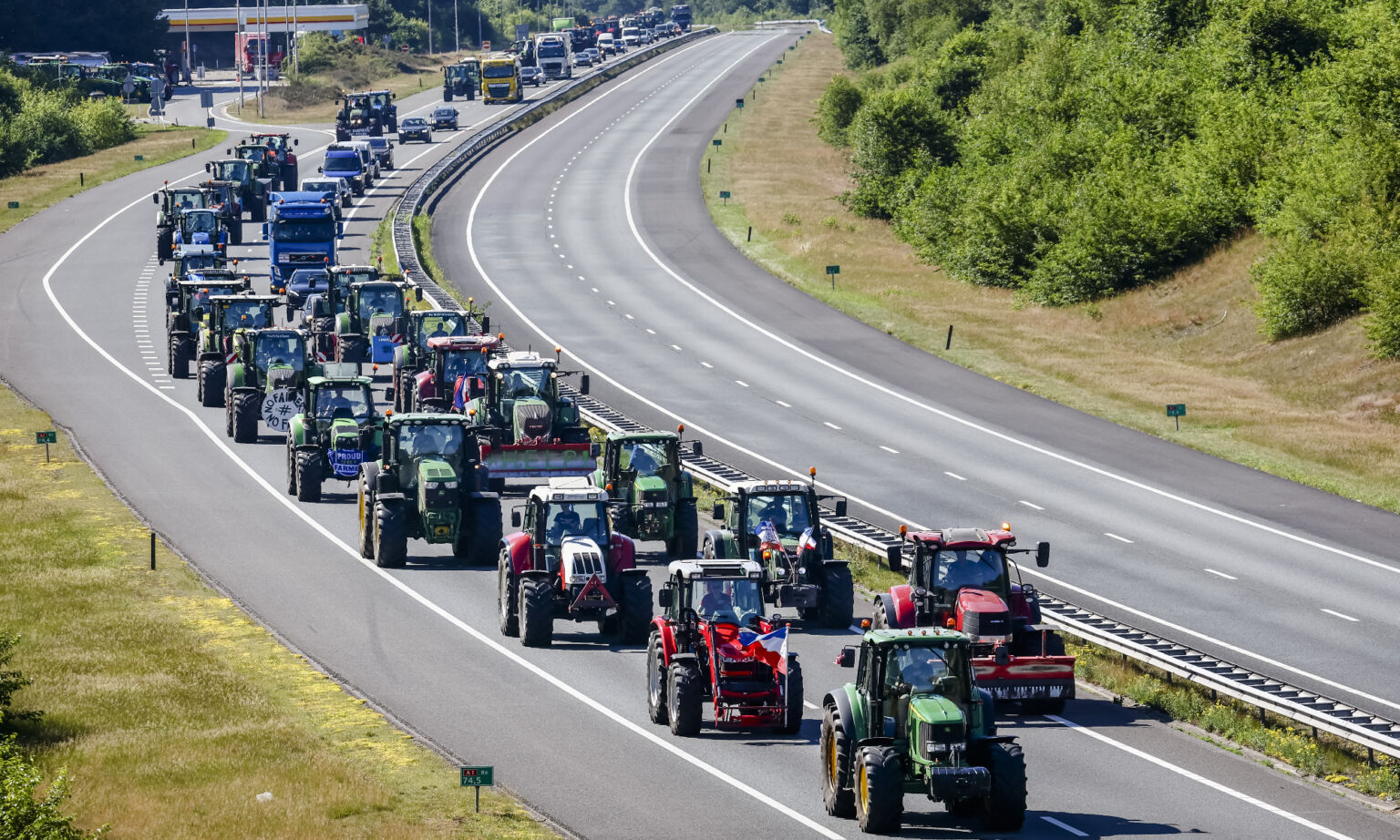
The Dutch farmers are still protesting. They won concessions but they still aren’t happy with the government’s zealous eco-focus. They’ve been joined by Dutch construction workers, whose building projects were also impacted by the government’s insistence on ‘nitrogen assessments’. Builders descended on parliament in the hi-vis orange vests of their industry, a nod to the yellow-vest rebels in France. The umbrella body of Dutch construction workers found that 308 projects worth three billion Euros had been affected by the government’s obsessive insistence on cutting nitrogen and other emissions. The Aztecs sacrificed human beings to Tlaloc, the god of rain and thunder. Modern-day Europe sacrifices farming, building and people’s livelihoods to Net Zero, the god of eco-dread. Different centuries, same superstition.
Farmers in other nations joined the tractor revolt. In January 2024, French farmers carried out a ‘siege of Paris’, in furious protest against a proposed rise in diesel-fuel taxes for agricultural vehicles and various other ‘green regulations’. Also in 2024 there was the ‘siege of Berlin’ by thousands of German farmers enraged by cuts to farm subsidies and a raft of green rules that make their lives that much harder. The revolt of the food-makers spread as far as Canada, where farmers gathered in July 2022 to offer solidarity to their Dutch counterparts and to protest their own government’s proposal to cut nitrogen use by 50 per cent over the next eight years. Irish farmers have likewise pushed back against their government’s insane talk of culling 200,000 cows to ensure that Ireland achieves its EU-dictated climate targets. Butchering animals to save nature: this is where we’re at.
The uprising of the farmers confirms one of the laws of the vibe shift – that there is far greater wisdom among ‘the crowd’ than there is within our post-truth elites. It is the new establishment’s chasm-sized disconnect from the reality of everyday life that leads it to pursue such lethal follies as farm destruction and even livestock sacrifice. Ensconced in their bubbles of self-reinforcing opinion, where your status is determined by the depth of your bowing to correct-think, they have become blind not only to the needs of ordinary people, but also to the very workings of the societies they rule over. They christen themselves the ‘expert’ classes, captains of the new ‘knowledge industry’, yet they can’t even figure out that a sudden and drastic cut in fertiliser use is likely to frustrate food production and hit economic output.
We have seen, so clearly, not just the folly of luxury beliefs but the danger of them, too. We live under a governing class that views food production, all production in fact, as a ‘polluting’ phenomenon. As a necessary evil at best, one whose ‘dirty’ outputs must be continually lamented and curbed. In their high church of climate hawkery, they have come to conceive of agriculture and industry as poxes that ail Mother Earth. They pay more heed to the End Times cries of fellow bubble-dwellers like George Monbiot than to the fourth-generation farmer whose hens laid the eggs they have devilled with a side of sourdough toast. ‘Farming is the most destructive human activity ever to have blighted the Earth’, says Monbiot, giving brute voice to the reactionary anti-modernism that blights the influential classes.
If you believed the liberal media, you would think ours is an era of cool-minded expertise threatened only by the gullibility and hotheadedness of the masses. As one columnist said following the votes for Trump and Brexit in 2016, it is now clear that ‘huge numbers of voters’ can be ‘horribly if temporarily misled by false prospectuses, by lies, by unreasonable hopes and by sudden fears and hatreds’. We are continually warned of the problem of ‘low-information’ voters. Yet the events of recent years confirm that the precise opposite is the case. It’s those who rule over us who are easily distracted by ‘false prospectuses’ (such as that the world is ending) and by ‘sudden fears’ (such as that floods and fires and presumably plagues of locusts will soon consume life on Earth). I would far sooner entrust a nation’s food policy to a country farmer who knows how things are made than to a Brussels-spawned expert who can only conceive of a cow as a producer of methane.
The vibe shift fundamentally represents the tempering of elite mania by the wisdom of everyday people. We so often hear that ‘checks and balances’ are necessary in a democracy to dilute ‘the passions of the mob’. In truth, we far more often require the lived, social knowledge of the public to be wielded against the closed, eccentric thinking of the remote ruling class. Show me one idea from ‘the mob’ that is as unhinged as the belief that cutting off a young lesbian’s healthy breasts will turn her into a man? Or that women should be made to live alongside rapists in places where there is no means of escape – prisons? Or that culling millions of cattle will save man from Gaia’s rage? Or that the world will end in six years’ time if you don’t stop driving to Walmart?
These ideas come not from ‘the mob’ but from the Ivy League, from over-credentialled members of the activist class, from Silicon Valley, from the political establishment, from Brussels. And it took the common sense of women, workers and farmers – people saying such basic things as ‘women are real’ and ‘food matters’ – to hold back such lunatic thinking. In the vibe shift, we see the experience of society being brought to bear against the dead dogmas of the lost elites. The truth of everyday life against the delusions of an establishment that has studied everything but knows nothing.
There was a time when such pushback was valued. The Chartists, the 19th-century British movement for the right of working-class men to have the vote, understood well that society would come a cropper without the intellectual input of people who labour. They argued that ‘ordinary people’ are often better placed to understand social problems because they live and breathe them in a way that lords and princes do not. They mocked the ‘pretend knowledge’ of the pen-pushers in power. ‘They can read books’, the Chartists said, ‘but who made the paper? Who made and set the types? Who printed, stitched and bound the books? Who made the ink, the ink bottles and the steel pens?’ To that mocking cry we might now add that it’s all well and good that a PhD climate policymaker in Brussels knows the exact amount of methane farted by a cow every year – but does he know when to milk a cow? How to milk a cow? How to calve them? How to care for them? How to collect their shit and apply it to the soil? The idea that expertise is a one-way street is surely the great lie of the 21st century.
The ‘greenlash’ has panicked the establishment. Revolting drivers in France. Angry farmers across Europe. Thousands in Poland protesting against the closure of coal power plants and other ‘EU green policies’ that ‘threaten… their livelihoods’. Polish steelworkers chanting ‘Fuck the Green Deal’. Protests against ‘low-emission zones’ in London and Oxford and then in cities across Europe. There is a growing perception, frets one green think-tank, that ‘ecological protections’ are ‘anti-working class’. But aren’t they? From the Club of Rome’s 1972 report, The Limits to Growth, to Greta Thunberg’s wail of ‘How dare you’ at the idea of ‘eternal economic growth’ to Net Zero’s dismantling and outsourcing of Western industry – it seems to many people that where the eco-cult allows our ‘betters’ to accrue ever more virtue through posing as Earth’s saviours, it steals jobs and money and hope from many working-class communities.
The working classes have been quietly bristling against climate hawkery for some time. One striking poll in the UK in 2023 found that the richer you are, the more likely you are to think about climate change. Seventy-two per cent of those in the least deprived areas of England fretted over ecological doom, compared with just 50 per cent of those in the most deprived areas. Clearly poorer people have better things to worry about than a fantasy apocalypse. Polls in the US have ‘repeatedly indicated that the climate-change issue does not have high salience [for working-class voters]’. In one poll, just one per cent of non-college-educated voters identified climate change as ‘the biggest concern facing their family’.
This underground scepticism, this lurking blasphemous doubt that the eco-apocalypse is real, found its keenest political expression in the vote for Donald Trump in 2024. As even green-leaning observers in the US were forced to admit, tens of millions of Americans clearly ‘rank climate [and] energy policy well below economic concerns and other social issues’. Hence more than 77million of them voted for the candidate who expressly campaigned on a ticket of ‘relying more on fossil fuels, not less’. Against the pleas of a doom predicting elite that insists the planet will die if we burn more fossil fuels, a vast swathe of American humanity voted for the man who says ‘Drill, baby, drill’. It was an extraordinary electoral revolt not only against the Democratic Party, but also against the bleak and fearful anti-industrialism of the entire establishment.
Then came the executive order, in January 2025. ‘Unleashing American Energy.’ We are ‘blessed with an abundance of energy and natural resources’, it said. And we will dismantle the green ‘ideology’ that has ‘impeded the development of these resources, limited the generation of reliable and affordable electricity, reduced job creation and inflicted high energy costs upon our citizens’. It is in our ‘national interest’, it said, to ‘unleash America’s… natural resources’.
There it is: vibe, shifted. Of course the digital left accused Trump of being a world-destroying polluter, but to my mind the wording of his executive order had echoes of Sylvia Pankhurst, the socialist Suffragette. ‘We do not preach a gospel of want and scarcity, but of abundance’, she wrote: ‘We do not call for a limitation of births, for penurious thrift, and self- denial. We call for a great production that will supply all, and more than all the people can consume.’ That modern leftists view Trump’s promise of industry as an End Times event is a testament less to Trump’s destructiveness than to their own abandonment of the old ideals of growth and plenty.
It is extraordinary what the voicing of dissent can achieve. Against a vast infrastructure of censorship – few ideas have been as ferociously ringfenced from public discussion as climate alarmism – farmers, drivers, steelmakers, artisans and voters have rattled a once unquestionable belief system. Frederick Douglass was right – free discussion is always ‘the dread of tyrants’ for ‘they know its power’.
Brendan O’Neill is spiked’s chief political writer and host of the spiked podcast, The Brendan O’Neill Show. Subscribe to the podcast here. His new book, Vibe Shift: The Revolt Against Wokeness, Greenism And Technocracy, is out now. Find Brendan on Instagram: @burntoakboy.
You’ve hit your monthly free article limit.
Support spiked and get unlimited access.
Support spiked and get unlimited access
spiked is funded by readers like you. Only 0.1% of regular readers currently support us. If just 1% did, we could grow our team and step up the fight for free speech and democracy.
Become a spiked supporter and enjoy unlimited, ad-free access, bonus content and exclusive events – while helping to keep independent journalism alive.
Monthly support makes the biggest difference. Thank you.

Comments
Want to join the conversation?
Only spiked supporters and patrons, who donate regularly to us, can comment on our articles.