Will we ever kick trans activists out of the classroom?
New schools guidance will restore single-sex spaces, but it leaves too many loopholes for ideologues to exploit.
Want unlimited, ad-free access? Become a spiked supporter.
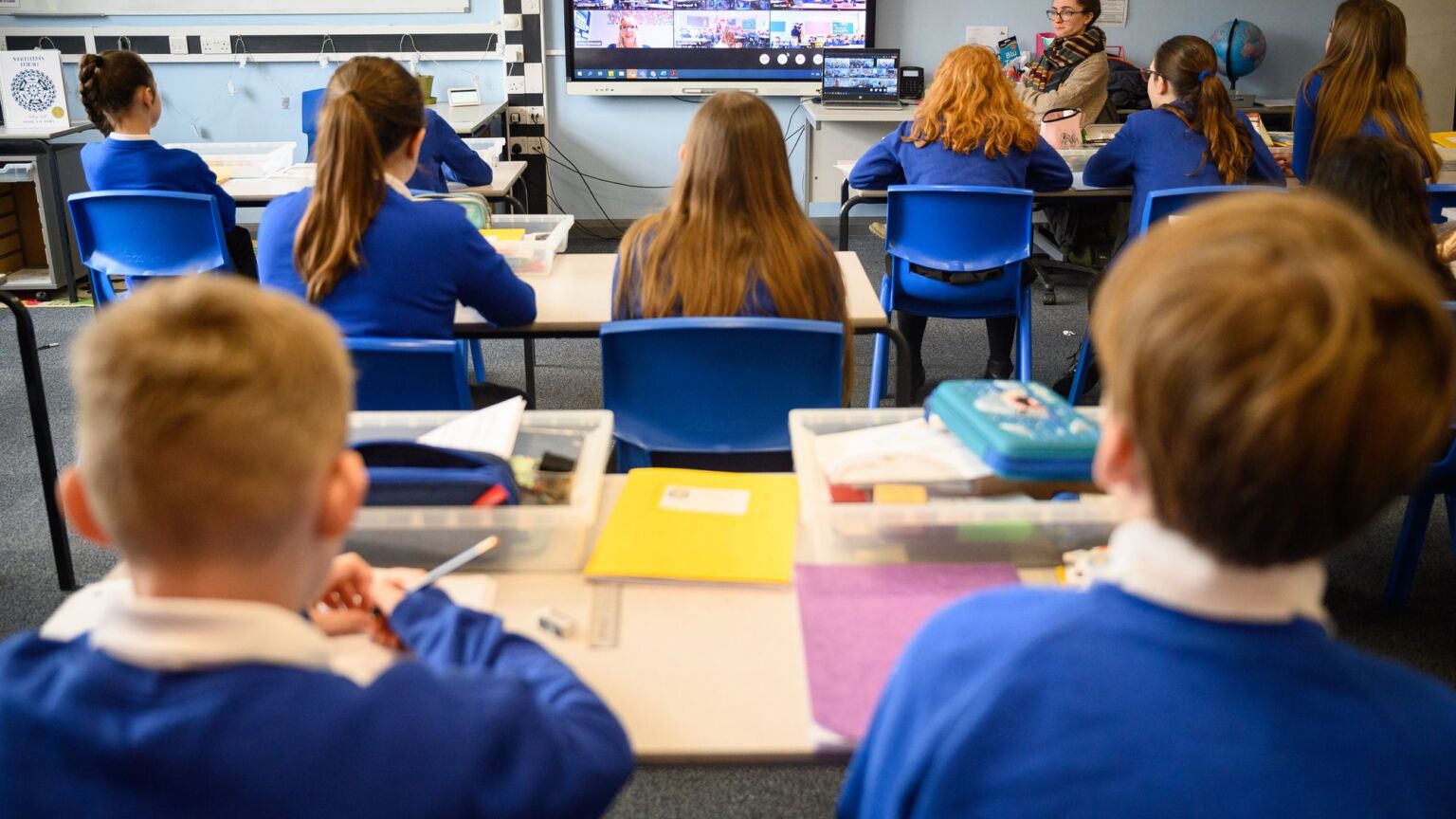
After eight years of dithering, the UK government has at last begun to rein in trans-activist teachers. A draft update issued this week to Keeping Children Safe in Education (KCSIE) – the statutory safeguarding guidance for schools in England – draws some firmer lines. It says children should not be ushered into opposite-sex facilities, and indulging every identity claim is not automatically in a child’s best interests. It may finally end the surreal scenario in which parents drop off Brian and are told to collect Briony (she / her).
Bridget Phillipson, who is both education secretary and equalities minister, is still dragging her feet on implementing guidance for single-sex spaces more broadly, following the Supreme Court’s ruling last year. But she has at last discovered an important principle when it comes to children. ‘Parents send their children to school and college trusting that they’ll be protected’, she said this week. ‘That’s why we’re following the evidence, including Dr Hilary Cass’s expert review, to give teachers the clarity they need to ensure the safeguarding and wellbeing of gender-questioning children and young people.’
This nod to the Cass Review sounds promising. Her review of children’s gender-identity services found only weak evidence in favour of letting children socially transition – that is, adopting the clothing, names and pronouns of the opposite sex. On the surface, the new guidance seems to reflect that caution.
However, former Ofsted chief Amanda Spielman has an eye on some of the ‘big buts’ in the guidance: she doesn’t like them and she cannot lie. She told Justin Webb on Friday’s Today programme: ‘There is far too much leeway for schools to decide unilaterally to permit a child to transition while keeping it secret from their parents… a child who does not want to wait may then be encouraged by peers, activists, campaign groups or influencers to tell the school they feel unsafe at home in order to put pressure on the school to allow them to transition.’ ‘The guidance’, she said, ‘should make clear that this is a decision that should never be taken without parents’ knowledge and agreement’.
On the plus side, schools are at least being urged to abandon a one-size-fits-all approach, where all gender identities are affirmed. They are now expected to treat these cases as serious welfare matters, not lifestyle choices. Thanks largely to parental pushback, activist language, including the fiction of the ‘trans child’, has been scrubbed from official communications. But gender ideology is now so deep rooted in parts of the education system that it will take more than a policy tweak to dislodge it.
For Spielman, the principle is straightforward. Social transition is serious and should not happen without parental agreement. If a school believes it would be impossible to have a conversation with parents, if that might make the child unsafe, then the proper step is a referral to social services. Anything else risks activists inside and outside schools exploiting loopholes in the guidance.
This concern is well founded. One mother told me what happened when her 12-year-old daughter, Sarah (not her real name), joined the school Pride club. Sarah said she was happy to respect people’s identities, but did not believe people could change sex.

The reaction was swift. Classmates called her a ‘transphobic bitch’ in school corridors and she was ostracised. When she later told a librarian that ‘no one can change sex’, she was issued a behaviour point for ‘transphobic language’, which stayed on her record for the rest of the year. Her mother wrote to the school asking what, precisely, her daughter had said that counted as transphobic. ‘Of course they couldn’t answer’, she says.
‘I don’t think that just a change in guidance in itself is going to have much effect on changing the culture in schools’, Sarah’s mother tells me. ‘I think it’s going to take positive intervention to course correct and make sure that schools can focus appropriately on safeguarding, rather than paying lip service to these fashionable mantras.’ Schools, she says, are hostile environments for any child who wants to express any sex-realist views.
In her landmark report, Cass wrote that ‘social transition is not a neutral act’. In this she is quite correct. Public debate often fixates on the so called ‘Munchausen mums’, the ghastly parents who parade their ‘trans children’ for social clout and online applause. They exist, and any teacher dealing with them has my sympathy. But they are not the whole story.
Some children are drawn into the trans fad online. Teen forums on Discord and Reddit are awash with ‘egg chasers’, typically older men who identify as transwomen and take a prurient interest in adolescents questioning their sex. The excitement some show about puberty blockers as a way to halt maturation should itself ring safeguarding alarm bells.

Others, particularly girls, are swept up in social contagions. The wave of Tourette’s-like tics among teenage girls copying social-media influencers showed how readily adolescent distress can take culturally shaped forms.
For some children, the roots are more personal and painful. Exposure to pornography or a history of sexual abuse can distort a young person’s sense of self. The Cass Review noted that the degradation of women in pornography can be so frightening that some girls seek refuge in a male identity. Hannah Barnes, in Time to Think, also found that children presenting with gender distress disproportionately come from troubled backgrounds, including higher rates of parental sexual offending.
If this new schools’ guidance is to mean anything, it must be the start, not the end, of reform. Teachers are not therapists and classrooms are not clinics. A child declaring a new identity should prompt adult curiosity about what is happening in their life, at home, at school and, crucially, online.
Progress will be measured by whether girls like Sarah can speak without punishment and whether parents are treated as partners, not obstacles. When schools recognise cross-sex identification as a sign of vulnerability, then we might say that common sense is back in the classroom. Until then, new rules risk sitting on top of old habits.
Jo Bartosch is co-author of Pornocracy. Order it here.
You’ve hit your monthly free article limit.
Support spiked and get unlimited access.
Support spiked and get unlimited access
spiked is funded by readers like you. Only 0.1% of regular readers currently support us. If just 1% did, we could grow our team and step up the fight for free speech and democracy.
Become a spiked supporter and enjoy unlimited, ad-free access, bonus content and exclusive events – while helping to keep independent journalism alive.
Monthly support makes the biggest difference. Thank you.






Comments
Want to join the conversation?
Only spiked supporters and patrons, who donate regularly to us, can comment on our articles.