The Church of England’s woke crusade is driving away the faithful
The church’s endless self-flagellation over imagined historical sins is fuelling division, not healing it.
Want unlimited, ad-free access? Become a spiked supporter.
Who remembers Beilby Porteus? He doesn’t quite win the competition for Church of England cleric with the silliest name in history – the reverend Nutcombe Nutcombe, 19th-century chancellor of Exeter Cathedral, easily walks away with that prize. But Porteus was certainly one of the Church of England’s most outstanding campaigners for the abolition of slavery and, what we might call today, racial justice.
From the pulpit of St Mary-Le-Bow in 1783, he gave a seminal sermon. It condemned the inhumane treatment of slaves in the Caribbean, and in particular those on the Codrington Plantations – then owned by the Society for the Propagation of the Gospel in Foreign Parts, a Church of England body. Despite this fulminating critique of his own church, in 1787, Porteus was appointed as Bishop of London and thus also to the House of Lords, a position he used tirelessly to support William Wilberforce’s campaign to extirpate the slave trade. He was also committed to improving the lot of the poor, and making sure that as many people around the world had access to the Bible in their own languages.
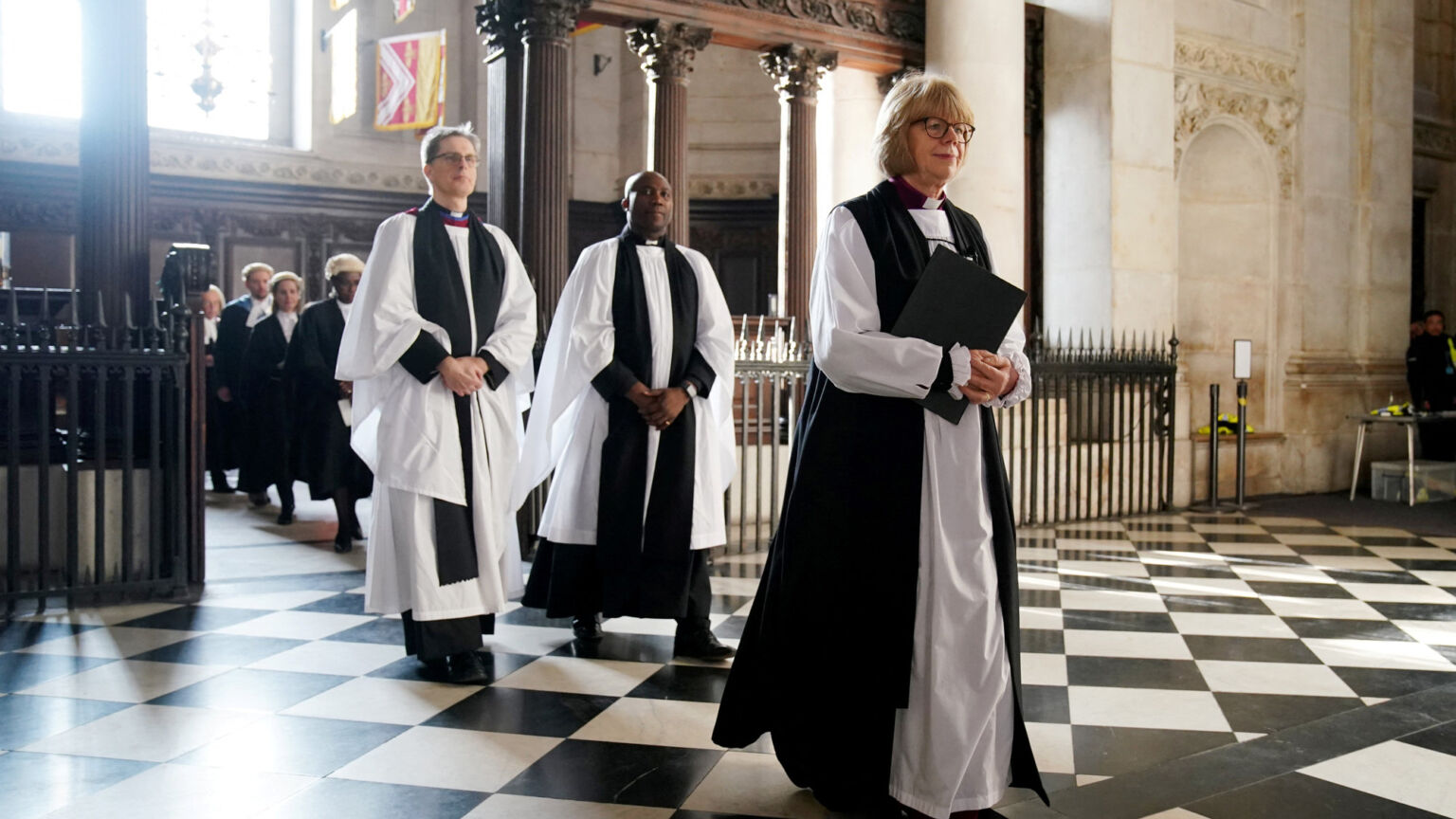
Unfortunately, it seems that the Diocese of London has forgotten what it itself did to fight slavery. It is now engaged in a ‘Racial Justice Priority’ project. Clergy will be encouraged to promote ‘anti-racism in sermons’ in order to correct what the diocese claims is its own ‘systemic racism’. The project will also engage in ‘truth-telling’ to challenge the ‘historical heritage of slavery’, which, the Church of England seems to believe, haunts its every move. The cost of this project is £730,000 over three years, funded by the Church Commissioners – whose money, it is worth pointing out, was originally laid down for the support of poor clergy and cathedrals.
Who could possibly object to the Diocese of London acting against racism? It would be following not only in the footsteps of Porteus, but also the prompting of scripture itself, which reminds us that: ‘There is neither Jew nor Greek… for ye are all one in Christ Jesus.’ The problem is that such anti-racism initiatives are more apt to exacerbate racial division than to heal it, and to lead far beyond the bounds of what may be sanctioned by theology and scripture into the world of partisan political dogma.
Very far, in some cases. The racial-justice plan includes targets for percentages of ethnic-minoirty membership among clergy, administrative staff and even churchgoers. It also proposes ‘unconscious bias training’ for volunteers – something many of them will almost certainly view as the final straw after hours of safeguarding training and the day-to-day challenges of fundraising.
Perhaps more damaging than all of this is the ideological crusade inherent in the project. The previous Archbishop of Canterbury, Justin Welby, regularly insisted that the Church of England was ‘institutionally racist’. Nearly all of the evidence in support of this claim amounted to a reluctance of ethnic minorities to follow the norms of Anglicanism – something Welby chalked down to the ‘racism’ of the Church of England and its members. So it has drawn from scripture to justify an approach which effectively calls for the historic culture of the majority to adapt itself to the new minorities, rather than for minorities to assimilate.
This approach to scripture – based primarily on the most famous biblical lessons of loving one’s neighbour, the Good Samaritan and St Paul’s statement of there being neither Jew nor Greek – informs not only this Racial Justice Project within the Diocese of London, but also the approach of the Church of England at a higher level. It is from this that there is a general insistence on the good of open borders, a deep reluctance to speak out about any reasonable concerns people might have about wide-scale migration – even when its impact on the most vulnerable in society has been, as in the case of the rape gangs, at the deepest level of seriousness.

One of the practical impacts of this likely to be seen in London churches will be physical. An innocuous paragraph in the Racial Justice Strategy calls for ‘partnerships that can assist the Diocese of London in reviewing the legacy of statues and monuments exploring historical links and their relevance in today’s culture’. This refers to a desire expressed in the Church of England’s wider racial-justice reports for a move from ‘retaining and explaining’ monuments to a presumption that they should be removed if they have connections to slavery, despite any heritage or educational value they might have.
Another is in the idea of ‘truth telling’ to highlight ‘the historic injustices and the role played by the wider church’. The problem is that nowhere in the literature can one find calls to celebrate the courageous and world-leading actions of Porteus and his many Anglican colleagues to end the slave trade and help the disadvantaged. Everything is pointed towards calling for the majority in the church to lament their wickedness, but to forget anything good they might have done. This one-sided approach is hardly just or ‘truth telling’.
Congregations will be alienated by this injustice, but also they will know that this approach is not properly based on scripture. Christ calls for one to love the neighbour and the stranger, but the Bible, both in Old and New Testament, calls for the stranger and guest to be respectful to their hosts and society, respecting their customs and laws. One is hard-pressed to find, either in the CofE’s racial-justice documents, or in its public pronouncements, this huge part of scriptural guidance repeated. This absence is an unfortunate sign that the racial-justice agenda is driven more by politics than theology.
One injunction of scripture is ‘let us now praise famous men’. Perhaps if the Diocese of London spent more time honouring the legacies and examples of those like Porteus, rather than flagellating itself for imagined sins, they would be more likely to inspire its congregations to practical work against real racism and oppression, rather than driving them away in despair.
Bijan Omrani is the author of God is an Englishman: Christianity and the Creation of England.
You’ve hit your monthly free article limit.
Support spiked and get unlimited access.
Support spiked and get unlimited access
spiked is funded by readers like you. Only 0.1% of regular readers currently support us. If just 1% did, we could grow our team and step up the fight for free speech and democracy.
Become a spiked supporter and enjoy unlimited, ad-free access, bonus content and exclusive events – while helping to keep independent journalism alive.
Monthly support makes the biggest difference. Thank you.







Comments
Want to join the conversation?
Only spiked supporters and patrons, who donate regularly to us, can comment on our articles.