Reform vs the Greens captures the real divide in politics
In Gorton and Denton, we see the ‘revolting’ but right pitted against the ‘romantic’ but wrong.
Want unlimited, ad-free access? Become a spiked supporter.
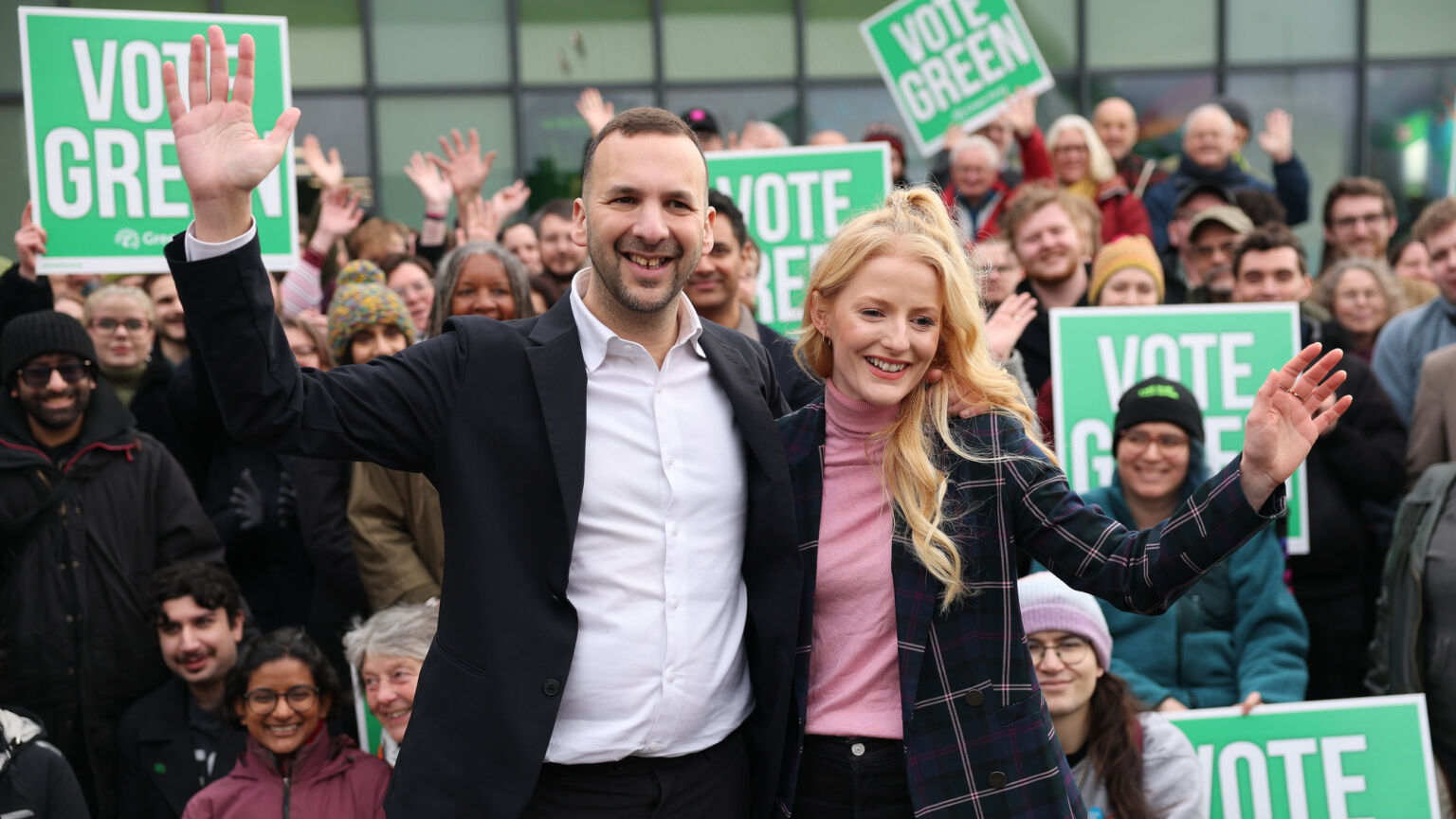
Not only does it look like the beginning of the end for Keir Starmer, which May’s local elections will surely precipitate, we are potentially on the brink of a recalibration of Britain’s party politics. You only have to look to the by-election in Gorton and Denton in Manchester on 26 February to take stock of the profound change afoot.
For the first time anyone can remember, in a contest for a Westminster seat in an English city, the two parties vying for power won’t be Labour or the Conservatives, but instead be two insurgent outsiders. This is a twin-pronged revolt against the political mainstream – against a clique that has become ever more detached and tin-eared since the advent of globalisation in the 1990s.
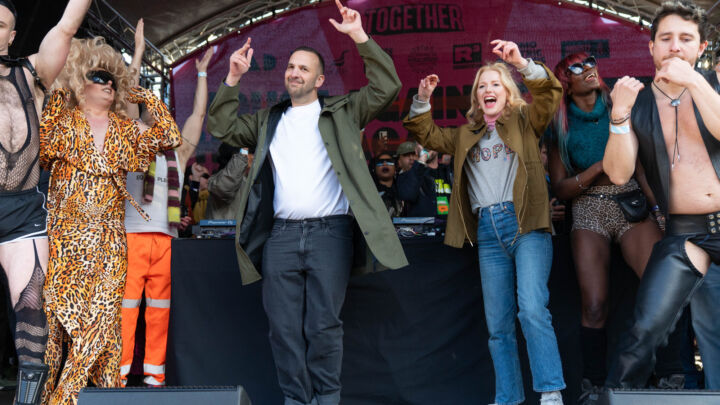
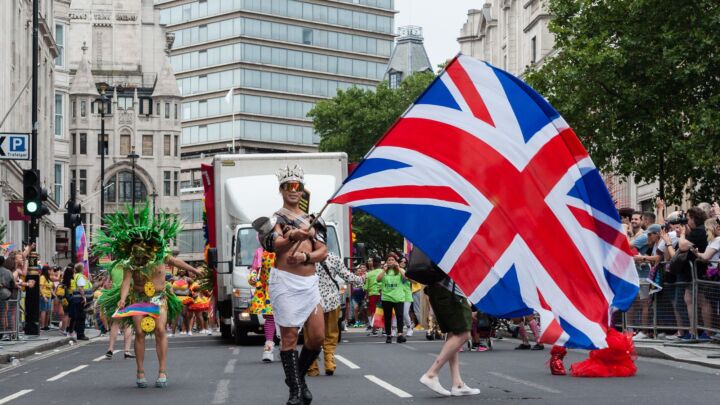
The concerns articulated by both outfits, Reform UK and the Green Party, mirror those seen in all developed countries around the globe. In Reform, we have a party that appeals to small-c conservatives and a disaffected working class who inhabit deindustrialised areas, who feel their homeland has been degraded by an aloof, footloose liberal-left who cares little for them or their country. In the Greens, we have a party that has enjoyed a surge in popularity by taking a sharp turn to the left, appealing to a graduate class for whom the ‘elites’ are instead neoliberal capitalists, who must be humbled through punitive tax hikes. The Greens have remained steadfast passengers on the woke bandwagon, still proud to fly the Progress Pride flag, while simultaneously making gainful overtures to Muslim voters. Time will tell how well that interesting marriage works out.
Whoever wins in Manchester, it will not only signal a recalibration – it will also confirm a wholesale change in our thinking. For those who are drawn to these two parties, concerns over culture, place, identity and community have become almost or equally important as material, bread-and-butter issues.
Many of the affluent middle-class voters attracted to the Greens are preoccupied with identity politics related to gender and race, or by the plight of migrants and the people crossing the English Channel on small boats. They espouse a border-free, airy hyper-liberalism, which transcends allegiance to any nation. Muslims attracted to the Greens also have identitarian concerns, namely what’s happening to other Muslims in Gaza and Palestine. For Reform supporters, the economic pros and cons of Brexit were often a secondary concern. What worried them in 2016, and worries them even more now, is the manner in which the fabric and appearance of this country has so rapidly changed in their lifetimes.
To expand on David Goodhart’s terminology, the technocratic centrists of the ‘Anywhere’ class will be the losers on 26 February. This vote will instead be contested between the ‘Somewheres’, those attached to place and their people, and an unholy alliance of ‘Elsewheres’, with an allegiance to a foreign country, and ‘Nowheres’, who don’t believe in nations at all. It will be a showdown between an unloved and unfashionable people, telling unpleasant truths about a country they love vs a nice, well-meaning class preaching hope not hate, and who scarcely care for the country at all.
Not for the first time on these islands, an ideological contest will pit the revolting but right against the romantic but wrong.
No one owns moral high ground
When Billie Eilish gave her oration at the Grammys earlier this month, she famously defended the rights of undocumented immigrants to settle in the United States on the grounds that ‘no one is illegal on stolen land’. For this, she faced criticism not only from those who find this kind of vacuous piety deeply tiresome, but also from elders of a Native American tribe.

A spokesman for the Tongva people argued that the ‘Bad Guy’ singer was herself squatting on land that didn’t belong to her, claiming that her $3million Los Angeles mansion was situated on ‘ancestral land’. The voice for indigenous inhabitants of the Los Angeles Basin, known as the ‘First Angelenos’, also noted that Eilish had failed to acknowledge them and their land in her speech at the Grammys.
Yet tribal elders might also want to rein in the self-righteousness. According to archaeological and linguistic evidence, when the Tongva arrived in the Los Angeles Basin about 3,500 years ago, they displaced or absorbed the Hokan-speaking Chumash people who had previously inhabited the area. Who the Chumash supplanted before them, who is to say.
History everywhere is one long, sorry sequence of events in which one group of people arrive and take land from another. Violence, exploitation and expropriation have been the eternal and universal human norm. No one today has the moral high ground.
Richard Dawkins: a fearless, peerless public intellectual
It’s always disconcerting when you see adverts online announcing the latest tour by a public intellectual, like Slavoj Žižek or Richard Dawkins, listing the dates they are due to appear at Nottingham’s Royal Concert Hall or the Liverpool Philharmonic, with some shows excitedly hyped as ‘Sold Out!’. It’s disconcerting because I forever mistake them for music concert tours promoted in The Sunday Times or those I remember from Kerrang! magazine. I keep expecting to see it announced beneath the main act: ‘With support from George Monbiot and Megadeth.’ I drift into a reverie in which I imagine ageing intellectuals leaping on to the stage and screaming to the crowd: ‘Hello Wembley! Let’s make some fucking noise!’

But back to Dawkins and his forthcoming nationwide speaking tour, which marks the 50th anniversary of his seminal first book, The Selfish Gene. Although the British have never warmed entirely to the notion of a public intellectual (Bertrand Russell became more broadly known for his Campaign for Nuclear Disarmament than for his philosophy), Dawkins surely qualifies as our finest today. What distinguishes this thinker is not only his intellect but also his consistency and fearlessness. He has railed against unreason in all its forms, especially against the postmodernist relativists of the 1990s, whose corrosive ideas morphed into today’s horror show of wokery. At 84, Dawkins remains a doughty foe of hyper-liberalism.
Many people think he got a bit sidetracked and monomaniacal in the 2000s, when he went through his ‘new atheism’ period. But this happens to the best of people – both AC/DC and Aerosmith also went through an iffy patch in the mid-1980s, and both recovered.
As with old rockers who refuse to retire, so it is with Richard Dawkins: we still prefer the early stuff, and we still hold dear the smash-hit debut that made his name.
Patrick West is a columnist for spiked and author of Get Over Yourself: Nietzsche For Our Times (Societas, 2017). Contact him on X at @patrickxwest.
You’ve hit your monthly free article limit.
Support spiked and get unlimited access.
Support spiked and get unlimited access
spiked is funded by readers like you. Only 0.1% of regular readers currently support us. If just 1% did, we could grow our team and step up the fight for free speech and democracy.
Become a spiked supporter and enjoy unlimited, ad-free access, bonus content and exclusive events – while helping to keep independent journalism alive.
Monthly support makes the biggest difference. Thank you.



Comments
Want to join the conversation?
Only spiked supporters and patrons, who donate regularly to us, can comment on our articles.