The culture war has no place in the casting room
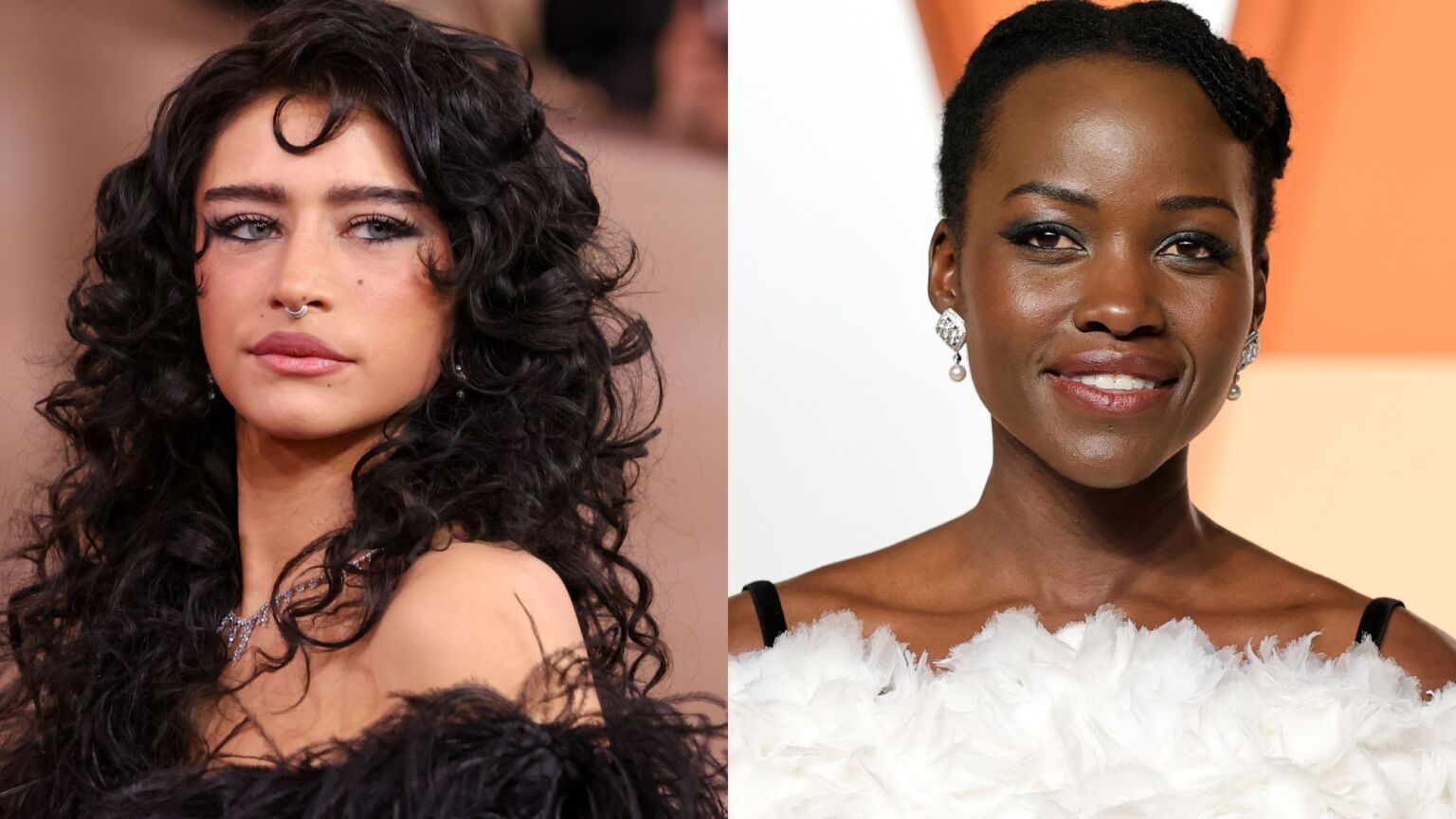
Lupita Nyong’o and Odessa A’zion have been judged unfit for certain roles, entirely on the basis of their race.
Want unlimited, ad-free access? Become a spiked supporter.
If you thought the culture war had blown over, think again. If anything, it is becoming more ridiculous. The latest spats over race and casting in Hollywood show just how bitter and entrenched progressive logic has become – as well as how much it hinders good art.
Last month, an open letter signed by more than 100 film and television creatives demanded that Odessa A’zion, a Jewish actress, be removed from a role in A24’s film, Deep Cuts, because the character in question is described as ‘half-Mexican’ in the source novel. A’zion’s own ancestry didn’t match up.
Soon afterwards, Lupita Nyong’o, a black Kenyan-Mexican actress, was rumoured to be playing Helen of Troy in Christopher Nolan’s upcoming The Odyssey. The right – particularly its Very Online division – went into meltdown. One particularly ugly X post read: ‘Helen of Troy was fair-skinned, blonde, and “the face that launched a thousand ships” because she was so beautiful that men started a war over her.’ To this, none other than Elon Musk replied, ‘Chris Nolan has lost his integrity’.
The Odessa A’zion business demonstrates the progressive urge to police who gets to play whom, even when the categories fall apart. Despite the character she was slated to play being half Jewish, like A’zion herself, her casting was still denounced as ‘whitewashing’. That this is taking place at a moment when anti-Semitism is all the rage – often repackaged as virtue in certain sections of the left – makes it feel all the more backward. Meanwhile, Lupita Nyong’o is facing a borderline-racist monstering from sections of the right. Their argument is that it is historically inaccurate for a black woman to embody the face that launched a thousand ships, and that Christopher Nolan is knowingly indulging woke sensibilities.
Both of these instances reveal the depths to which the culture warriors are willing to sink. Whether it is the left enforcing a bureaucratic audit of identity, or the right policing the borders of a mythological landscape, both rely on a near-identical foundation of identity politics. The approach of both sides rejects the transformative power of art in favour of demanding it reflect their own rigid and racialised worldview.
Criticism levelled at A’zion was never about how well she can act or whether her performance might enhance or enliven the source material. The objection is purely genealogical. Her ethnic heritage has been scrutinised and found wanting. The fact that any director deigned to cast her, let alone that she accepted, has been treated as a moral failing. ‘Identity’ has become a tick-box exercise for studios to agonise over, with one wrong move risking damage to a film’s reputation before it’s even out.
Outrage over a black Helen of Troy follows an almost identical logic. Dressed up as respect for ‘history’ (even if Helen of Troy likely never existed), it merely repackages the racial essentialism of the left. Helen has to look ‘right’, it is said, because even a globally popular myth, which has already been portrayed a thousand different ways, must be policed for perfect plausibility instead of mined for deeper truths.

The right may see itself as fighting a more worthy battle here: woke excess versus conservative backlash. In reality, the two enemies are bedfellows. Both assume that culture is a fixed and never-developing phenomenon, ‘owned’ by certain ethnic groups rather than belonging to humanity as a whole. Both treat meaning as something that can be corrupted if a person with the ‘wrong’ skin colour translates it. Both reduce art to a political instrument, whose value lies in affirming rather than exploring, coddling rather than unsettling.
The problem is that this isn’t how cinema – or art in general – works. Actors are standing in for others. They do this in all kinds of ways, following all kinds of different, often unarticulated or counterintuitive logics. Masks, costumes and roles exist precisely to loosen the grip of literal identity. Performances touch us by rejecting the idea that human experiences can be limited to a particular ‘kind’ of person.
And yet, essentialism is fast becoming a hallmark of cinematic institutions. Casting is driven by the demand to be ‘inclusive’ and ‘diverse’, while simultaneously enforcing strict limits on who may play whom. Minorities are to be visible, but only in roles deemed appropriate. In this way, inclusion slides easily into segregation. Diversity becomes a managerial target. The right responds by playing the same game to its own ends. In all cases the individual actor, with her unique inner life ready to be refracted by the alchemy of performance, disappears.
Most disheartening about these banal debates is how little curiosity they show about what art might otherwise be capable of. No one asks what a black Helen of Troy might reveal about desire, beauty or war. No one asks what a contested casting choice might say about contemporary anxieties. No one asks if there are more profound relationships between actors and their characters than shared genetics. The conversation never manages to rise above the level of offence and entitlement.

This is what the culture war really boils down to: a philistine struggle to deliver a pre-approved message, as opposed to just letting artists crack on with making what they want to. It distrusts audiences to make sense of things for themselves. It squeezes out any room for imagination and interpretation. The upshot is a complete flattening of culture.
If Western cinema is to revive itself from the hollowed out zombie-industry it’s become, we must reject such black-and-white thinking. Art ought to be risky, unpredictable and open to exploring the full range of human experience – even ones that might make us uncomfortable. It’s high time to get the culture warriors out of the casting room.
Alex Dale and Maren Thom are co-hosts of the Performance Anxiety podcast.
£1 a month for 3 months
You’ve hit your monthly free article limit.
Support spiked and get unlimited access.
Support spiked – £1 a month for 3 months
spiked is funded by readers like you. Only 0.1% of regular readers currently support us. If just 1% did, we could grow our team and step up the fight for free speech and democracy.
Become a spiked supporter and enjoy unlimited, ad-free access, bonus content and exclusive events – while helping to keep independent journalism alive.
———————————————————————————————————————————–
Exclusive January offer: join today for £1 a month for 3 months. Then £5 a month, cancel anytime.
———————————————————————————————————————————–
Monthly support makes the biggest difference. Thank you.


Comments
Want to join the conversation?
Only spiked supporters and patrons, who donate regularly to us, can comment on our articles.