After Anywheres vs Somewheres, meet the ‘Elsewheres’
In Gorton and Denton, Muslim voters are being urged to think of their faith, rather than British or local issues.
Want unlimited, ad-free access? Become a spiked supporter.
Brexit marked the point at which the real political cleavage in the country could no longer be denied. The UK was split not by left and right but between what author David Goodhart described as the ‘Somewheres’ – the predominantly Leave-voting cohort whose identity is rooted in place – and ‘Anywheres’ – the largely urban, mobile, socially liberal and university-educated class who voted Remain.
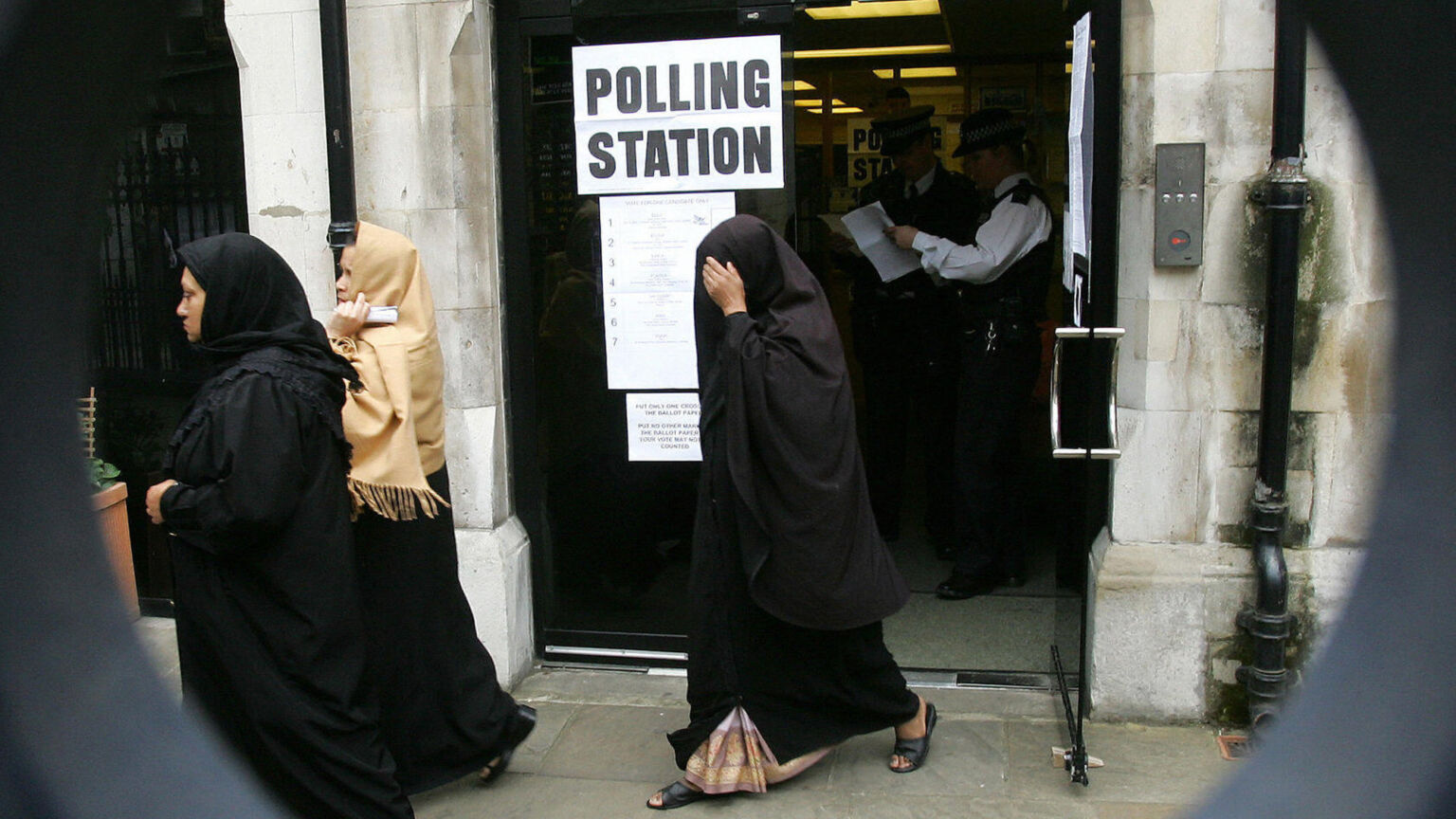
The Gorton and Denton by-election, which will be contested at the end of this month, heralds the arrival of a new tribe – the ‘Elsewheres’. These are people living in the UK whose primary loyalties and interests lie outside this country. They are distinct from the Anywheres as their identity and politics are firmly rooted in place, but distinct from the Somewheres as that place is not the one in which they live.
The demographics of Gorton and Denton are highly significant. Rob Ford, professor of political science at the University of Manchester, gives a detailed breakdown. Framed as a ‘tale of two Manchesters’, the picture he paints shows the enduring truth of Goodhart’s framing. It sets out a clear split between a substantial white working-class population and a ‘diverse, graduate and urban’ population.
These aren’t the only demographic divides, though – which brings us back to the Elsewheres. Gorton and Denton also has a large Muslim population – 28 per cent of residents, according to the 2024 census. It is as high as 40 per cent in certain wards. It was this bloc that George Galloway’s Workers Party of Britain mobilised so effectively in the February 2024 Rochdale by-election and May 2024 local elections, when Labour suffered significant defeats. Gorton and Denton, then, is more a tale of three tribes than two cities.
The Greens’ political strategy in the seat acknowledges the power of this new ‘tribe’. It has focussed on the conflict in Gaza as a way to unify their core constituency of well-educated Anywheres – the middle-class graduates for whom Gaza has become a central political preoccupation – and the Muslim Elsewheres in the seat, for whom the conflict is of decisive importance. The strategy seems to be working, in the short term at least. The Muslim Vote, the activist group that helped elect four ‘Gaza independents’ in the 2024 General Election, have come out in support of the Greens in the by-election.
Longer term, though, the fundamental differences between these two groups of supporters will prove hard to manage. Indeed, it is an alliance that has already proven to be fractious. Your Party, launched by Jeremy Corbyn and Zarah Sultana in July 2025, sought to unite ‘progressive’ socialists with Muslim MPs elected on pro-Gaza platforms. Yet within months, two of these MPs – Adnan Hussein and Iqbal Mohamed – left the party over its ‘progressive’, woke social stances.
The label Elsewheres, however, should not just be applied to Muslim voters. While there is no doubt that Muslims are being encouraged to vote as a communal bloc, they are not the only group rallying behind sectarian causes. Conflicts abroad are having increasing significance in how voters of various ethnicities cast their ballots. In 2020, backlash from the British Indian community caused Labour to change its policy on Kashmir – away from calls for self-determination and international monitoring to ‘a bilateral issue for India and Pakistan to resolve peacefully’. This was a clear recalibration, driven by the specific concerns of Elsewhere voters.

The fact that voting patterns so easily correlate with ethnic allegiances, rather than personal views or class interests, speaks to a staggering failure of integration. As Goodhart himself noted recently, there are now areas of the UK largely unintegrated with the rest of society. These are areas where people speak a different language, consume different media, follow politics more closely in their countries of ancestry, and marry exclusively within their own religious or ethnic communities.
It is this new condition of parallel communities that has given rise to the political tribe of Elsewheres. And it is in the Gorton and Denton by-election that we see its emergence most clearly: a sign that UK politics is no longer structured by the divide between Somewheres and Anywheres, but increasingly shaped by voters whose principal political commitments lie well beyond Britain’s borders.
Chaille Larcombe is a writer.
You’ve hit your monthly free article limit.
Support spiked and get unlimited access.
Support spiked and get unlimited access
spiked is funded by readers like you. Only 0.1% of regular readers currently support us. If just 1% did, we could grow our team and step up the fight for free speech and democracy.
Become a spiked supporter and enjoy unlimited, ad-free access, bonus content and exclusive events – while helping to keep independent journalism alive.
Monthly support makes the biggest difference. Thank you.






Comments
Want to join the conversation?
Only spiked supporters and patrons, who donate regularly to us, can comment on our articles.