Long-read
Why Steve Coogan is so much worse than Alan Partridge
The comic-cum-activist is far more conceited, ignorant and lacking in self-awareness than his most famous creation.
Want unlimited, ad-free access? Become a spiked supporter.
Early last year, I was putting a list together for ‘Middle Class Holes’ – a Substack series and now a new book – refining it to the golden 50. But there were a few names that hovered about at either end of the species classification. If somebody attended Eton, are they middle or upper class? What if they have titled relatives but went to a state comprehensive? And where do the shabby genteel fit in?
I had assumed that the subject of this feature, Steve Coogan, was working class, and so I was saving him up for the follow-up series to this one, provisionally titled ‘Working Class Holes’ (if anybody can think up a better name for it, do let me know). But then a punter pointed out to me that Coogan’s dad was an IBM engineer, and that Coogan himself had referred to his own background as lower middle class. It’s a slightly grey area, but I decided to upgrade Coogan on to the roll call and squeeze out his associate, comedy writer Armando Iannucci, who is far more evidently middle class, but who is a drear creature, far less interesting for me to write about, or for you to read about.
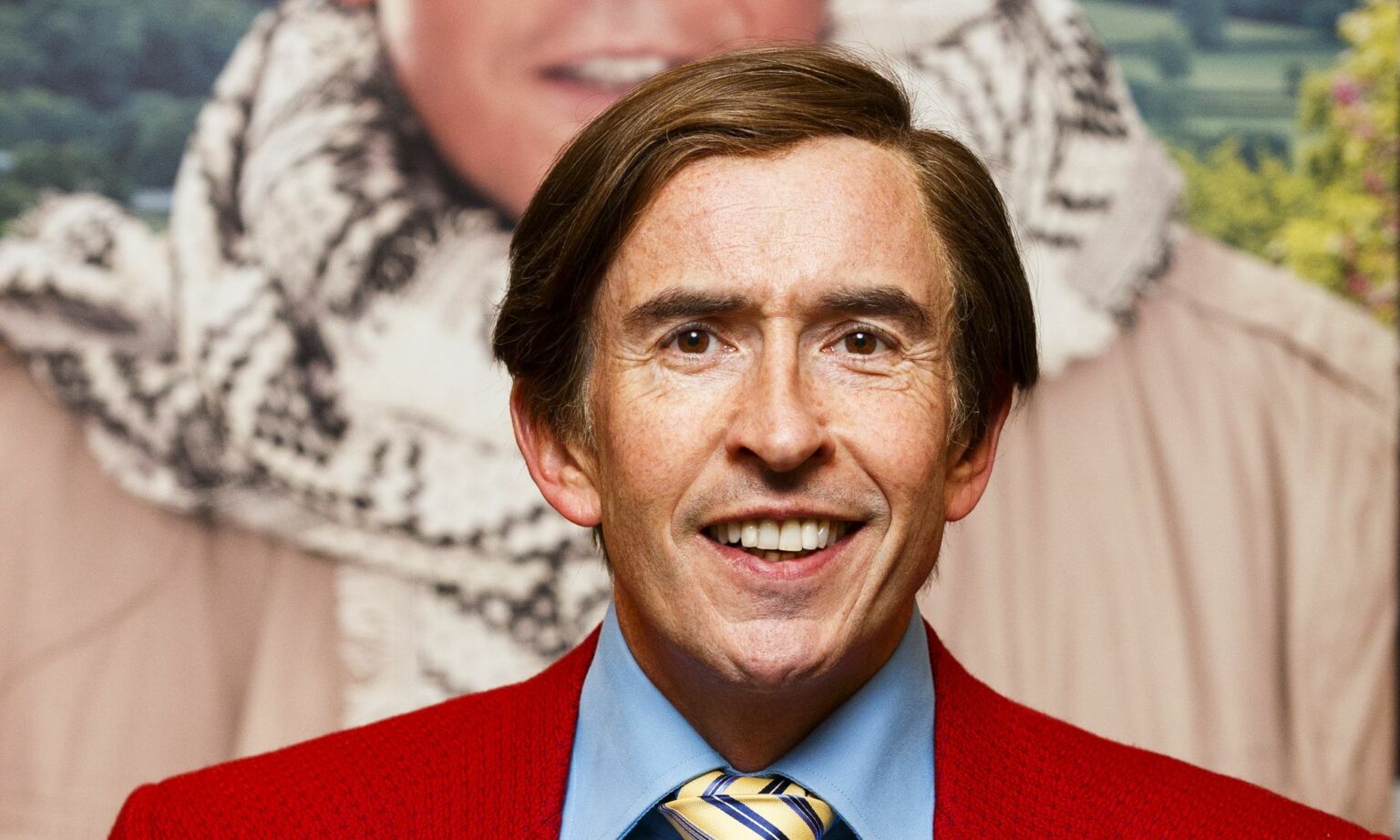
Coogan is a brilliant impressionist, with a very long list of credits. But there’s only one part that has ever truly taken off – Alan Partridge, the local-radio sports presenter and live-television disaster. The character has given me, probably you and millions of others much pleasure over the years.
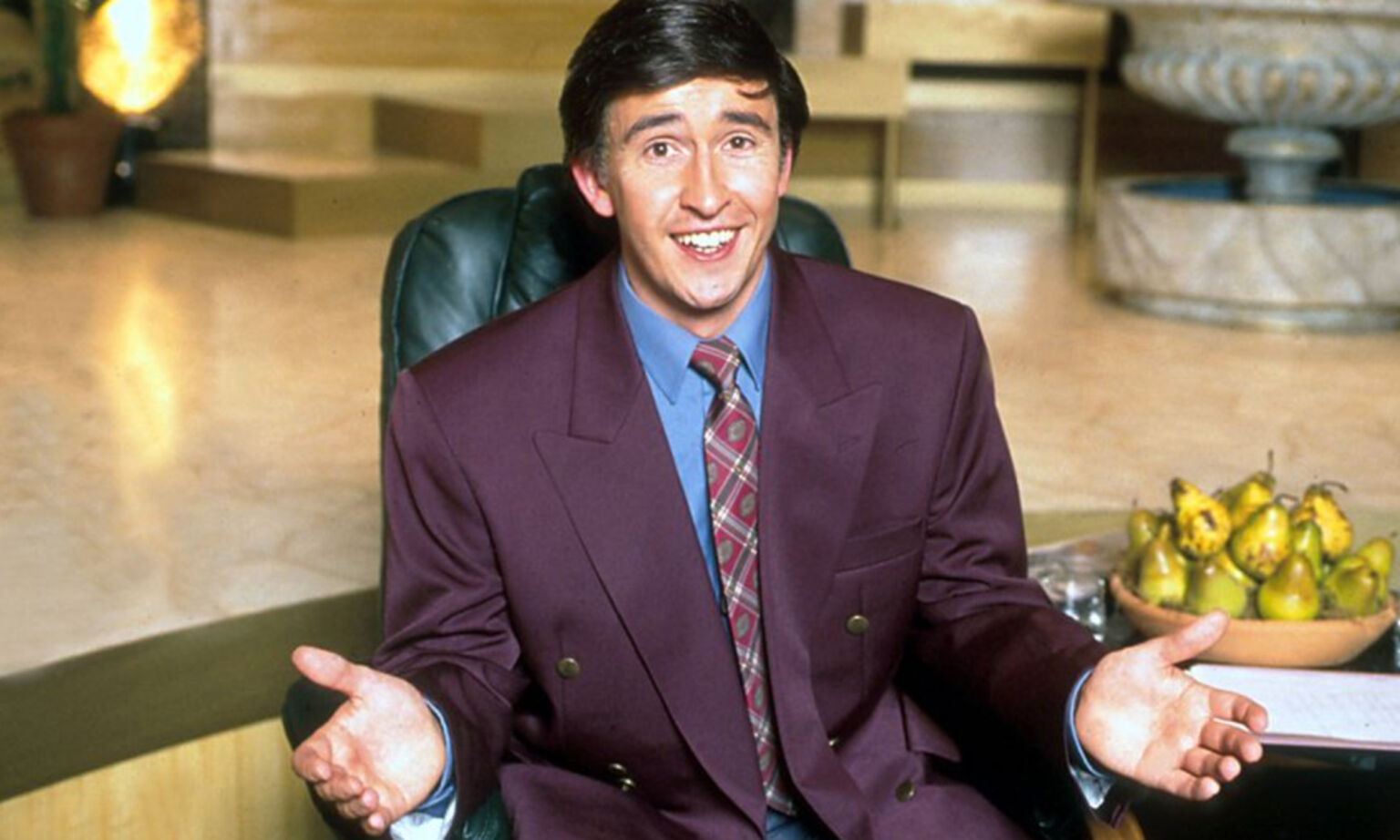
Partridge is the standard comic little-big man, retooled for the early 1990s. The gauche sports presenter trying to avoid dead air by saying anything that came into his mind was already a stereotype – David Coleman’s flights of fancy were legendary when both Coogan and I were lads. But Partridge crystallised the character, adding an instantly recognisable putrid panache. Like all the great comedy characters, you only have to spend 20 seconds in Alan Partridge’s company to understand him, love him and want to see much more of him.
Better still, Partridge reflected back into the real world. The surreal digressions of Richard Madeley became impossible to watch without immediately thinking of Alan. The absolutely extraordinary encounter last year between Madeley and new Reform UK chairman Dr David Bull – in which the latter reveals how he was strangled by the ‘psychic’ Derek Acorah, who was supposedly possessed by an evil spirit – was perfectly Partridgean. It had all the elements: low-rent celebrity, an odd political slant, a surreal twist, the sense of live TV slipping slightly out of control.
We hardly ever get such moments on TV nowadays. They used to happen all the time, back in the days of John Motson, John Stapleton and Robert Kilroy-Silk. Live TV always came with a sense of nerves, embarrassment, the feeling that something excruciating was going to happen, because it nearly always did. Neither the public at large nor celebrities quite knew how to behave on TV in those days, and the inevitable cack-handed wrangling of guests by presenters made your stomach do flips. I only have to think of Princess Margaret’s boyfriend, Roddy Llewellyn, as a guest on Multi-Coloured Swap Shop, or indeed any and every interview Russell Harty ever conducted, and I shudder convulsively.
Partridge first announced himself in 1992, on BBC Radio 4 spoof chat show, Knowing Me, Knowing You with Alan Partridge. This then transferred to TV, via The Day Today, as Knowing Me, Knowing You in 1994. The original joke of Alan Partridge was that he was normal, though awkward and out of place, slightly lost in the modern world. And that the guests on his chat show were all unremittingly self-regarding and awful, whether this was the lesbian host of a new gay show, a fashion designer, a student prankster, a drink-sodden peer of the realm, a child genius or a Cockney geezer gangster. Partridge himself was just slightly strange compared with that lot, given to peculiar conversational wanderings and clumsy, dated assumptions.
The Partridge world is the clapped-out glamour of the late 1970s viewed from the early 1990s, of Return of the Saint and Roger Moore, of people thinking Abba and Kate Bush are naff. Male emotional clumsiness was expressed through cars, sports and divorce.
When the chat show ended and Partridge moved into a motorway hotel in the 1997 sitcom, I’m Alan Partridge, his own awfulness started to increase. This was all very funny, but the act eventually became all about him. He became the oddity. This was perhaps a creative mistake, but still a very popular and lucrative one. I loved those series.
Partridge was semi-retired after the 2002 I’m Alan Partridge series, with Coogan trying to create other characters – odd misfires like Vegas lounge singer Tony Ferrino, or more interesting but still far lesser entries like Tommy Saxondale. There have been attempts at straight acting, including Philomena (2013), a remarkable film for its pairing of one of the greatest actors of our age, Judi Dench, with Steve Coogan, in which Dench convinces you that Coogan is good. (And I once saw Simon Callow on stage with Patsy Kensit and he was totally unable to work his magic on her, so such elevations are tougher than they look.) There was also the incredible crassness of his star turn in the 2023 Jimmy Savile drama, The Reckoning, one of modern TV’s cake-and-eat-it exploitation pics, the Grand Guignol dressed up as ‘giving voice to the victims’ – which isn’t fooling anybody.

But all roads lead back to Partridge. In the late 2010s, the character returned to our TV screens, reinvigorated by new writers. The most recent Partridge shows – This Time with Alan Partridge (2019) and Alan Partridge: How Are You? (2025) – have been good in themselves, but seemed strangely worn out. Ratings were very low, even in a low-rating world. The audiobooks – pure Partridge patter – do great numbers, however.
The character is, we should remember, now 35 years old, originating in 1990. For context, this is like one of the big comedy sensations of 1990 being a continuation of 1950s sitcom Life with the Lyons. Partridge is the satirising of a world that’s gone. A spoof of the late David Coleman, who retired from broadcasting over a quarter of a century ago, is really very odd in the 2020s.
Coogan is hardly alone in this. We are awash with middle-aged men of our time still satirising the middle-aged men of the 1980s. It’s all over Private Eye, Have I Got News For You, and so on. This has got so bad that it has led to the ludicrous situation where I am the one criticising other people for living too much in the past. (For context, I recently sent a Marmalade Atkins meme.)
It is all a bit strange, yes, but hardly objectionable. For that, we must leave Alan Partridge and turn to Steve Coogan.
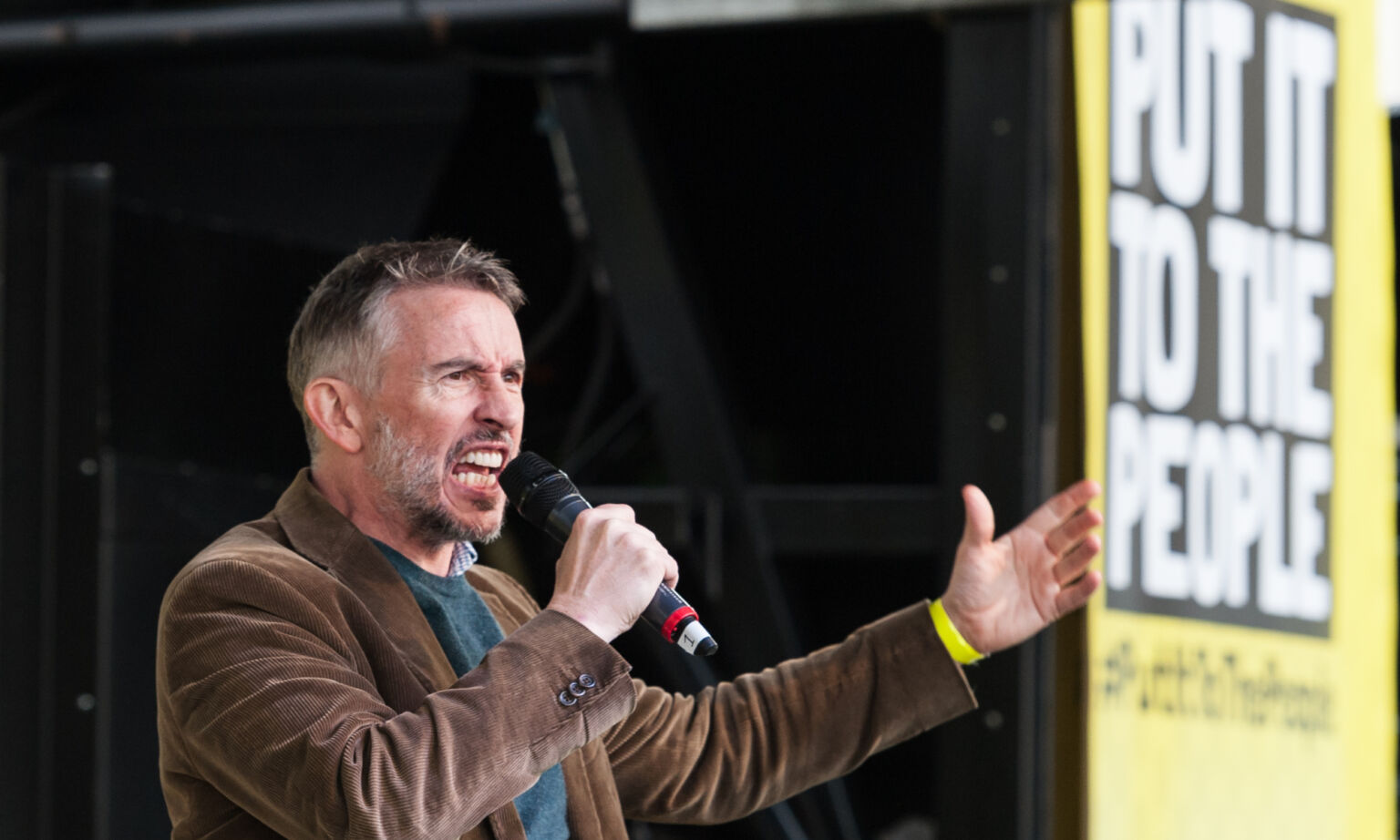
It is not Partridge but Coogan who likes to tell us where we’ve gone wrong, loudly and repeatedly. Just this week, he has been talking up his antipathy to the British flag, and his preference for an Irish identity over an English one. He thinks we care what he thinks and that what he thinks matters. He has supported Jeremy Corbyn’s Labour, and the Lib Dems and the Greens. Nobody could accuse him of being doctrinaire, at least. He signed the infamous open letter by ‘Artists For Palestine’, published in October 2023, that made no mention of Hamas’s atrocities on 7 October. He then backtracked to add that ‘it goes without saying that what Hamas did is evil beyond imagination’. (It did indeed go without saying by Artists For Palestine.) It is all the usual ‘Middle Class Hole’ hogwash.
And this is where the strange time warp surrounding Alan Partridge does become relevant, a bit. Britain is a country utterly transformed since the 1990s and Alan’s early heyday. There are at least three outrages every day. It feels like being a citizen of a country that’s losing a war.
But the Coogan class still thinks it’s 1995, and none of that has happened. Their discourse might as well be ‘What’s bloody Selwyn Gummer done now!?’. Or ‘Gillian Shepherd must go!’. If you do notice what is happening, they try to make you think you’ve imagined it.
Now, I bow to nobody in my disregard for the Conservative Party. But for Coogan, everything is the Tories’ fault, and so everybody else in politics is basically all right, really. Witness his hopping about between all the other parties – Labour, Lib Dems, Greens, old Uncle Tom Cobbleigh and all. As a diagnosis, this is rather like trying to cure a patient’s cancer by giving them thrombosis, heart failure and necrotising fasciitis.
It is very easy to say that Coogan is Partridgian. How could he not be? That doesn’t necessarily mean that it’s not true. And there is certainly an element of Partridge to him.
‘Am I as incompetent, narcissistic and socially inept as Alan?’, Coogan writes in his 2015 autobiography, Easily Distracted:
‘Sometimes. But aren’t we all? Isn’t that why we respond to him? Alan’s foibles aren’t unique; there is an unfiltered honesty coupled with ignorance. Some critics seem to think I might be wounded by the observation that I’m a bit like him, as if it’s something I’m not completely cognisant of.’
This sounds reasonable. And it’s true that he does occasionally say things that are gloriously Alan – ‘By being profoundly uncool, I ended up being the coolest person in the room’, for example, also in the memoir. But actually, the comparison between the two is inaccurate. Steve is far worse than Alan. Partridge is harmless and strangely loveable. We are often on his side. Coogan is frequently repellent.
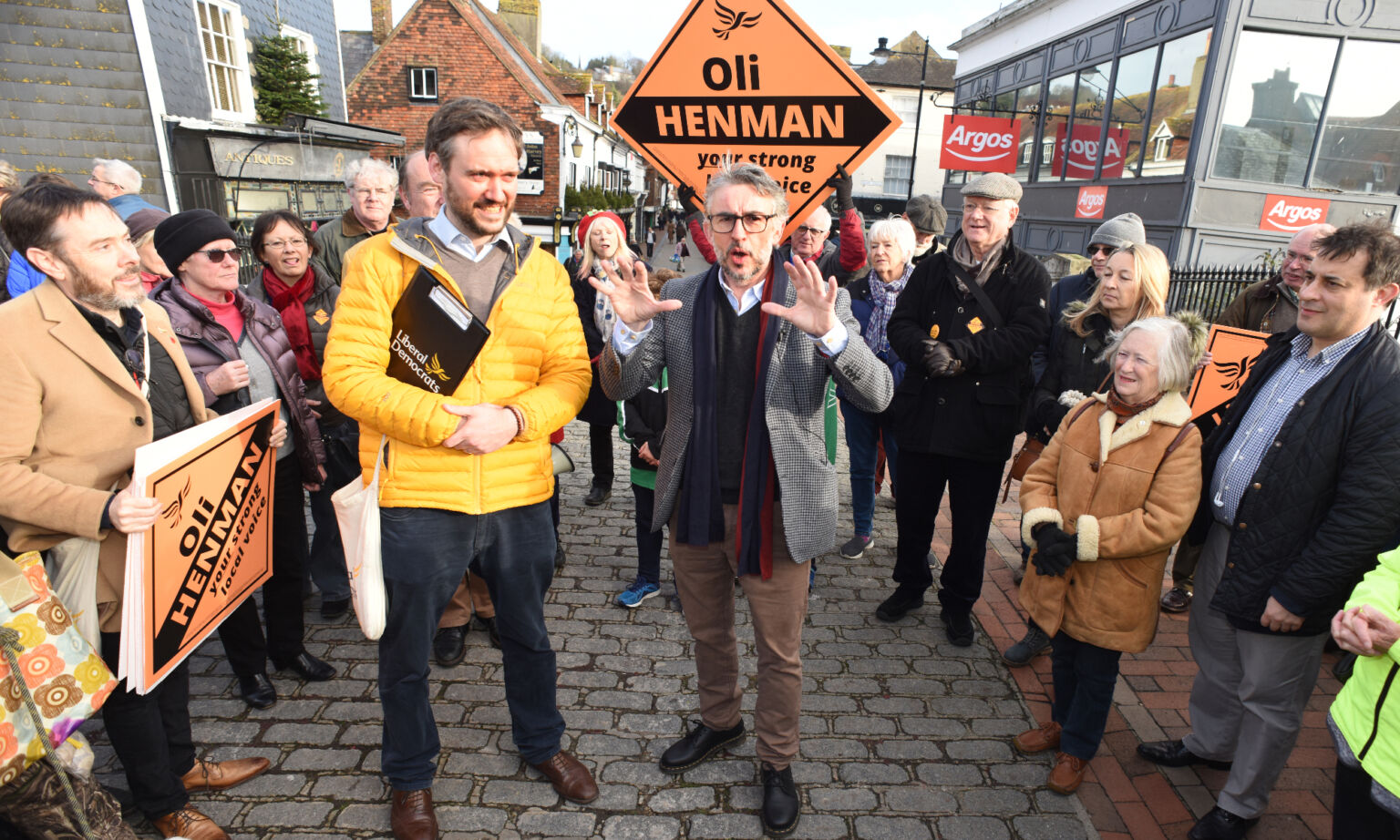
Hence, we had him telling Cathy Newman of Channel 4 News in 2017 that ‘Alan Partridge is ill-informed and ignorant, therefore he is a conservative and a Brexiteer’, suggesting that his understanding of the character can be as shaky as his understanding of the world. ‘Having a fool praise something is a far more powerful indictment than just criticising it’, he went on.
Hang on. Coogan thinks he is in the business of issuing ‘powerful indictments’ about anything? This is a person who occupies roughly the same cultural position today as Dick Emery or the Two Ronnies did when he was a boy. We were not electing decrees of intent from them, and indeed they were not proffered.
In a 2019 interview, when questioned about his constantly shifting political stances while out on the stump for the Lib Dems in Lewes (they lost), he answered, ‘Well, I could say nothing, but the fact is, if you make a difference or you can say anything that will help influence the election, I think you’re honour bound to do that’.
This is hilarious, yes, but in a totally different way to Partridge. ‘Honour bound’? To whom, or to what? And there is the giveaway that he thinks he ‘makes a difference’ and that he can ‘influence the election’. These are delusions of grandeur that make Alan Partridge seem a model of self-knowledge. Does he really believe that people will be swayed by the man who does Alan Partridge, in any way?
Back to 2017, when Coogan said: ‘There are still broadcasters with “Alan-like attitudes” around. We thought we had thoroughly debunked that.’ Who is this ‘we’? Did those 1990s lads – Iannucci, Chris Morris, David Schneider, etc – really credit themselves with that? Did they assume that because they made jokes about the Tories on the TV that people would stop being conservatives?
He goes on, sadly, ‘It just shows how little influence you actually have on the national culture’. Wait a second. It’s that I word again. You thought you had influence? That your delightful skits, fun as they were, were world-changing?
It’s funny to reflect, in a way, about the ‘culture’ these supercilious comedians thought they needed to ‘debunk’. From today’s vantage point, Britain’s big problems of 1995 look pretty appealing. This was the country just pre-Blair, under the cruel heel of the unforgiving John Major. I’d happily swap today’s shitshow for Lady Di on Panorama and Eric Cantona’s kung-fu kick.
Coogan is far beyond Partridge. Talking to the Radio Times, he said that his creation, whom he described as an ‘albatross around my neck’, would dislike him if they were to meet in person:
‘I don’t think Alan would like me… If we met, Alan would say to me, “Oh, stop being provocative. Please say funny things and just leave it at that”.’
He genuinely thinks he is provocative – when he is saying exactly what almost every other person in showbiz says. This is not provocation, unless it is provocation performed in the way a wasp provokes – utterly predictably, irritatingly and like every other wasp. If a wasp hung back from the jam sandwiches at a picnic, if it said, ‘Frankly, I can take or leave those cupcakes’, that would be provoking, or at least a novelty.
But Coogan has nothing of interest to say, and proclaims it at the top of his voice. In comparison, Alan Partridge is a lovely, lovely man.
Gareth Roberts is a screenwriter, author and novelist, best known for his work on Doctor Who. The above is an edited extract from Gareth’s new book, Middle Class Holes: A Guide to the Worst Semi-Posh People in Britain Today.
You’ve hit your monthly free article limit.
Support spiked and get unlimited access.
Support spiked and get unlimited access
spiked is funded by readers like you. Only 0.1% of regular readers currently support us. If just 1% did, we could grow our team and step up the fight for free speech and democracy.
Become a spiked supporter and enjoy unlimited, ad-free access, bonus content and exclusive events – while helping to keep independent journalism alive.
Monthly support makes the biggest difference. Thank you.


Comments
Want to join the conversation?
Only spiked supporters and patrons, who donate regularly to us, can comment on our articles.