Starmer, Carney and the twilight of the globalists
Greenland, Chagos and the New World Disorder have exposed the weakness of Western elites.
Want unlimited, ad-free access? Become a spiked supporter.
‘The strong do what they can and the weak suffer what they must.’ Opinion writers have once again been dusting off Thucydides’ ancient dictum, in a desperate attempt to understand the new world another tumultuous week in international affairs has left us in… and to find a vaguely intelligent-sounding opener to a column. A crime – I guess – of which I am also now guilty.
Donald Trump’s apparent climbdown on Greenland would suggest we are yet to arrive in the Hobbesian hellscape the president’s more excitable critics had been predicting, in which the power-mad Donald was about to take the coveted Arctic territory from Denmark by force, even if it meant driving an aircraft carrier through NATO. Apparently, some vague ‘framework’ for a greater American presence on the island has been agreed, aimed at keeping America defended and China out.
No one seems to know what this framework actually looks like, or what other thrills and spills we are soon to endure amid this new era of Great Power rivalry. But the Greenland episode has – at the very least – exposed the lethal mixture of weakness, confusion and unseriousness afflicting the technocratic ruling class.
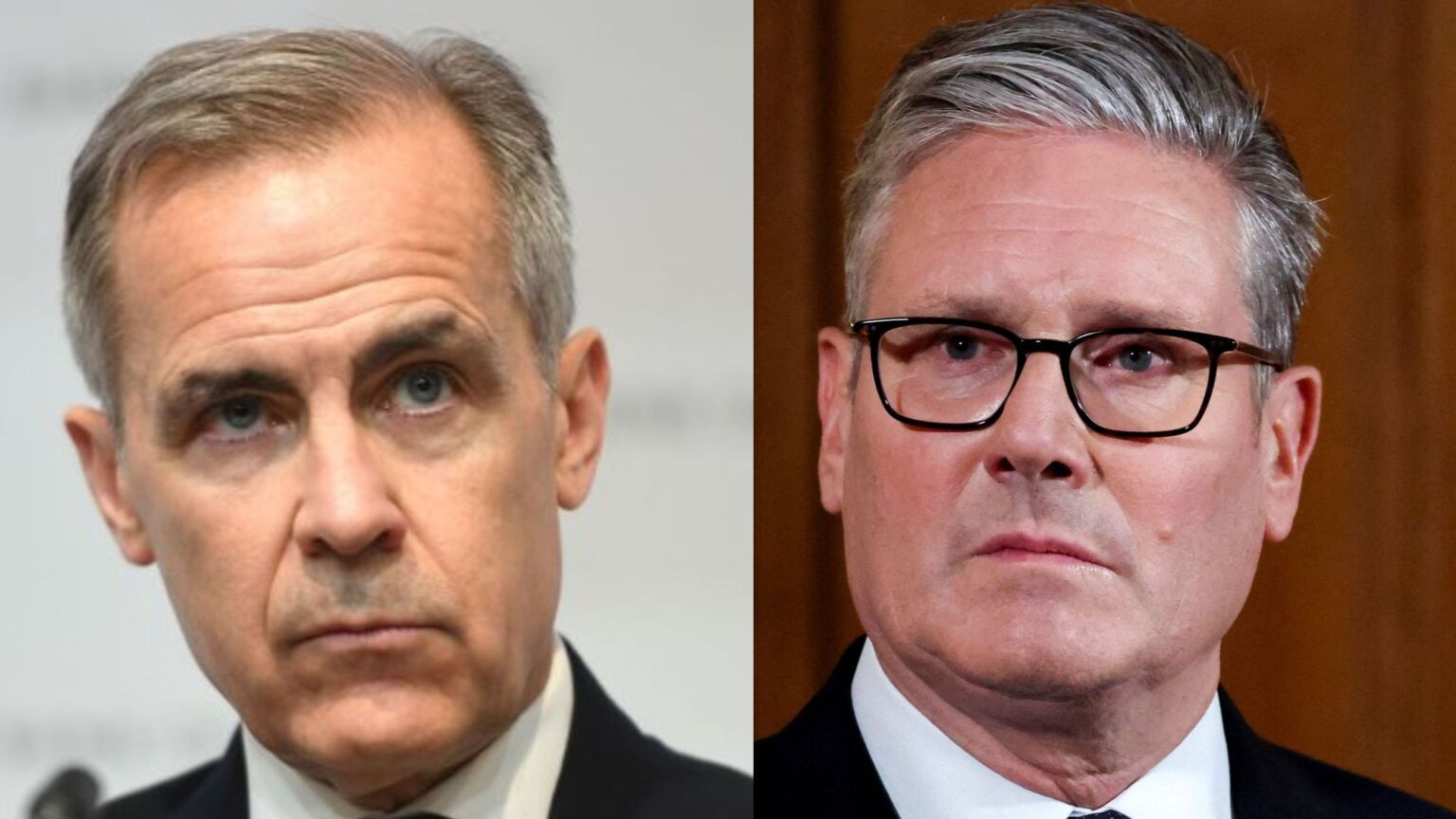
‘Canadian prime minister gives landmark speech’ is rarely the stuff of international headlines. But Mark Carney achieved precisely this at Davos this week, leaving the World Economic Forum (WEF) in raptures and Justin Trudeau quietly sobbing into Katy Perry’s handbag. Carney declared the US-led rules-based international order dead and called on ‘like-minded’ middle powers to band together to defend their interests.
The speech wasn’t without its insights – which was itself striking, coming as it did from a globalist functionary whose caste rarely musters any. Carney called the old order a ‘fiction’, noting that large powers have always broken the rules on which it was supposedly based. While mourning the ‘public goods’ once secured by American hegemony, from open shipping lanes to US-backed collective security, he argued it has left smaller states economically and militarily weak – and thus even more exposed to the whims of Great Powers.
Unlike previous WEFs in the Trump era, where the globalist gabfest became a theatre of resistance, Carney’s speech was decidedly more in sadness than in anger, calling on his fellow leaders to ‘stop pretending, to name reality, to build our strength at home and to act together’. This Liberal mugged by reality has recently loosened Canada’s Net Zero rules and embraced the fossil-fuel industry to counter Trump’s trade hostilities.
It has been fairly amusing to see the one-time chief of the Bank of England and United Nations climate envoy lauded for tacitly accepting what the populists have been saying for yonks: that national independence matters, globalist institutions aren’t all they are cracked up to be, and climate extremism is the road to ruin.
Even so, the speech’s tributes to ‘sustainability’ and the crisis-riddled European Union would suggest this conversion is – at best – partial. Meanwhile, Carney has been glad-handing with Xi Jinping, agreeing a trade deal following years of hostility between Canada and China; turning from the old, erratic superpower to the new, totalitarian one to offset the impact of Trump’s tariffs. Carney is also ‘doubling’ defence spending, but from the pitifully low base of 1.4 per cent of GDP in 2024.
Canada eventually decided against sending any troops to Greenland last week, as part of a Danish-led effort among NATO allies to reassure Trump that Greenland was secure, even without an American hostile takeover. More company away day than military exercise (Britain sent one officer), it served as a neat metaphor for how militarily threadbare many NATO powers have become, having long ago outsourced defence to the Americans.
We’ve heard it time and again in recent years – technocratic leaders declaring Everything Has Changed, before carrying on largely as they did before. The financial crisis, the migration crisis, Brexit, Trump, Covid and Ukraine may have exposed the shakiness of the old ways, yet they can’t help but cling on to them. Still, Carney looked positively statesmanlike this week, in contrast to our own wibbling Keir Starmer, who is incapable of giving a memorable speech, let alone articulating a coherent vision of international affairs.
The Chagos Islands debacle – rearing its head again a few days ago, thanks to another unwelcome intervention from the White House – is a near-constant reminder of Starmer’s geopolitical cluelessness. The former human-rights barrister’s fealty to international law led him to hand over this prime piece of Indian Ocean real estate, home to a UK-US military base, and pay to lease it back from Mauritius. All because of a non-binding (and legally questionable) opinion issued by the International Court of Justice, and all over the heads of the Chagossian people themselves, who harbour a well-earned distrust of the Mauritian government.
Isn’t this a betrayal of the Chagossians? Is this deal in Britain’s interest? Is it wise to cede this territory to a nation whose moral and geographical claim to the archipelago has always been tenuous – and a nation that is increasingly close to China to boot? No, no we have to do it – lest Lord Hermer get into one of his huffs. Just as NATO has relieved many Western powers of the burden of defending themselves, so ‘international law’ has become a substitute for having to think at all. (That the Chagos deal has now been put on ice, due to claims it may break international law, is almost too delicious.)
We are in a much more dangerous world, but not because an unpredictable reality-TV star has stormed the old imperial centre. American power has been on the wane for decades, fuelled by economic decline and feckless foreign interventionism. All the while, China has been on the rise. The era of unchallenged US dominance is gone, and with it the luxury of Western powers to ignore their industrial, military and indeed social decay – borne of greenism, mass-migration multiculturalism and a delusion that conflict was a thing of the past. All this has left nations weak, divided, unable to defend themselves and unclear what it is they might be defending.
The holiday from history is well and truly over. But too many remain, mentally, on the sun lounger. We need politicians with the substance and vision to navigate this New World Disorder; to rediscover the national interest after decades of braindeadening supranationalism; and to remember they are ultimately answerable to the people, not distant technocrats or international courts. Somehow, I don’t think the Canadian central banker or the British human-rights lawyer are up to this task.
Tom Slater is editor of spiked. Follow him on X: @Tom_Slater_.
You’ve hit your monthly free article limit.
Support spiked and get unlimited access.
Support spiked and get unlimited access
spiked is funded by readers like you. Only 0.1% of regular readers currently support us. If just 1% did, we could grow our team and step up the fight for free speech and democracy.
Become a spiked supporter and enjoy unlimited, ad-free access, bonus content and exclusive events – while helping to keep independent journalism alive.
Monthly support makes the biggest difference. Thank you.
Comments
Want to join the conversation?
Only spiked supporters and patrons, who donate regularly to us, can comment on our articles.