America has thrown the Kurds to the Syrian wolves
The West’s most loyal Middle Eastern allies have been betrayed once again.
Want unlimited, ad-free access? Become a spiked supporter.
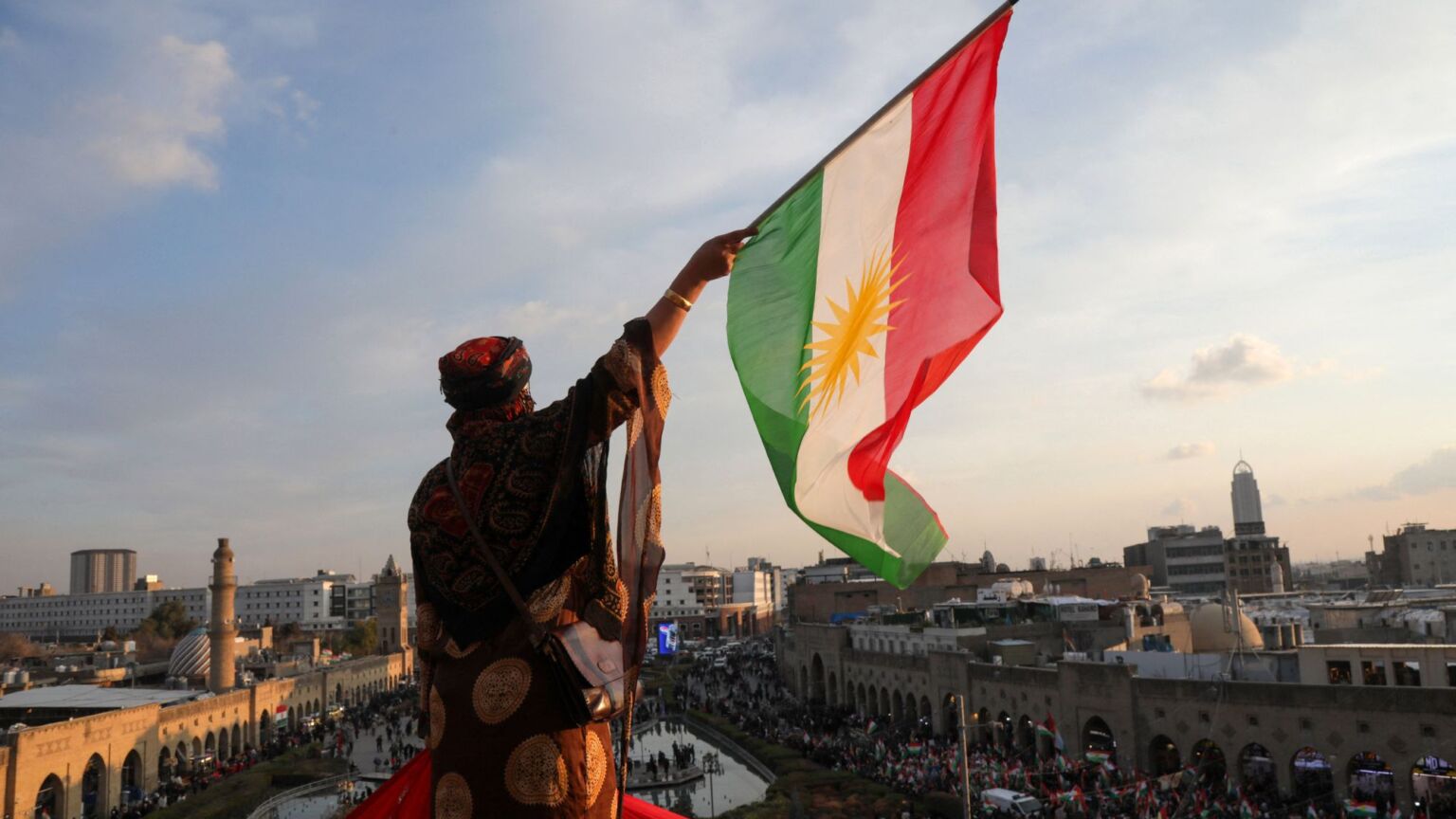
Not for the first time, the West has abandoned the Kurds. In recent days, the Syrian army has overwhelmed Kurdish forces in north-eastern Syria. The Democratic Autonomous Administration of North and East Syria, sometimes known as Rojava, is now effectively under the control of Syria’s transitional government, led by Ahmed al-Sharaa. The Kurds’ brief taste of semi-independence is over. America and its Western allies, so reliant on Kurdish forces in the war against Islamic State, have watched on with indifference.
Already, the rhetoric from Damascus is disturbing, and appears to be a calculated move to justify dispossession. Denying people’s roots, after all, is the easiest way to deny their rights to statehood. There is ‘no such thing as a Kurdish issue in Syria’, Ahmad Alhamile, a Syrian government insider, said recently. He claimed that Kurds only arrived ‘relatively recently’, fleeing wars in Iraq and Turkey. In other words, the land that they have fought for and recently governed, does not belong to them.
When the Islamic State advanced across north-eastern Syria, it was Kurdish-led forces, now known as the Syrian Democratic Forces (SDF), that took on the burden of fighting. They pushed ISIS back, guarded the prisons full of ISIS combatants, and established a semi-autonomous administration that, despite its flaws, kept north-eastern Syria relatively stable over the past years of wild upheaval.
Now that autonomy is being dismantled, with American acquiescence. Following the collapse of negotiations to bring the Rojava region under the control of Damascus, Sharaa’s forces launched an all-out assault on the Kurds, with Turkish support. After days of fighting and rapid advances by the Syrian government, Damascus and the SDF have signed an ‘integration’ deal. The terms are a significant blow for the Kurds. SDF forces must be incorporated into Syria’s defence and interior ministries as ‘individuals’, not as cohesive Kurdish units, explicitly breaking their command structure. It also transfers control of border crossings, and the prisons and camps holding ISIS fighters and their families, to the Syrian government
The Syrian government will also now get their hands on the oil and gas fields of north-east Syria. Hand over oil, wheat regions and hydroelectric dams, and the Kurds lose the revenue that sustains their self-rule – as well as the leverage that had previously restrained Damascus.
Washington’s message to the Kurds has been brutal. The US ambassador to Turkey, Tom Barrack, says the SDF’s ‘original purpose’ has ‘largely expired’ and that the US has no long-term interest in remaining in Syria. Despite admitting that the Kurds were ‘the most effective ground partner in defeating ISIS’s territorial caliphate by 2019’, Barrack stressed that was only because ‘there was no central Syrian state to partner with’. Reuters also reports that behind-closed-doors meetings earlier this month – to which America appears to have been a party to – helped pave the way for Sharaa’s offensive. Washington has thrown the Kurds to the wolves.
The Kurds are familiar with this pattern. They have been betrayed by the West many times before. First, by allowing Turkey to breach the 1920 Treaty of Sèvres, which created Kurdistan, then by looking the other way when Saddam Hussein carried out the ethnic cleansing of Iraqi Kurds in the 1980s. Hezbollah’s Hassan Nasrallah once warned them not to ‘bet on the Americans’ because Washington would ‘sell you out’ when it suited. He was right.
Turkey, meanwhile, is the obvious winner. Sharaa has emerged as a close ally of Ankara, whose overriding goal has always been to crush Kurdish autonomy on its border.
America’s indifference to the fate of Syria’s Kurds is not just a betrayal – it is also a profound strategic mistake. The threat of ISIS has not vanished. If anything, with jihadists firmly in control in Damascus, it has increased.
As Kurdish control and ability to guard the ISIS prisoner camps collapses, the US military has begun transferring ISIS detainees from Syria to Iraq, starting with 150 men and with warnings that up to 7,000 could be moved. There are already problems. Sources report that approximately 1,500 Islamic State detainees escaped from Shaddadi prison – abandoned by Kurdish forces in the teeth of the Syrian army. US officials have provided much lower estimates of around 200, with many reportedly recaptured. The precise number is less important than the fact that no one can guarantee this will not happen again on a larger scale.
Then there is al-Hol, which Syrian government forces also took control of this week. It holds around 40,000 people of various nationalities, mostly relatives and suspected affiliates of ISIS fighters, in conditions long described as a breeding ground for extremism.
All of this is unfolding under a Syrian president whose past should worry the West. Sharaa is a former jihadist commander who once led al-Qaeda’s Syrian affiliate, the al-Nusra Front.

Damascus refers to decrees about Kurdish rights and recognition, including steps towards citizenship and cultural protections, but paper promises are worthless if Kurdish self-rule is crushed. Pro-government voices are already spreading the claim that the Kurds are merely recent ‘arrivals’ with no distinct claims to nationhood.
This is the strategic cost of Trump’s approach. By prioritising short-term gains over long-term moral principles, Washington continues to reinforce the same lesson: you can be useful, brave and pro-Western, yet still be discarded as soon as you become inconvenient. This does not bring stability to the region. Instead, it fuels radicalisation. From the Kurds to the Ukrainians to European members of NATO, the message is the same: the US is not a reliable ally. This has tremendous security implications for us all.
If the West wants to stop the next ISIS wave, it needs to stop treating the Kurds as expendable. That means enforceable guarantees for Kurdish-majority areas, and a recognition of the right to statehood they deserve.
Abandoning the people who fought jihadism on the ground is not ‘stability’. What we are seeing from the US in its relations with Syrian jihadists is a down payment on the next catastrophe.
Andrew Fox is a former British Army officer and an associate fellow at the Henry Jackson Society, specialising in defence and the Middle East.
You’ve hit your monthly free article limit.
Support spiked and get unlimited access.
Support spiked and get unlimited access
spiked is funded by readers like you. Only 0.1% of regular readers currently support us. If just 1% did, we could grow our team and step up the fight for free speech and democracy.
Become a spiked supporter and enjoy unlimited, ad-free access, bonus content and exclusive events – while helping to keep independent journalism alive.
Monthly support makes the biggest difference. Thank you.




Comments
Want to join the conversation?
Only spiked supporters and patrons, who donate regularly to us, can comment on our articles.