Why should a modern country like Britain tolerate water shortages?
Profiteers, regulators and green dogma have allowed vital water infrastructure to decay.
Want unlimited, ad-free access? Become a spiked supporter.
UK prime minister Keir Starmer and Tory leader Kemi Badenoch have both recently rejected the idea that ‘Britain is broken’. Customers of South East Water (SEW) might beg to differ.
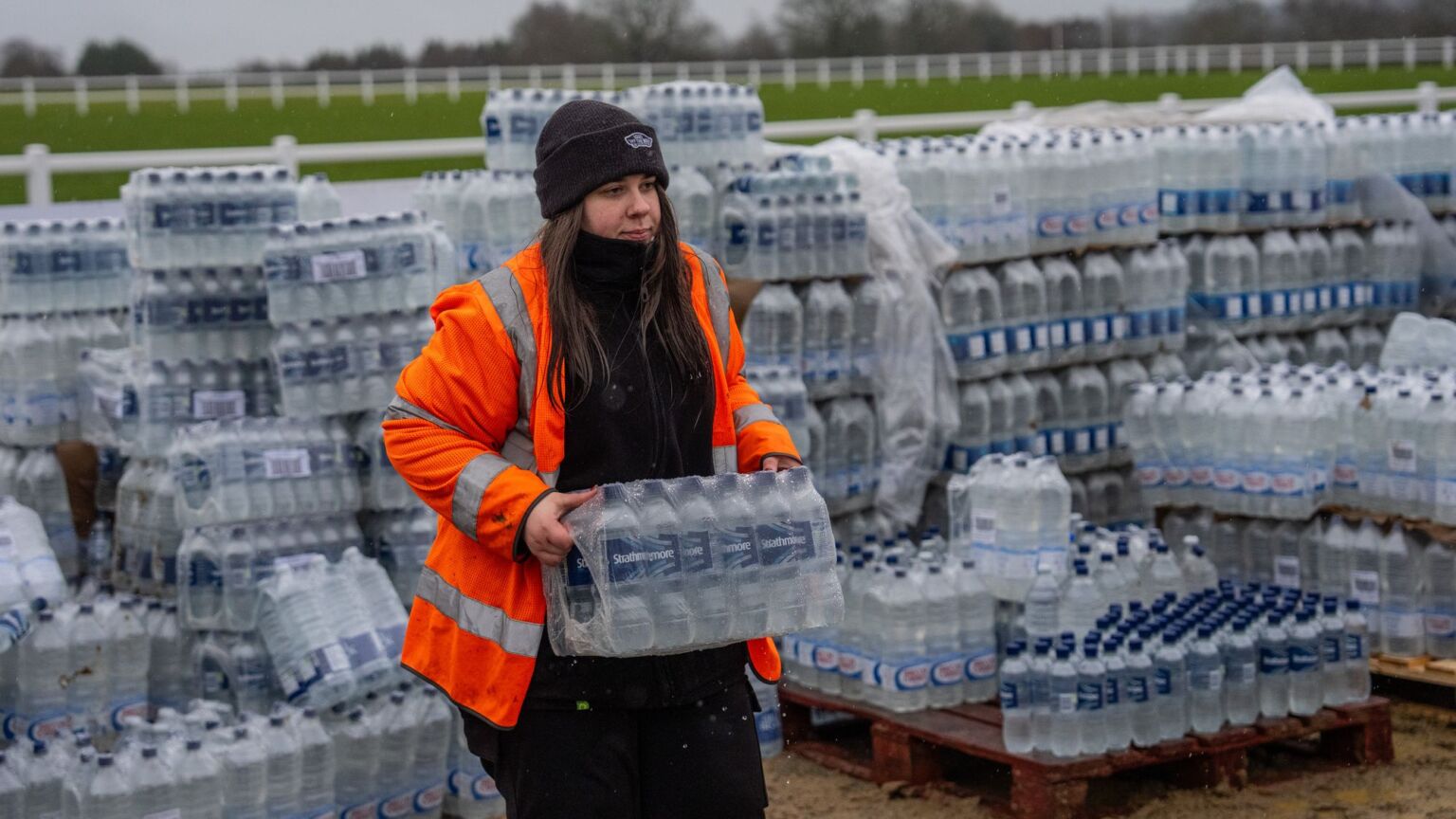
For several weeks now, many people living in Kent and Sussex have been deprived of something as fundamental to daily life as running water. In November and December, there were snarl-ups at the SEW-run water-treatment works in Pembury, which serves Tunbridge Wells and surrounding areas in Kent. This led to 24,000 customers of SEW being without water for a fortnight. This affected thousands of homes, two hospitals, 15 schools, 19 care homes, 29 nurseries and a kidney-treatment centre.
Then, in January, SEW ran into further problems, this time in Sussex as well as Kent. Some 30,000 properties across Tunbridge Wells, East Grinstead, Maidstone, Whitstable, Canterbury and nearby towns either had limited water supply or no supply at all.
Refusing to shoulder any responsibility, SEW has blamed cold weather and Storm Goretti for the waterless plight of tens of thousands of customers. SEW CEO David Hinton, who is still in line for a £400,000 bonus this year, has been particularly unapologetic. Facing parliament’s Environment, Food and Rural Affairs Committee earlier this month, Hinton even gave himself eight out of 10 for his handling of the Tunbridge Wells incident.
Unsurprisingly, many commentators and politicians have blamed the myriad failures of British water-supply companies, like SEW, on boardroom and shareholder greed, and an undeniable lack of capital investment. But there is another key factor behind their failure which is not getting enough attention.
In 2011, the Department for Environment, Food and Rural Affairs (DEFRA) directed SEW and others to report on how they planned to respond to the likely impacts of climate change. In its 2024 report, ‘How South East Water is adapting to a changing climate’, SEW drew attention to prospective climate-driven heatwaves and the resulting higher demand for water. Its solution? To hector consumers into consuming less water. There was no real talk of infrastructural investment or of improving supply. Instead, SEW’s plan was to target customers with ‘behaviour-change campaigns’.
In other words, SEW has long been focussing on lowering household demand for water, rather than improving supply. And it’s been doing so at the behest of the British state. For SEW as for DEFRA, the infrastructure is not the problem – it is households’ ‘waste’ of water and ‘overconsumption’. This is then treated as a rationale for not investing in our water-supply systems.

There are other villains of the piece beyond SEW and even DEFRA. Among the many regulatory agencies letting SEW get away with its terrible service are the Water Services Regulation Authority (Ofwat) and the Environment Agency.
Ofwat, whose headcount in 2022-23 was a handsome 250 people, has become notorious for sucking up to water companies. So supine was Ofwat CEO David Black during an interview on BBC Radio 4 back in 2022, that the Financial Times argued that he ‘sounded like a lobbyist for the water industry’. More recently the Telegraph has opined that, ‘in a crowded field, Ofwat must be a contender for the most ineffective industry policeman of all time’.
The Environment Agency has also provided a handy excuse for failing water companies. As SEW noted in 2024, the south-east of England is regarded as ‘an area of serious water stress’ by the Environment Agency, ‘owing to the region’s warm and dry climate, as well as its growing population’. In other words, a powerful quango, like the Environment Agency, is effectively exonerating SEW from any responsibility for its poor service and infrastructure, by blaming the soil and an expanding population.
As far as the water companies are concerned, they are not the problem. The people who need water are. They would rather encourage us to ‘improve’, than to improve their service.
James Woudhuysen is visiting professor of forecasting and innovation at London South Bank University. He tweets at @jameswoudhuysen.

You’ve hit your monthly free article limit.
Support spiked and get unlimited access.
Support spiked and get unlimited access
spiked is funded by readers like you. Only 0.1% of regular readers currently support us. If just 1% did, we could grow our team and step up the fight for free speech and democracy.
Become a spiked supporter and enjoy unlimited, ad-free access, bonus content and exclusive events – while helping to keep independent journalism alive.
Monthly support makes the biggest difference. Thank you.






Comments
Want to join the conversation?
Only spiked supporters and patrons, who donate regularly to us, can comment on our articles.