Only parents should decide if their kids use social media
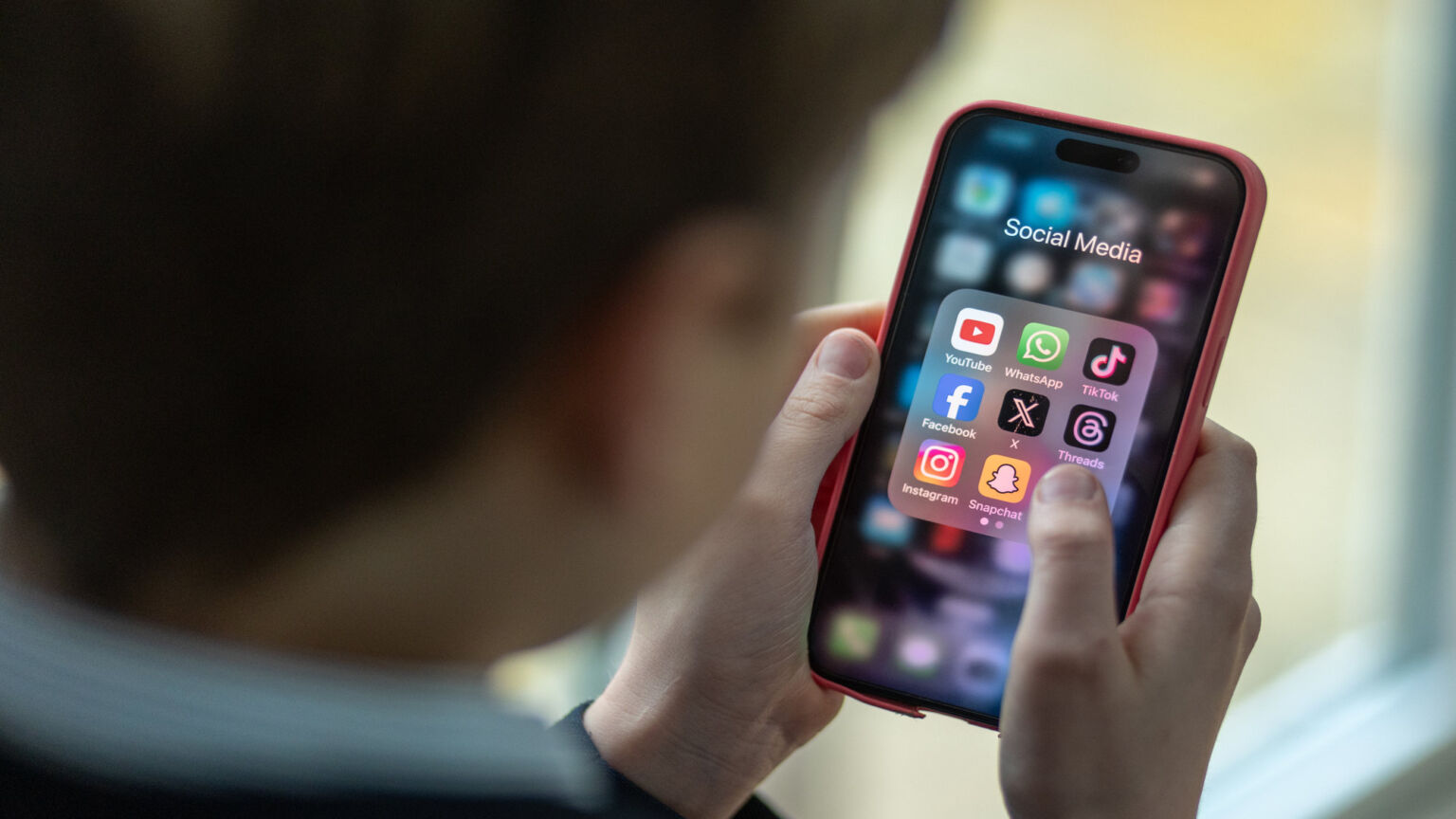
Why is the state so terrified about children’s social-media screentime?
Want unlimited, ad-free access? Become a spiked supporter.
After Australia banned under-16s from using social media last month, the UK government has proposed its own set of restrictions on young people’s social-media use. Keir Starmer’s Labour is considering giving Ofsted tougher guidance to check the use of phones and social media in schools. There could also be restrictions on so-called addictive features and a wider use of age checks, among other measures.
It’s not just Labour. Britain’s other political parties seem to be equally keen on clamping down on kids’ social-media use. Conservative Party leader Kemi Badenoch took to X at the weekend to claim that the Tories had the idea first, arguing that ‘we need to help parents raise healthy, happy children who go on to make good decisions about their lives’. The Liberal Democrats argue that kids should be allowed on WhatsApp groups, but not on ‘platforms that use addictive algorithmic feeds or host inappropriate content’. What everyone seems to agree on is that it’s a bad thing for kids to use social media, and that legislation is needed to, in the words of Badenoch, ‘help parents’.
Discussions about children’s online experiences and the dangers they might face are nothing new. But in recent months, officialdom seems to have become increasingly concerned about protecting children’s ‘wellbeing’, rather than protecting them from ‘harm’. So instead of concerns about children seeing extreme content or writing nasty things about each other, the current focus is on the amount of time kids spend on social media. Hence much of the detail of the proposed restrictions focusses on ‘infinite scrolling’ and ‘excessive use’.
This focus on the duration of kids’ social-media use is revealing. It shows the extent to which calls for a ban are rooted in a lack of confidence in parental authority – a lack of confidence, that is, in parents’ capacity to control their kids’ behaviour and limit the amount of time they spend on social media.
True enough, it might be tricky for some parents to navigate the online world, to block certain content or monitor which sites their kids are looking at. But keeping a handle on the amount of time children spend online doesn’t take a PhD in computer science. You simply take the phone out of your child’s hand. Much like regulating children’s sweets intake, controlling young people’s access to the online world ought to be seen as just the latest in a long line of parental responsibilities.
But that’s not how the Labour Party has come to see it. This shouldn’t be a surprise given Labour’s history of intervention into family life stretches back to the days of New Labour. Many of today’s policies, from supervised toothbrushing in primary schools to the NHS’s obsessions with kids eating sugar, reveal the influence the Blairite ‘politics of behaviour’ continues to have on today’s Labour government. The somewhat depressing difference is that today the pushback from parents seems to be waning.
There is no denying that in the 20 years since I was a teenager, young people’s access to the internet and social media has changed dramatically. This will continue to pose challenges to parents for whom the sanctity of home life, with its private rules and structures, is challenged by a strange second world on a little screen. But these challenges are not insurmountable. Inviting the state to play guardian when it comes to their kids’ online access undermines the relationship between parents and their children. Secure and safe childhoods are built on the foundation that the people with your best interests at heart are mum and dad, not Keir Starmer.
We need to dial down the hysteria about children’s social-media use. Most children are using socials simply to connect – to post pictures of their pets, talk gaming or even just to have a group chat. It seems rather bizarre that the same government campaigning to give 16-year-olds the vote thinks they’re barely capable of navigating social media.
It’s on parents now to step up, step in, and start taking primary responsibility for their children’s ‘wellbeing’ again. If they don’t, the state will never leave us alone.
Ella Whelan is the author of The Case For Women’s Freedom, the latest in the Academy of Ideas’ radical pamphleteering series, Letters on Liberty.
You’ve hit your monthly free article limit.
Support spiked and get unlimited access.
Support spiked and get unlimited access
spiked is funded by readers like you. Only 0.1% of regular readers currently support us. If just 1% did, we could grow our team and step up the fight for free speech and democracy.
Become a spiked supporter and enjoy unlimited, ad-free access, bonus content and exclusive events – while helping to keep independent journalism alive.
Monthly support makes the biggest difference. Thank you.



Comments
Want to join the conversation?
Only spiked supporters and patrons, who donate regularly to us, can comment on our articles.