The managed decline of Britain’s universities
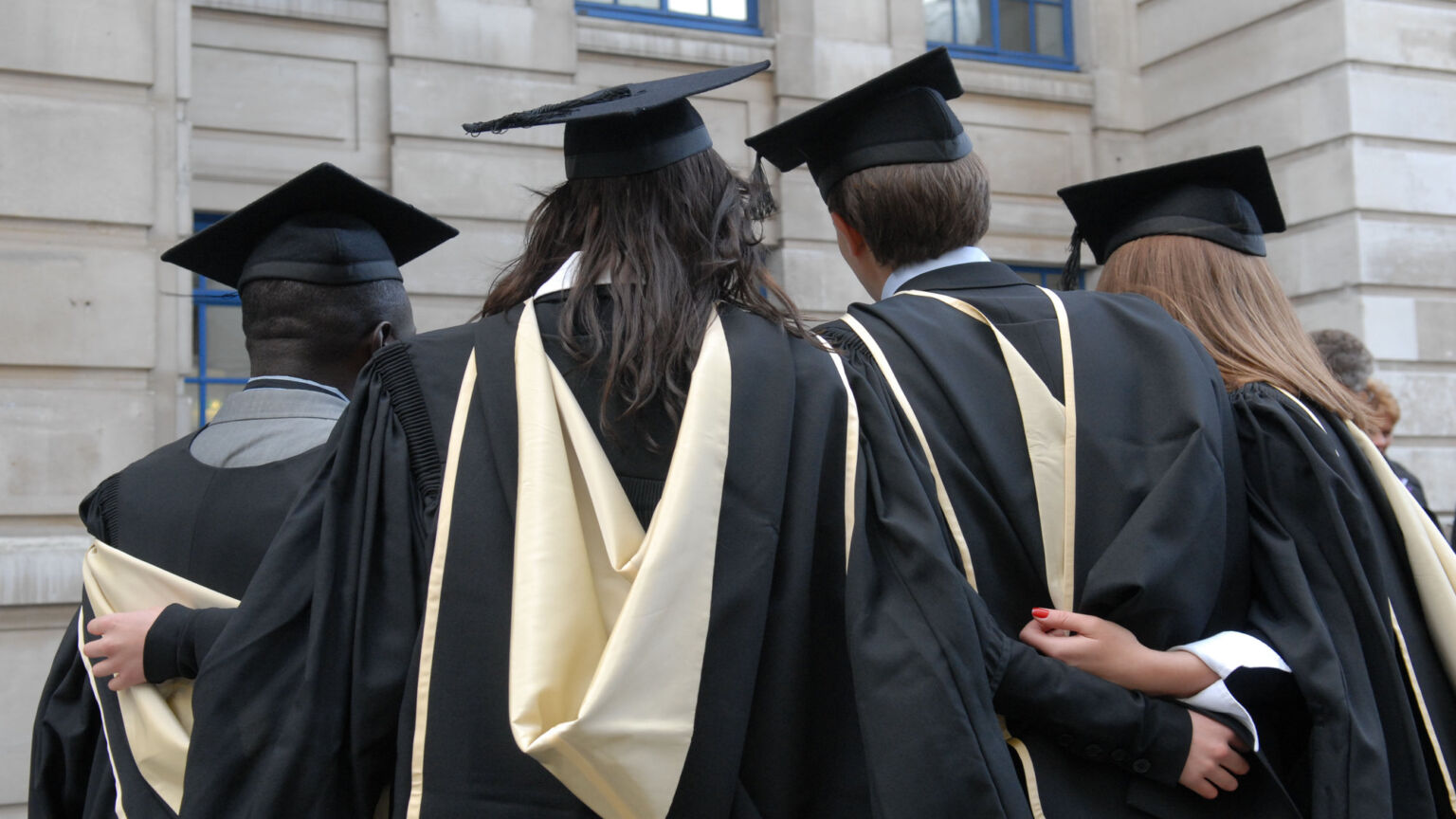
The education is subpar, the fees are exorbitant and the career gains are negligible. Our model is broken.
Want unlimited, ad-free access? Become a spiked supporter.
I have not always had an easy relationship with university. I entered after taking an access course as a mature student, and I was also a mother living on a council estate. I knew very little about university life, as I didn’t have any family or friends who had been. Walking into a Russell Group university was beyond anything I could have ever imagined when growing up.
Initially, I loved it: the lectures, the library and even the assessments. I learned to write properly, something I had always secretly wanted to do. I liked it so much that I didn’t want to leave, so I undertook a masters, then a PhD. I have now been teaching in higher education for over 20 years.
In this time, I have been exposed to the ugly side of the UK’s university sector. The system is extremely hierarchical and class-driven, offering unfair advantages to wealthier students. Elite universities remain filled with snobbery, demoralising working-class students rather than inspiring them.
Like so much of our country, our education system is crumbling. Further-education colleges have been underfunded for years and offer limited courses. For students in my own county, Nottinghamshire, BTEC (Business and Technology Education Council) courses are mainly limited to retail and logistics, which often lead to a warehouse job on a poor contract with low pay. This is why anyone wanting to better themselves – whether young or well into adulthood – looks to the university system for hope.
But they find none. Instead, they encounter a system that is dominated by superstar academics and wealthy overseas students. The real job of the university – to educate and inspire – has been forgotten.
Much of this damage has been done in the past 25 years. First under Labour and then the Conservatives, universities stopped being places of learning, and became instead another branch of the sterile corporate world. Student numbers increased, university marketing teams became more important than the students they were trying to attract, and vice-chancellors were paid eye-watering salaries. Towns became swamped with new buildings – characterless apartment blocks filled with students watching lectures in their bedrooms. Real education, and the inspiration that lecturers with specific knowledge can offer, has gradually disappeared. What those who run universities really care about is getting bums on seats.
If there is anything that represents the failure of modern universities, it is the practice of ‘clearing’, which allows students with poor A-levels to get into courses that have excess positions. Lecturers are pressured into filling courses, and threatened with losing their jobs if positions remain unfilled. The students are desperate to attend because, in truth, what else do you do now at 18 if not go to university? It’s not as though you can get a decent job in manufacturing. Mature students, hoping that a university education can help get them out of their mundane jobs, soon find out that they’re simply a statistic – another source of income.

The crisis at universities is financial as well as philosophical. At least four in 10 English universities are in debt. In 2024, this totalled more than £13 billion. Banks are currently looking to renegotiate the terms of their loans. The situation is so bad that skills minister Jacqui Smith has had to provide assurances that the government would step in if a university were to become insolvent.
Meanwhile, students are taking out enormous loans to cover their courses. Under the Conservative-Lib Dem coalition, universities were allowed to triple fees, charging up to £9,000 per year. The fee cap in England was raised again last year to £9,585. This is in addition to other loans most students take out to help with living costs – loans that will be paid back with interest on any income over £25,000, a fraction more than the minimum wage. So the loan is ultimately a tax. Last year, the total interest on student loans in England was more than £15 billion. Yet so dire are employment prospects that repayments were just five billion pounds.
This is a national scandal. Those who have gone to university in the hope of a better future are saddled with debts that can be as high as £100,000. It is another source of despair in a nation that seems to be forever depressed.
This is perhaps the strangest thing about the modern university: rather than working for the interests of the country, it is working against them. Universities are not providing the skills and education the economy needs. And what’s more, they are leaving students with debts that many will never be able to repay. This will be an inter-generational economic burden.
Those of us who work in universities are tired of the inequality that the system produces, and witnessing what once was a jewel in our nation’s crown become white elephants. Yet, if our universities are left to fail, they will take many of our provincial cities with them. It is an invidious trap: the university model is the problem, but it is one that thousands of people are now dependent on.
We can hardly be surprised that Britain seems to be so depressed and with many of our young emigrating. Our university system leaves them with a poor education and a massive debt, spitting them out into a job market offering little more than the minimum wage. Many British universities may claim to ‘lead the world’, but they rely on a model that is broken beyond repair.
Lisa McKenzie is a working-class academic.
You’ve hit your monthly free article limit.
Support spiked and get unlimited access.
Support spiked and get unlimited access
spiked is funded by readers like you. Only 0.1% of regular readers currently support us. If just 1% did, we could grow our team and step up the fight for free speech and democracy.
Become a spiked supporter and enjoy unlimited, ad-free access, bonus content and exclusive events – while helping to keep independent journalism alive.
Monthly support makes the biggest difference. Thank you.






Comments
Want to join the conversation?
Only spiked supporters and patrons, who donate regularly to us, can comment on our articles.