Approving China’s ‘mega embassy’ is a catastrophic folly
Keir Starmer has prioritised appeasing a foreign power over Britain’s national interests.
Want unlimited, ad-free access? Become a spiked supporter.
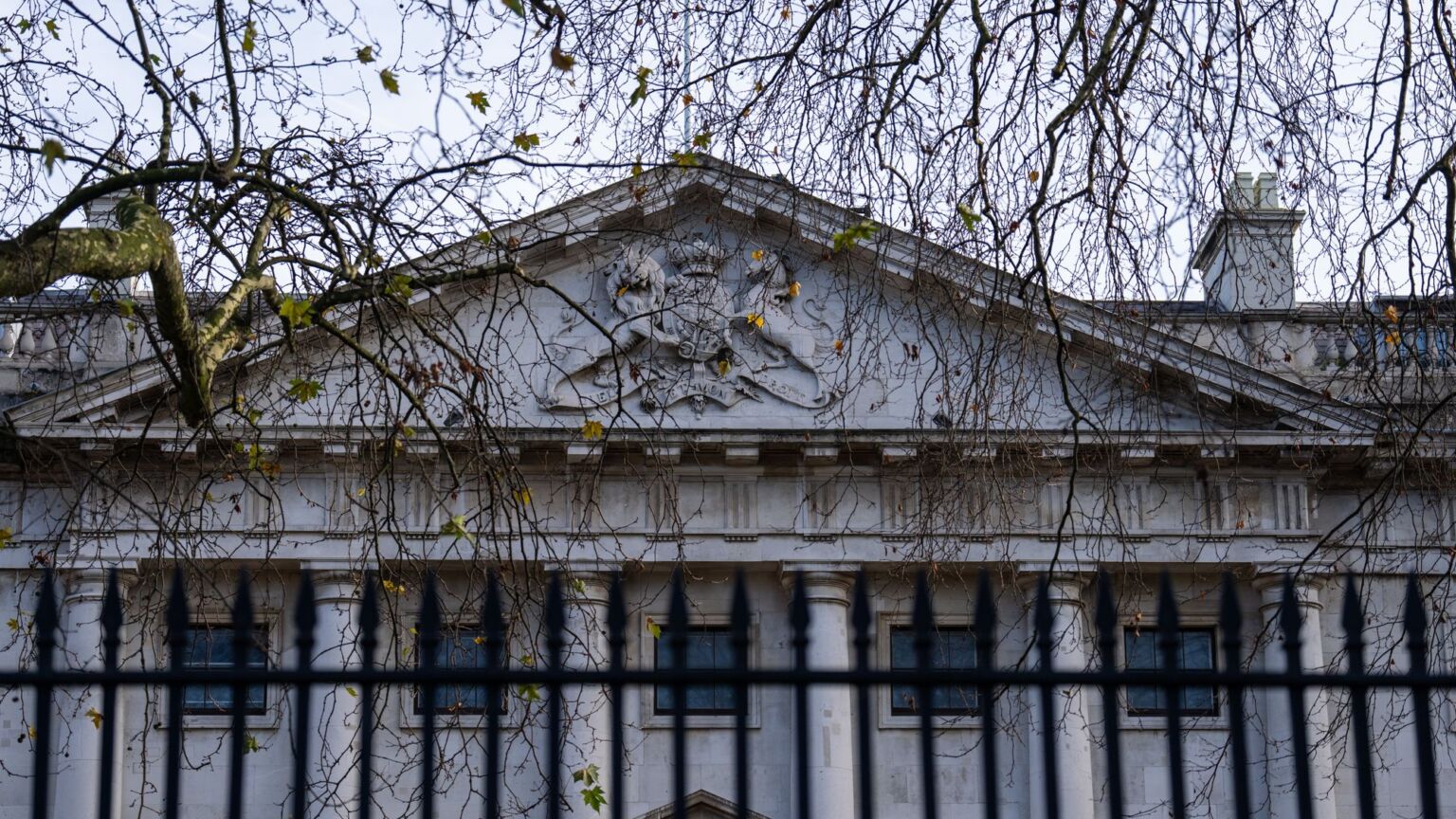
You do not have to be an MI6 intelligence officer to understand the risks posed by China’s planned ‘mega embassy’ in London. The Labour government has long been warned that the complex’s highly sensitive location and secretive design would make it an ideal hub for espionage. So why, then, did it come as no surprise when the embassy was formally approved earlier today? Has any government in our history ever been so cavalier about Britain’s national security or so craven to foreign powers?
The saga of the proposed Chinese embassy began in 2018. When China bought the Royal Mint in east London for £255million, few people thought the plans would ever be approved. Not only is the Mint a national landmark, a 200-year-old, heritage-listed building opposite the Tower of London. It is also next to the Wapping Telephone Exchange, which runs fibre-optic cables between London’s main financial centres, the City of London and Canary Wharf. The proposed mega-embassy includes a secret, 208-room bunker. Unredacted plans seen by the Telegraph show just how close some of these basement rooms would be to the communication cables, which would allow Beijing to tap into them with ease. Surely, no government would ignore such an obvious red flag?
Allies, including the US, Sweden and New Zealand, tried to warn the UK against approving the embassy, expressing fears about the potential for the cables being tapped. Even Labour backbenchers have warned that it could be used to intimidate Hong Kong and Chinese dissidents living in the UK (the CCP has form for using British consulates to rough up pro-democracy campaigners). In a letter to the Telegraph this week, retired figures from defence and the City said it would pose an intolerable economic and strategic risk to the UK. Financial data, as well as email and messaging traffic for millions of users, could be compromised. The general consensus has long been that approval would be unthinkable. Except, it seems, to Keir Starmer’s government.
It is possible that Starmer believes he has executed some great act of statesmanship. To the rest of the world, however, it looks more like he’s been bullied into this decision. China certainly expected him to be a soft touch, even before he came to power. When the embassy plans were first submitted, they were opposed by the Conservative government, Tower Hamlets Council, the Metropolitan Police and even London mayor Sadiq Khan. China then bided its time until Starmer’s General Election victory in 2024, before resubmitting precisely the same plans. This time successfully.
The approval has been timed just ahead of Starmer’s planned visit to China, which will reportedly happen later this month. Labour hopes this will help revive Sino-British relations, which became increasingly fractious under the Conservatives. Chancellor Rachel Reeves believes greater ties with China will be critical to securing the economic growth that has so far proved elusive. Yet there has undoubtedly been an element of coercion from the CCP, too. For instance, China refused to allow the UK to carry out basic maintenance on its embassy in Beijing until the London embassy plans were approved. It even went so far as to cut the water and power supplies.
That Starmer acquiesced to China isn’t all that surprising. What is more concerning is the seemingly relaxed attitude of MI5 and MI6. The government claims the security services did not raise any concerns about the proximity of the embassy to the City’s fibre-optic cables. More bizarrely still, the Labour government says there are ‘clear security benefits’ to approving the embassy, supposedly because China’s seven UK embassies will be consolidated into one location. Really?
It is hard to take the government at its word here, not least after the strange events of last year. In September, the Crown Prosecution Service suddenly dropped the espionage charges it had brought against two alleged British spies – Christopher Cash and Christopher Berry. The director of public prosecutions, Stephen Parkinson, claimed that the government refused to provide him with the evidence needed to take the matter to trial. The case collapsed as a result. The government never responded to Parkinson’s serious allegation, and the matter remains shrouded in secrecy.

Domestically, Starmer has proven time and again that he can be easily pressured into a decision he might not otherwise have made. He has changed his mind so many times on so many issues that it is almost trite to say that he stands for nothing. It is easy to see the embassy decision as further proof of the weakness that has been the hallmark of his leadership.
However, even amid the great vacuum of his government, there is one common thread – its burning desire to placate powerful foreign governments. First, there was his decision to gift the Chagos Islands – a vital strategic outpost in the Indian Ocean – to the China-aligned Mauritius, and to pay tens of billions of pounds for the pleasure. Then there is his ‘reset’ with the European Union, which will return swathes of the British economy to the control of Brussels. Not only do these ‘deals’ bring few discernible benefits to the UK – they actively undermine its economic and security interests. Yet Starmer never looks happier than when announcing these agreements. It is the only time he even appears engaged in his job as prime minister. We can expect him to sell Britain short on his trip to China – and to be similarly pleased with himself for doing so.
There is one silver lining to this depressing news. It is the promise of local residents to wage planning warfare on the government. According to The Times, China’s embassy will face ‘years of legal challenges’, with a judicial review already in the works. A senior planning barrister, Lord Banner KC, has already agreed to represent them. China may have been able to bulldoze Starmer and the British security establishment. But it is yet to encounter the ferocious, unrelenting pedantry of the NIMBYs. This may be the only force left in Britain that can resist the might of the CCP.
Still, whatever happens next, the decision to grant approval to China’s embassy will undoubtedly rank among Keir Starmer’s worst. Just 18 months into his premiership, it is frightening to imagine how much more damage he could yet inflict.

Hugo Timms is a staff writer at spiked.
You’ve hit your monthly free article limit.
Support spiked and get unlimited access.
Support spiked and get unlimited access
spiked is funded by readers like you. Only 0.1% of regular readers currently support us. If just 1% did, we could grow our team and step up the fight for free speech and democracy.
Become a spiked supporter and enjoy unlimited, ad-free access, bonus content and exclusive events – while helping to keep independent journalism alive.
Monthly support makes the biggest difference. Thank you.







Comments
Want to join the conversation?
Only spiked supporters and patrons, who donate regularly to us, can comment on our articles.