The Islamic Republic is a cautionary tale for the left
In 1979, left-wing revolutionaries sided with Islamists – and ended up digging their own graves.
Want unlimited, ad-free access? Become a spiked supporter.
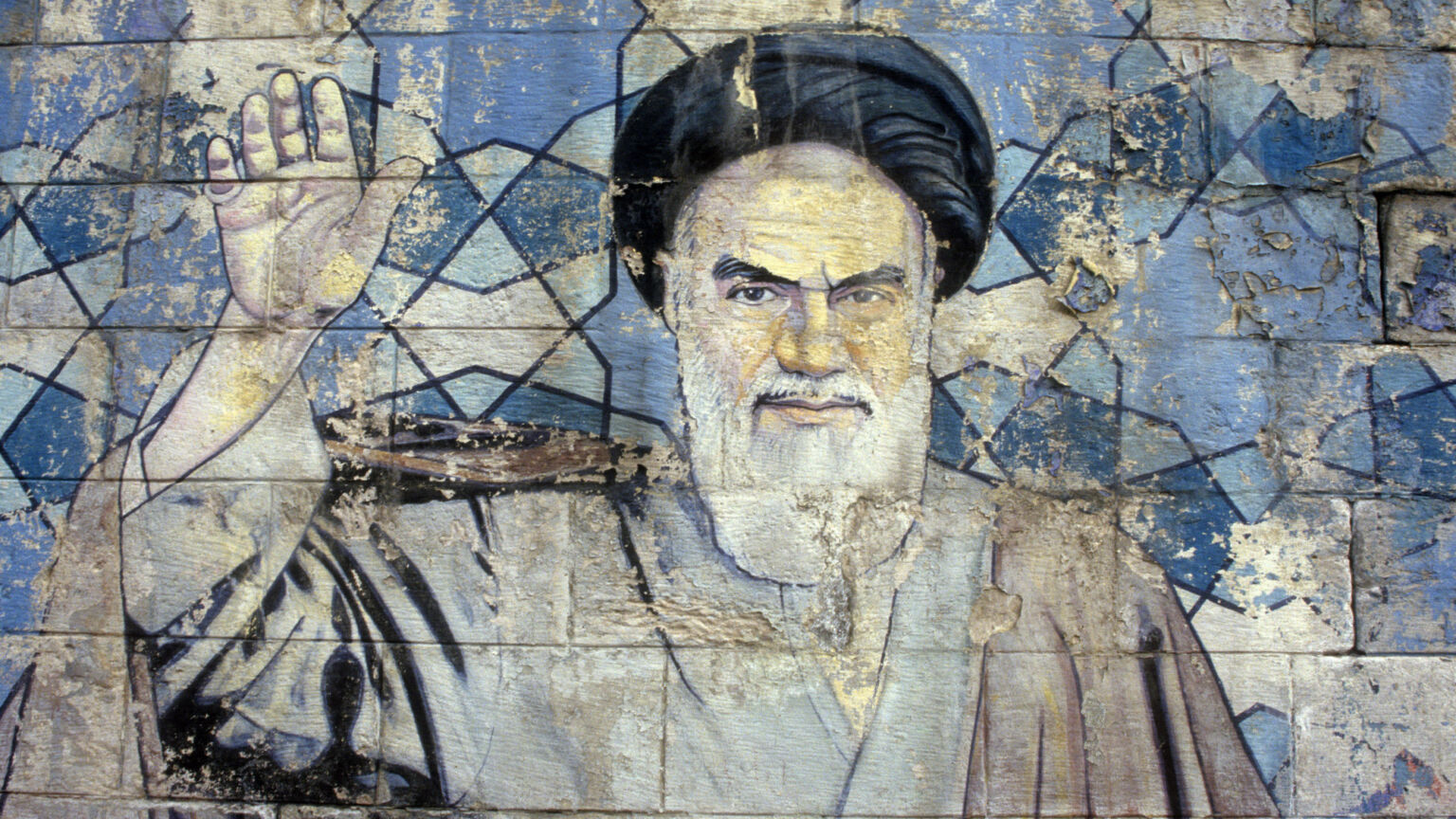
In autumn 1978, Iran’s deeply unpopular monarch, Mohammad Reza Shah, was coming under increasing political pressure. The main source of this was not the religious right, as troublesome for him as the clerics had become. It wasn’t even the exiled Islamist firebrand, Ruhollah Khomeini, as ideologically influential as he was in the mosques where his tapes and letters were circulated among an eager congregation. The pressure came, rather, from the Iranian left – from Tehran’s burgeoning student population, from the Stalinist Tudeh Party and, above all, from a restive, unionised working class.
Indeed, it was the widespread oil-workers’ strike, particularly in Khuzestan in September 1978, that brought tensions to a head. The shah attempted to crush the strikes and accompanying protest movement, sending in his security forces to put down a demonstration in Tehran’s Jaleh Square. They succeeded in killing between 60 and 100 people in what became known as the Black Friday massacre. This merely supercharged the rebellion. A wider range of Iranian workers joined what was to become a general strike, bringing Iran to a near standstill. The cry of ‘Death to the shah’ went up around the country. By the start of 1979, even the insular shah knew his time was up.
In January 1979, Mohammad Reza fled the nation he and his father, figureheads of the Pahlavi dynasty, had ruled for over half a century with Western backing. He took with him a small box of Iranian soil. A fortnight later, Khomeini returned to Iran, and on 11 February 1979, the Iranian monarchy was officially no more.
The following month, parties representing the Iranian left, from Tudeh to the People’s Mojahedin Organisation, backed Khomeini’s move to put forward a referendum on establishing an Islamic Republic. It passed with an overwhelming majority.
That is the gruesome paradox of the Iranian Revolution. It may have been fuelled by the agitation and bravery of workers, and dominated by left-wing forces. But it almost immediately ushered in the ultra-reactionary Islamist regime of Ayatollah Khomeini, which then set about purging the left. Leftists allied with Islamists in the fight against the shah, only to then find themselves repressed by their own creation.
The Islamo-leftist alliance was an unmitigated disaster for the left. This might seem predictable in retrospect. But the reasons leftists went down this path, and why they were swallowed up so quickly by the Islamists, are varied and complex. Many of the parties and organisations on the left were weak and opportunist. The shah had also imprisoned many of their leading figures. And their intellectual and ideological disorganisation was no match for the lethal Islamist clarity and leadership of Khomeini, and the massed ranks of the mullahs, clerics and worshippers.
But this tragedy goes deeper than that. The key problem was that the Iranian left’s leading figures were so consumed by a particular form of anti-imperialism that they saw Khomeini and his Islamist supporters as their allies. The shah was, quite understandably, viewed as a tool of the West. A coup in 1953, which overthrew a democratically elected prime minister and allowed the shah to expand his power, was aided by the CIA and MI6 in defence of British oil interests. Yet what emerged in opposition to the shah wasn’t anti-imperialism as older generations might have understood it.

The Iranian Revolution was framed as a cultural battle, rather than a political, economic or class-based battle. And it was pitted not just against foreign rule or meddling, but also against Western modernity itself. This was a struggle against Gharbzadegi (‘Westoxification’ or ‘West-struckness’), to use a term popularised by Jalal Al-e-Ahmad in his crucial 1962 book, Occidentosis: A Plague from the West. In the words of Sorbonne-educated sociologist Ali Shariati, the leftist forefather of the revolution, it was a movement to return Iranians to themselves. Up until his death in Southampton in 1977, Shariati and other Iranian left-wingers framed the revolution as a fight to free Iran’s essence – reimagined as religious and socialist – from Western influence.
These left-wingers and the ultra-conservative Khomeini really shouldn’t have had much in common. Inspired by Shariati, Iran’s leftists dreamed of a popular, Shia-inspired liberation, while Khomeini dreamed of Iranians’ absolute submission to Islamic law. But their differences were obscured by their shared dislike for the West and its monarchical representative in Iran. And so, in the years up to the fall of the shah, leftist radicals and Islamist reactionaries were increasingly speaking the same language. They all raged against a predominantly cultural imperialism. They all wanted to tackle ‘Westoxification’. And they were all convinced that the way forward lay in building a new Iran informed by Shia Islam.
With the fall of the shah, leftists and Islamists were united in the belief that they had thrown off the cultural yoke of the West. They now felt they had a chance to construct an entirely new society, neither liberal nor communist – ‘Neither East, nor West’. Or so the rhetoric went.
The left thus became the unwitting midwife of the Islamist theocracy to come. Having wanted to rid Iran of the ‘toxifying’ influence of the West, some had come to dismiss even ideas like democracy or secularism as overly Western concepts. In March, when the moderate Mehdi Bazargan, installed as interim prime minister, suggested adding the option of a ‘Democratic Islamic Republic’ to the referendum motion, Khomeini was not impressed. ‘Islam does not need adjectives such as democratic’, he later explained. ‘It is sad for us to add another word near the word Islam, which is perfect.’ Too few objected.
After March 1979, came the clampdown, as Khomeini quickly consolidated his position. He made himself Iran’s lifelong Supreme Leader, subordinated parliament to an assembly of clerics and established a shadow government – comprising the Revolutionary Guard Corps, the Islamic Republican Party and its own militia. He then used this fledgling Islamic state to violently wage war against the ‘sickness’ of Westernisation. He criminalised alcohol consumption, stripped libraries of books deemed ‘anti-Islamic’, and ensured that women were covered up and slowly but surely erased from public life.
Infamously, he also rooted out what was left of the Iranian left. Trade unions were systematically suppressed and the working class silenced. In the years that followed, thousands of political opponents were put on trial in so-called revolutionary courts, where a Khomeini-supporting cleric then oversaw their executions.
This was the tragedy of the Iranian Revolution. Blinded by anti-Westernism, leftists couldn’t see the Islamist menace right in front of their eyes. And when they finally did, it was already far too late. It is a cautionary tale.
Tim Black is associate editor of spiked.
You’ve hit your monthly free article limit.
Support spiked and get unlimited access.
Support spiked and get unlimited access
spiked is funded by readers like you. Only 0.1% of regular readers currently support us. If just 1% did, we could grow our team and step up the fight for free speech and democracy.
Become a spiked supporter and enjoy unlimited, ad-free access, bonus content and exclusive events – while helping to keep independent journalism alive.
Monthly support makes the biggest difference. Thank you.

Comments
Want to join the conversation?
Only spiked supporters and patrons, who donate regularly to us, can comment on our articles.