Europe’s fury at Trump’s criticism is breathtakingly hypocritical
The EU has traditionally been eager to welcome American meddling in its affairs.

Want unlimited, ad-free access? Become a spiked supporter.
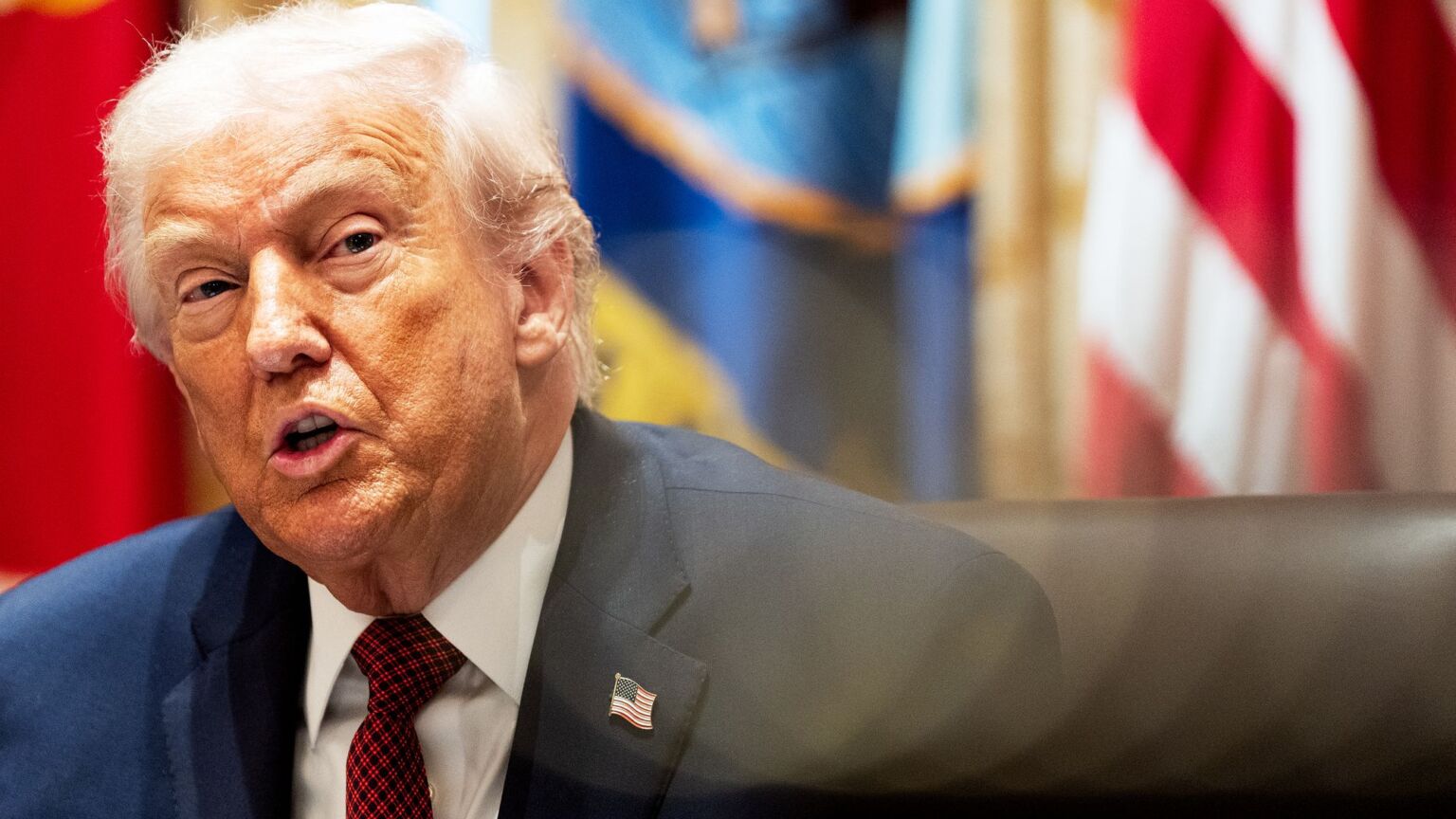
The release of Donald Trump’s National Security Strategy (NSS) has provoked a furious reaction from Europe’s legacy media and centrist political leaders. One Guardian commentator went so far as to assert that Trump has ‘declared civilisational war on Europe’.
The 33-page report, released this week, certainly doesn’t pull any punches. It accuses the European Union of undermining national sovereignty and economic growth, of promoting a migration policy that is ‘transforming the continent and creating strife’, and overseeing the ‘censorship of free speech and suppression of political opposition’. Ultimately, these policies are leading to ‘civilisational erasure’, the report says. It also celebrates the rise of anti-EU populist parties, saying that ‘America encourages its political allies in Europe to promote this revival spirit’.
It is this last point, more than any other, that appears to have stuck in the craw of the establishment. European Council president António Costa has demanded that Trump show ‘respect’ towards Europe. ‘We respect the choice of Americans, and they need to respect the democratic choices of our citizens’, he says.
Costa’s statement is stunningly hypocritical. In the past decade, the EU’s centrist leaders have hardly held back from criticising America and meddling in its politics, at least when Trump has been in power. In 2017, after the US president pulled America out of the Paris climate accords, France’s Emmanuel Macron mocked Trump’s ‘Make America Great Again’ slogan with his pledge to ‘Make our planet great again’. In January of that year, then president of the European Council, Donald Tusk, told EU leaders that Trump ‘presented a threat on par with a newly assertive China’ and an ‘aggressive Russia’. In 2019, Spanish prime minister Pedro Sánchez warned against the global advance of ‘Trumpism’. Where was the ‘respect’ that Costa now demands back then?
It is also the case that the EU establishment has previously welcomed American interference in its domestic affairs – at least when this interference has been on its own terms. Former US president Barack Obama went out of his way to endorse his centrist friend, Macron, during the 2017 French presidential elections. In an implicit criticism of Macron’s opponent, Marine Le Pen of the populist Front National (now known as National Rally), Obama stated that Macron ‘appeals to people’s hopes and not their fears’.
Nor did we hear much from Europe during the last Democratic administration, which frequently put EU member state Hungary in its crosshairs. In March last year, Joe Biden accused prime minister Viktor Orbán of wanting to impose a dictatorship on his country. ‘You know who [Trump’s] meeting with today down at Mar-a-Lago? Orbán of Hungary, who stated flatly he doesn’t think democracy works, he’s looking for dictatorship’, he said. For her part, former vice-president Kamala Harris described Orbán, bizarrely, as a ‘dictator, authoritarian and murderer’. Of course, we heard nothing about the importance of ‘respect’ for the ‘democratic choices’ of Hungarians from the EU elite.
The meltdown caused by Washington’s support for populism is understandable. The EU is anti-populist to its core. Despite all the posturing of EU leaders as the valiant defenders of Ukraine, it’s clear they are opposed to national sovereignty. Instead of viewing patriotism as the sign of a healthy and cohesive society, the EU sees it as a threat to be snuffed out.
The consequences of the EU’s war on the nation state are plain for all to see. According to a recent poll, two-thirds of Germans ‘would probably not defend their country from invaders’. In Italy, a recent survey indicated that only 16 per cent of those of fighting age would take up arms if their country was under attack. Recently, the head of France’s armed forces, Fabien Mandon, said his country needs ‘the spirit that accepts that we will have to suffer to protect what we are’. But French public opinion is not having any of it.
No doubt, the NSS was a shot across the bows of Europe. It follows a pattern of Europe-bashing that has been almost relentless since the beginning of Trump’s second term. Some of it has displayed an obsessive hostility, but much of it has been a statement of the obvious. One need not be a craven vassal of Washington to take on board what most astute observers of the EU already know – namely, that it has been crippled by mass immigration, has impoverished its citizens in a blind pursuit of Net Zero, and has demilitarised to the point of strategic impotence.
Europe would do far better taking some of the NSS on board, rather than rejecting it in full. But that will never happen: like all anti-democratic institutions, the EU would sooner quash criticism than learn from it.
On the most important point, Donald Trump is right: Europe is erasing any hopes of a prosperous future for its citizens. And as a result, the threat of populism that has the EU elites trembling is clearly not going anywhere.

Frank Furedi is the executive director of the think-tank, MCC-Brussels.
£1 a month for 3 months
You’ve hit your monthly free article limit.
Support spiked and get unlimited access.
Support spiked – £1 a month for 3 months
spiked is funded by readers like you. Only 0.1% of regular readers currently support us. If just 1% did, we could grow our team and step up the fight for free speech and democracy.
Become a spiked supporter and enjoy unlimited, ad-free access, bonus content and exclusive events – while helping to keep independent journalism alive.
———————————————————————————————————————————–
Exclusive January offer: join today for £1 a month for 3 months. Then £5 a month, cancel anytime.
———————————————————————————————————————————–
Monthly support makes the biggest difference. Thank you.




Comments
Want to join the conversation?
Only spiked supporters and patrons, who donate regularly to us, can comment on our articles.