Why the puberty-blockers trial must be stopped
Helen Joyce on the ongoing medical scandal of ‘trans medicine’.
Want unlimited, ad-free access? Become a spiked supporter.
When the Cass Review landed last year, it seemed as if it might finally put an end to the dangerous practice of so-called gender-affirming care. It led to the closure of the NHS Gender Identity Development Service, which was found to have profoundly failed the children in its care. It also prompted a ban on puberty-blocking drugs, which were deemed ineffective and unsafe. Yet now, the UK government wants to restart the experiment. Last month, a clinical trial of 220 children was announced, to re-examine the potential ‘risks and benefits’ of puberty blockers for ‘gender distressed’ children.
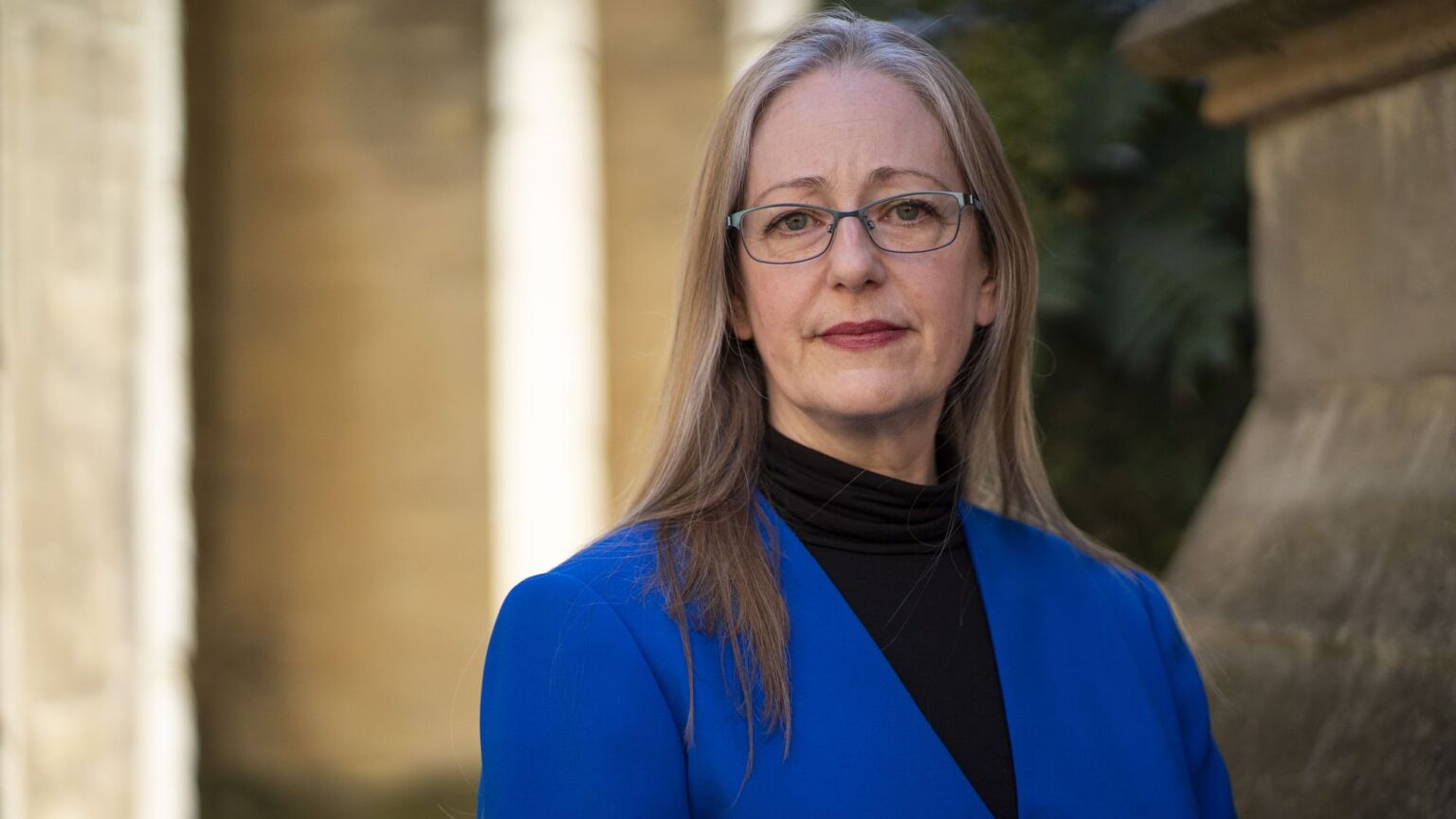
Helen Joyce – director of advocacy at Sex Matters – recently returned to The Brendan O’Neill Show to warn that the puberty-blockers trial is a travesty of science. What follows is an edited extract of the conversation. Watch the full thing here.
Brendan O’Neill: Can you explain the current puberty-blockers trial, and why it is taking place?
Helen Joyce: In 2024, Hilary Cass brought out this groundbreaking report into child gender medicine, and her headline finding was that, for the interventions used on children, there is almost no good evidence. The main hormonal treatment being used in the NHS was puberty blockers – powerful drugs that shut off the signals from the brain to the testicles or ovaries, which start puberty. This makes it easier, if the child later wants surgery or cross-sex hormones, to try to look more like the opposite sex. These blockers have been found to have irreversible physical effects. The idea that they give a child ‘time to think’ before treatment also turned out to be false: nearly every child who goes on blockers – 97 or 98 per cent – goes on to cross-sex hormones.
After receiving the Cass report, the UK government (initially under the previous health secretary and then continued by Wes Streeting) decided to ban puberty blockers entirely for minors, publicly and privately, except in the context of a properly structured experiment that might finally produce the sort of evidence Cass said was missing. That is the trial the government has now decided to do.
The gold standard for medical research, though not applied to most drugs and especially not usually to children, is the randomised controlled trial. You take a group who meets the criteria, randomly assign some to receive the treatment and some not, and ideally nobody knows who is in which arm. Sometimes you can’t blind it, because the effects are obvious, but the point is that afterwards you can compare the treated group with a statistically identical untreated group.
Except, you can’t do that with puberty blockers, because it is immediately visible who has been given them. So what the researchers have done is take 200 or so children and randomise them to receive puberty blockers straight away or to receive them in a year’s time. They think this will give them some sort of comparison, and they hope it will stop children dropping out of the trial because they’re not getting blockers. That was their fear, because kids have been told – propagandised, really – by lobby groups that these drugs are ‘life-saving’. Cass found that this is not true.
It’s a small trial. They’ll only follow the children for up to two years. It won’t tell us anything about what happens in adulthood. It won’t tell us whether they all go on to cross-sex hormones, what happens to their bone density, their brains, their IQs, or whether they regret it. There’s a whole range of crucial things this trial simply cannot tell us.

Instead of doing this trial, they could have looked at the 2,000 children who have already been given puberty blockers. The disadvantage is that those children didn’t have a standardised intake – their IQ, bone density and so on weren’t measured at the start. But you can still look at where they are now. If their current IQ or bone density is average, that tells you something. If it’s much lower than average, that also tells you something, because that’s unlikely to have happened by chance. But they’re not doing that. They’ve gone straight to this new trial. I’m genuinely amazed it got ethical approval.
O’Neill: Many are calling this an ‘experiment on kids’. Do you agree?
Joyce: We should note that ‘experiments’ on kids are justifiable in some circumstances. If you take kids who have cancer, for instance, doctors do horrific things to them: cut off body parts, give them drugs that nearly kill them, sterilise them. But they do that because the child is going to die otherwise. And in those situations, you might have very genuine questions like, what dose should you give of this drug? Is there a way we could give a bit less and not sterilise them? Is there watchful waiting? Is surgery better? Is radiotherapy better than chemotherapy? That sort of thing. But in this case, the idea behind what we’re doing is fundamentally dumb. It’s based on the principle that people can be born in the wrong body. It’s a treatment pathway to something you cannot actually achieve: becoming the opposite sex.
Some people think ‘but if we all pretend these kids are the opposite sex, they will be much happier’. I don’t think that’s true. Nobody has proved that. In fact, there’s a fair amount of evidence that the opposite is true.
Think what it means for one of the kids on this trial. You’ve been recruited from when you’ve started puberty, which may be as young as eight or 10 to age 15, because at 16 you can go on cross-sex hormones. You go to school and you’ve had your puberty blocked and you tell everyone you’re the opposite sex. But presumably, you can’t use the opposite sex’s toilets. You can’t go into their changing room. You can’t do their sports. It will increasingly become clear you can’t make everybody else call you the sex that you wish you were. So why the hell are we pretending?

And then they grow up and they go into the workplace, or they go out into public, into places like swimming pools and so on, and they find themselves barred from spaces which are specifically for women. So it’s promising children a pathway that cannot lawfully be provided to them by the rest of society.
O’Neill: What is it that makes certain sections of society cling to trans ideology so stubbornly, even after ample evidence against the medicalisation of children?
Joyce: Two things. One is the sunk-cost aspect. There is a narrative that things simply ‘went too far’ and now need to be pulled back, rather than admitting that the whole thing was a cult from the start. In truth, this was like lobotomies, or trepanning, or the theory of the humours in ancient Greek medicine, which persisted into the Middle Ages. It has about that level of validity.
Related to that, more broadly in society, there is a deep unwillingness to say ‘no’ to people. When you talk, as I have recently, to people who push gender medicine, especially for children, they present themselves as kind. They say how happy the children are when you give them what they want. But children want all sorts of things. Part of being an adult is saying no – appropriately, kindly, but firmly. And sometimes that will make children unhappy. Growing up includes unhappiness. It includes realising you can’t have everything you want in life, and that you have to make your way with the body you were given. But people don’t want to say that to children anymore. And I think it is desperately unkind to let children hope for something they cannot have.
This brings us back to how any of this got ethical approval. I think it’s a failure of responsibility – a structural failure. Nobody ultimately took the decision. Hilary Cass had to say, as a scientist, that there wasn’t enough evidence. Wes Streeting said, as health secretary, that he listens to the scientists. The ethics panel looked at a very narrow question. Nobody looked more broadly and asked: Is this right? Is this good? Should we really be doing it?
Nobody had the bravery to step forward and say, ‘I will try to stop this’. Anyone who thought about saying that knew they would be attacked. So there’s a failure to take responsibility here – a kind of cowardice – and an unwillingness to say no, both to children and to adults.
Helen Joyce was talking to Brendan O’Neill. Watch the full conversation below:
£1 a month for 3 months
You’ve hit your monthly free article limit.
Support spiked and get unlimited access.
Support spiked – £1 a month for 3 months
spiked is funded by readers like you. Only 0.1% of regular readers currently support us. If just 1% did, we could grow our team and step up the fight for free speech and democracy.
Become a spiked supporter and enjoy unlimited, ad-free access, bonus content and exclusive events – while helping to keep independent journalism alive.
———————————————————————————————————————————–
Exclusive January offer: join today for £1 a month for 3 months. Then £5 a month, cancel anytime.
———————————————————————————————————————————–
Monthly support makes the biggest difference. Thank you.




Comments
Want to join the conversation?
Only spiked supporters and patrons, who donate regularly to us, can comment on our articles.