Ariana Grande and Cynthia Erivo’s blubfest is a sorrowful sight
There is nothing brave or boundary-breaking about the Wicked: For Good stars’ relentless emoting.

Want unlimited, ad-free access? Become a spiked supporter.
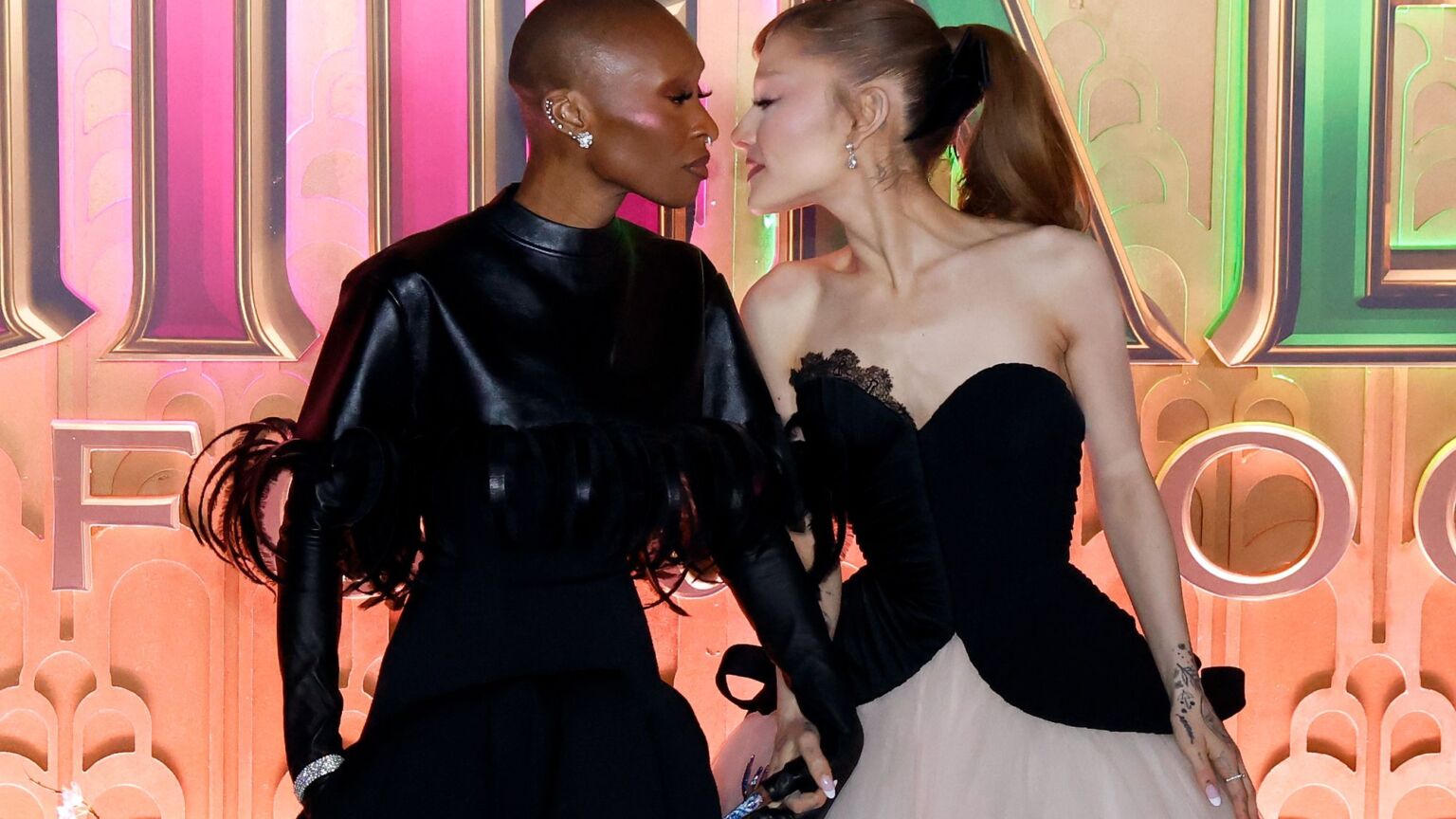
Laurel and Hardy. Morecambe and Wise. Many showbiz double acts have been extremely fond of each other, to the extent that, like these pairs, they would often be shown onscreen sharing a bed. But surely no showbiz duo has ever demonstrated as much of a mutual tendresse as Ariana Grande and Cynthia Erivo, the stars of the Wicked film franchise.
They have recently delighted us with their antics while promoting the follow-up to last year’s original Wicked film, Wicked: For Good. For anyone with the good sense not to be drawn in by this nonsense, of whom sadly I cannot count myself, this consists of a long, lachrymose love-in, with interviewers being relegated to either elaborately admiring or covertly embarrassed bystanders, while ostensibly promoting their product. Whether they were finishing each other’s sentences in a self-consciously cute-old-married-couple way, praising the hue of each other’s auras or simply weeping because they loved each other so much, almost every interview became a duet of narcissism masquerading as empathy and feminism. All that performative grooming and ‘protecting’ each other was just their way of letting us know how special they are, as we generally don’t have the luxury of treating our mates in such a flamboyantly affectionate manner, unless we’re extremely drunk. Even then, a slurred, ‘Yoush my besht friend, you are!’, and an ill-judged, badly-aimed smooch usually suffice.
But the awful hen-night slobbering of Grande and Erivo is now the subject of serious speculation, with every publication from Pink News to Forbes wondering What It All Means. The former examined the fact that ‘Posts circulating online claim that Erivo finally gave a name to her relationship with Grande, claiming they are in a “non-demi-curious semi-binary relationship… [which] means we are not actually a couple but we are curious about what that could mean and everything”’. It then promptly debunked this all-too-realistic sounding (especially in Pink News) pseudo-sexual set-up by revealing that the source for the posts circulating online was in fact a ‘Facebook page dedicated to satirical content’. Boo, hiss!
There are probably writers on Pink News who believe that the late queen was secretly gay, so you can’t really blame them for getting their nonbinary knickers in a twist about the outside chance of there being a new hot multi-racial queer couple in town. However, you might expect more from the very grown-up Forbes. It published a po-faced piece of polemic called scoldingly ‘Ariana Grande, Cynthia Erivo and why women still pay a price for showing emotion’, by one Kim Elsesser. This pleasingly comes with a cute summary at the top, so you don’t need to read the whole thing:
‘The viral emotional displays of Ariana Grande and Cynthia Erivo highlight a societal discomfort with women’s tears in professional settings, prompting a re-evaluation of why natural human responses are so startling. Crying at work, especially for women, often leads to career penalties; judgments are harsher for public tears or those perceived as manipulative, potentially limiting advancement opportunities.’
My (crying) eye! You can’t get away from performative displays of emotion these days. I blame Bobby Charlton, the late footballer, and Bob Hawke, the late Australian prime minister, equally. Once upon a time, only women and children cried – it was why they were traditionally allowed to get into lifeboats first, so they didn’t sob themselves stupid, thus making a sinking ship an even harder prospect to control. But it only took one crying sportsman and one crying statesman for the whole thing to go to pot. Everybody’s doing it – wiping their eye and boo-hooing it!
Crying is an equal-opportunity sport these days, with even ‘civilians’ (those not in showbusiness) being encouraged to get it out there. Companies exhort them to ‘Take your whole self to work’ and set up ‘crying rooms’ so that women can be encouraged to dwell ceaselessly on the allegedly devastating sorrows of menstruation and the menopause. It’s telling that on one of the few occasions that Queen Elizabeth II was reported to have cried in public, she had it be known that the wind was in her eye, whereas Kate and Meghan famously jostled to be The One Who Cried.

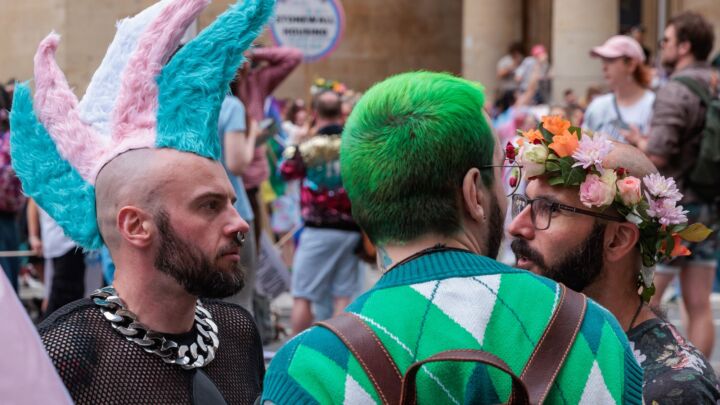
And now we have Grande and Erivo, snivelling their way around the globe like a pushmi-pullyu of puling. No matter how much their defenders attempt to make them appear brave boundary-pushers, any adult with sense knows that there’s a perfectly good reason why children are encouraged out of crying by the time they’re teenagers. It’s because a life in which the emotions rule the intellect, as opposed to the other way around, is not a good thing – whether individually or collectively. In the trans debate, it’s notable that while the gender-realist side speaks dispassionately, referring to facts, the trans-activist side is all about emotion and ‘feelings’ – at worst, threatening mass suicide of pubescents if they are not aided and abetted by the likes of Helen Webberley in mucking about, often irretrievably, with their unformed bodies. It’s no coincidence that Erivo and Grande are both so invested in ‘trans rights’ – it’s what would naturally pass for political thought to a pair of performing, sobbing seals like them.
There have been quite a few gal-pal film stars in the past. Yet none of them has ever felt the need to lay it on with a trowel the way this duo do. When Marilyn Monroe, the up and coming new sex symbol, joined the established and older Jane Russell on 1953’s Gentlemen Prefer Blondes, the spectacle of a cat-fight was anticipated gleefully by gossip columnists. However, despite the disparity in their pay ($200,000 for Russell, around $11,000 for Monroe), the two became friends, with the senior and serene older actress behaving protectively towards the younger and notoriously nervous one. ‘She was quite wonderful to me’, Monroe later recalled.
Though more a relationship of equals, Brigitte Bardot and Jeanne Moreau got along well making 1965’s Viva Maria!. And while Susan Sarandon has since transpired to be an utter clown, the real-life friendship she formed with Geena Davis on the making of 1991’s Thelma and Louise added to the verve and excitement of the film; ‘It was a magical experience’, Davis remembered 20 years later. ‘I think my favourite moments were just hanging around with Susan.’
Not one of these actress couples of the 20th century – though they did plenty of publicity together – felt the need to do anything more touchy-feely than verbally praise the other. That Grande and Erivo can’t keep their paws off each other could only happen now, in these truly decadent days – not decadent as in seedily sexy, but decadent as in decaying – where emoting passes for emotion, and emotion passes for reason. No doubt they believe that they look really attractive blubbing like kindergarten children who’ve failed to get what they wanted for Christmas while patting each other down like sorrowful store detectives. But personally, I found the bed-sharing Morecambe and Wise a damn sight hotter.
Julie Burchill is a spiked columnist. Follow her Substack, Notes from the Naughty Step, here.
You’ve hit your monthly free article limit.
Support spiked and get unlimited access.
Support spiked and get unlimited access
spiked is funded by readers like you. Only 0.1% of regular readers currently support us. If just 1% did, we could grow our team and step up the fight for free speech and democracy.
Become a spiked supporter and enjoy unlimited, ad-free access, bonus content and exclusive events – while helping to keep independent journalism alive.
Monthly support makes the biggest difference. Thank you.



Comments
Want to join the conversation?
Only spiked supporters and patrons, who donate regularly to us, can comment on our articles.