Why men in women’s sports is the doping of our time
Sharron Davies on how the Olympics’s long history of betraying female athletes.
Want unlimited, ad-free access? Become a spiked supporter.
The 2024 Paris Olympics put the dangers of ‘trans inclusion’ in sports on full display for the world. Most notoriously, biologically male boxers won gold in two of the six women’s weight categories. Ten years after the International Olympics Committee (IOC) first agreed to open up female sporting categories to men who identify as women, it seems as if common sense and fairness are about to return to elite sports. The Times reported recently that new rules are to be announced next year, following a science-based review of the physical advantages enjoyed by male athletes.
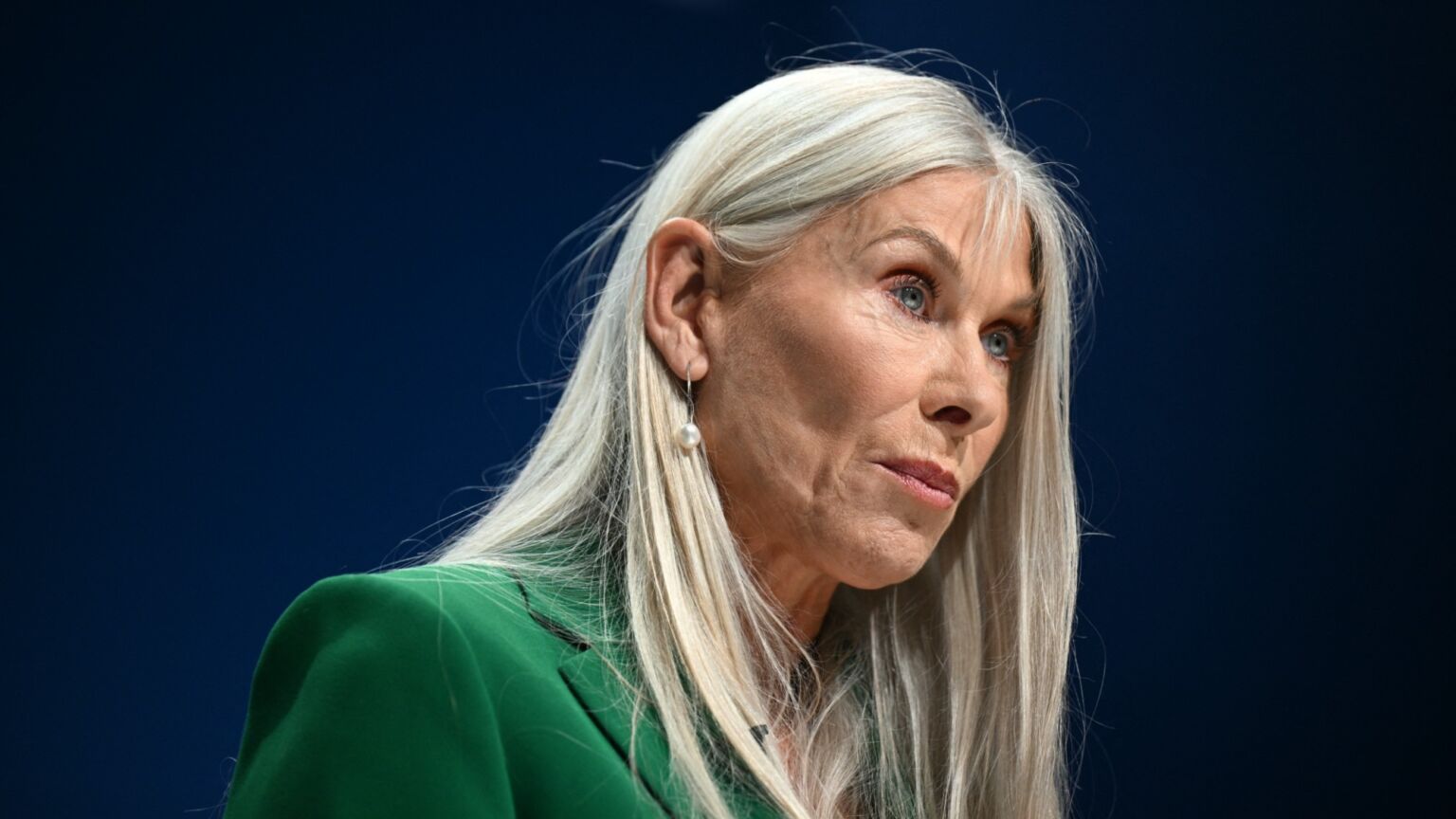
Sharron Davies – Team GB Olympian, author of Unfair Play and CEO of the Women’s Sports Union – who has long campaigned to protect women’s sports, sat down with spiked’s Georgina Mumford to discuss the IOC’s belated acceptance of biological reality. What follows is an edited extract from that conversation. You can watch the full thing here.
Georgina Mumford: We’re speaking after the IOC has signalled a change of heart on men in women’s sports. What has been your reaction to that?
Sharron Davies: It’s certainly a big step in the right direction. Nothing official has been announced yet – this is mostly ‘leaked’ information. But it’s good information. Olympic swimmer Kirsty Coventry and Olympic rower Jane Thornton have taken over as IOC president and head doctor respectively following the absolutely shambolic 2024 Olympics in Paris. I think the decision is partly down to those changes being made.
I also think it’s partly because the next Olympics will be held in Los Angeles and, as we know, Donald Trump has vowed to protect the female category. For that reason, I’m not sure that the IOC is acting as willingly as we would have liked it to. But if the end result is to reinstate a female-only category, then I will be very pleased.
Mumford: You’ve previously drawn parallels between the unfairness of men in women’s sports and the era of state-sponsored doping during the Cold War. Can you expand on that?
Davies: In the early 1970s, the East Germans decided to start feeding their female athletes the anabolic steroid, Oral Turinabol. They gave these young girls drugs from the age of 11. Initially, the girls were unaware – they were told that these little blue pills were ‘vitamins’. But of course, at some point, they would have realised that they were having a male puberty.
These girls were always kept very separate from us. We were never allowed to mix. I remember my first European Championships in 1977, when I was only 14 years old. We put an official complaint in because we thought there were builders in the girls’ changing rooms. It turned out that it was the East German women’s swimming team. The drugs caused the voice to change, hair to grow, male characteristics to develop. It was extremely obvious – and they were very successful because of it.
Everybody on the side of the pool, on the side of the track, watching the rowing, absolutely knew what was going on. Some East German athletes even defected, and they produced their little blue pills to the IOC. ‘Look’, they said, ‘this is what we’re being given’. And they were totally ignored. The IOC genuinely has blood on its hands for that, because many of those East German girls have died as a result of taking the drugs. An awful lot of them have had disabled children. All of them have had health issues.
All of this information is in the public domain. Yet the IOC refused to learn its lesson. In 2015, it allowed trans-identifying males to participate in women’s sport with all sorts of ridiculous rules about ‘reducing testosterone’, none of them based on any science whatsoever. It’s blatantly obvious that if someone has gone through male puberty, they’re going to have an advantage. But beyond that, males simply have different biology. They have a different bone structure, better cadence, better dynamic energy out of the lower part of their body. In football, women get six times as many knee injuries than men do. None of these factors are removed by reducing testosterone. In allowing these men to compete, women were essentially told that their sport is disposable. It has taken 10 years to get to a place where the IOC will acknowledge that males have a biological advantage over females.
Mumford: You’ve been subject to multiple personal attacks over the years as a result of your campaigning. What was it that kept you going despite that?
Davies: I think you do get to a point where you’re either all in or all out. For me, it was a matter of personal conscience, especially after what I went through in the 1970s and 1980s with my own sport. I often think about how many of my friends would have had a very different life if they’d won the medals they should have. I wouldn’t be able to live with myself if I just didn’t do anything.
I learned early on that there is no placating the trans activists. There’s nothing you can say or do to make them happy unless you totally capitulate to their wild thinking. They want people to agree that they can just ‘feel’ their way into a different sex. Except, a 15-year-old cannot ‘feel’ his way into an under-12 race; a heavyweight cannot ‘feel’ his way into the bantamweight category. We have to base these things on reality. And still, to this day, I struggle to understand how we’re in this position.
After the whole Leah Thomas situation, there was an invitation put out for trans swimmers to compete in their own category at the Swimming World Cup event in Berlin. Not a single trans athlete turned up. And that tells you everything we’ve always known: that this has got nothing to do with inclusion. Trans people are already included. They just refuse to compete where it’s fair for them to do so. They want the advantage of being in women’s sports. As soon as they’re told ‘no’, all hell breaks loose.

Sharron Davies was talking to Georgina Mumford. Watch the full interview below:
You’ve hit your monthly free article limit.
Support spiked and get unlimited access.
Support spiked and get unlimited access
spiked is funded by readers like you. Only 0.1% of regular readers currently support us. If just 1% did, we could grow our team and step up the fight for free speech and democracy.
Become a spiked supporter and enjoy unlimited, ad-free access, bonus content and exclusive events – while helping to keep independent journalism alive.
Monthly support makes the biggest difference. Thank you.




Comments
Want to join the conversation?
Only spiked supporters and patrons, who donate regularly to us, can comment on our articles.