The Metropolitan Police are institutionally woke
A report condemning the Met as ‘still institutionally racist’ flies in the face of observable reality.
Want unlimited, ad-free access? Become a spiked supporter.
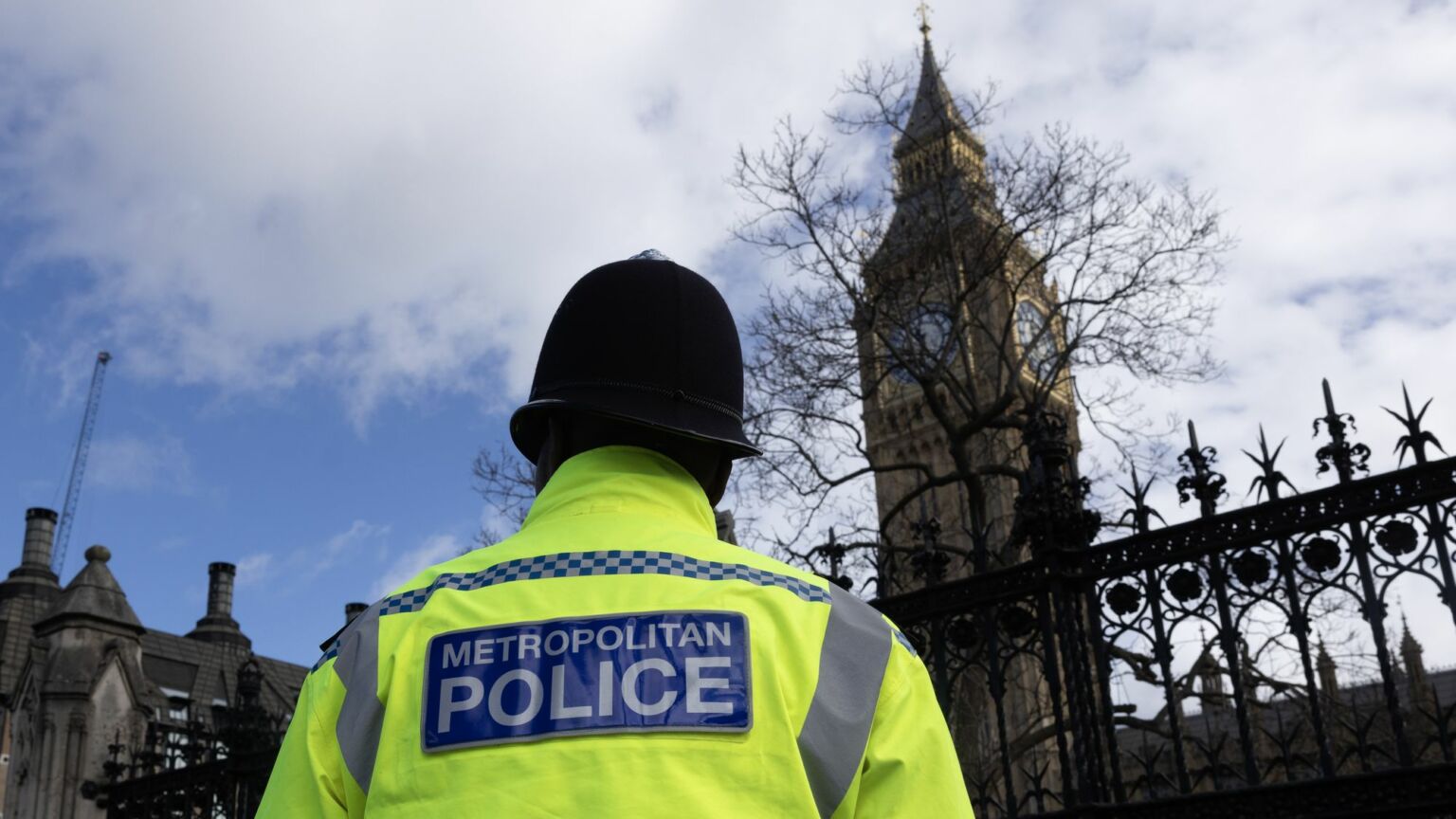
A new report has found that London’s Metropolitan Police is ‘still institutionally racist, sexist and homophobic’, and that further scandals in the force are ‘highly likely’. Three years after Baroness Louise Casey’s damning review of Scotland Yard, Dr Gillian Fairfield’s report concludes that these problems remain ‘systemic’. She said the Met is ‘different’ but ‘not yet different enough’.
The Casey review was issued in response to the 2021 murder of Sarah Everard by Met officer Wayne Couzens. Published in March 2023, the review branded the force ‘institutionally’ racist, sexist and homophobic. Dr Fairfield says the Met ‘still struggles to acknowledge racism as a structural problem rather than something people can be trained out of’.
Female officers described ‘predatory behaviour’, particularly towards younger women and new recruits. Bereaved families said the Met ‘gaslit’ them. One officer said: ‘I have zero confidence that anything is going to happen when reporting misconduct.’ The report also states that bullying and harassment are still under-reported and that the only scrutiny the organisation fears is from the media. The Met has welcomed the review and accepted all of its recommendations.
The Fairfield report certainly paints a bleak picture of the workplace. Fewer than half of staff – 44 per cent – felt confident raising concerns about a senior officer. Of those who felt bullied or harassed, 49 per cent had not reported it, and two-thirds of those who had – 67 per cent – said that when they did, no action was taken.
These numbers certainly are stark. But in an era when many people believe that the police would be better described as institutionally woke, how could the Met still be guilty of the more traditional prejudices? Should we look beyond the report?
One of the consequences of the culture war is the rise of victimhood culture in the workplace. Like many workplaces, the Met is not short of workers who are hypersensitive to slights. It is vital to read the Fairfield review with this in mind. Workforce surveys and personal testimonies are useful for finding problems, but they also tend to measure perception rather than reality. Just because someone feels they have been mistreated does not mean that they have been. And there are always two sides to every story.
What’s more, the Fairfield review comes across as unduly harsh. The Met has removed nearly 2,000 officers and staff since 2022, rebuilt vetting and misconduct systems, and lifted ethnic-minority representation among officers from 15 per cent to nearly 20 per cent. Yet the verdict was that there had been no good progress on a single recommendation from the Casey review. Is this not a case of focussing more on grievances than facts?
It’s certainly the case that the Met has, historically, failed to stop predators and bigots among its officers, and there have been many examples of racism and sexism. But this must be balanced against a younger, modern workforce that has a habit of seeing racism and sexism everywhere. We should be wary of conflating the testimonies of the latter with the very real discrimination that once existed, and concluding that the Met remains no different from what it was in the 1980s.
Meanwhile, there is a nasty underbelly to the anti-discrimination agenda that has been pursued by police forces across England in recent years. Met commissioner Mark Rowley wishes to recruit more ‘people of colour’ into the force. Yet other forces show where these good intentions lead. In 2024, three white officers at Thames Valley Police won a discrimination claim against their employer after an Asian colleague was moved into a superior role without any competition. Last year, West Yorkshire Police blocked white applicants in order to boost diversity. The police might talk about ending discrimination, but they seem to do a lot of it.
When I worked in the Met, the cult of victimhood was widespread. Those who felt themselves to be perpetual victims felt wronged more often, more intensely and for longer. They dwelt on supposed slights, showed less empathy for others, claimed moral superiority and interpreted ambiguous situations negatively. All of this impacted significantly on the operational efficiency of policing teams.
Victims of crime and the public deserve better than an insular, inward-looking Met. Unfortunately, it still seems to be more interested in identity politics than doing its job.
Paul Birch is a former police officer and counter-terrorism specialist. You can read his Substack here.

You’ve hit your monthly free article limit.
Support spiked and get unlimited access.
spiked is even better on the app
Read, watch and listen to spiked wherever you are. Our brand-new app brings everything together, with ad-free reading, audio articles and offline access.
Become a spiked supporter to unlock exclusive app access, unlimited articles, bonus podcasts, discounts and special events.
Monthly support makes the biggest difference. Thank you.






Comments
Want to join the conversation?
Only spiked supporters and patrons, who donate regularly to us, can comment on our articles.