Burnham’s EU ‘reset’ shows he’s given up on governing
Labour would rather turn Britain into a vassal state of Brussels than take responsibility for the nation.
Want unlimited, ad-free access? Become a spiked supporter.
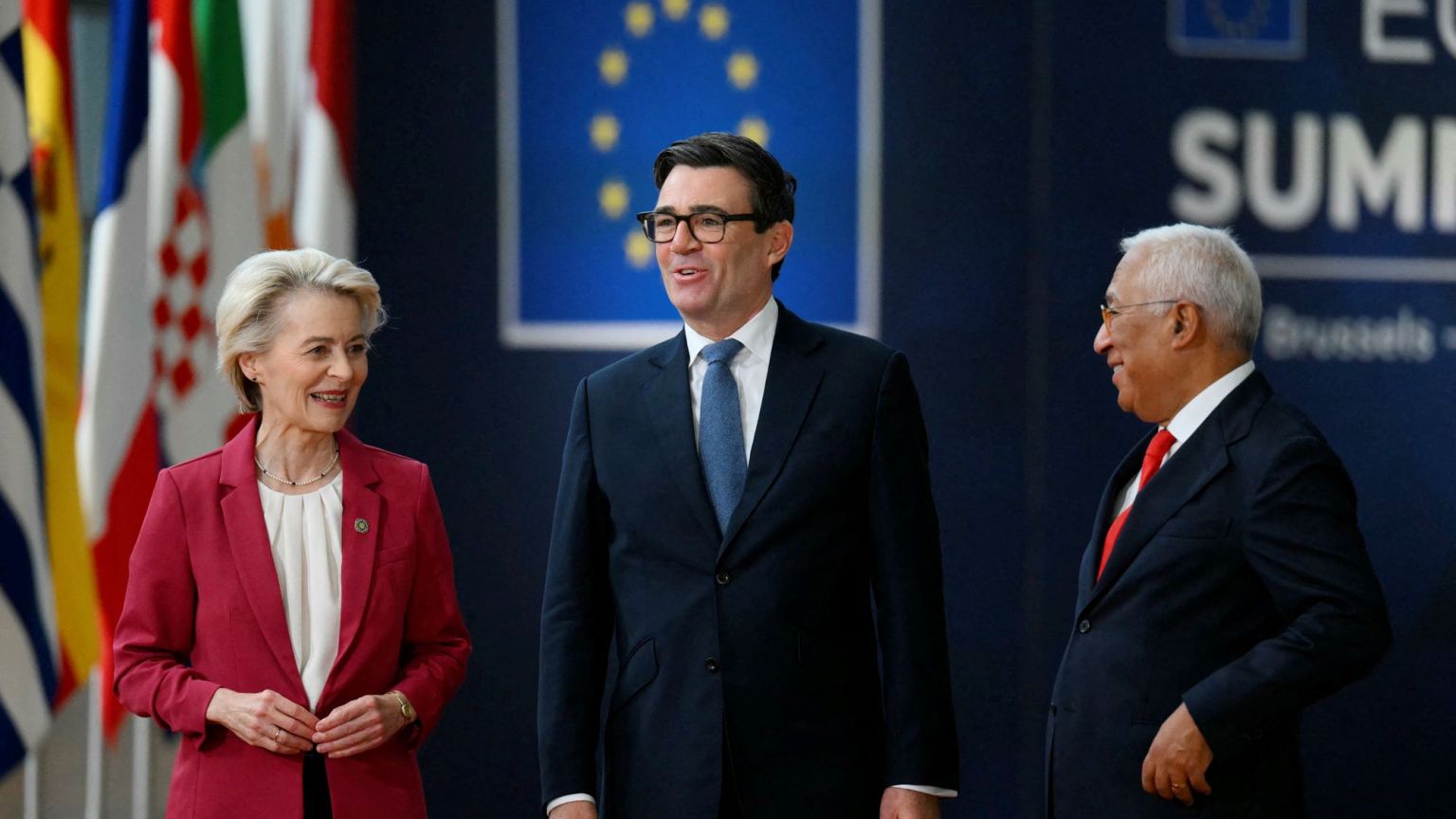
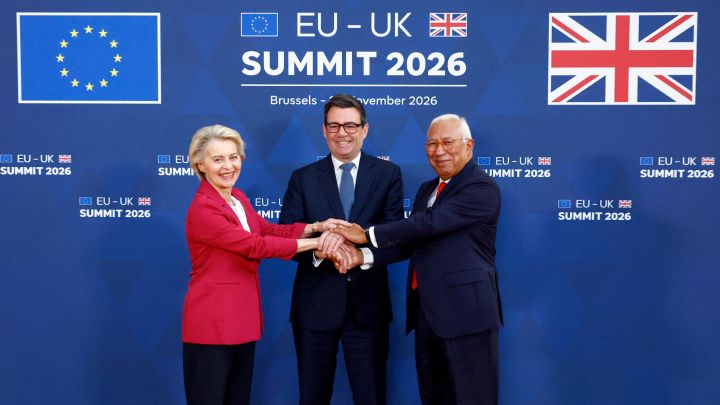
UK prime minister Andy Burnham went to Brussels last Friday to ‘reset’ relations between the UK and the EU. By Monday, he was talking about a referendum on returning to the EU entirely. Whether we like it or not, this means the Europe question is going to be the dominant issue of British politics between now and the next election.
Putting the details of the new EU deal to one side for a moment, it is worth considering why Burnham is doing this. After all, it was only a few months ago that he pledged to voters in Makerfield not to reopen the question of EU membership. But by the time he made his speech at the Labour Party conference in September, something had changed. He cast his earlier promises aside and blamed Brexit for most of the UK’s ills. Last week’s summit flowed from that speech – although, in actual policy terms, the deal itself was mostly a rehash of the agreement sketched out by former prime minister Keir Starmer earlier this year.
Essentially, Burnham’s EU reset is further proof that Labour has given up on governing. Since the summer of 2025, when Starmer failed to secure the votes in parliament for cuts to the ballooning welfare budget, this edition of the parliamentary Labour Party – whoever may be leading it – has ceased to function as a government in any real sense. Difficult votes have been dodged and hard decisions punted into the long grass. Attempting to take Britain back into the EU, after six years of independence, is less of a strategy to fix the country’s problems than a way of uniting a fractious group of MPs who have never got over the 2016 vote to leave.
Burnham’s calculation makes a certain amount of sense in purely electoral terms. In this year’s local elections, Labour lost votes to the Greens in many of its local-government strongholds, particularly in London. Despite left-wing voters diverging on a range of issues, returning to the EU is one thing that unites them. Talking up rejoining may prove a worthwhile political gamble for Burnham.
But returning to the EU is not like swapping parties at a General Election. This is because it would hand lawmaking power from the British people back to the opaque web of institutions in Brussels. British democracy would be blunted and key decisions about our future would be made by unelected, supranational bodies.
This disenfranchisement would also come with a heavy price tag attached. The EU is desperate for money, and rejoining would likely cost British taxpayers around £750million per week, when one takes into account the loss of our old rebate and the growth in the EU’s budget since we left.
So if rejoining is the ultimate endpoint of Burnham’s agenda, what of the reset itself? The deal must surely be a disappointment even to those who signed it. Aligning with EU food standards – also known as letting Brussels regulate Britain’s farms, butchers and supermarkets – is unlikely to bring many economic gains. Labour’s minister for Europe, Hamish Falconer, claimed that Burnham’s deal will reduce prices in British supermarkets by cutting the bureaucracy associated with importing food from the EU. To illustrate this in a video, he brandished a packet of British beef mince, emblazoned with the Union Jack. Quite how import costs would affect beef already grown in Britain was left unexplained.
In truth, letting the EU set food rules will impose more regulation – and therefore costs – on the supply chain. The Fresh Produce Consortium claims that the reset would actually increase British food costs because of added regulations for imports from outside the EU, which make up around half of Britain’s food imports. The food aspect of the deal may help out a small number of British farmers who export to Europe. But it could add around £300million per year to the cost of importing fruit and vegetables from other countries.
The plan to link Britain’s carbon pricing with Europe’s is similarly misguided. Labour claims that some British manufacturers will avoid a carbon tariff from the EU in 2028, saving around £800million, as a result of this agreement. But the EU’s carbon price is currently higher than the UK’s and getting higher. The cost of alignment will therefore be felt throughout the entire economy. According to research by the Prosperity Institute (where I am director of strategy), this could add up to £8 billion in new costs to British businesses, which will ultimately lead to higher household bills and higher inflation.
What’s more, this reset deal is currently on ice while the two parties negotiate over university fees. The EU is demanding that its students pay the same fees as British students in UK universities. And Burnham will almost certainly capitulate.
Britain’s universities are in financial peril, and it is well known that many have been relying on high fees for international students – sometimes over £25,000 per year – to stay afloat. Cutting these fees for EU students to the same level as British students, whose fees are capped at slightly less than £10,000 a year, would be a handsome cost saving for European families, but would come at a significant cost to the British taxpayer. Burnham has reportedly offered a concession of £12,000 per year, but this is not enough for Brussels. The prospect of British taxpayers funding foreign students to study in Britain, while EU students owe a reported £5 billion in unpaid student debt, really sums up the one-sided nature of this deal.
Andy Burnham has firmly put us on the path to rejoining. Ten years on from the Leave vote, we will have to fight for independence all over again. It’s time for us Leavers to repaint that old battle bus: Do we really want to send £750million a week to the EU? Or should we focus on our own problems instead?
Fred de Fossard is the director of strategy at the Prosperity Institute.
You’ve hit your monthly free article limit.
Support spiked and get unlimited access.
spiked is even better on the app
Read, watch and listen to spiked wherever you are. Our brand-new app brings everything together, with ad-free reading, audio articles and offline access.
Become a spiked supporter to unlock exclusive app access, unlimited articles, bonus podcasts, discounts and special events.
Monthly support makes the biggest difference. Thank you.







Comments
Want to join the conversation?
Only spiked supporters and patrons, who donate regularly to us, can comment on our articles.