Nigel Farage is right about two-tier Britain
Identity politics has run amok in the British state.
Want unlimited, ad-free access? Become a spiked supporter.
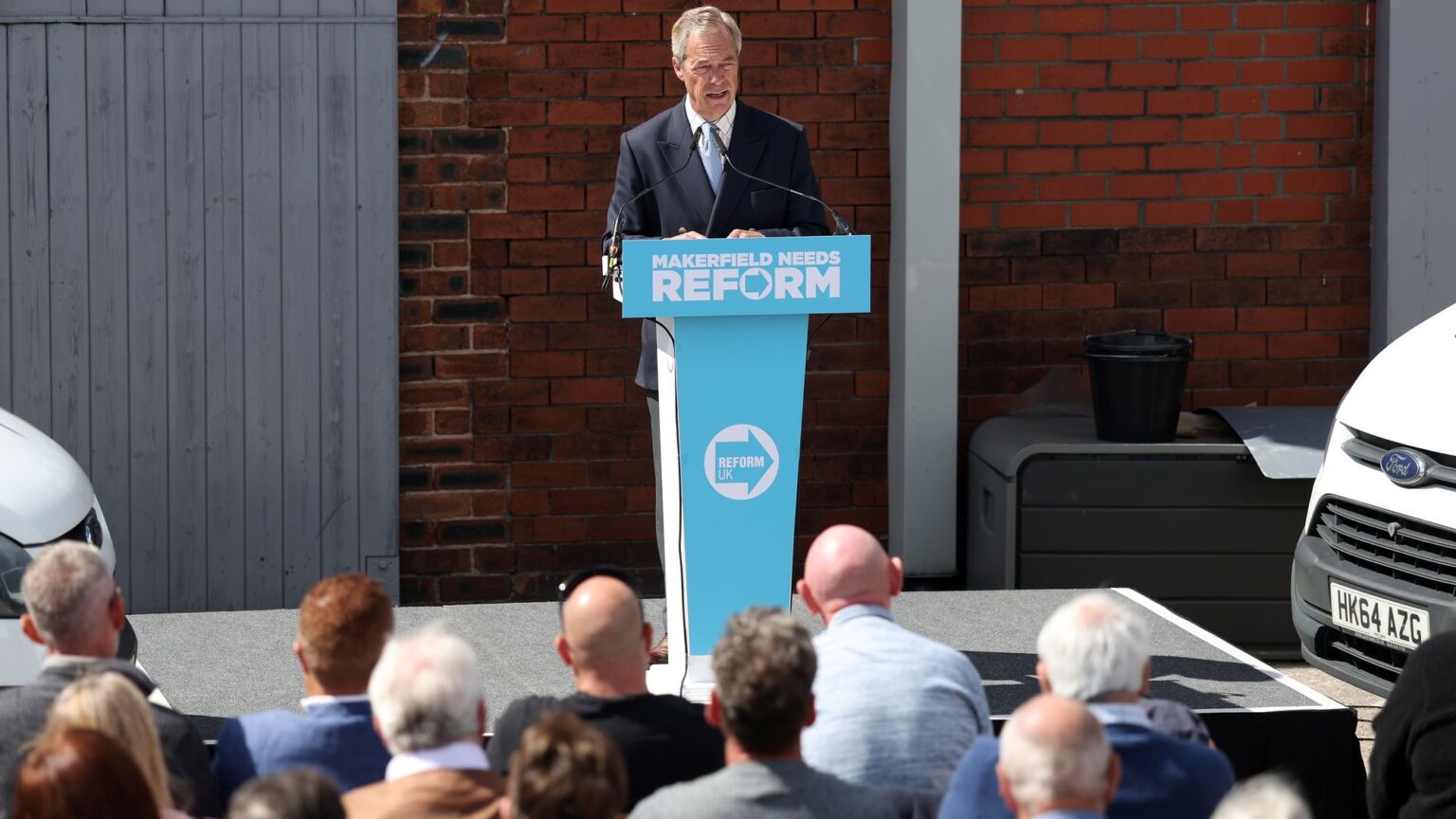
On Sunday, Nigel Farage published the first in what he promised would be a series of essays. It’s a new initiative from the Reform UK leader to speak – unfiltered by the media – directly to the British public.
There’s plenty to sink one’s teeth into: the essay is 7,000 words, with a bibliography numbering over 80 sources. Nor does it pull any punches: titled, ‘Britain is a two-tier state – against white people’, Farage goes through education, healthcare, housing, policing, even the military, showing in each case how Britain’s obsession with identity politics has disadvantaged white British citizens.
Inevitably, criticism has centred on Farage’s strident tone, rather than the substance of what he says. But whatever people’s quibbles over language, I find it hard to find fault with his core arguments.
Like Conservative Party leader Kemi Badenoch did recently, Farage takes aim at the Public Sector Equality Duty as the basis for much of the state’s two-tierism. But he goes further than her in calling for abolition of the 2010 Equality Act.
He is right to do so. This Brown-era legislation has done the opposite of what its name implies. It hasn’t created a more harmonious society. In fact, it has done the opposite. One presumes that, in place of the Equality Act, Reform will look to introduce more narrow legislation focused on outlawing direct discrimination, closer to the original Race Relations Act.
Farage is at his strongest when he reminds you of the history that should guide our current policy. For why indeed should ‘Homes Fit For Heroes’ – initially a plan to help returning First World War soldiers – now house economic migrants, while veterans go without a roof over their heads? Farage is helped by the multitude of absurdities modern Britain throws up. As he points out, among the beneficiaries of Britain’s generosity are the first lady of Sierra Leone and a Hamas fugitive – both given social housing while Brits wait patiently in line.
Of course, legislation isn’t the only problem. Rather, as Farage points out, it is the ecosystem of quangos that so often act as the enforcers of this diversity dogma – from the National Police Chiefs’ Council’s insistence on racial equity in policing outcomes to the Office for Students’ requirement for ‘Access and Participation Plans’.

The question now is how to get to the sort of colour-blind society I – and most of us – would like to see. We clearly do not have that society as of now. Indeed, recently revealed policing guidance, which explicitly says a commitment to anti-racism ‘does not mean treating everyone “the same” or being “colour blind”’, makes that clear.
Farage provides some hints in the form of future legislation. The ‘Policing (Equal Treatment) Act’, to be legislated within the first 100 days of a Reform government, is one example. Denying foreign nationals access to welfare, capping the recruitment of foreign doctors and prioritising the recruitment of British medical students, and requiring every school to fly the Union flag and mount a portrait of the King, are others. This is more substance than we have seen from many previous opposition parties, particularly so far from an election.
Even those who take exception to Farage’s arguments should support party leaders laying out their case in this level of detail, for all to dissect and debate. Former Spectator editor Fraser Nelson’s charge that Farage is taking to Substack ‘to avoid scrutiny by anyone who may point out his carefully crafted misrepresentations’ is an unconvincing one. Indeed, it is ironic that it is the party that the commentariat love to paint as rabble-rousers, peddlers of empty slogans and bereft of policy substance, which is the first to produce such a piece.
It’s unclear who actually wrote the essay. I don’t think it’s reasonable to expect Farage to have done it all himself – and nor should he. It could be the work of Amarjeet Johal, the highly regarded staffer working for Reform’s policy chief, James Orr. Or one of the clutch of new hires that Reform have made in recent weeks – Sam Ashworth-Hayes, poached from the Telegraph, and James Graham and Karl Williams from the think-tank world. Whoever held the pen, it shows the fruits of Reform’s quiet work building up its team into an increasingly high-powered intellectual and policy-focussed machine.

Judging by this first essay, they – and Farage – have plenty to say. The party now looks to have the confidence to take on the establishment not just on the doorstep, but in the realm of policy, too.
Ameer Kotecha is CEO of the Centre for Government Reform. He was formerly a senior diplomat, serving as the head of the British consulate in Russia between 2023 and 2025.
You’ve hit your monthly free article limit.
Support spiked and get unlimited access.
Support spiked and get unlimited access
spiked is funded by readers like you. Only 0.1% of regular readers currently support us. If just 1% did, we could grow our team and step up the fight for free speech and democracy.
Become a spiked supporter and enjoy unlimited, ad-free access, bonus content and exclusive events – while helping to keep independent journalism alive.
Monthly support makes the biggest difference. Thank you.





Comments
Want to join the conversation?
Only spiked supporters and patrons, who donate regularly to us, can comment on our articles.