After Iran, is Cuba next?
Washington’s blockade is harsh, but an all-out war would be devastating.
Want unlimited, ad-free access? Become a spiked supporter.
The US certainly seems to have Cuba in its sights. Since seizing Venezuelan president Nicolás Maduro in a January raid on Caracas, the Trump administration has made Maduro’s successor, Delcy Rodríguez, stop supplying oil to Havana. Trump has also threatened tariffs on any country, including Mexico, that dares to keep the island supplied. The New York Times calls all this the first effective blockade of Cuba since the 1962 Missile Crisis.
It’s true that, having anchored off Jamaica, just 90 miles from Cuba, the aircraft carrier USS Nimitz is now heading north for Virginia. But if and when Trump’s war with Iran really ends, it’s worth remembering that Trump has already warned: ‘We may stop by Cuba after we’ve finished.’ Early in May, too, he dispatched CIA chief John Ratcliffe to Havana to demand that Cuba end its security ties with China and Russia. Ratcliffe was accompanied by one of the paramilitaries that had helped kill 32 Cuban guards protecting Maduro, a move CBS News delicately suggested ‘may have been intended to send a signal’.
So, as the US tightens the screw on Cuba and its desperate inhabitants, could it really take the ultimate step and invade Cuba?
From a military perspective, an invasion certainly wouldn’t pose too great a challenge. Unlike in 1962, Cuba is no dangerous dagger pointed at the US. There’s no Soviet Union, and there are no Soviet missiles stationed on Cuba. Though Cuba has just acquired a measly 300-plus drones, it has little else with which to repel the US.
Economically, Cuba has long been a basket case, thanks largely to American imperialism, aiming for revolt and regime change, and Stalinist mismanagement, aiming for the maintenance of a police state. Indeed, Cuba is at just as much risk of state collapse as it is of a US invasion.
The warning signs are certainly there. In 2021, Cuba’s dire economic situation prompted major protests. And since then, more than a million people have left, bringing its resident population in 2024 down, according to Havana’s own estimate, to 9.75million.
During 2021, the ruling communist party, the PCC (Partido Comunista de Cuba), tried to respond to the deepening unrest. It conducted a major round of repression. And, in a move designed to alleviate Cuba’s economic plight, it legalised private firms employing up to 100 workers.
But as ever, the PCC’s reformist tinkering has led nowhere. Last year, Reuters reported that Cuba’s annual harvest of sugar, which used to run to eight million tonnes before the end of the Cold War, would drop to just 200,000 tonnes. The tourism industry is also suffering, with the number of visitors coming to Cuba falling to 1.8million in 2025, the lowest level in two decades.
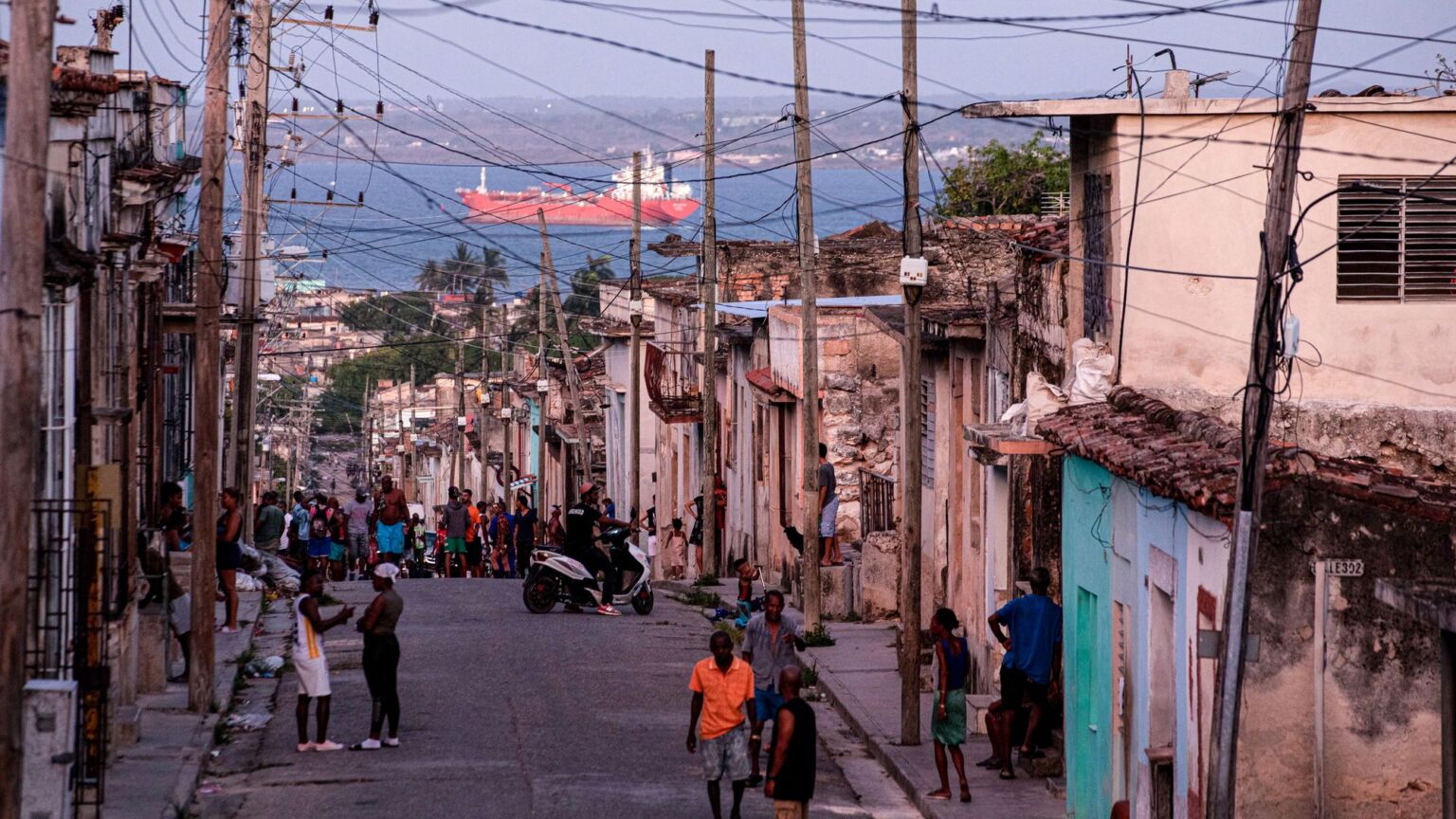
Everyday life remains incredibly hard. Power outages in Havana last more than 20 hours a day, and medicines are lethally scarce.
Given all this, why would Washington want to invade Cuba? It may be tempting to locate the motive in Trump’s taste for beachfront real estate, or in the perennially angry Cuban exiles in Florida, who form much of US secretary of state Marco Rubio’s electoral base. But the real impetus behind the White House’s Cuban moves lies elsewhere.
There are several factors at play here. There is Washington’s stated commitment to shoring up its ‘hemispheric’ security. There is domestic political pressure, too – a piece-of-cake ‘victory for democracy’ in Cuba might just staunch Trump’s loss of popular support in the wake of his reckless war with Iran. And finally, there is a much underestimated factor – namely, the hollowing-out of statecraft. The US State Department no longer produces intellectual giants, such as George Kennan or Henry Kissinger. Instead, it makes do with the swagger of ‘Department of War’ chief Pete Hegseth, and the tireless Rubio, who is both secretary of state and acting national security adviser – an extraordinary workload for one man to bear.
Washington’s strategic desire to ensure its regional dominance, Trump’s plummeting poll numbers and the intellectual lack at the heart of the State Department could well have put Cuba on the table.
Nevertheless, there is good reason to think the US will stop short of an invasion. After all, Washington will know that the Cuban authorities have spent 60 years preparing for just such an act of aggression. They have prepared arms caches all around the country. And the Cuban people themselves will not welcome US troops. The PCC may not be popular, but a US intervention promises to be even less so.
There is every chance then that, to avoid a bloodbath, Washington does to Havana what China has been doing to Taiwan. That is, on top of the blockade, it will use drones, airborne reconnaissance missions and naval manoeuvres, and escalate every other ‘grey zone’ military tactic, but will stop short of all-out war.
There is a big problem here, however. Systematically wearing Cuba down in this way could prompt yet another of the mass emigrations Cuba has experienced over the years. Former CIA director Robert Gates has warned about just such a turn of events. A future flight of Cubans promises to be much larger and less popular with Americans than it might have been in the past.
As it stands, Trump is the 10th US president to have tried to bully Cuba into submission. What is new in 2026 is not American bullying, but its scale, its thoughtlessness and the humanitarian crisis it is likely to set off.
Washington’s posture denotes not a confident hegemon, but the wobbly hubris of a declining power. Cuba will not be the last place where the damage caused will be unconscionable.
James Woudhuysen is visiting professor of forecasting and innovation at London South Bank University. Follow him on X: @jameswoudhuysen.
You’ve hit your monthly free article limit.
Support spiked and get unlimited access.
Support spiked and get unlimited access
spiked is funded by readers like you. Only 0.1% of regular readers currently support us. If just 1% did, we could grow our team and step up the fight for free speech and democracy.
Become a spiked supporter and enjoy unlimited, ad-free access, bonus content and exclusive events – while helping to keep independent journalism alive.
Monthly support makes the biggest difference. Thank you.




Comments
Want to join the conversation?
Only spiked supporters and patrons, who donate regularly to us, can comment on our articles.