The Oxford Union should not cancel Tommy Robinson
Decades of No Platforming controversial speakers have left students incapable of defending their ideas.
Read our latest coverage of the French riots here – paywall-free all of this week..
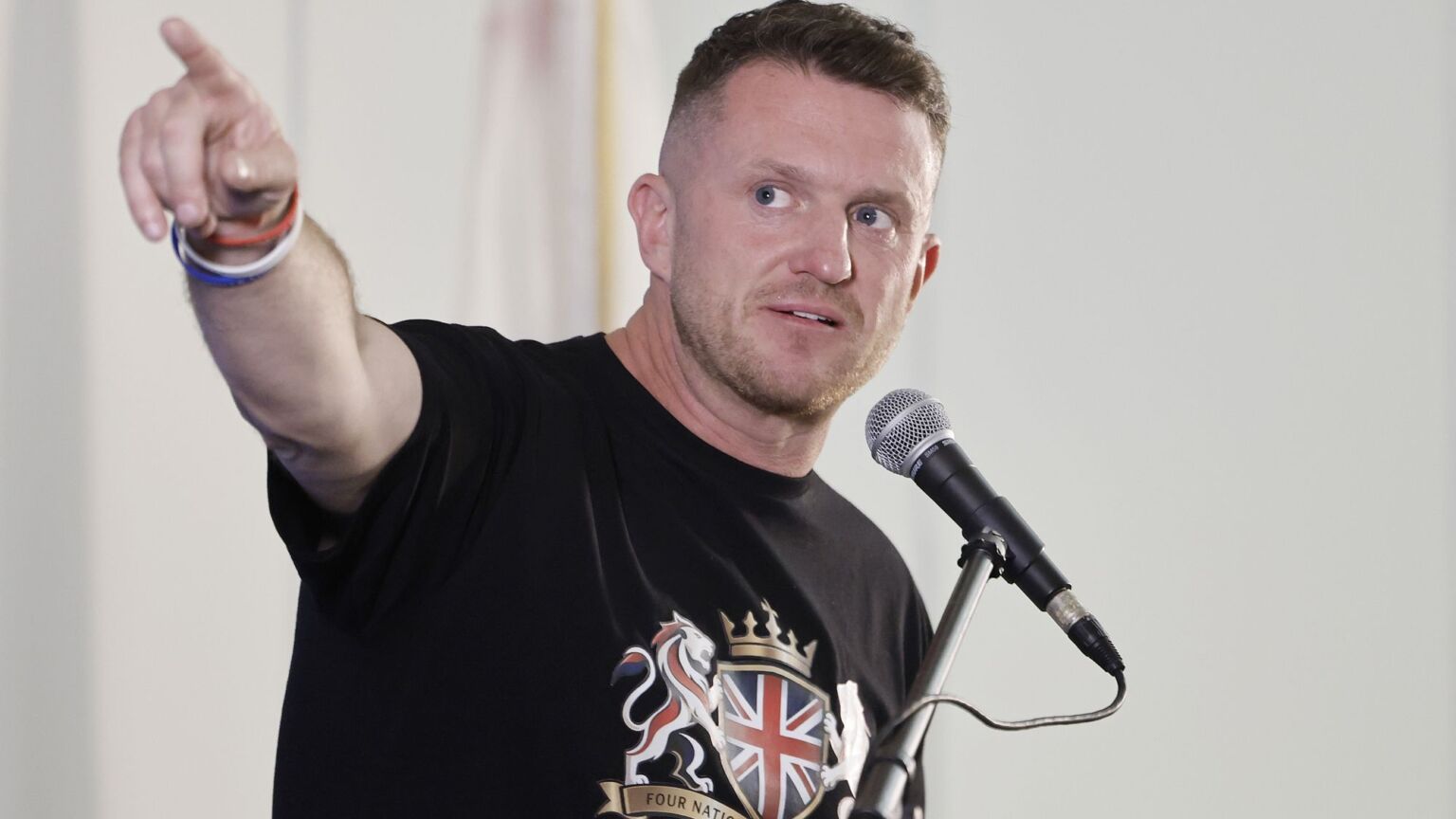
The controversial hard-right activist Tommy Robinson has been invited to an Oxford Union debate on whether Islam is a threat to the West, alongside British Muslim MPs and scholars opposing the motion. Yet there is no guarantee he will be allowed to speak at the debate, scheduled to take place on 28 May. Ever since news of the invitation was leaked, pressure has mounted for the event to be cancelled. Stand Up To Racism Oxford, the Oxford Labour Club and several other student organisations have objected, while some speakers are said to have withdrawn in protest.
There are, of course, valid reasons why many people object to Robinson. He has spent years making contentious arguments about Islam’s deleterious impact on the UK, and is often accused of encouraging anti-Muslim sentiment. Then again, many who feel disenfranchised by elite consensus regard him as one of the few public figures willing to speak openly about Islamist extremism, Muslim grooming gangs and the consequences of large-scale immigration.
But that isn’t the point. What matters is whether students and academics still believe arguments should be confronted publicly, rather than suppressed before they can be heard.
For more than 200 years, the Oxford Union has hosted debates in an adversarial forum, exposing controversial arguments to scrutiny, criticism and rebuttal. In 1992, for instance, it hosted Enoch Powell without the kind of organised campaign for disinvitation now surrounding Robinson.
Then again, it would be misleading to pretend attempts to prevent controversial speakers appearing on campus are entirely new. In truth, something changed quite a while ago.
If we were looking for an origin story, we might point to the National Union of Students (NUS) 1974 No Platform policy against ‘openly racist or fascist organisations’. As so often with speech restrictions, what began as a tactic against fascists specifically gradually evolved into a much broader hostility to free speech. By the late 1970s, Conservative ministers, anti-abortion advocates, opponents of sanctions against apartheid South Africa and others were being physically attacked or prevented from speaking at universities across the country.
A recent Higher Education Policy Institute survey suggests this instinct remains deeply embedded within campus culture: 81 per cent of students support the NUS No Platform policy, including 35 per cent who say it should apply to those who ‘may cause offence’ to certain student groups.
A more interesting question than when this began is how a policy to oppose organised fascism came to be applied to an ever-wider range of lawful but contentious speech.
One answer lies in our impoverished understanding of listening. Would-be censors are fond of imagining ‘listening’ in crude behaviourist terms: the audience hears a view so dangerous that it is either harmed or infected by it. As a result, democratic culture comes to be viewed with suspicion – less as JS Mill’s marketplace of ideas, where individuals reason and choose freely, than as BF Skinner’s dismal world of behaviourism, where human beings are merely conditioned by external stimuli.
That places remarkably little trust in the intellectual agency of ordinary people. And yet, as anyone who has actually engaged in debate knows, listening can be forensic, hostile, sceptical, adversarial, amused, analytical, morally alert and readily converted into argument. It isn’t mere absorption, with the audience reduced to empty vessels into which ideology is poured.

Oxford Union president Arwa Elrayess has made precisely this point in defending her decision to invite Robinson. Reflecting on a previous Oxford Union debate with an Israeli soldier, she noted that others had argued he should not have been allowed to speak. But as a Muslim Gazan, she disagreed, wanting the chance to challenge his arguments directly. Many audience members, she says, ‘left changed, not because I asked them to stay away, but because I asked them to listen’.
Elrayess is right. What the behaviourist impulse offers, by contrast, is an easier way out, with censorship masquerading as compassion. If listeners are treated as psychologically vulnerable, then the freedom not to listen – not to buy a ticket, not to attend – quickly curdles into the supposed moral duty to suppress dangerous ideas before anyone can be harmed by them.
What Robinson’s detractors would do well to remember is that objectionable views driven out of public debate don’t simply disappear. They retreat into spaces where their ideas face less or no scrutiny, beyond the reach of open challenge and rebuttal, where they find eager adherents.
After all, what has half a century of No Platforming actually achieved? Robinson has millions of followers. The hard-right Restore Britain, the recently launched party he has endorsed, is already polling at around four per cent nationally.
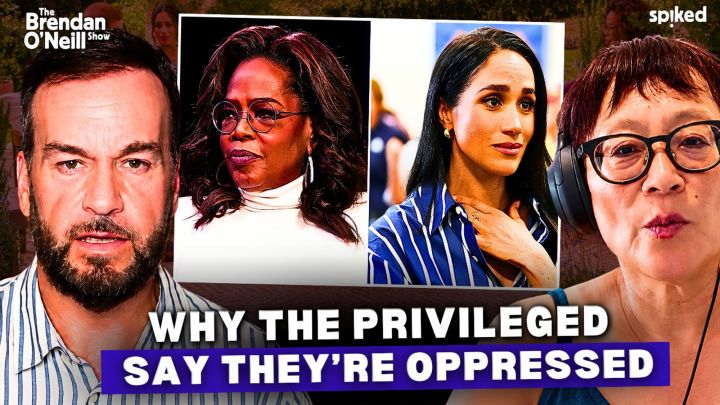
Perhaps it’s finally time for campus censors to spend less energy cancelling their adversaries and more explaining, in public, how and why they might be wrong.
Freddie Attenborough is director of research for the Committee for Academic Freedom.
spiked summit 2026 – SOLD OUT
Saturday 27 June 2026
10am-6pm, Saturday 27 June
Emmanuel Centre, London, SW1P 3DW
With Lionel Shriver, Brendan O’Neill, Katharine Birbalsingh, Toby Young, Allison Pearson, Paul Embery, Tom Slater, Andrew Doyle, Fiyaz Mughal and more
The spiked summit has now SOLD OUT. To join the waitlist, email:
[email protected]
£80 or £50 for supporters
Private: Brendan O’Neill – live and in conversation
Tuesday 9 June 2026
Tuesday 9 June – 7.30pm
This is a free online event, exclusively for spiked supporters.
You’ve hit your monthly free article limit.
Support spiked and get unlimited access.
Support spiked and get unlimited access
spiked is funded by readers like you. Only 0.1% of regular readers currently support us. If just 1% did, we could grow our team and step up the fight for free speech and democracy.
Become a spiked supporter and enjoy unlimited, ad-free access, bonus content and exclusive events – while helping to keep independent journalism alive.
Monthly support makes the biggest difference. Thank you.



Comments
Want to join the conversation?
Only spiked supporters and patrons, who donate regularly to us, can comment on our articles.