Paddington syndrome is making children of us all
Modern Britain infantilises adults and treats kids as founts of wisdom.
Read our latest coverage of the French riots here – paywall-free all of this week..
In the words of Quint aboard the Orca: ‘He’s got lifeless eyes, black eyes, like a doll’s eyes. When he comes at ya, he doesn’t seem to be livin’. Until he bites ya…’
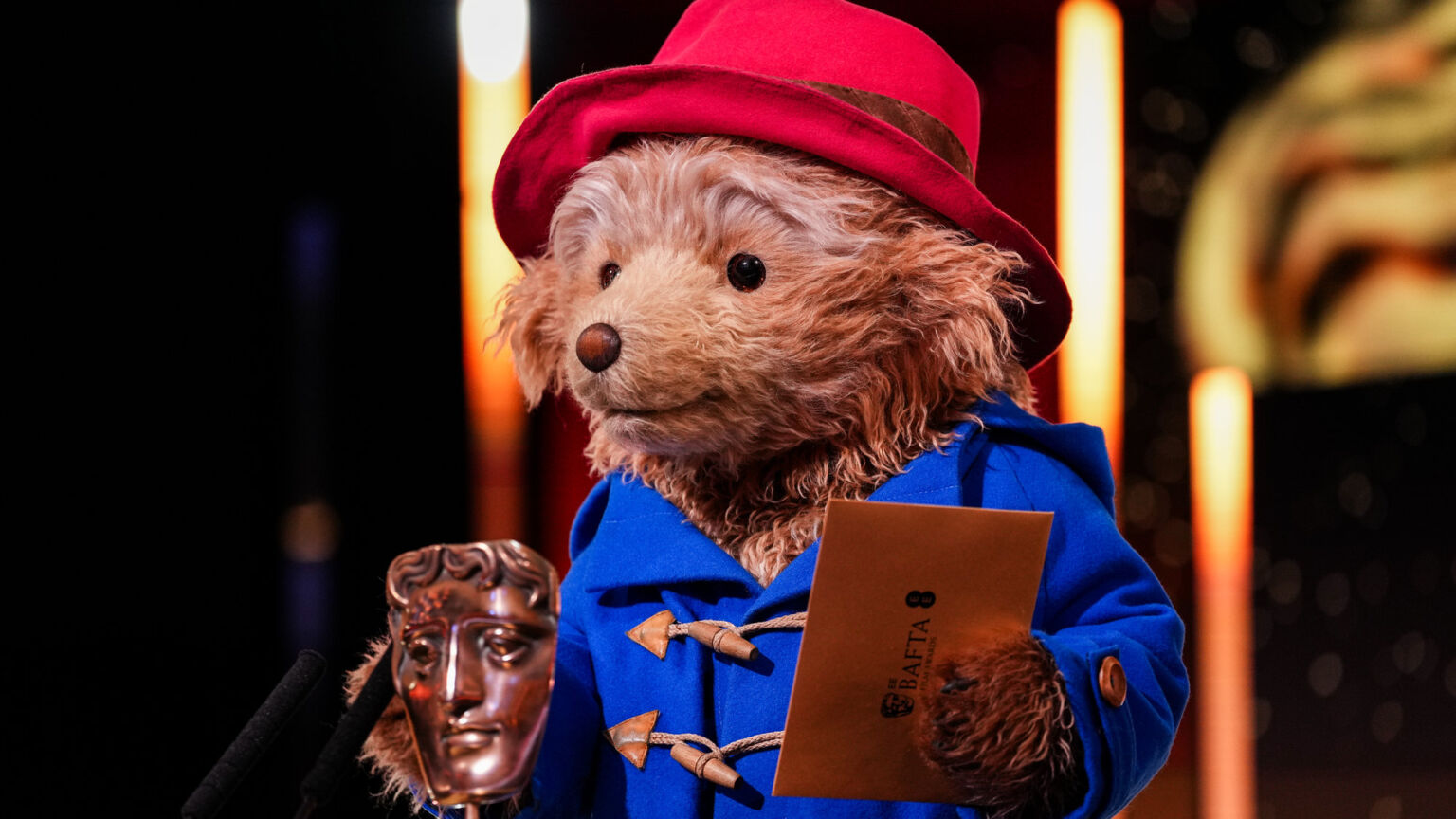
When a similarly soulless creature lurched onstage at this year’s BAFTAs, the reaction of the audience was not to run screaming. Instead there were a few whoops, and then a slide into what felt and looked like… embarrassment. Paddington Bear gave his speech, and his jokes got barely a laugh. Not even his earnest quotes from his opinionated mother figure, ‘Mrs Brown’, got a cheer. Prince William, the future king no less, looked as if he regretted not bringing his hunting rifle. It all made the breathless media headlines – ‘Adorable!’ ‘Paddington stole the spotlight and hearts!’ ‘Stunning debut!’ – look somewhat out of step. Maybe they were quoting the pre-show press release.
I was a fan of Paddington growing up. Quite a big fan. I loved the books. But here’s the thing: I was seven. Don’t get me wrong, I would probably still enjoy them today (I mean, I recently spent a few happy hours reading old Calvin and Hobbes compendiums). I loved the 2014 Paddington movie. It’s just that I don’t remember the Paddington of my day giving quite so many moral lectures – and I think that even at the age of seven I’d have resented his newfound priggishness. Nobody likes a lecture, least of all children. It’s a big part of why the modern publishing industry can’t get kids to read.
But with the bear from computer-generated hell, it’s not the kids I’m worried about – it’s the grown-ups. Paddington Syndrome is rife these days. It hit what I can only hope was its nadir last year, when district judge Sam Goozee, an actual member of the judiciary at an actual magistrates’ court, told two sheepish defendants, ‘Your actions were the antithesis of everything Paddington stands for’.
The defendants in question had vandalised a Paddington statue in the home town of his author, Michael Bond. Vandalism is bad, even when it’s (whisper it) quite funny. The two young men deserved their punishment and they deserved the financial penalty of restoring the statue. What they didn’t deserve, because none of us does, is a vicarious moral lecture from a fictional bear. As the defence counsel said, likely while trying to stop his eyeballs from rolling back in their sockets:
‘I accept there are a lot of people who know who Paddington Bear is, but there are a number of people who would not say it is a national treasure. It is a literary character. I am not too sure it has that level of status.’
Sometimes pronouns do matter. I am full of admiration for that lawyer for his use of ‘it’.
The bear is not to blame for this phenomenon. Paddington is a cutesy, dead-eyed symptom of mass infantilisation – a process that has long infected public-information leaflets, advertising and our television screens in the UK. You know the style: two-dimensional figures who look as if they were dressed by Hannah Spencer, long-legged and occasionally eyeless, big white semicircles on their faces in lieu of human smiles. They’re supposed to make information accessible. Relatable. Though what kind of grown-up human being ‘relates’ to these artless monstrosities is anyone’s guess.

The BBC is at it, too; everyone’s a kids’ TV presenter these days. Watching a BBC News TikTok video about violence towards Trading Standards officials, I had to ignore the presenter’s earnest CBeebies enunciation. Here was a truly dark story voiced like a Newsround item. The One Show comes across as a reiteration of Blue Peter. Programmes on gardening, properties and makeovers feature the stars speaking to their guests as if they’re nine years old. Even on Question Time, host Fiona Bruce acts like an overwrought Year 12 teacher fielding rude interjections from the class. You can almost imagine the scene in the staffroom – sorry, the green room – afterwards. ‘I’m so sorry about Connor. I’ll be writing to his parents. I do hope you’ll be kind enough to visit again?’
Perhaps the most curious thing about this infantilisation of adults is the concurrent determination to treat actual children as if they’re undersized grown-ups. Children sometimes need guidance from actual adults. However, as is particularly stark in the gender debate, adults are increasingly prone to taking political dictation from their kids. Alastair Campbell, who learned everything he knows about women and woman-impersonators from his infantile daughter, Grace, is one such example of this. Back in the day, it was understood that children rebel against their parents from time to time. That it’s all part of the process. But the poor offspring now have nothing to rebel against. Their parents merely roll over at the first threat of a breakfast-table tantrum. Kids, we are encouraged to believe, are omniscient little gods.
This age-inversion has real-world safeguarding consequences. There are way too many videos of mothers applauding their children as they dance ‘provocatively’ at events, all the while being leered at by grown men throwing money. The idea that ‘young people know who they are and what they want’ has quickly devolved into ‘Thomas is a girl and wants puberty blockers’. Of course, Thomas has no concept of what it means to lose future fertility and sexual function and to put a screeching chemical brake on his brain development.
Adulthood and childhood have been transposed, and it’s not just insulting – it’s dangerous. Let children be children, not political gurus, hyper-sexualised drag queens or medical experiments. And for the love of all that’s holy, cut the cartoons and the stuffed bears, treat adults like adults, and expect a bit more of them.
Gillian Philip is a writer and a driver in the haulage industry.
spiked summit 2026 – SOLD OUT
Saturday 27 June 2026
10am-6pm, Saturday 27 June
Emmanuel Centre, London, SW1P 3DW
With Lionel Shriver, Brendan O’Neill, Katharine Birbalsingh, Toby Young, Allison Pearson, Paul Embery, Tom Slater, Andrew Doyle, Fiyaz Mughal and more
The spiked summit has now SOLD OUT. To join the waitlist, email:
[email protected]
£80 or £50 for supporters
You’ve hit your monthly free article limit.
Support spiked and get unlimited access.
Support spiked and get unlimited access
spiked is funded by readers like you. Only 0.1% of regular readers currently support us. If just 1% did, we could grow our team and step up the fight for free speech and democracy.
Become a spiked supporter and enjoy unlimited, ad-free access, bonus content and exclusive events – while helping to keep independent journalism alive.
Monthly support makes the biggest difference. Thank you.




Comments
Want to join the conversation?
Only spiked supporters and patrons, who donate regularly to us, can comment on our articles.