Why Viktor Orbán lost
Fidesz failed to take the challenge from Péter Magyar seriously – until it was far too late.

Want unlimited, ad-free access? Become a spiked supporter.
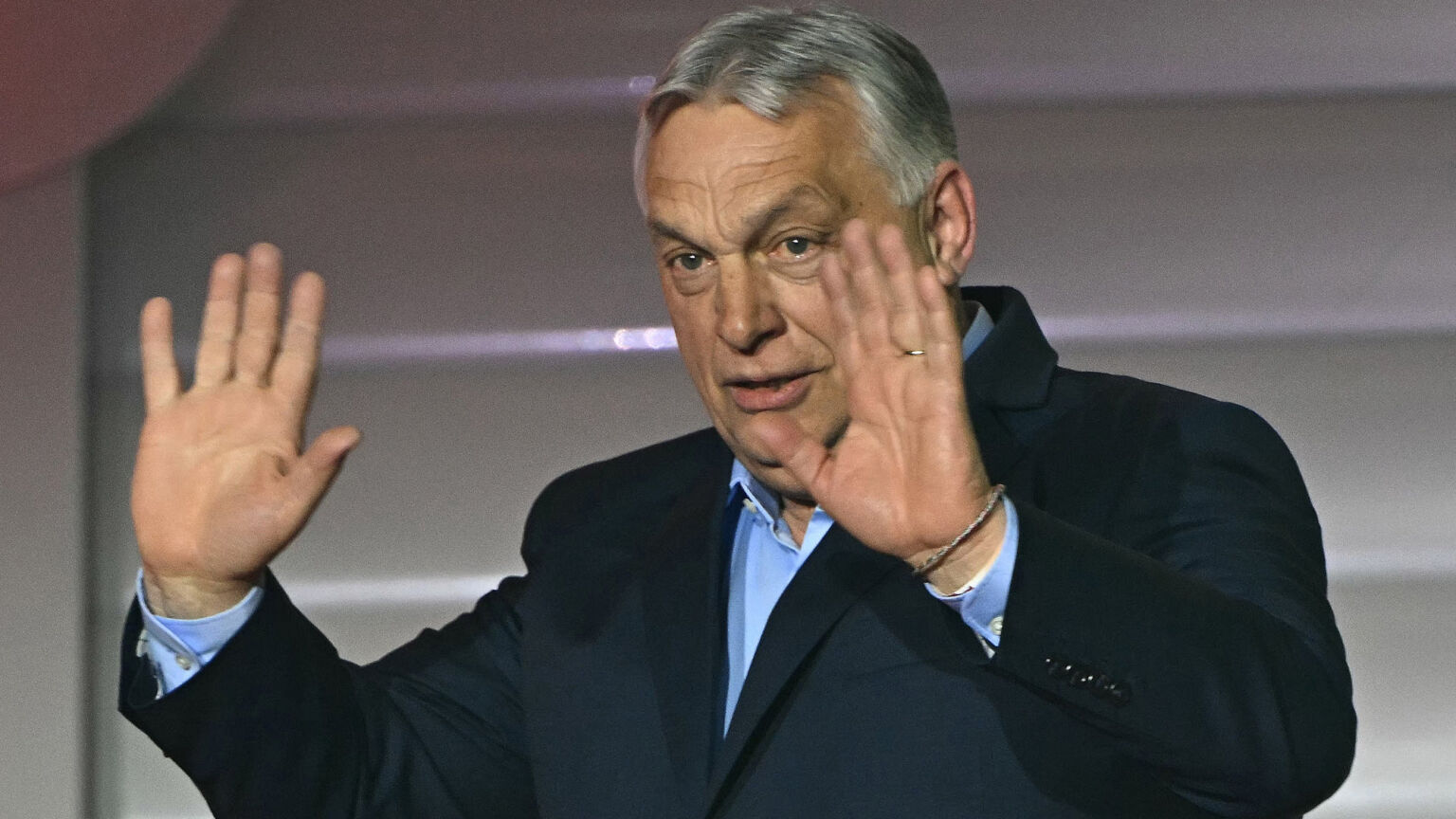
Within two hours of the polls closing on Sunday, it was clear that Hungary’s governing party, Fidesz, had lost the General Election to Péter Magyar’s Tisza Party. Prime minister Viktor Orbán soon gave a gracious concession speech and promised to fight on in opposition.
The defeat of Orbán and Fidesz represents a major setback for conservative, populist-minded movements in the West. More than any other individual, the now former Hungarian prime minister personified the national-sovereigntist, anti-globalist outlook that has made so much headway over the past decade.
The significance of this electoral contest has certainly been acknowledged by mainstream commentators far and wide. The day before the election, the main feature in the Financial Times concluded that ‘Orbán’s defeat would deprive nationalist conservatives across the world of a champion’. The Guardian was also excited about the implications of a potential Fidesz defeat, noting in its editorial that it ‘could conceivably be a bellwether event for the global far right, ahead of challenging midterm elections for Mr Trump’.
For globalist, cosmopolitan elites, getting rid of Orbán has been a priority for some time. The EU oligarchy has been particularly obsessed with eliminating the national-conservative regime in Budapest, given that, as far as it’s concerned, Orbán was continually trying to thwart the EU’s plans. In the words of Politico, the ‘Brussels establishment [has been] praying’ for Tisza to defeat its bitter enemy.
As part of my role as executive director of think-tank MCC Brussels, I have had many discussions with individuals close to the EU’s executive body, the European Commission. It has long been clear they bear a profound grudge towards Orbán and the radical, national-sovereigntist political outlook he represents. That is why they regard Péter Magyar’s electoral triumph as their own victory.
No doubt some pro-Fidesz commentators will blame outside pressure and interference for Orbán’s defeat. This is an understandable but misguided reaction. Though it is tempting to blame the efforts of EU politicians and EU-backed NGOs for what happened, they had at best only a marginal impact on the attitudes of Hungarian voters. The latter were motivated not by the concerns of the EU, but principally by domestic issues and their assessment of how well the Fidesz government has been able to deal with them.
Many commentators have offered only partial explanations for Orbán’s loss. They have claimed that Fidesz’s defeat was the inevitable consequence of people’s weariness with a government that has been in power for 16 years. And no doubt many voters will have felt that a change is needed. However, people’s desire for fresh faces in government is not enough to explain Fidesz’s loss. If people were satisfied with the existing arrangements, no matter how over-familiar the faces, they would not have decided that change was needed. Moreover, many who voted at the weekend, in an election with a near 80 per cent turnout, had never previously voted. Their decision to back a party for the first time can’t be explained solely by a weariness with 16 years of Fidesz.

Other analysts have blamed Orbán’s loss on Hungary’s economic slowdown and the cost-of-living crisis now faced by millions of citizens. This will have certainly undermined support for the government. But voters weren’t just concerned about their economic predicament. They were also outraged by the seemingly corrupt behaviour of sections of the Fidesz elite. Their frustration at the decline of their own living standards went hand in hand with their perception that some close to Fidesz were raking it in.
Hence, when I talked to those planning to vote for Tisza, they repeatedly said something along the lines of ‘they are all stealing from us’. Who ‘they’ were was not always clear, but Tisza supporters tended to point their fingers at prominent wealthy individuals in Fidesz’s orbit.
Yet accusations that Fidesz has been lining the pockets of a few, while others endure a decline in living standards, are also not sufficient to explain what happened this weekend. After all, talk of Fidesz’s supposed corruption is far from new. It played a significant role in opposition parties’ campaigns during the 2022 Hungarian elections. Fidesz still won that election with a substantial mandate.
To understand why Orbán lost, it is not enough to talk of voter fatigue, the cost-of-living crisis or even the allegations of corruption. Instead, any analysis must look deeper at three interrelated factors.

Firstly, it has been clear for some time that Fidesz has been unable to connect with younger generations of voters. As far back as 2022, the majority of under-30s were opposed to the Orbán government. At that time, however, the majority of younger, first-time voters did not bother to cast a ballot. Since then, this cohort has become more and more politicised, leading various anti-government initiatives in recent years.
Fidesz has seemed at a loss as to how to engage with the younger generation. Indeed, by 2024, it appeared that it had more or less given up on young people, fatalistically accepting it had lost their support. It was content to view itself as a party of the older generations.
Secondly, Fidesz never understood what drove the hostility of younger voters towards it. Fidesz activists frequently put it down to the natural rebelliousness of youth. They invariably claimed that as younger voters aged, they would grow out of their anti-government attitude. Viewing voter sympathies in terms of a generational life-cycle, from the radicalism of youth to the conservatism of middle and old age, allowed Fidesz to ignore the causes of the generational disaffection with Orbán’s government.
The main driver of this generational disaffection was the powerful influence exerted on them by Western identity politics and, underpinning it, therapy culture, with its emphasis on victimhood and vulnerability. The influence of therapy culture and the increasing focus on individual psychology and identity have tended to detach young people from the traditional, conservative values of Fidesz. In effect, many young Hungarians hold attitudes closer to those of their Western peers than the older members of their own society.
When I drew attention to the corrosive influence of therapy culture and identity politics on Hungarian society, many in Fidesz assured me that I was exaggerating the problem. They imagined that these phenomena were confined to the West and somehow miraculously stopped at the border of Hungary. Yet a therapeutic, identitarian sensibility increasingly prevails throughout Hungary’s cultural and educational institutions. Invariably, those influenced by it are likely to be drawn to Western anti-traditionalist and anti-nationalist ideals. Supporters of the government appeared to be oblivious to the fact that they not only were facing a culture war – they were losing it, too.
Thirdly, in recent years, many Fidesz politicians have come across as complacent, entitled and out of touch with their own society. This problem was particularly striking in relation to their constant mis-assessment of the challenge posed by Tisza leader Péter Magyar.
From the outset, Fidesz framed Magyar as an unserious, joke candidate. Magyar was described as psychologically unstable, someone who would sooner or later go into meltdown, while Tisza itself was dismissed as a one-man band. This failed to take into account the influence of the emerging sentiment that ‘enough is enough’, and the extent to which Magyar was able to personify it.
From February 2024 onwards, when Magyar announced his resignation from Fidesz and his plan to set up a new opposition party, he proved to be an able communicator. With every rally and demonstration, he became ever more comfortable – and increasingly formidable – as a political leader.
At the 2024 European Parliament elections, Tisza secured second place behind Fidesz, on nearly 30 per cent of the vote – the highest vote share of any non-Fidesz party since 2006. But still the penny didn’t drop among Fidesz supporters. Pro-Orbán media continued to peddle the tired narrative of Tisza as a one-man band.
But Tisza was always much more than that. As many observers have noted, Magyar’s remarkable use of rallies, marches and crowd events proved important to Tisza’s rise. These events provided an opportunity for people who were hungry to voice their frustrations to come together with like-minded citizens. Often broadcast online, Magyar’s public events provided the opposition with traction and momentum.
Sometime in 2024, Tisza seemed to gain the initiative. Despite his technocratic-centrist political outlook, Magyar succeeded in projecting an anti-elitist, even outwardly populist image.
Fidesz, in contrast, was consistently on the defensive, forced to respond to Tisza. Its belated attempt to create its own cohort of online influencers lacked the spontaneity of the Tisza rebels. Fidesz initiatives, like the online Fighters Club, launched in spring 2025, tended to appeal to its pre-existing base rather than reach out to a wider audience. Despite being in power for 16 years, Fidesz could not match the cultural élan and mobilising pull of its opponents.
And so Tisza won the battle for hearts and minds. It proved to be better at populism than its opponents. Riding the ‘enough is enough’ wave of public discontent, it succeeded where previous opponents of Orbán had failed.
Being in government rather than posturing in opposition will likely undermine Tisza. It will certainly expose its populism as entirely performative. And by the time the next General Election comes around, Fidesz should have learned from this experience of defeat. The future of Hungary depends on an effective Fidesz opposition.
Europe’s centrist elites may hope that the defeat of Orbán represents a defeat for the populist movement in Europe. But crucially, none of the values that Fidesz stands for, from national sovereignty and strong borders to the importance of tradition, has been explicitly challenged, let alone defeated by Tisza. That is why I am confident that the populist surge will continue to transform the political landscape in Western societies.
As for Hungary, it is important that Fidesz holds its nerve and learns from the experience of defeat. An honest assessment of what went wrong is the prerequisite for a recovery ahead of the next election.
Frank Furedi’s new book, In Defence of Populism, is published next month by Polity Press.
You’ve hit your monthly free article limit.
Support spiked and get unlimited access.
Support spiked and get unlimited access
spiked is funded by readers like you. Only 0.1% of regular readers currently support us. If just 1% did, we could grow our team and step up the fight for free speech and democracy.
Become a spiked supporter and enjoy unlimited, ad-free access, bonus content and exclusive events – while helping to keep independent journalism alive.
Monthly support makes the biggest difference. Thank you.






Comments
Want to join the conversation?
Only spiked supporters and patrons, who donate regularly to us, can comment on our articles.