Long-read
Sayyid Qutb: the godfather of Islamism
How an Egyptian intellectual helped birth a totalitarian, terroristic ideology.
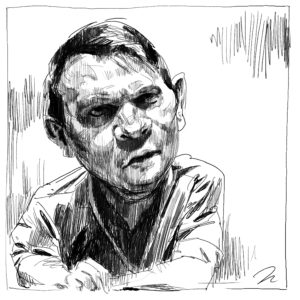
Want unlimited, ad-free access? Become a spiked supporter.
As historian Faisal Devji has recently shown, the meaning of the term Islam began to change during the 19th century. In the colonial context of South Asia and the Middle East, the likes of ‘pan-Islamic’, anti-colonial activist Jamal al-Din al-Afghani (1838-1897) began to turn it into something rather more modern, in opposition to European imperialism and the West more broadly.
The real shift, however, happened after the First World War. In Europe, the collapse of the pre-war liberal order fuelled radical vanguardism, be it Communist, fascist or modernist. The colonial metropoles witnessed a similar political and cultural insurgency, refracted through a more explicitly anti-Western, anti-imperial lens and framed in national, cultural terms. Nowhere more so than in Cairo, in British-occupied Egypt, where young and young-ish radicals challenged the status quo. It was in this context that Islam was effectively and implicitly repurposed as an ideology – indeed, as an –ism to sit alongside the others that were flourishing in Europe and elsewhere during this period.
This was not Islam as a set of devotional practices. This was Islam as a revolutionary solution to the perceived failure of Western, liberal modernity. Its advocates no longer measured their faith against Christianity. They pitched it into battle against liberalism and capitalism, as a revolutionary challenge to the liberal order to rival that of fascism or Communism – the latter being a political creed that Islamists dismissed as just another outgrowth of godless Western rationalism.
The creation of the Society of Muslim Brothers (otherwise known as the Muslim Brotherhood) in Cairo in 1928 is the key moment. Its founder, a then 22-year-old teacher called Hassan al-Banna (1906-1949), gave Islamism its first organisational form. But it is in the later work of Banna’s contemporary, Sayyid Qutb (1906-1966), an Egyptian teacher and civil servant, that Islamism gained arguably its most influential and explosive articulation. In the multi-volume In the Shade of the Koran (1951-1965) and, above all, in Milestones (1964), Qutb presented Islam as a political order (Nizam), indeed, as ‘the only system’ capable of rescuing mankind from the spiritless descent of ‘Western civilisation’.
Though wrought from the scenery, symbolism and parables of the Koran, Qutb’s Islam was also modern and revolutionary. He reimagined the first Muslims as professional, vanguardist revolutionaries. He reapplied the ancient era of ‘Jahiliyyah’, the pre-Islamic ‘age of ignorance’, to the present-day world. And he recast the ‘crusaders’ of America and Europe – and, above all, ‘Zionists’ and ‘world Jewry’ – as Islam’s cosmic, evil-doing enemies. He drew Manichean battle lines and pledged war on the unbelievers. As political scientist Bassam Tibi has it in Islamism and Islam (2012), Qutb is ‘the rector spiritus of political Islam’, the figure ‘who first interpreted jihad as an “Islamic world revolution” in the pursuit of an Islamic world order’.
Understanding Qutb – grasping how this sometime civil servant came to give voice to an ideology that is now cutting a keffiyeh-clad dash across the world – has rarely been more important than it is right now. It allows us to see the genesis of a political force, a corrosive anti-Western animus, that has now managed to outlast its 20th-century competitors.
Qutb was born in 1906, in Musha, a village in the Asyut province on the West bank of the Nile. His father was a small landowner, and Qutb, if born a few decades earlier, would have likely lived an agricultural life very similar to that of his ancestors. But during the latter half of the 19th century, Egypt’s Alawiyya dynasty, governing under nominal Ottoman and then British rule from 1882, had undertaken a significant modernisation programme. Successive governments centralised the state, built canals, dams and trainlines. They standardised the legal system, virtually limiting the purview of Sharia law to domestic disputes. Perhaps most significant of all in the case of Qutb, under Ismail the Magnificent (1863-1879), the government enlarged and modernised the education system along European lines, including the introduction of primary and secondary schooling. The older ways of doing things, rooted in semi-feudal practices dating back centuries, were being supplanted by new, rather more Western practices. As Ismail put it towards the end of his reign, ‘my country no longer belongs to Africa; it is part of Europe’.

Qutb was a beneficiary of this Europeanisation. Having done well at school, and having learnt the Koran virtually by heart, he was enrolled at Cairo’s Teachers Training College (established by Ismail in the 1870s), where he studied Islamic-Arabic heritage. In many ways, he was the very archetype of the modern Egyptian. Wrested from the annually inundated backwaters of the Nile delta, a besuited Qutb had, by the 1920s, become one of the effendiyya – Egypt’s burgeoning, often state-employed, urban middle class. He worked at the Ministry of Education after graduating, and, from 1936, lived in Hulwan, a newly built, affluent suburb of Cairo.
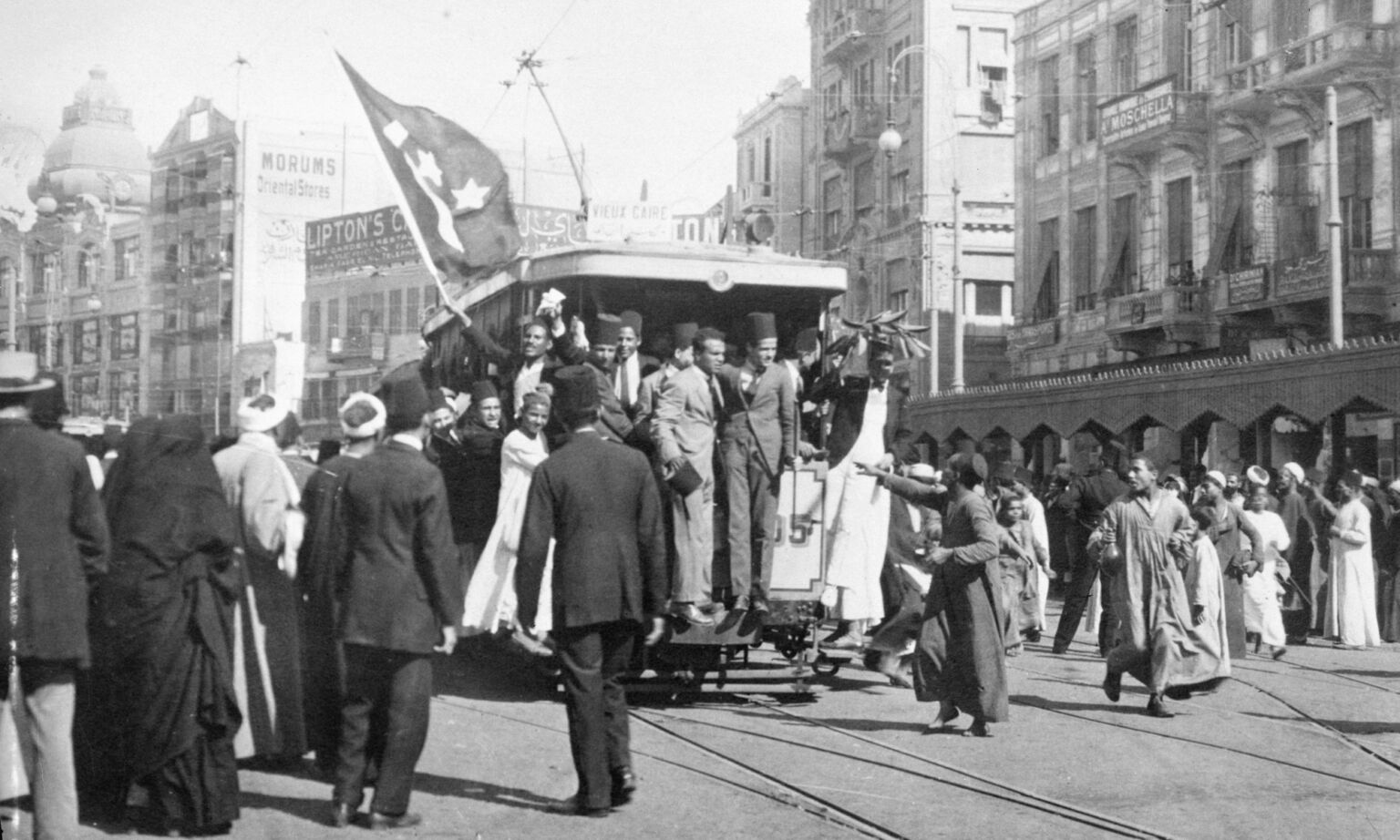
But this was a tense, turbulent, crisis-ridden moment, too. Egypt’s modernisation had come at the cost of increasing foreign indebtedness – the Suez Canal was notably sold off (in part) to Britain in 1875. When that same foreign creditor invaded in 1882, imposing a combination of indirect and direct rule, it was clear where power really lay. Little wonder that a new nationalist movement began to emerge at the turn of the century. It contained aristocrats, army officers and ulama (or clergy). The nationalist struggle against foreign imperialists and Europeanised Egyptian elites was to form the revolutionary backdrop to much of Qutb’s life. Especially after the momentous 1919-1922 uprising against British occupation, which pushed the colonial power away from, but not fully out of, Egyptian affairs.
Yet while Qutb was sympathetic to the nationalist fight for political and economic independence during the late 1920s and 1930s, he did not play an active role. For much of his life, he was also at a distance from the Muslim Brotherhood, which had emerged as a radical Islamic counterpoint to the secular aspirations of the nationalists. He was a fellow traveller at points, but not at this stage one of the committed.

Indeed, during the interwar years, Qutb is better understood as a would-be litterateur. While advancing in the civil service, he moved in high-cultural circles. He launched and wrote for literary and educational journals. He even took as his mentor the journalist and critic, Abbas Mahmoud al-Ayadd (1889-1964), a man steeped not in the 114 surahs of the Koran, but in the English Romanticism of Samuel Taylor Coleridge and William Hazlitt. Qutb made something of a name for himself during this period as a cultural critic.
Much has been written of Qutb’s immersion in the Koran, and of his affinity with the spiritual richness of his rural upbringing (captured in his 1946 work, A Child from the Village). But Qutb’s worldview was also nourished by Western cultural sources. Like al-Ayadd, he drew deep on the social protests of Romanticism, and its appeal to more authentic sources of experience. Like many of his generation, he also inhaled the darker, reactionary fumes of the later anti-Enlightenment turn among many European thinkers, writers and artists, from the end of the 19th century into the 20th century. He saw something valuable in their critiques of reason, autonomy and universalism in the name of feeling, crowd psychology and cultural particularism. He was familiar with Oswald Spengler’s Decline of the West (1922), and above all Alexis Carrel’s Man the Unknown (1935), a jeremiad about the deadening effects of Western rationalism on man, which he quotes at length in his work. All this captures something important about the development of Islamism – it drew just as much on a distinctly Western counter-Enlightenment tradition, especially its radically reactionary descent, as it did on Egyptian or Islamic sources. Indeed, the affinity of large parts of today’s degenerate Western left with Islamism rests partially on the extent to which they both draw intellectually from the same reactionary well.
Qutb, then, was immersed in the West’s own cultural disillusionment. It was through a prism cut from distinctly European materials that Qutb first began fashioning both his own vision of Egypt’s cultural renaissance and his cultural critique of the West. In terms echoing late 18th-century German Romantic Johann Gottfried Herder, he argued that Egyptians are in essence spiritually distinct from Western peoples – they need to find a way to realise their inner essence.
To prove his point, he suffused his poetry and writing with Romantic and even Existentialist tropes. He wrote of his sense of deracination from a Westernised Egypt. He talked up the importance of expressing ‘authentic feelings’ that had been smothered by foreign influences.
In the 1930s and 1940s, Qutb was engaging principally in a cultural critique. He saw Westernisation as a culturally oppressive and decadent force, strangling Egypt’s own authentic cultural essence. He denounced Western rationalism, materialism and individualism, and decried the extent to which Westernisation led to the disenchantment and demoralisation of the world. Western culture has destroyed, he wrote, ‘all that humanity has produced in the way of spiritual values, human creeds and noble traditions’.
Islam at this stage was a key component in Qutb’s argument against the West. But it was not yet the overriding element. It sat alongside others, including national independence. Even in the mid 1940s, Qutb’s assertion of Egypt’s non- and anti-Western identity led him to situate Egypt within a broader, Eastern cultural bloc, with Arabism accorded the same importance as Islam.
By the mid-1930s and into the 1940s, the Muslim Brotherhood was a significant political force, numbering some half a million members. And it was still in open conflict with Egypt’s rulers and their British backers, culminating in the assassination of Egyptian prime minister Mahmoud El Nokrashy Pasha in 1948. In retaliation, the Egyptian security forces assassinated Hassan al-Banna himself the following year.
Throughout all this, Qutb was still keeping his distance, but there was a distinct Islamist turn to Qutb’s writing after the Second World War. The ethical antagonisms of his thought, of West vs East, inauthentic vs authentic, materialist vs spiritual, were increasingly acquiring an Islamic hue, at the same as he was moving away from nationalism. The Jewish-Arab struggle in the British Mandate for Palestine seemed to have focussed his mind, and also played on his long-standing anti-Semitism. Writing in 1946, he portrayed it as a ‘struggle between the resurgent East and the barbaric West, between God’s law for mankind and the law of the jungle’. He called for the boycott of Zionists everywhere, accusing them of ‘settler-colonialism’, a term now central to academic discourse.
As the 1940s progressed, it was clear that Qutb’s focus on Islam, as the solution to the problems of ‘Western civilisation’, was intensifying. In a triad of well-received books published in the late 1940s and early 1950s (Social Justice in Islam, The Battle of Islam and Capitalism, and Islam and World Peace), Qutb identified Islam with social-welfare programmes. This was not just an attempt to outflank the then insurgent Egyptian left. It was also Qutb’s most significant and coherent attempt to present Islam, above all other aspects of Egyptian culture, as the answer to the failings of liberalism, capitalism and Western modernity as a whole.
In 1948, the Ministry of Education sent Qutb to America to study the latest curricula and pedagogical practices. This was his chance to visit the enemy, and to put his beliefs to the test. Or it might have been if his mind hadn’t been so closed. He spent nearly two years in the US, visiting New York on his arrival, before heading to Wilson’s Teachers Training College in Washington, DC, and later enrolling at Colorado State College of Education, in the town of Greeley. Throughout his time in the US, he merely confirmed his own anti-Western prejudices.
As John Calvert shows in his excellent biography of Qutb, the section in In the Shade of the Koran dealing with his American sojourn drips with a moralistic contempt on a par with the most snobbish of the Bloomsbury set. He writes, most probably fantastically given his less than appealing mien, of bravely fending off a ‘semi-naked’ woman on the crossing over. He describes New Yorkers as a ‘furious human herd’ driven by ‘gluttony, indulgence, craving and consumption’. And he condemns the crass materialism of Greely’s inhabitants, noting with disdain their predilection for tending to their gardens. In a recurring theme throughout his work, he’s especially critical of Western women. He writes of their supposed sexualisation, of their ‘thirsty lips… bulging breasts… smoother legs’. It’s proof, if any were needed, that the Islamist subjugation of women – which leads to them being covered up and confined to domestic non-bliss – seems to go hand in hand with a fear of female sexuality. On his return to Egypt in 1950, he wrote an article in which he summarised the conclusions of his research mission: ‘The white man, whether American or European, is our first enemy.’
Throughout the early 1950s, the deepening of Qutb’s Islamism, the intensification of his cultural opposition to what he called the ‘Western disease’, meshed with his increasingly vocalised anti-Semitism. This was writ large in Our Struggle Against the Jews, a work that conjured up Jewish people as the eternal, cosmic enemy of Muslims everywhere. For Qutb, Israel was the face not just of the Western ‘crusaders’, but of evil.
As Qutb’s Islamist embrace deepened, Egyptian nationalist forces were in the process of putting an end to British occupation and toppling the monarchy. In the initial aftermath of the Free Officers coup d’état in July 1952, Egypt’s new leader, Colonel Gamal Abdel al Nasser, was seemingly keen to keep the Muslim Brotherhood onside. Qutb himself, his status as an Islamic intellectual rising, was also promoted by the new regime. He spoke at Free Officers events and was given a chance to deliver public radio lectures on the importance of Islamic values.
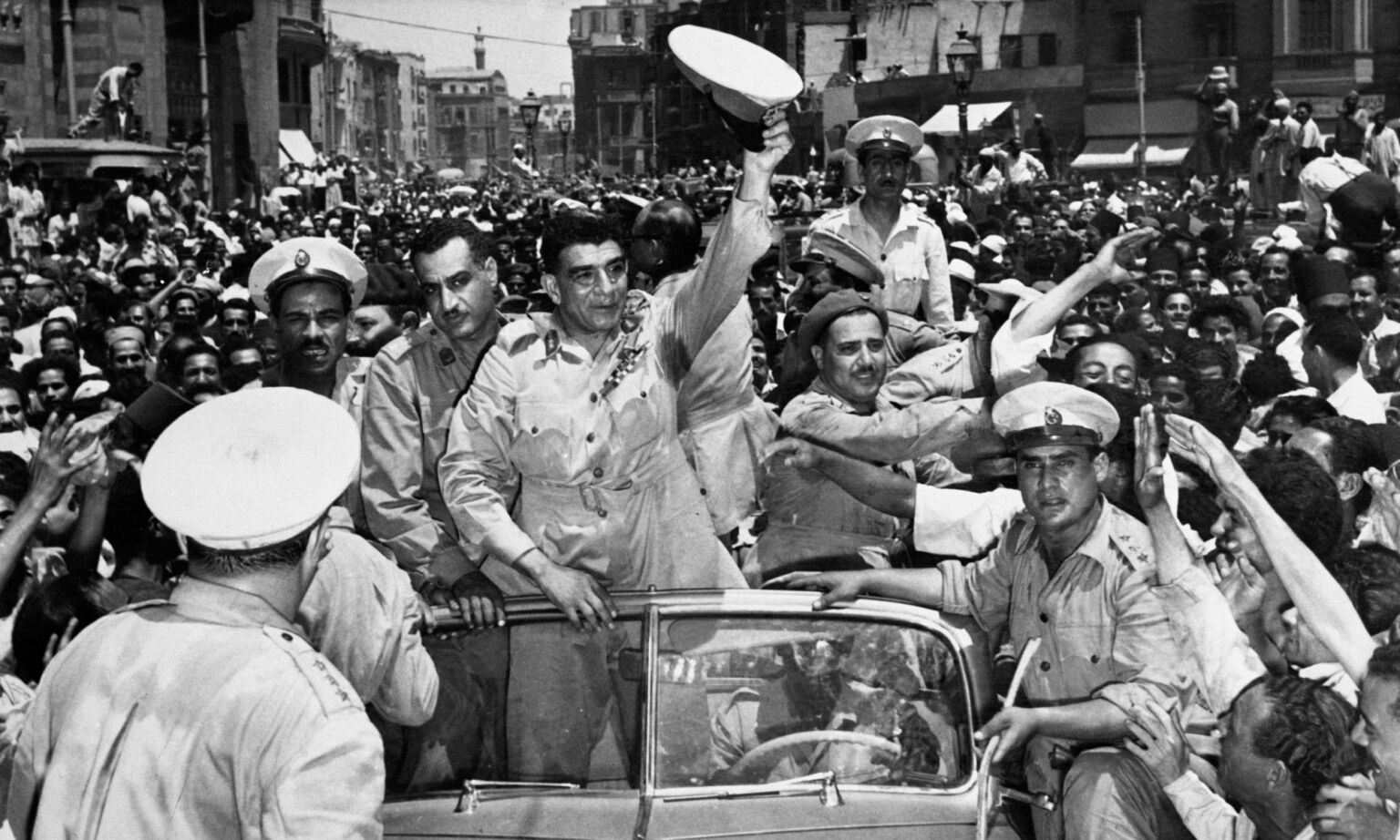
Yet the secular aspirations of Nasserite nationalists – ‘Religion is for God and the nation for all’, as Nasser put it – always sat uneasily alongside the Islamist dreams of the Muslim Brotherhood and now Qutb. In February 1953, Qutb finally joined the Muslim Brotherhood. He proclaimed: ‘No other movement can stand up to the Zionist and the colonialist crusaders.’
In the months that followed, tensions between the Muslim Brotherhood and Egyptians’ nationalist rulers mounted, culminating in the disbanding of the Muslim Brotherhood in 1954 and the arrest and eventual imprisonment of hundreds of members, including Qutb. It was in prison that Qutb – ill, embittered and hardened against Nasser and secular nationalism – produced Milestones, arguably the defining document of Islamism. From the start, Milestones is shot through with revolutionary intent. Cosplaying as a What Is to Be Done? – Lenin’s 1901 political cri de coeur – for Islamists, it begins by offering a diagnosis of the spiritual crisis in which mankind finds itself. This amounts to a recapitulation of Qutb’s long-standing cultural critique of the West, of the way in which the elevation of human reason has disenchanted the world, depriving people of ‘any healthy values for the guidance of mankind’. Only Islam has the answer, he writes. Only Islam has the capacity to re-enchant the world, to suffuse it with the breath of the divine.
The problem, Qutb argues, is that the world is steeped in Jahilyyah (‘age of ignorance’). Previously, this was a term scholars used to refer to the supposed moral turpitude of the pre-Muslim world. But Qutb turns it into something more abstract – a reference to any society under the sway of an authority other than that of Allah. Any society, that is, that elevates human reason to a position of authority, or that places a value on freedom or material progress. That goes for all social forms and political ideologies of Western origin, from the liberal to the Communist to the nationalist. All societies are ‘jahili’, Qutb writes, that have ‘delegated the law-making capacity of God to others’ – that have, in short, usurped the ‘sovereignty’ of Allah. There is, he writes, ‘no authority except God’s, no law except from God, and no authority of one man over another, as the authority in all respects belongs to God’.
‘Sovereignty’ is the key concept in Milestones. Adapted from the work of Indian Islamist, Abdul Maududi (1903-1979), with whom Qutb had been corresponding in prison, ‘sovereignty’ in Qutb’s world ought to belong solely to Allah – an assertion he draws from the Muslim declaration of faith, ‘There is no deity except Allah’ (La ilaha illallah). This sovereignty is not limited to spiritual affairs. There is no room for secularism in the Islamist worldview. Allah’s writ applies to every aspect of human reality. As he put it in In the Shade of the Koran, ‘it is not natural for religion to be separated from [the affairs] of the world’. Qutb’s stated ambition in Milestones is to replace every man-made law, custom and tradition ‘with a new concept of human life, to create a new world on the foundation of submission to the creator’. This, he says, is Islam’s ‘revolutionary message’.
At points, Qutb frames this message in terms of freedom and even ‘autonomy’, stating that Islam ‘is really a universal declaration of the freedom of man’. He argues that jahili societies enslave men to laws made by other men, and – in a pointed allusion to what he perceives as Western freedom – enslave them to their own animal-like desires. Islam, by contrast, will liberate men both from secular authorities and from their own impulses. Not by encouraging them to exercise their own reason, as the actual self-governing promise of ‘autonomy’ has it, but through their submission to their only right and true ruler: Allah. This is Qutb’s vision of freedom, ‘the total submission to God alone’.
It is a singular, brutal vision. It not only recognises no other authority, but also, as Qutb makes clear, no other ties, bonds or commitments. It floats free of family, friends and, importantly, nation. It’s a vision that, in its sheer, inhuman abstraction, transcends all boundaries – a vision global in scope, and horrifying in ambition.
And how is this Islamic society to be realised? Through what Qutb calls a ‘vanguard’ of true believers. Those who, in every aspect of their existence, have freed themselves from jahili society and submitted themselves entirely to Allah. Those who live only according to the laws of God, not man. That is who Milestones is aimed at – the revolutionary cell.
In this regard, Islamism once again reveals its origins in the tumult and vanguardist energy of the interwar years. There is talk in Milestones of ‘praxis’, of Islam being a ‘dynamic’ message, of striving and becoming through the act of fighting – and above all, through struggle, Kampf or jihad.
There is little question in Milestones that ‘Islamic jihad’ will sometimes be a violent struggle against jahili society. That a ‘vanguard’, a growing ‘community’ of Islamists, submitters to Allah, will have to, at some stage, wage war with the ‘crusaders’, ‘Zionists’ and all other elements of jahili society to come. This is an ‘eternal’ cosmic jihad against evil, those ‘usurpers of God’s authority’. As Qutb puts it, Islamic jihad is ‘a universal proclamation of the freedom of man from servitude to other men, the establishment of the sovereignty of God and his Lordship throughout the world, the end of man’s arrogance and selfishness, and the implementation of the Divine Sharia in human affairs’. The only question Milestones leaves open is when Islamic jihad is to be waged.
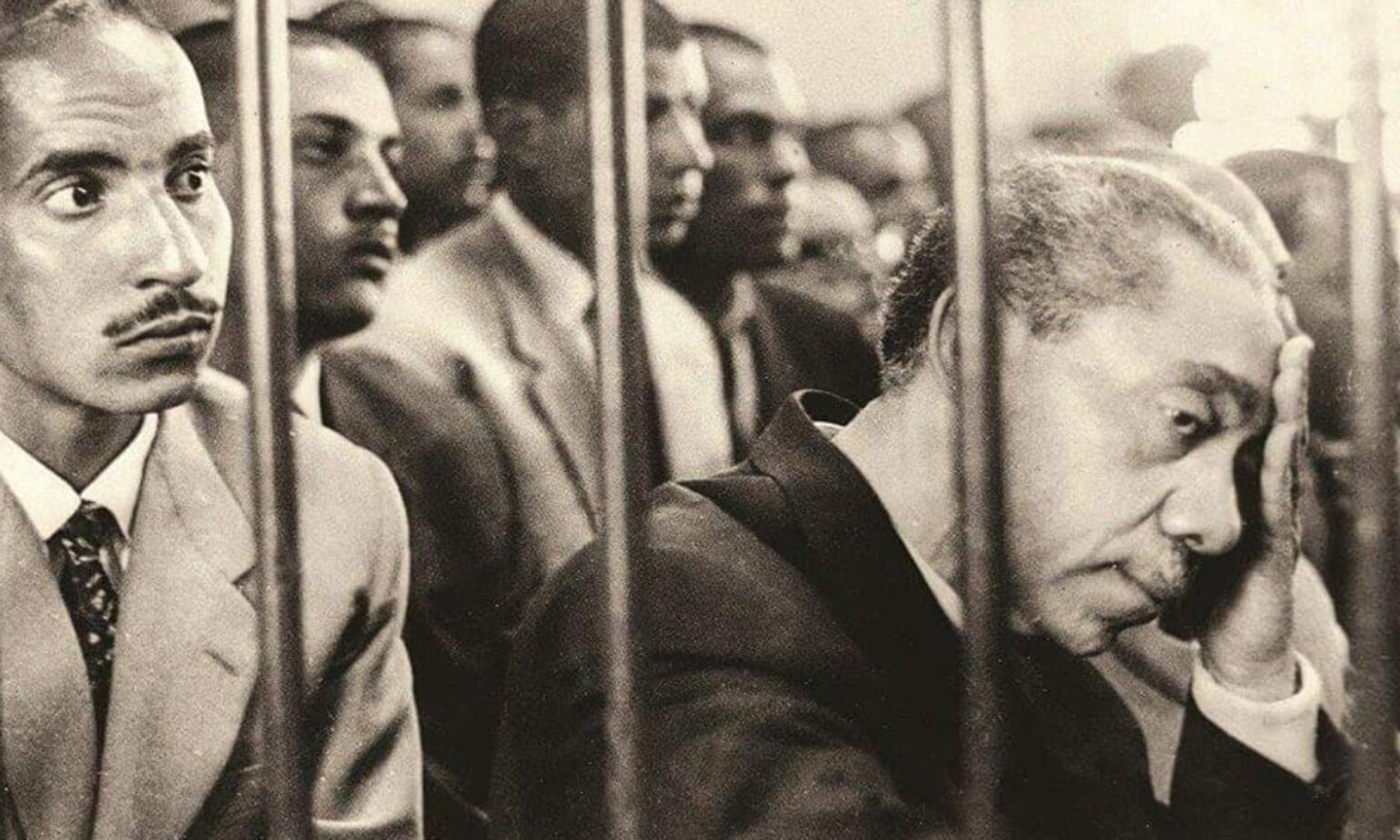
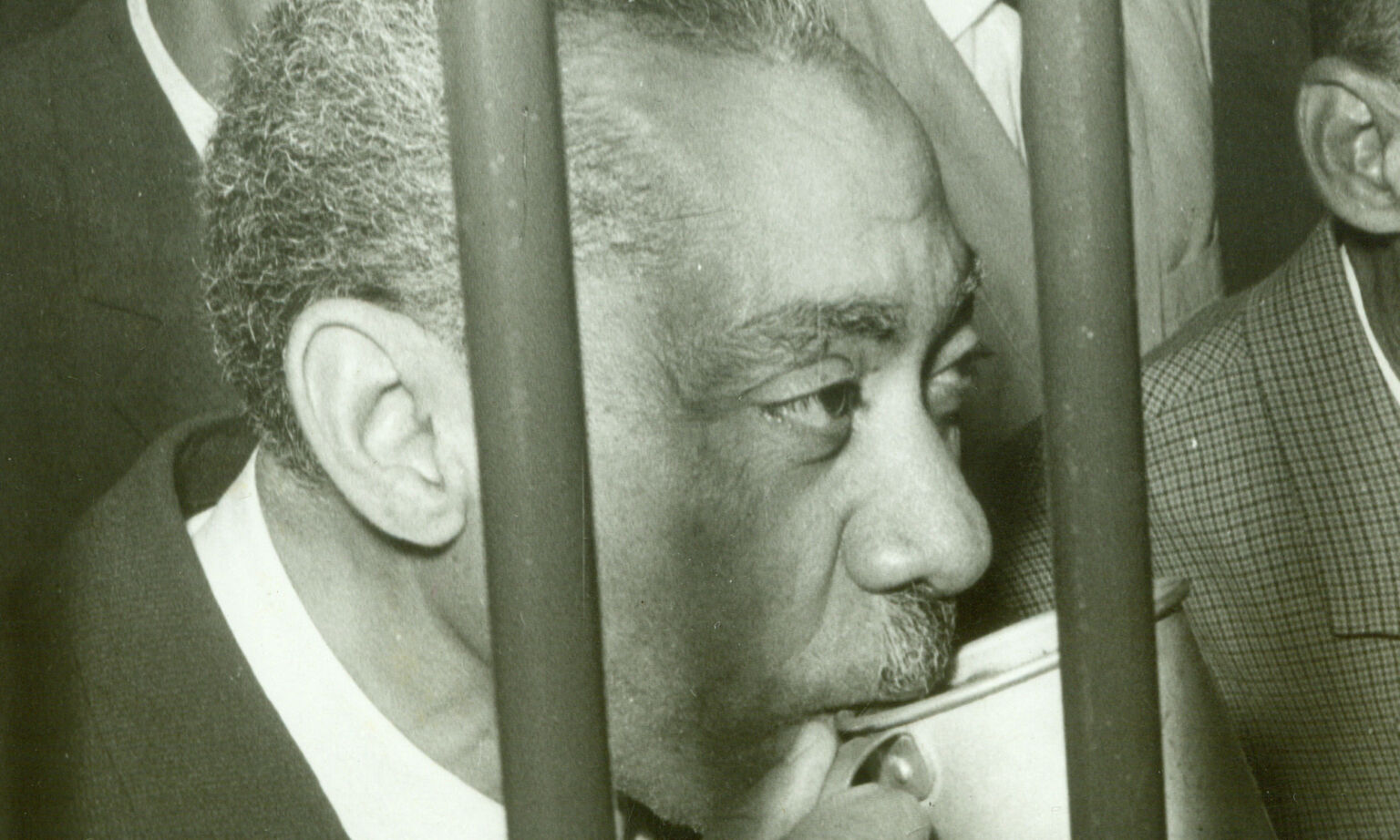
Milestones was published in 1964, the same year Qutb was released from prison. Just eight months later, amid Muslim Brotherhood scheming, gun-running and plots to kill Nasser, Qutb was re-arrested. At a subsequent trial, he was found guilty of his alleged part in the conspiracy to assassinate the Egyptian president. On 29 August 1966, Qutb was hanged to death.
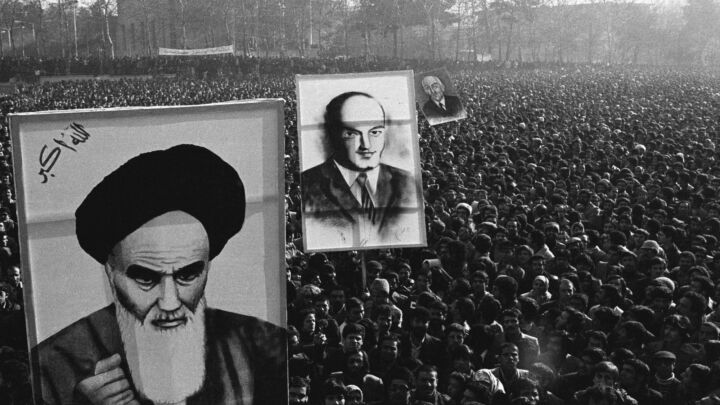
Since then, his influence and legend have grown massively, aided and abetted by the effective defeat of Nasser and the cause of Arab nationalism in 1967 – after Egypt-led forces were roundly thrashed in the Six-Day War with Israel. From that point on, Islamism, with Qutb’s later writings to the fore, has bloomed darkly across the Middle East, Africa and far beyond, driving on the Islamic Republic of Iran, compelling the loyalty of much of the Muslim Brotherhood, and informing the outlook of Islamist terror groups, from al-Qaeda to the Islamic State. And now Islamism’s toxic combination of anti-Westernism and anti-Zionism seems to have seduced swathes of the Western left, too.
Digging at the roots of this pernicious ideology, rending the veil on its reactionary origins has rarely been more necessary.
Tim Black is associate editor of spiked.
You’ve hit your monthly free article limit.
Support spiked and get unlimited access.
Support spiked and get unlimited access
spiked is funded by readers like you. Only 0.1% of regular readers currently support us. If just 1% did, we could grow our team and step up the fight for free speech and democracy.
Become a spiked supporter and enjoy unlimited, ad-free access, bonus content and exclusive events – while helping to keep independent journalism alive.
Monthly support makes the biggest difference. Thank you.




Comments
Want to join the conversation?
Only spiked supporters and patrons, who donate regularly to us, can comment on our articles.