Students should not be marked on their ‘lived experience’
Universities are swapping exams, essays and grammar to make assessments more ‘culturally responsive’.

Want unlimited, ad-free access? Become a spiked supporter.
Everyone in Britain, from the chancellor of the exchequer to the parents of 17-year-olds currently being dragged around university open days, is concerned about student debt, tuition fees and interest rates. Fretting about the price of a degree has become a national pastime. Far less discussed is the value of higher education: what students will learn and how they might grow intellectually. Unlike tuition-fee increases, which are set by government ministers and policy wonks, educational standards are determined by universities themselves – and they are in freefall.
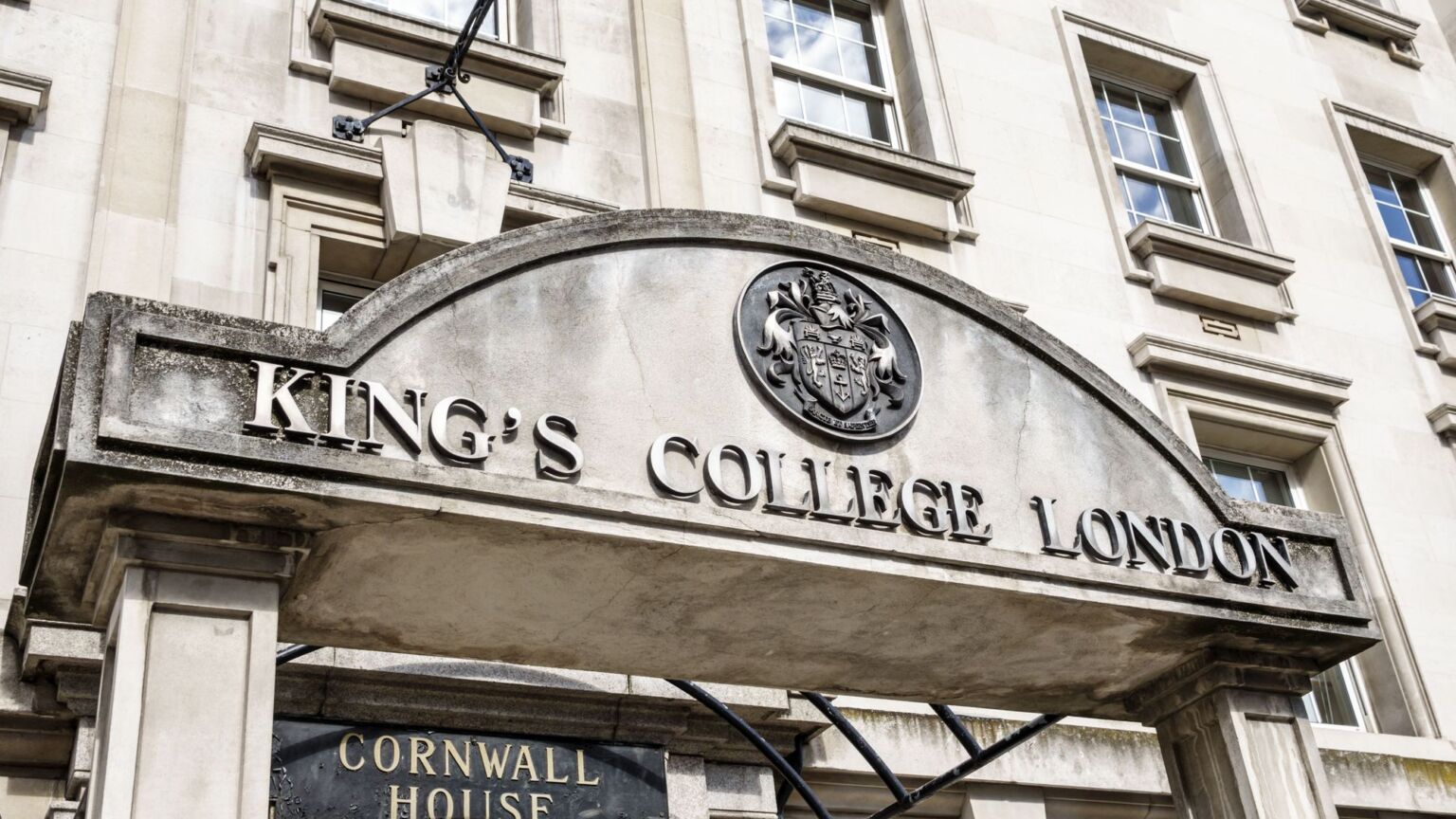
This week, King’s College London has hit the headlines after academics went public with their disagreement over an internal directive that they should cut the number of exams students are set and overlook grammatical errors when assessing work. At the same time, essay word counts will be lowered from 2,000 to just 1,300 words. You don’t need a degree to work out that the result of all of these changes will be lower standards. Passing will be easier when students are not expected to work so hard, take exams or worry about writing correctly.
But King’s is not the only institution to have lowered standards in this way. Oxford and Cambridge are among the other universities moving away from exams. At the University of the West of England, students can write field-trip reports or book reviews, design a book jacket, write a pitch or record a podcast. These are no doubt fun activities. Some, perhaps, are challenging. But crucially, success does not depend on students having read extensively, thought deeply and marshalled their ideas, either under time pressure or in a longer written form.
Unsurprisingly, this is reflected in grade inflation. More than 75 per cent of all students now leave university with a first-class or 2:1 degree, with the most dramatic increase taking place between 2010 and 2020. Chinese students studying in the UK have wryly labelled Britain’s higher-education system ‘easy in, easy out’, because not only is it easier to get accepted on to courses than in the US or China, but assessments are also less stringent. In other words, easy admission is followed by low expectations and easy-to-meet academic standards.
So, the academics at King’s College are absolutely right to decry ‘dumbing down’. But the fact that they had to take their complaints to the national press raises uncomfortable questions about who runs our universities. If lecturers themselves are not setting standards, expectations and assessment methods, then who is?
The answer becomes clear when we see the justification for cutting exams, lowering essay word counts and ignoring students’ grammatical mistakes. These changes are apparently needed to make higher education ‘diverse’ and ‘more inclusive’. Those now calling the shots in universities are not lecturers, then, but learning-support officers and diversity, equity and inclusion managers. Not subject experts, in other words, but bureaucrats. And their motivation is not academic, but political.
According to this managerial elite, the problem with exams is that they are a bit stressful. Writing essays can be overwhelming. Those now in charge think students are just too fragile to meet even the most basic demands. But the clincher seems to be the implication that more traditional assessment methods are racist. The learning and teaching bureaucrats at King’s think changes are needed in order to ‘validate diverse knowledge systems and lived experiences’. New forms of assessment should be ‘culturally responsive’ and take into account ‘language culture and identity’. Marking, meanwhile, should ‘embrace linguistic diversity’ and focus on ‘ideas not grammar’.

We need a reality check. It is not exams that are racist, but the patronising assumption that only white men can cope with writing essays under timed conditions. It is not grammar that is elitist, but the condescending notion that people with ‘diverse’ identities are incapable of mastering the finer points of the English language. For all their politically correct euphemisms, DEI managers see non-white students as ignorant and ineducable.
The idea that so-called non-traditional students have their own ‘knowledge systems’ and need to have their ‘lived experiences’ affirmed through the curriculum and assessment methods challenges the very idea of a university. Rather than being dedicated to the pursuit of truth and the transmission of knowledge, universities become places where multiple perspectives are affirmed, and none must be judged inferior. (Apart, that is, from the work of white males, which must only ever be condemned on the decolonised curriculum.) And rather than students being expected to employ reason and intellectual endeavour, they must have their experiences and emotional responses validated. This is not a university education but a therapy session.
Thankfully, there is at least one positive to take from the King’s College saga. Students have written an open letter criticising the new assessment regime, and lecturers have taken their accusations of ‘dumbing down’ to the press. Clearly, there are at least some people in our universities who still value excellence.
Joanna Williams is a spiked columnist and author of How Woke Won. Follow her on Substack: cieo.substack.com.


spiked summit 2026
10am-5pm, Saturday 27 June
Emmanuel Centre, London, SW1P 3DW
With Konstantin Kisin, Lionel Shriver, Brendan O'Neill, Katharine Birbalsingh, Toby Young, Allison Pearson, Tom Slater and more
Become a spiked supporter to get a discounted ticket
£80 or £50 for supporters
You’ve hit your monthly free article limit.
Support spiked and get unlimited access.
Support spiked and get unlimited access
spiked is funded by readers like you. Only 0.1% of regular readers currently support us. If just 1% did, we could grow our team and step up the fight for free speech and democracy.
Become a spiked supporter and enjoy unlimited, ad-free access, bonus content and exclusive events – while helping to keep independent journalism alive.
Monthly support makes the biggest difference. Thank you.





Comments
Want to join the conversation?
Only spiked supporters and patrons, who donate regularly to us, can comment on our articles.