Britain has become a nation of do-nothings
Our passive society disdains those who take personal responsibility or independent action.
Want unlimited, ad-free access? Become a spiked supporter.
It’s understandable to feel overwhelmed by the welter of bad news these days, what with the abundance of problems seemingly facing the UK. However, one can at least take some comfort in the knowledge that many of our woes have one common origin: our passive society. If we can correctly diagnose this as a principal source of our difficulties, we can at least begin to solve them.
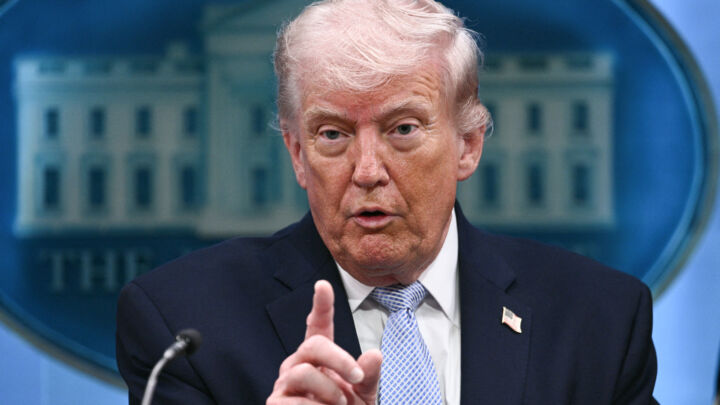
We were reminded of the ascendency and dominance of our passive society this week with the lifting of the two-child benefit cap on universal credit, much to the horror of those who diligently save to provide for their own children, and much to the delight of the workless who don’t take responsibility for themselves or their families. While most Britons oppose lifting this cap, the voices of dissidents have been relatively muted, mindful that airing any opposition goes against the prevailing and deeply compassionate norm: that a paternal state ought to ‘lift children out of poverty’. The same paternalistic mentality underpins the tacit agreement that parents should not even be duty-bound to feed their own children, and that school breakfast clubs should perform this task instead.
This is but one area. Altogether, there is a widespread and lazy acceptance that it’s the state’s moral obligation to intervene when individuals are unable, or unwilling, to look after themselves. Indolence, apathy and the abnegation of personal responsibility are now the rule.
This has been the key factor in our mostly self-diagnosed, mostly inauthentic ‘mental-health crisis’. This was triggered by the lockdown years of 2020-21, which taught a generation of youngsters to be fearful of human contact and instilled in them the notion that not working for a living was normal. Yet those lockdowns were visited on a therapeutic society that had already taught its youth to think of themselves as fragile and vulnerable, as all on a spectrum of mental illness. The combined effect has been to reduce a whole generation to a state of passivity and dependence.
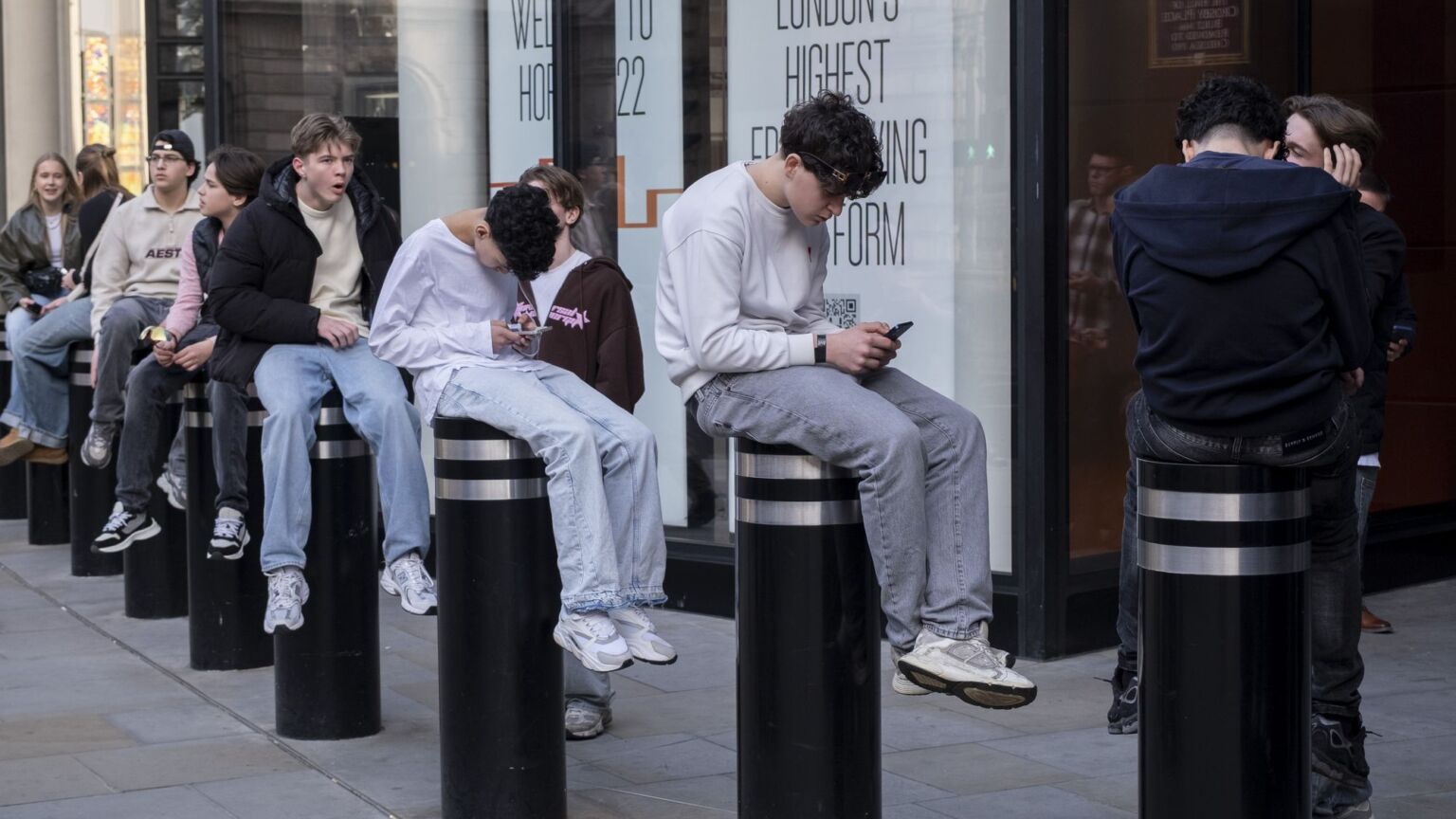
Admittedly, the proliferation of smartphones hasn’t helped the youth, or people of all generations, as entire swathes of Western society have today been reduced to zombies in the public domain. Thanks to smartphones, we have also become a society of cinematic rubberneckers, rather than active, intervening citizens.
Even in our response to smartphone enslavement, and the related problem of social-media overuse, we betray how passive our thinking has become. People talk of smartphone and social-media ‘addiction’, as if they cannot help but use these machines constantly, or to stop their kids from doing so. And so they demand the government step in, as if individuals have no choice on the matter, as if parents have no jurisdiction over their own children. Why not just put down that phone?
The same attitude is applied to obesity, which can only be solved by a crackdown on junk-food adverts or Ozempic injections, but less so by exercising self-control. You see the spectre of passivity rear its head ceaselessly on such subjects as screen violence, knife crime, vaping and alcohol abuse. In all cases, the response seems to be a resigned cry of ‘something must be done’ – ie, anyone else but me must do it.

Our collective repudiation of agency reached its logical conclusion this week, with the report that Waitrose had sacked one of its staff in south London for tackling a habitual shoplifter. Like the north London bus driver who was dismissed last February for punching a thief who had stolen a necklace from a passenger, this employee, Walker Smith, was fired because he did something many people in power today find bewildering: he acted of his own accord, of his free will, without permission and without official blessing.
If only more of us could be like Smith, able to exercise personal autonomy, perhaps this country would be in a better state than it is.
The stupidity of the educated
A graphic doing the rounds on X this week, originally fashioned by Stats for Lefties, contrasting the lower educational levels of Reform UK voters with the higher ones of those who vote Labour or Green, has caused much irritation and anger. And rightly so. There are few things less edifying than pompous progressives trying to win an argument by pointing to their superior qualifications. There’s nothing less likely to gain converts to your cause than insulting and belittling your opponents. You’d have thought those who traduced Brexiteers as knuckle-scrapping peasants 10 years ago would have learnt that lesson. Perhaps they’re too stupid to realise or remember.
Back then, many of the Remainer class seemed to assume that having an English degree qualified them as experts on the European Union. As for those who support Labour and the Greens today, they may be educated, but are they better-informed or wiser than the lower orders? If they think the Labour chancellor of the exchequer, Rachel Reeves, is doing anything but a catastrophic job, then they aren’t well-informed. If they think Zack Polanski’s policy of attempting to fleece this country’s 156 billionaires represents a coherent economic policy, and opening the borders, legalising hard drugs and placing a 55mph speed limit on motorways are signs of joined-up thinking, then they aren’t especially wise.
The conceit that being well-educated equates with sagacity surely raises the questions: Who was it that fell for the transgender delusion? Who was seduced by the madness of wokery in general, with all its McCarthyite fanaticism and reactionary racism? It wasn’t the ‘less-educated’.

Panel shows don’t have to be preachy
The panel show, Mock The Week, tested the patience of most of its viewers to despair before it was axed by the BBC in 2022. With its tedious Brexit monomania, and its creeping policy of shoe-horning ethnic minorities and female guests of manifestly lesser calibre, it deserved to be put out of its misery.
Its revival on the TLC channel, the first series of which concluded recently, is proof that comedy can survive and be revived in our post-Brexit, still woke-infested world. The latest outing wasn’t self-satisfied or aloof. There weren’t any deadweight guests there to make up an unspoken quota. I counted only two jokes about Nigel Farage. The ever-perceptive Ed Byrne has nurtured a witty persona as a beta-husband, while Ahir Shah has a wry perspicuity. Mercifully, there is no Nish Kumar or Rosie Jones.
It was, for the most part, a smart, good-natured and above all funny affair, with Dara Ó Briain remaining steadfast as its affable, cerebral and judicious host.
Makers of Have I Got News For You: take note.
Patrick West is a spiked columnist. His latest book, Get Over Yourself: Nietzsche For Our Times, is published by Societas. Follow him on X: @patrickxwest.
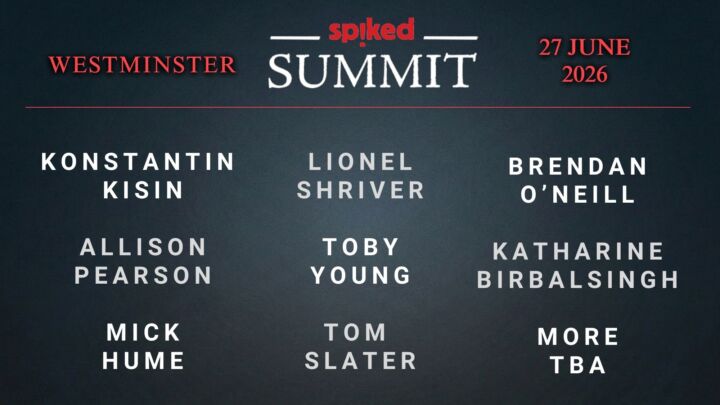
spiked summit 2026
10am-5pm, Saturday 27 June
Emmanuel Centre, London, SW1P 3DW
With Konstantin Kisin, Lionel Shriver, Brendan O'Neill, Katharine Birbalsingh, Toby Young, Allison Pearson, Tom Slater and more
Become a spiked supporter to get a discounted ticket
£80 or £50 for supporters
You’ve hit your monthly free article limit.
Support spiked and get unlimited access.
Support spiked and get unlimited access
spiked is funded by readers like you. Only 0.1% of regular readers currently support us. If just 1% did, we could grow our team and step up the fight for free speech and democracy.
Become a spiked supporter and enjoy unlimited, ad-free access, bonus content and exclusive events – while helping to keep independent journalism alive.
Monthly support makes the biggest difference. Thank you.


Comments
Want to join the conversation?
Only spiked supporters and patrons, who donate regularly to us, can comment on our articles.