HS2: British infrastructure is stuck in the slow lane
The UK’s delayed, scaled-back and now slowed-down high-speed rail service is a national embarrassment.
Want unlimited, ad-free access? Become a spiked supporter.
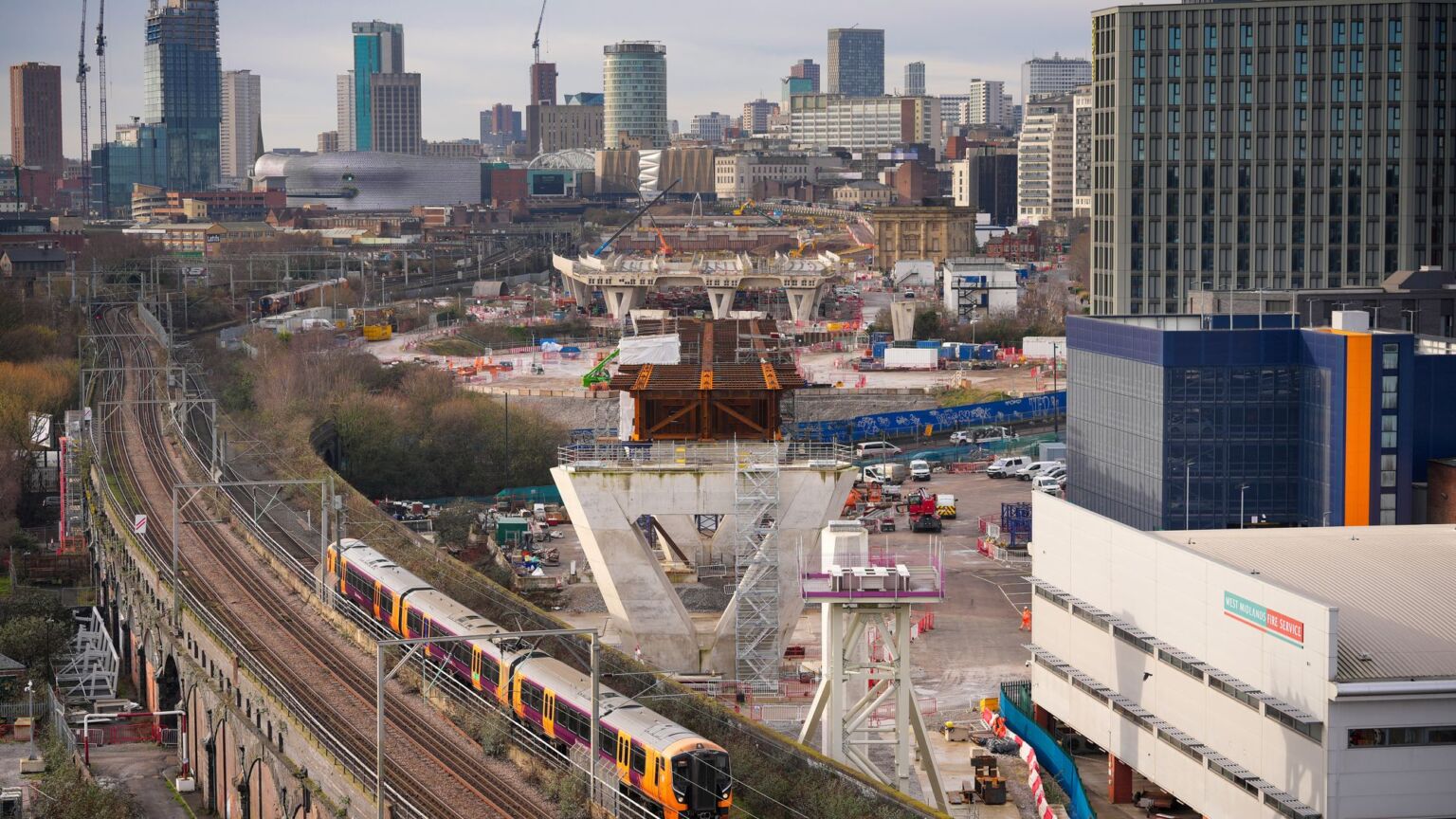
UK transport secretary Heidi Alexander announced last month that High Speed 2 (HS2), the fast-track London-to-Birmingham line, might not run trains very fast after all. Instead of reaching up to 224mph as initially advertised, trains might need to stay under 186mph.
Why? After 14 years of delays and cost increases, not to mention the northern half of the project being abandoned, the budget for HS2 is widely estimated to exceed £100 billion – more than double its original cost. Hitting a full-on 224mph in train trials, Alexander said, would require either waiting for test tracks to be laid in the UK, which could cause yet more delays and cost increases, or sending rolling stock abroad for tests.
Alexander’s proposal of a slow-version of high-speed rail has been widely and rightly ridiculed. Why, though, has the HS2 project gone so repeatedly wrong, for so long?
It would be glib to dismiss HS2 as an overblown vanity project, as a white elephant or gravy train that benefits only overpaid executives and venal contractors. It would also be overly simplistic to blame the interminable snarl-ups surrounding HS2 on Britain’s geography (small, highly populated, with few vast expanses like France) or its planning system (dreadful). Nor should we treat it as a signal of an iron law of megaprojects: always late, over budget and underwhelming in terms of payoffs.
No, instead we should heed Andrew Meaney, who has advised on HS2. Speaking to the BBC, he noted that the real problem is that British politicians ‘don’t have the confidence to say, right, this is what we’re building and let’s just go and get on and build it’. ‘We tend to change our mind and we sort of bend with public opinion’, he added.
Meaney’s appraisal is devastatingly accurate. Today’s politicians lack the conviction, let alone the courage, that’s needed to get public works done. They will not initiate a serious national discussion on trade-offs. Instead, they prefer to trim to the latest opinion polls. They outsource decisions on transport, as on everything else. They don’t want to and never try to take the public with them – and then they wonder why they’re not trusted.
Britain has been talking about HS2 for nearly two decades. In January 2009, then Labour transport minister Geoff Hoon announced to parliament that a new company, High Speed 2, would assess the case for new high-speed rail services from London to Scotland. In a press conference in March 2010, Hoon’s successor, Lord Adonis, set aside £17.4 billion for a first phase of track, running 128 miles from London to the West Midlands, as well as £30 billion to include Manchester, Leeds and Sheffield. Already, Hoon’s hopes of high-speed service to Scotland had been dashed.

Worse, British officialdom’s growing suspicion of travel permeated the whole launch of HS2. Late in 2007, prime minister Gordon Brown announced improved security at Britain’s 250 busiest railway stations in response to two foiled terror plots. Then the Climate Change Act 2008 imposed statutory targets for carbon emissions. In an ominous sign of things to come, in July 2009, Adonis issued an 111-page white paper titled Low Carbon Transport: A Greener Future. By 2010, Adonis insisted that any high-speed rail be delivered ‘sustainably, without unacceptable environmental impacts, and in line with the government’s strategy to promote a low-carbon economy’.
Then came the planning lawfare. As Alexander noted last month, there have been nine legal challenges and 25 planning appeals that have raised costs further. Amid this, there has been a string of green engineering extravagances, most notoriously the £100million ‘bat shed’. As a result, HS2 has become so wretchedly slow that even an announcement on a new timeline – expected to be another delay beyond 2033 – has itself been postponed till beyond the local elections on 7 May. In other words, there has been a delay to the announcements of further delays.
By contrast, high-speed rail systems abroad are in rude health. To help link Shanghai in the east with Chengdu, 1,200 miles to the west, China has just dug a tunnel under the Yangtze River that stretches nine miles. Helped by several other links like this, China opened a colossal 7,500 miles of high-speed rail lines just between 2021 and 2025.
High Speed 2 has been a case study in British economic and political decline. It now seems as though it would take a miracle for any of us to live to see the project completed – by which stage, it will probably be a horse-and-cart service from London to Birmingham.

HS2 was sold as a nation-defining project that would take the UK forward. Instead, it’s been a reminder that we’re going nowhere fast.
James Woudhuysen is visiting professor of forecasting and innovation at London South Bank University. Follow him on X: @jameswoudhuysen.

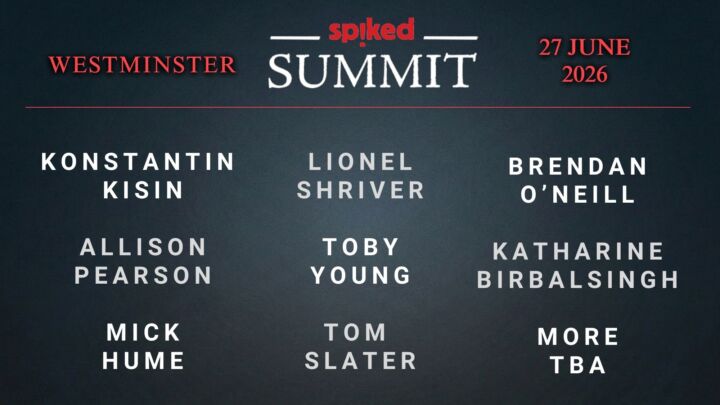
spiked summit 2026
10am-5pm, Saturday 27 June
Emmanuel Centre, London, SW1P 3DW
With Konstantin Kisin, Lionel Shriver, Brendan O'Neill, Katharine Birbalsingh, Toby Young, Allison Pearson, Tom Slater and more
Become a spiked supporter to get a discounted ticket
£80 or £50 for supporters
You’ve hit your monthly free article limit.
Support spiked and get unlimited access.
Support spiked and get unlimited access
spiked is funded by readers like you. Only 0.1% of regular readers currently support us. If just 1% did, we could grow our team and step up the fight for free speech and democracy.
Become a spiked supporter and enjoy unlimited, ad-free access, bonus content and exclusive events – while helping to keep independent journalism alive.
Monthly support makes the biggest difference. Thank you.




Comments
Want to join the conversation?
Only spiked supporters and patrons, who donate regularly to us, can comment on our articles.