The UK should not pay a penny in slavery reparations
African nations that cashed in on the slave trade have some cheek in demanding a bung from Britain.
Want unlimited, ad-free access? Become a spiked supporter.
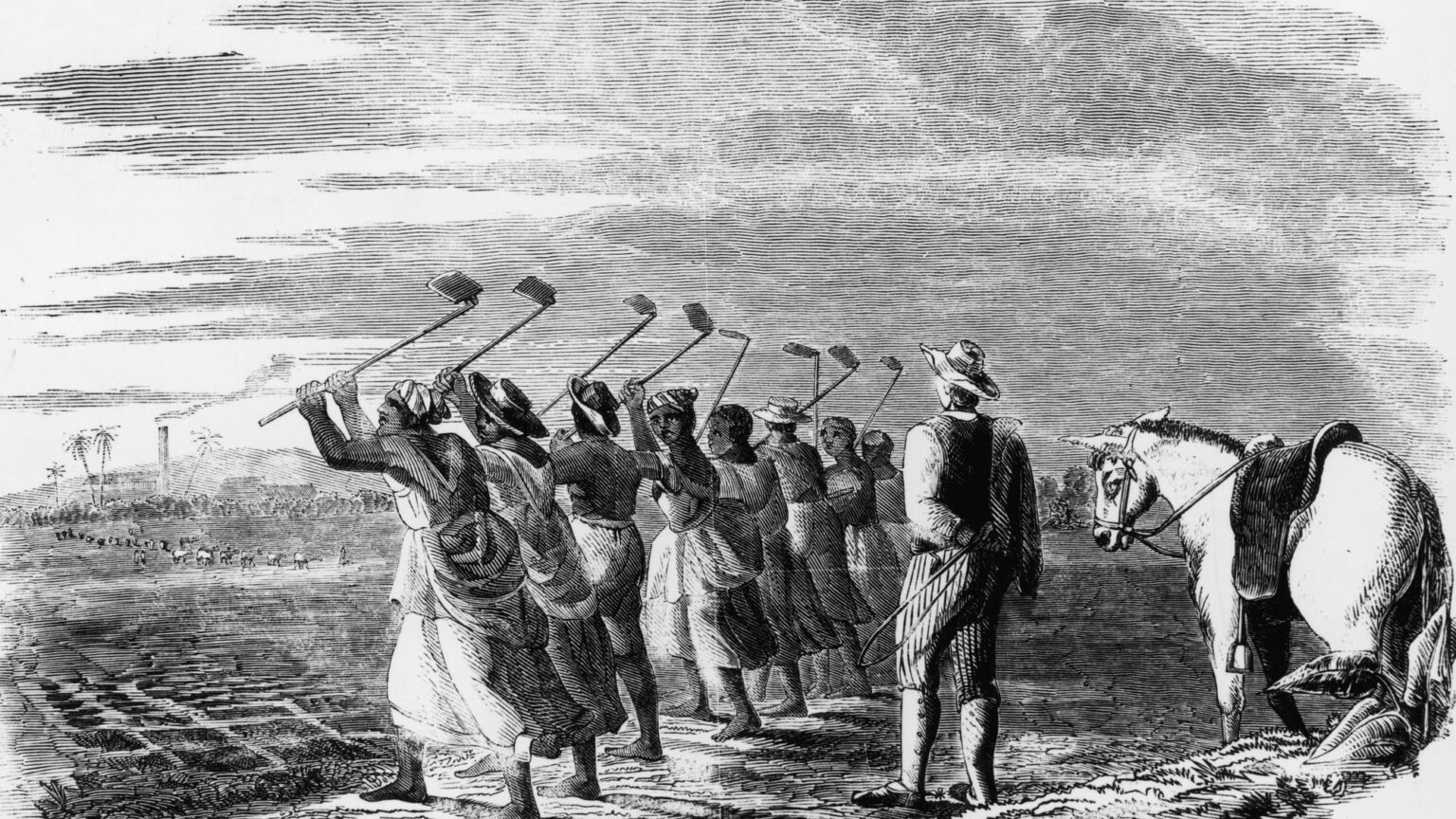
The debate on slavery reparations is showing no signs of dying down. Last week, the United Nations General Assembly voted in favour of a resolution urging members to apologise for the slave trade and to pay reparations to African countries.
The UK was one of 52 countries to abstain from the vote, which was proposed by Ghana and supported by 123 members. But should we not have voted against it, alongside the United States, Israel and Argentina?
The truth is that demands for reparations are opening a can of worms. Identifying which countries should pay up for slavery is more complicated than some might think. While it is true that European colonial powers including Britain participated in the slave trade, it is important that we revisit the very origins of the supply chain.
To begin with, the integral part played by exceptionally wealthy and powerful African kingdoms in selling slaves to European merchants should not be ignored. In the early 18th century, the kings of Dahomey – current-day Benin – established themselves as major players in the slave trade. King Gezo, who was King of Dahomey from 1818 to 1850, labelled the slave trade as ‘the ruling principle of my people’, being ‘the source and the glory of their wealth’. Indeed, there is a certain irony to Ghana proposing this resolution and Nigeria supporting it. The elites of the Asante and Yoruba kingdoms – in present-day Ghana and Nigeria respectively – also benefited a great deal from the slave trade.
It is undeniable that Britain was a leading slave-trading nation. But this fact should be qualified by the knowledge that so too was every seafaring nation or empire in history, prior to abolition. China, Arab states and indeed many African countries were enthusiastic participants in this evil practice. And, in many of these countries, slavery lingered on for many centuries longer than it did in Britain.
Indeed, Britain’s only unique contribution to the slave trade was in ending it before anyone else. In the early 19th century, Britain became the home of abolitionist campaigning, thanks to the efforts of leading philanthropist William Wilberforce. Britain then played a pioneering humanitarian role in suppressing the trade at great human and financial cost – especially to the Royal Navy’s West Africa Squadron, which patrolled the coast of West Africa, capturing slave ships and freeing in the region of 150,000 Africans destined for the Americas.
This was a costly and arduous campaign, which lasted decades. The squadron ships were generally not as sophisticated, dynamic and well-equipped as many of the slave vessels, contributing to high mortality rates for the sailors and significant expenses for the Royal Navy. Have those who are part of the reparations lobby called for a compensatory fund for the descendants of these fallen sailors, who made the ultimate sacrifice in the name of fighting the slave trade? Of course not.

So the role played by Britain, and the West, in the slave trade is far from straightforward. It can also be said that the part played by Africa’s powerful elites and rich kingdoms in supplying slaves – generating considerable wealth in the process – is commonly overlooked.
Nor should we be entirely trusting of the motives of those now calling for reparations. Many African countries need to look within to better understand the root of ongoing failures. The quality of internal governance and rampant institutional corruption would be a good start. In this light, calls for ‘reparatory justice’ could even be considered a deflection tactic. Slavery was indeed a great evil, but it is not the sole reason, or even the primary reason, why African countries are impoverished compared with their Western counterparts.
We are just a few years away from the 200-year anniversary of abolition in the British Empire. Britain should not shy away from acknowledging its historical role. But when all of its victims and beneficiaries have been dead for generations now, it is surely high time we moved on. Certainly, we should not be paying a penny in reparations.
Rakib Ehsan is the author of Beyond Grievance: What the Left Gets Wrong about Ethnic Minorities, which is available to order on Amazon.

spiked summit 2026
10am-5pm, Saturday 27 June
Emmanuel Centre, London, SW1P 3DW
With Konstantin Kisin, Lionel Shriver, Brendan O'Neill, Katharine Birbalsingh, Toby Young, Allison Pearson, Tom Slater and more
Become a spiked supporter to get a discounted ticket
£80 or £50 for supporters
You’ve hit your monthly free article limit.
Support spiked and get unlimited access.
Support spiked and get unlimited access
spiked is funded by readers like you. Only 0.1% of regular readers currently support us. If just 1% did, we could grow our team and step up the fight for free speech and democracy.
Become a spiked supporter and enjoy unlimited, ad-free access, bonus content and exclusive events – while helping to keep independent journalism alive.
Monthly support makes the biggest difference. Thank you.



Comments
Want to join the conversation?
Only spiked supporters and patrons, who donate regularly to us, can comment on our articles.