Does Britain need a First Amendment?
The UK’s censorship regime has turned us into an international laughing stock. It cannot go on.
Want unlimited, ad-free access? Become a spiked supporter.
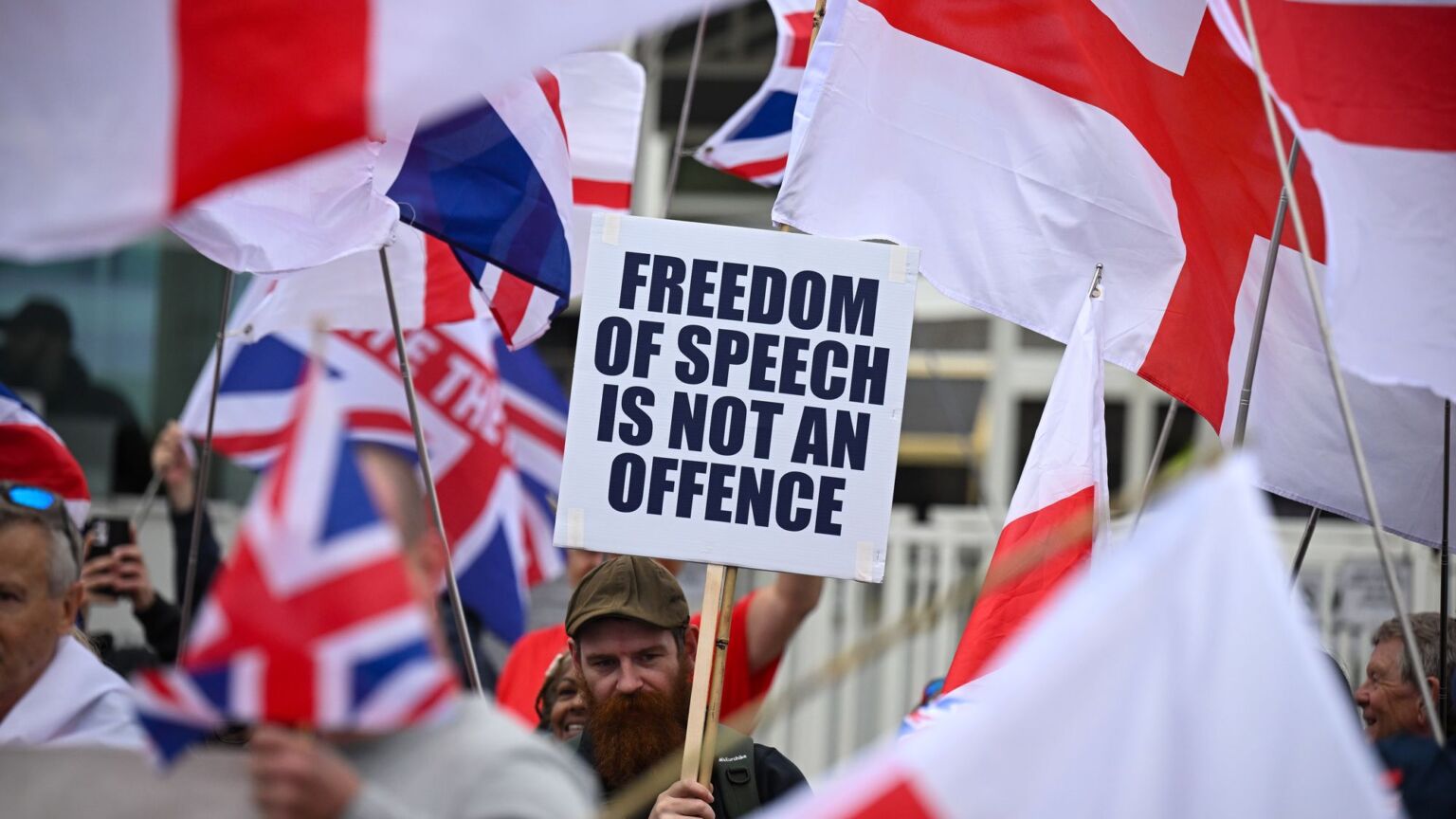
The Adam Smith Institute (ASI) has unveiled a proposed Free Speech Bill for the UK. It will infuriate almost the entire governing class – especially since American lawyers, with at least one eye on the First Amendment, had a large hand in drafting it.
The draft bill is short and strong. It gives a positive right to free speech – subject only to stated, narrow exceptions, such as incitement to crime. It says, explicitly, that speech may not be suppressed merely because it is ‘offensive, grossly offensive, insulting, abusive, shocking, blasphemous, indecent’ or causes ‘an emotional or intellectual impact’ on anyone, as the current law allows. The bill would also ban compelled speech. While most of what the bill sets out is directed at the state, it would also narrow the limits on an employer’s right to discipline employees for what they say off the job.
The laws and practices currently used to curtail our right to free expression are picked off one by one: it strips the Public Order Act of its power to enforce content-related restrictions on speech. The appalling section 127 of the Communications Act, which prohibits posting anything ‘grossly offensive’ on the net, would go. Non-crime hate incidents would be outlawed. No conditions relating to speech or opinion could be placed on public employment, licensing or any public benefit. Website owners would be spared liability as publishers of information.
Best yet, the bill would clip the wings of the European Convention on Human Rights. Liberals often forget that in many cases, the ECHR enforces significant limits on free speech.). Ironically, if the UK were to introduce a First Amendment tomorrow, the loudest yelps would come from human-rights lawyers lamenting the loss of authority over what we can and can’t say.
Obviously, the ASI’s initiative is intended to provoke an establishment that has become very comfortable with censorship. Nevertheless, it matters, mainly because it is the right approach. Vague commitments to free speech don’t work, unless we also get rid of the props that have supported censorship in the law for decades: Public Order offences, the Communications Act, ill-defined anti-harassment laws and so on.
The fact that the bill is American-inspired is important. A prime mover is the admirable American attorney, Preston Byrne, who is currently leading the fight against Ofcom’s campaign to dictate what US websites can and can’t publish. Forget the now-fashionable anti-Americanism in the progressive establishment – the fact that foreigners now view the UK as a free-speech disaster ought to be a source of shame to any government.
Until now, serious free-speech advocacy among the establishment class has been virtually non-existent. While plenty may claim to support it, the idea of relaxing controls on the internet still makes them blanch. This bill, expressed in proper legal form and outlining a clear, watertight case for speech protections, has a good chance of moving the Overton window in the right direction.
Of course, there is now an open goal waiting for any political party with the nous to line it up. Imagine a ticket stressing the right of anyone – from the tycoon to the keyboard warrior to the janitor – to say what they damn well please, without fear of threats from the state, police or employers. The attraction is enormous. It would shine an embarrassing spotlight on the ever-more authoritarian Labour Party – especially if Nigel Farage, Kemi Badenoch or both of them were to adopt it.
The Free Speech Bill has no chance of becoming law just yet. But if it pushes free speech to centre stage, its publication will have been an unalloyed good. Now, we need to keep advancing the ideas it contains – the same ones our American cousins laid out in their all-important First Amendment.
Andrew Tettenborn is a professor of commercial law and a former Cambridge admissions officer.
You’ve hit your monthly free article limit.
Support spiked and get unlimited access.
Support spiked and get unlimited access
spiked is funded by readers like you. Only 0.1% of regular readers currently support us. If just 1% did, we could grow our team and step up the fight for free speech and democracy.
Become a spiked supporter and enjoy unlimited, ad-free access, bonus content and exclusive events – while helping to keep independent journalism alive.
Monthly support makes the biggest difference. Thank you.




Comments
Want to join the conversation?
Only spiked supporters and patrons, who donate regularly to us, can comment on our articles.