The end of the British salt industry could be apocalyptic
For the first time in history, England is set to become a net importer of the world’s most important mineral.
Want unlimited, ad-free access? Become a spiked supporter.
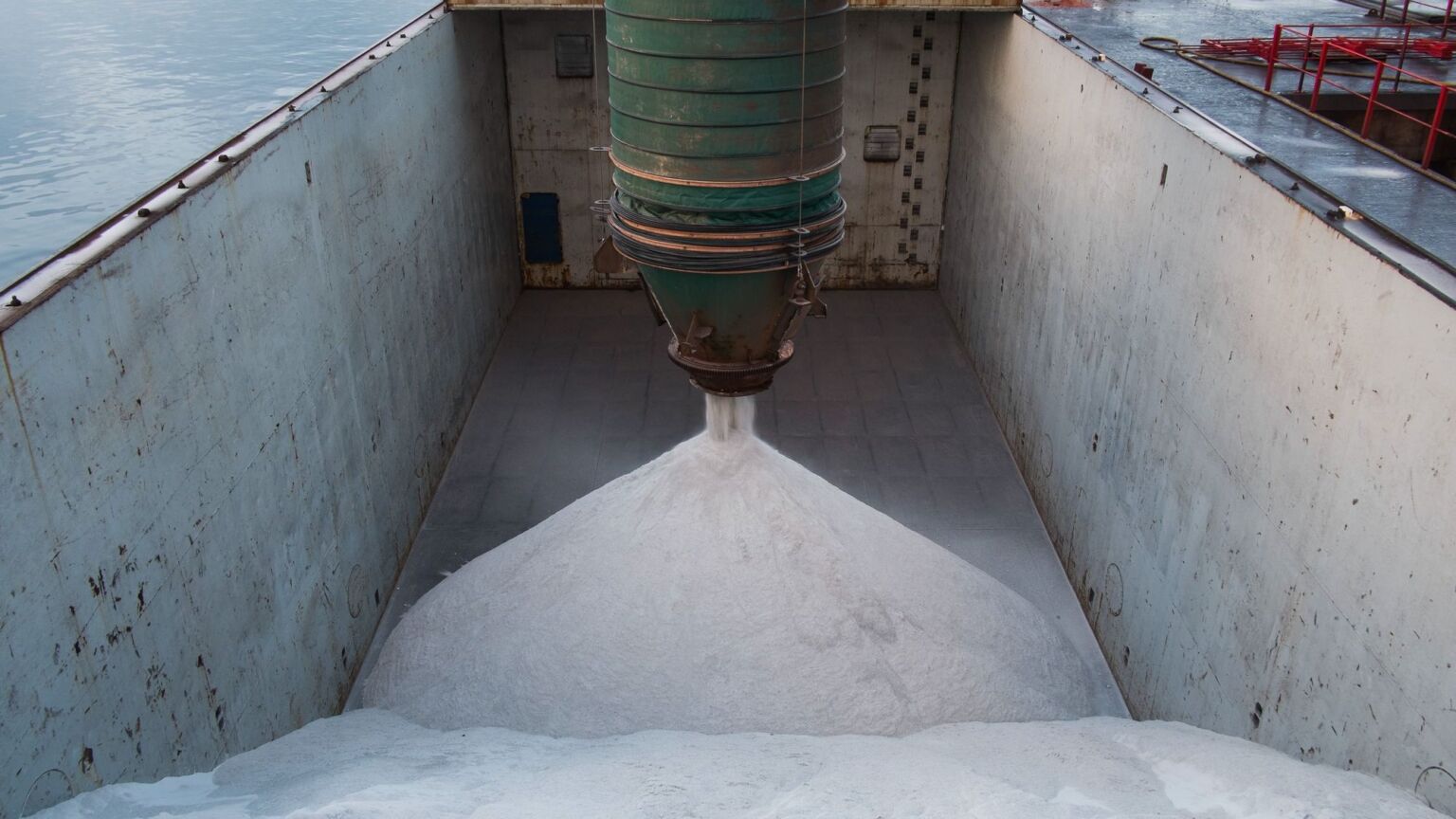
Salt has been a major industry in Britain for centuries. The salt deposits in Cheshire, the West Midlands and Teesside are huge and still are – in fact, they could be viable for decades to come.
Yet now the UK is on the verge of becoming a net importer of salt, for the first time in history. Inovyn, the company that produces roughly 50 per cent of Britain’s salt, has announced that it will likely have to close its facility in Runcorn, Cheshire, unless it receives government support. Like the rest of the UK’s manufacturing industry, Inovyn is struggling to cope with the UK’s breathtakingly high energy costs and crippling carbon taxes. In other words, Britain’s salt industry is to be sacrificed at the altar of Net Zero.
The decline of salt would be an economic disaster. The chemical and pharmaceutical industry is one of the largest manufacturers in the UK. Salt, which is used in 90 per cent of pharmaceuticals, is a vital component in a surprising number of everyday products. Only the food industry contributes more to the domestic economy – and the food industry also needs high-quality salt, for taste and preservative reasons.
Salt is integral to sectors that employ hundreds of thousands of people. The consequences of Britain becoming a net salt importer will have a huge impact on these industries. Salt is difficult to store and transport. That is the major reason why chemical plants are located very close to the point of production. Those chemical and pharmaceutical industries that depend on local supplies will, inevitably, either close down or relocate closer to salt sources. If Runcorn goes, don’t expect the chemicals industry or pharmaceuticals to survive in this country.
Salt is a vital part of an integrated industrial supply chain. And that is what Britain had, for most of the 20th century, in the shape of Imperial Chemical Industries (ICI). ICI was, for decades, the largest manufacturer in the UK. It owned and operated plants, production and distribution along the entire supply chain, from salt extraction in Cheshire to Dulux paint in your local hardware store.
When ICI was still in business, the less profitable elements were maintained because they fed the valuable downstream activities. Since the demise of ICI in 2008, the separated upstream operations like salt production have been allowed to decline, following years of underinvestment.
While demand for salt and its derivatives has fallen, that cannot be seen in isolation. It has been a long time coming. The removal of ICI’s integrated supply of salt and derivatives has led production of cosmetics, chemicals and pharmaceuticals to move elsewhere. If the Runcorn plant closes, a full sector collapse will inevitably follow.
Inovyn is part of INEOS, whose owner, Jim Ratcliffe, is hardly short of a bob or two. I would argue that Inovyn should be recognised as a key, national strategic asset. There is a case for public funding. But we should avoid the normal no-strings giveaway with which we have become all too familiar. It should be co-investment, matched by the owners and interested parties from the private sector more widely.

Pleas to change the current government’s entire energy strategy in order to rescue Runcorn will fall on deaf ears. But calls for targeted support for Runcorn may be better received – especially if the current government wants to have a fighting chance of reclaiming the local parliamentary seat from Reform UK.
To allow Runcorn to close – and lose 50 per cent of Britain’s salt production – would be a catastrophic folly. The UK is already far too vulnerable to the slings and arrows of international events. We must not allow salt to join the manufacturing funeral procession.
Ruari McCallion is a freelance journalist specialising in manufacturing. He tweets at @RuariJM.
You’ve hit your monthly free article limit.
Support spiked and get unlimited access.
Support spiked and get unlimited access
spiked is funded by readers like you. Only 0.1% of regular readers currently support us. If just 1% did, we could grow our team and step up the fight for free speech and democracy.
Become a spiked supporter and enjoy unlimited, ad-free access, bonus content and exclusive events – while helping to keep independent journalism alive.
Monthly support makes the biggest difference. Thank you.







Comments
Want to join the conversation?
Only spiked supporters and patrons, who donate regularly to us, can comment on our articles.