The betrayal of white working-class boys
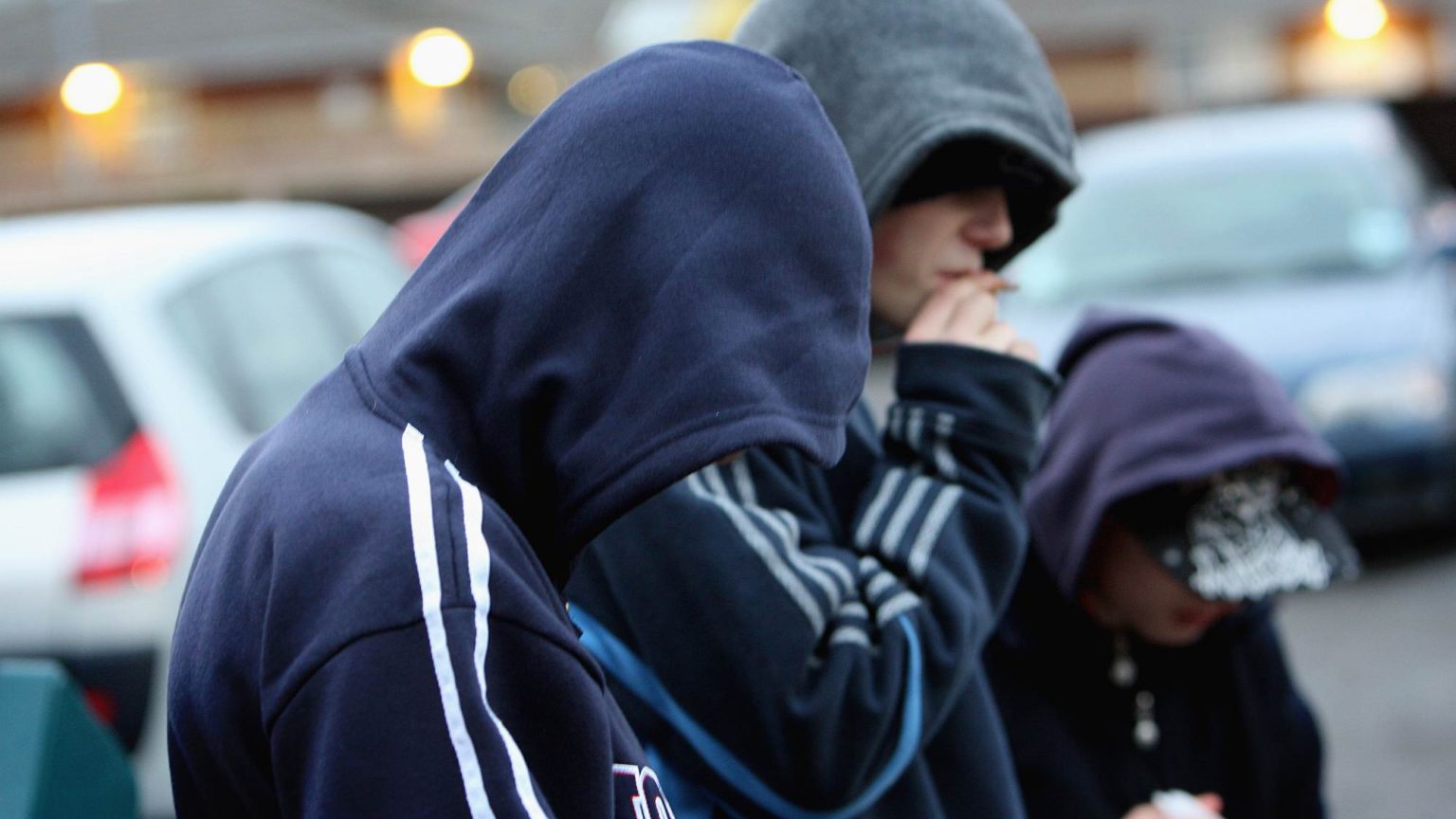
Anyone who still believes in white, male privilege should take a look at England’s school system.

Want unlimited, ad-free access? Become a spiked supporter.
Five years on from the publication of the landmark report from the Commission on Race and Ethnic Disparities, the lead author, Tony Sewell, is still angry. Successive governments have ignored his warnings that England’s schools are failing white working-class boys. This week, Lord Sewell will tell Keir Starmer that ‘boys from the poorest homes are still stuck at the bottom of the class’ and are outperformed by every other group.
Established in the wake of the 2020 Black Lives Matter protests, Sewell’s inquiry reported in 2021 that inequalities between different groups were primarily linked not to race but to class, geography and family stability. On all counts, the white working-class group was doing worst. Now, new research from the Centre for Social Justice shows that little has changed. White British boys on free school meals are more likely to fail GCSE English and maths, most likely to be excluded from school, and least likely to stay on in education after 16, compared with all other groups.
Just over a third of white British boys on free school meals passed GCSE English and maths last year. This compares with 82 per cent of Chinese boys on free school meals, 68 per cent of Bangladeshi boys and 58 per cent of African boys. Only black Caribbean boys on free school meals, with a 39 per cent pass rate, come close to matching the dismal results of white British boys. But it’s not just exam results: white working-class boys account for 83 per cent of permanent school exclusions and are more likely to be out of education, employment or training than any other group.
Clearly, something is going badly wrong in England’s schools. The ‘soft bigotry of low expectations’, a phrase often used to refer to the treatment of black pupils, now seems just as applicable to white boys. More pointedly, as education has become increasingly politicised, white boys have come to be seen as a problem. Education secretary Bridget Phillipson has called the outcomes of white working-class pupils a ‘national disgrace’. She’s right. But, at the same time, she has called for schools to focus on challenging ‘toxic masculinity’ and the ‘scourge’ of misogyny. And Starmer backed a campaign to have the Netflix drama, Adolescence, shown in every school. He said that violence carried out by young men, influenced by what they see online, was ‘abhorrent’. It seems that all the Department for Education has to offer boys is panic-fuelled hectoring.
At schools today, white British boys learn not just that they are toxic because of their sex, but also that they are sinful because of their skin colour. Critical race theory-inspired classroom exercises promote the idea that white people need to make amends for their inherent privilege, while campaigning organisations seek to imbue reading lists, resources and lesson plans with the same message. Heroic figures from the past are shot down. Teachers are told to avoid a ‘white-saviour narrative’ by focussing lessons on slavery around white abolitionists such as William Wilberforce. Rather than feeling pride in their nation’s achievements, white pupils are taught to feel ashamed of Britain’s past.
The decades-long emphasis on diversity, equity and inclusion (DEI) in British institutions means there are few specific schemes targeting white working-class boys. Stormzy and HSBC bank continue to support scholarships for black students studying at Cambridge. At the same time, two leading private schools – Dulwich and Winchester colleges – rejected a substantial donation to fund places for disadvantaged white boys.
This DEI penalty carries over into the workplace. In 2023, the Royal Air Force was found to have engaged in unlawful practices to boost the numbers of women and ethnic-minority recruits. In the police force, diversity schemes use ‘positive action’ to target recruitment campaigns at non-white officers. It is hardly a surprise that white working-class boys see little point in working hard at school.
Lord Sewell’s report also found that geography plays a part in reinforcing the disadvantage experienced by white working-class boys. Year after year, pupils in London achieve significantly better exam results than pupils in the north east of England. Yet, in December, Phillipson cancelled plans for Eton to open a free sixth-form college in Middlesbrough.
Instead, Labour highlights its Pride in Place programme, which gives additional financial support so deprived communities can fund improvements in ‘pavements and high streets’ or invest ‘in culture and green spaces.’ Such schemes do nothing to challenge the lack of ambition that comes with intergenerational unemployment. The Sydney Harbour Bridge in Australia was constructed using steel produced on Teesside. Nearly a century on, its giant beams still bear the words ‘Made in Middlesbrough’. A lick of paint and a few new plant pots may make towns look nice, but they do not provide working-class boys with either jobs to aspire to or a sense of genuine pride in their town’s achievements.
White working-class boys are being failed by a cultural elite that views them as irredeemably racist, misogynistic and violent. They are being failed by a political class that, for successive generations, has had little to offer by way of well-paid, meaningful employment. And they are being let down by a school system that prioritises therapeutic interventions over discipline and high standards. All children deserve better.
Joanna Williams is a spiked columnist and author of How Woke Won. Follow her on Substack: cieo.substack.com.

You’ve hit your monthly free article limit.
Support spiked and get unlimited access.
Support spiked and get unlimited access
spiked is funded by readers like you. Only 0.1% of regular readers currently support us. If just 1% did, we could grow our team and step up the fight for free speech and democracy.
Become a spiked supporter and enjoy unlimited, ad-free access, bonus content and exclusive events – while helping to keep independent journalism alive.
Monthly support makes the biggest difference. Thank you.



Comments
Want to join the conversation?
Only spiked supporters and patrons, who donate regularly to us, can comment on our articles.