The feminist courage of Dame Jenni Murray
While her BBC colleagues remained silent, the Woman’s Hour host took a stand against trans ideology.
Want unlimited, ad-free access? Become a spiked supporter.
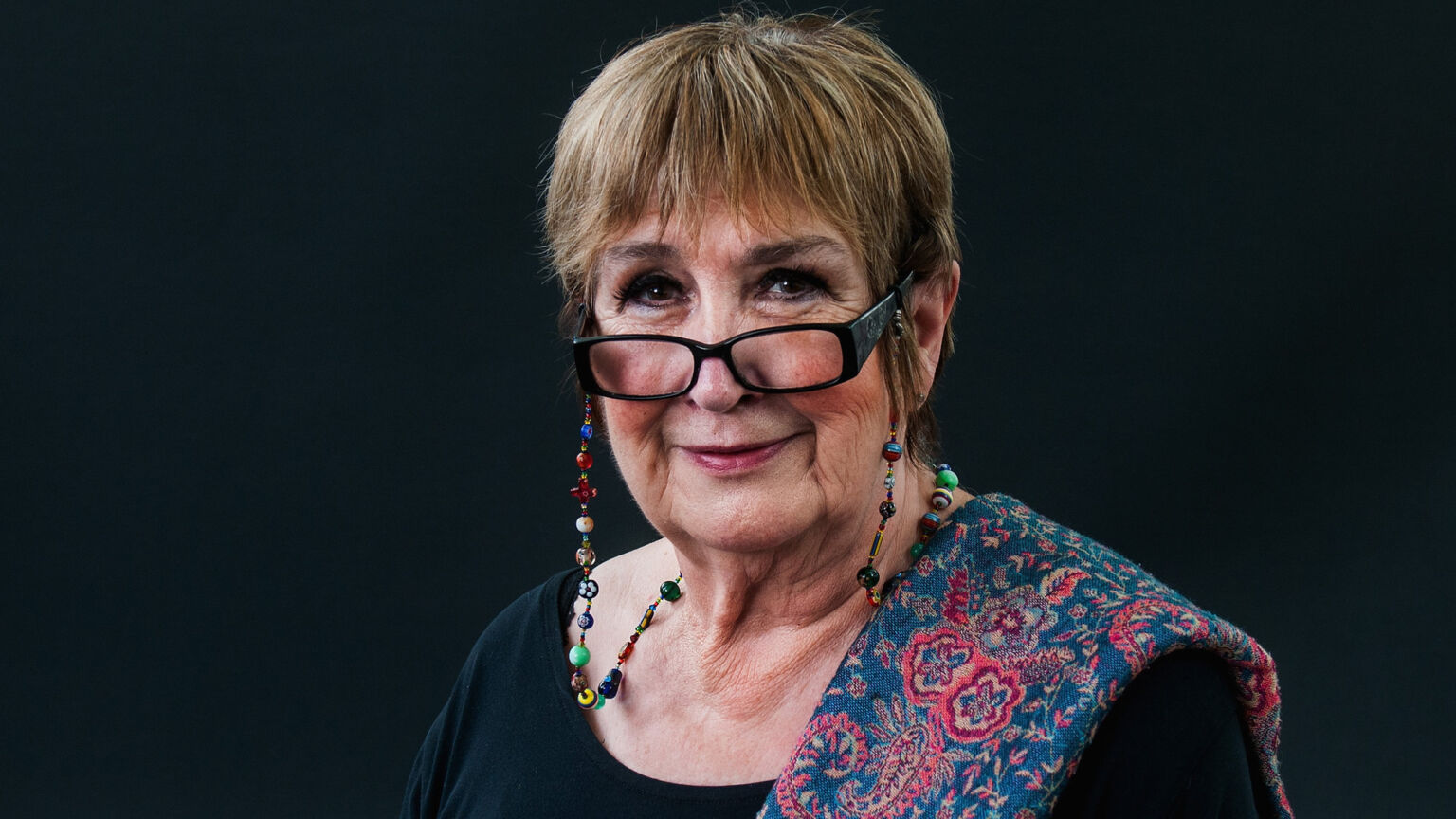
Journalist and broadcaster Dame Jenni Murray died last week at the age of 75.
Born in Barnsley in South Yorkshire in 1950, Murray began her journalistic career at BBC Radio Bristol in 1973, before becoming a presenter and reporter for regional news programme, South Today. A warm but probing interviewer, she became a presenter on BBC’s Newsnight from 1983 until 1985, and then on BBC Radio 4’s flagship news programme, Today, in 1987. But it was as the host of Radio 4’s Woman’s Hour, a role she held for over 30 years until she stepped down in 2020, that she was best known.
She was also a prominent feminist voice in the media. Alongside her work on Woman’s Hour, she focussed on women’s issues in her journalism for the Guardian among other outlets, and in her own books, including Is It Me or I It Hot in Here?, tackling everything from menopause to sexist beauty standards. Climbing the ranks at the BBC when it really was a boys’ club, Murray, with her clipped and serious questioning style, was a heroine for many aspiring female journalists.
But it was in 2017 that Murray showed her feminist courage. In an article for The Sunday Times in March 2017, entitled ‘Be trans and be proud – but don’t call yourself a real woman’, Murray outed herself as possibly the only member of the media elite at the time who wasn’t going to get on the ‘transwomen are women’ bandwagon. Murray wrote that ‘it takes more than a sex change and makeup’ to become a woman.
In a long, eloquent article detailing her position, Murray recounted experiences she had had with transwomen – the Reverend Carol Stone and India Willoughby among them – who had disappointed her by clinging to stereotypes of what it meant to be a woman. Murray argued that men, who had enjoyed all the privileges and power that she argued women were often refused, could not suddenly shop in a different section of the department store and call themselves ladies. She described her ‘fury that a male-to-female transsexual could be so ignorant of the politics that have preoccupied women for centuries’. Referencing the British Medical Association’s request for employees to use ‘inclusive’ phrases like ‘chest-feeding’, Murray responded: ‘I breastfed my kids and it was my breast that was cut off when I had cancer. No debate.’
This article would come to define much of Murray’s later career. She faced cancellations and countless protests at several universities where she was scheduled to speak. At Oxford University, protesters hung a ‘transwomen are real women’ sign. At the University of Hull, students decided to drop plans to name a lecture theatre after her, with Hull Students’ Union president claiming that her views made her ineligible as a ‘role model for students’. And trans activists were interviewed on television claiming to be frightened to be in the presence of Murray.
The BBC responded to the trans-activist pressure by preventing Murray from discussing any trans-related issues on Woman’s Hour – a behind-closed-doors decision Murray herself revealed in a 2020 article for the Daily Mail. Murray described stepping away from Woman’s Hour as being ‘free of the leash’.
Murray’s no-nonsense attitude to the issues and challenges facing women, from marital rape to women’s healthcare (Murray herself was diagnosed with breast cancer in 2006), gave her the kind of confidence to challenge trans ideology. Her commonsense challenge to the idea that men could become women with a wardrobe change and a visit to the doctors was a brave and brilliant intervention during a time of madness.
Many of Murray’s former colleagues have celebrated her journalistic integrity since the announcement of her death. Her passing should also provoke some soul-searching among a fair few of them, too – particularly those who have quietly moved TERFside now that it is no longer career-ending. Many failed to stand with Murray when she chose to say what she knew to be true. They looked the other way as she defended women’s rights – just as she had done all her life.
A pioneering journalist, cutting it in what was once a male-dominated industry, Murray remains an inspiration to many. She set a moral, political and journalistic example that others would do well to follow.
Ella Whelan is the author of The Case For Women’s Freedom, the latest in the Academy of Ideas’ radical pamphleteering series, Letters on Liberty.
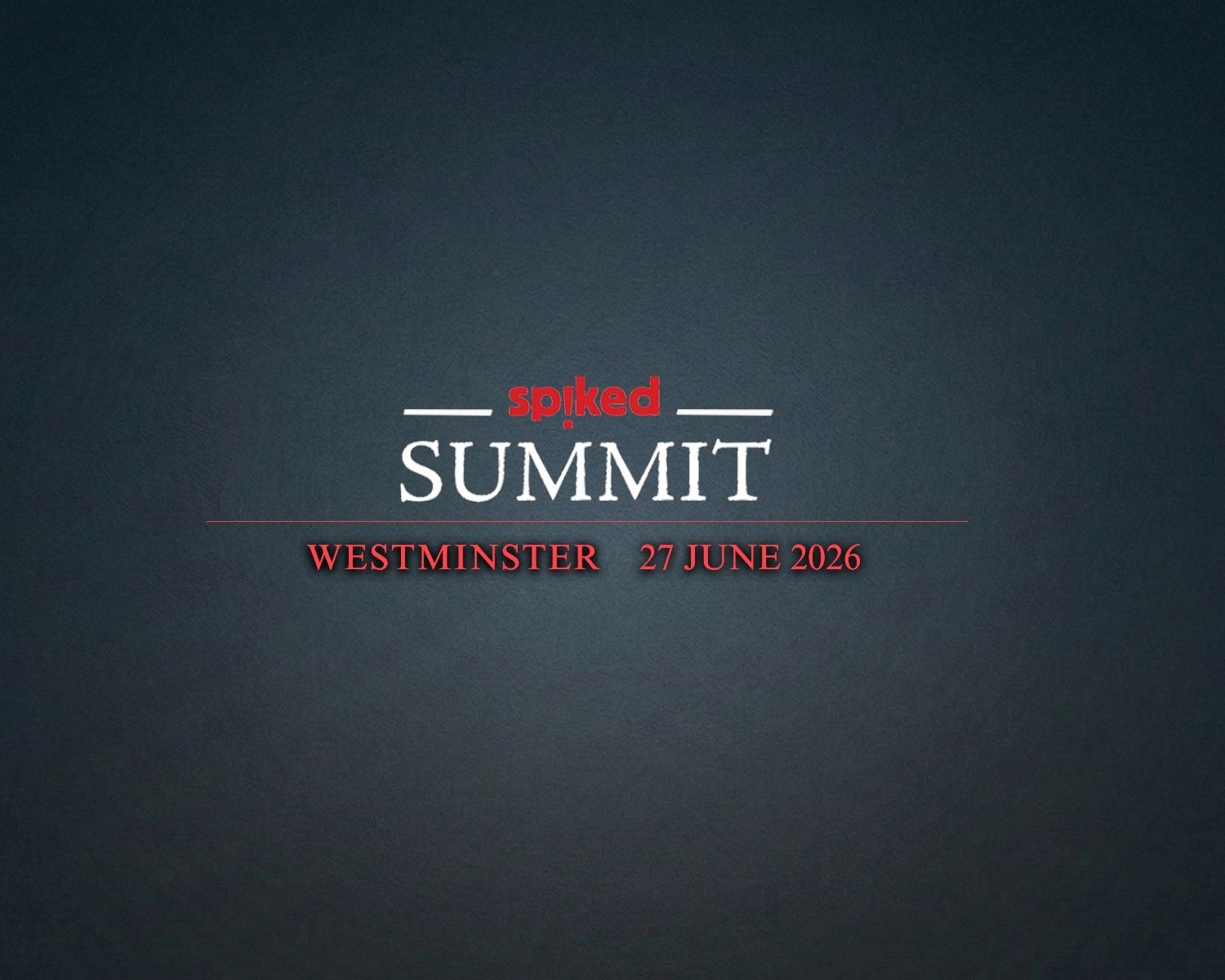
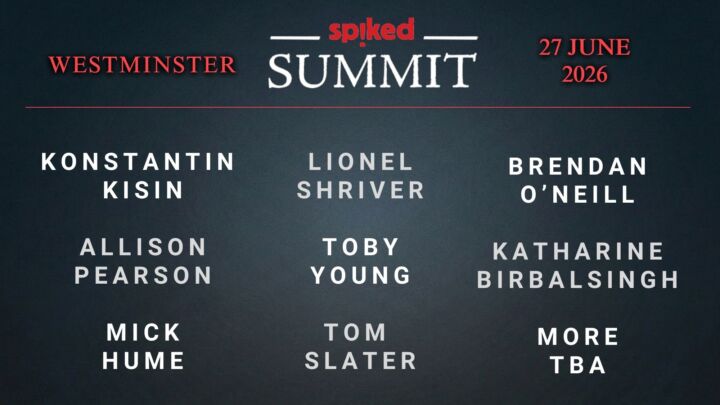
spiked summit 2026
10am-5pm, Saturday 27 June
Emmanuel Centre, London, SW1P 3DW
With Konstantin Kisin, Lionel Shriver, Brendan O'Neill, Katharine Birbalsingh, Toby Young, Allison Pearson, Tom Slater and more
Become a spiked supporter to get a discounted ticket
£80 or £50 for supporters
You’ve hit your monthly free article limit.
Support spiked and get unlimited access.
Support spiked and get unlimited access
spiked is funded by readers like you. Only 0.1% of regular readers currently support us. If just 1% did, we could grow our team and step up the fight for free speech and democracy.
Become a spiked supporter and enjoy unlimited, ad-free access, bonus content and exclusive events – while helping to keep independent journalism alive.
Monthly support makes the biggest difference. Thank you.
Comments
Want to join the conversation?
Only spiked supporters and patrons, who donate regularly to us, can comment on our articles.