‘Sympathy is always for the migrant – never for the people paying for them’
Lionel Shriver on why she wrote a novel tackling the immigration debate.
Want unlimited, ad-free access? Become a spiked supporter.
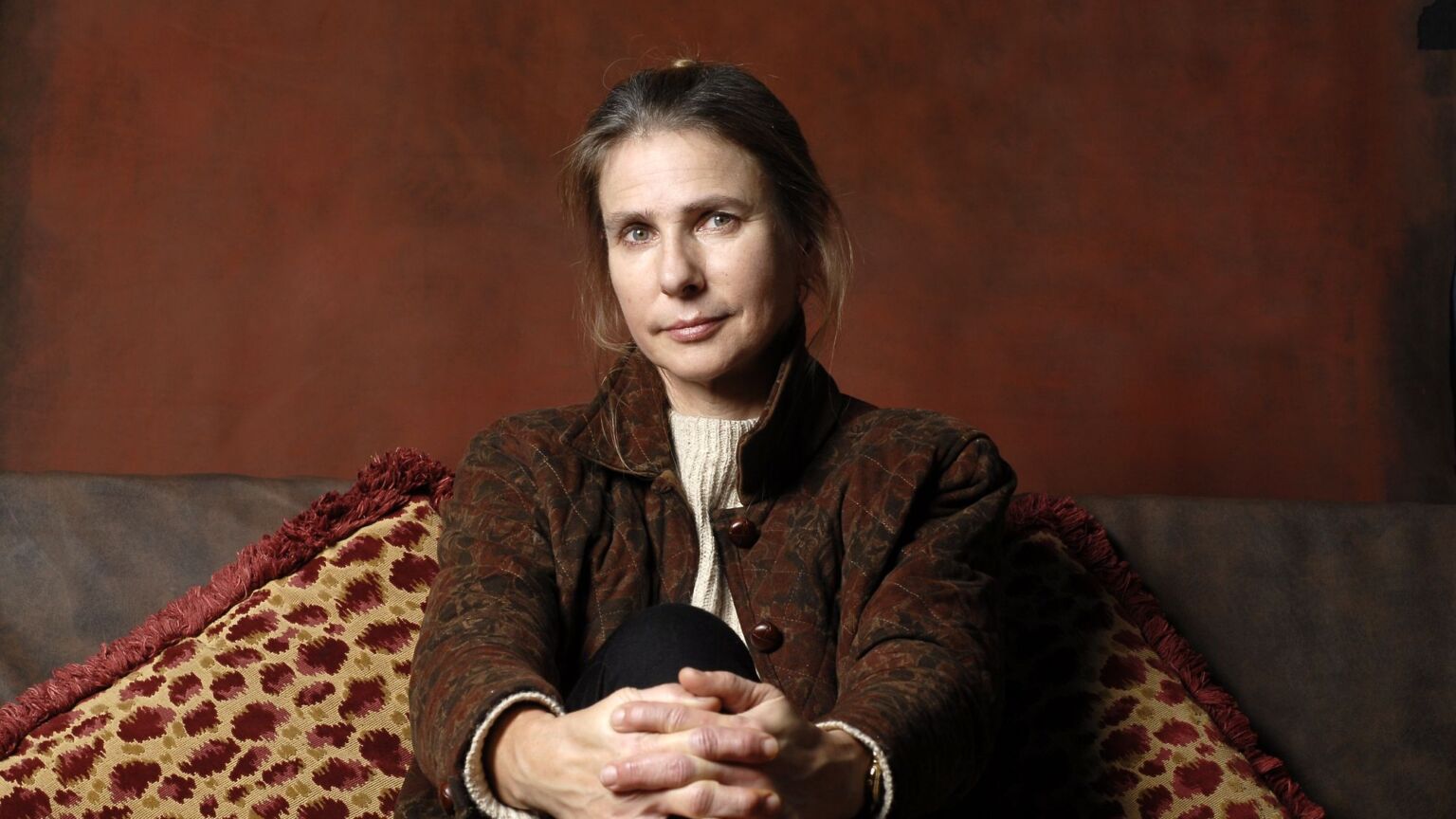
All across the West, immigration is consistently named as one of the most pressing concerns of our time. Mass migration has transformed societies. Illegal migration has made a mockery of national citizenship. A populist backlash is upending our politics. And yet, artists and intellectuals have shied away from an honest reckoning with this. Migration is only ever portrayed positively, and the growing public discontent against it is framed as a nativist, racist or even fascist peril. Lionel Shriver’s new novel, A Better Life, dares to ask the forbidden question: what happens when migration isn’t entirely positive for the people on the receiving end?
Shriver sat down with spiked’s Fraser Myers to discuss why she felt she had to write this novel, and why she isn’t surprised that it’s been met with such a furious response. What follows is an edited version of that conversation. You can watch the full interview here.
Fraser Myers: Why was now the time to write this book?
Lionel Shriver: The book’s plot follows a Brooklyn family that takes in one migrant to begin with, but little by little, it turns into a home invasion. This system doesn’t work out. I’m not presenting immigration as this purely wonderful thing – as an economic lifeline for the West or a cultural improvement via interesting restaurants.
Immigration is not only the biggest issue in Europe and the United States right now, but also the biggest issue of this century. In 2023, I was listening to Eric Adams, the then mayor of New York, on the news, proposing a programme that would pay regular New Yorkers to put migrants up in their spare bedrooms. This is a programme that never came to fruition – but in my book, it does. I wanted to explore what could go wrong with placing completely unvetted foreigners in people’s homes.
My novel takes place against the backdrop of the migrant crisis during the Biden administration. It’s set in history. Everything in it, aside from my fictional characters, is accurate. I was inspired by a 2024 incident which became nationwide news, wherein a group of eight or nine migrants being housed in a shelter attacked a couple of New York policemen, beating them up. That story became really emblematic of ingratitude. I wanted to look at what it was like to be a New Yorker during that time, when it was being inundated with hundreds of thousands of migrants – especially as it was partly the New Yorkers’ own fault.
Myers: Most novels or films about immigration focus on the migrant and their journey. Your book is from a different perspective.
Shriver: The title implicitly asks: ‘a better life’ for whom, right? And according to most of the research, migrating quite reliably improves life for the immigrant, but not necessarily for the host population. That’s why this book is going to get a lot of flak. It’s a story that represents both sides of the immigration debate, but for the usual suspects, there’s only one side you’re really allowed to discuss.
You can’t say, for instance, ‘this is too much, too fast’. You can’t ask why we’re paying welfare for these people, or where the benefits are for us. You’re not supposed to say any of that stuff – much less in fiction. The host population is always to be seen as wealthy and advantaged or, as we say now, ‘privileged’. Sympathy is exclusively reserved for the migrants. This book bucks the trend by having sympathy for the people who have to accommodate and pay for all these strangers in their midst.
Myers: Publishing is a notoriously woke industry. Did you have any difficulties in getting the book out there?
Shriver: To their credit, the publishers, HarperCollins, did buy the book. I wasn’t sure they would. This is the first time I’ve submitted a manuscript to them and was genuinely anxious that it might be a bridge too far. I wondered if I might be reduced to self-publishing. None of the other ‘big five’ would have touched a book like this, so I give them a lot of credit for that.
Regarding the editing though, I detected some cold feet – especially when it came to particular passages. I would often be told that a section was ‘too long’, or that it wasn’t really necessary. It was suggested that I remove certain characters because they ‘didn’t serve much purpose’. It just so happened that the characters they wanted to remove said things that made my editor nervous.
It was an interesting experience. On the one hand, they were going to buy this book. On the other hand, when it came down to page by page they probably thought, ‘we can’t publish this!’ On balance, there was an element of them wanting to protect me from myself, so it wasn’t entirely heavy-handed censorship. But I figured: In for a penny, in for a pound.
Myers: My sense is that the book is as much a criticism of Western society as it is of migrants or even migration policy.
Shriver: Definitely. And it’s not just a ‘woke poke’. It isn’t just a send-up of the progressive mindset. It’s a more serious criticism of the family at the centre of the novel, especially the three grown children. The two older sisters do not have kids themselves. The youngest, the son, through whose eyes the whole story is viewed, also has no intention of having a family. As the Honduran immigrant points out, that family is just going to disappear. Who’s going to own their big house? There will be no Bonaventura family left.

That is a sincere criticism and actually a self-criticism, because I didn’t have kids either. My younger brother, at least, had four. He more than did his part, and I did not do mine. When I was much younger, it was unusual for someone like me to opt out of having a family, but it’s become altogether too usual now. This matters, because one argument on the open-borders side is that we’re not reproducing: if we don’t want to diminish as a nation, we need to let in more people.
I’d contend that argument doesn’t quite hold water. Immigrants get old, too. We have these family-reunification policies, which often entail bringing in migrants’ parents. This means we don’t really improve our age structure. Furthermore, there are values to defend other than economic growth. That’s where many on the left are especially uncomfortable, because in their view, there’s nothing worth preserving about Western civilization.
Myers: It would be remiss not to ask you about the language we use when we talk about immigration, as it seems to change all the time.
Shriver: It’s a very obvious and tired pattern with the left, this constant cleansing of language. The left especially dislikes the term ‘illegal’. It’s ridiculous. These people are not supposed to be here by law, therefore their presence is illegal. The left, of course, prefers to use words like ‘undocumented’, which is similar to calling the homeless ‘unhoused’. It puts the responsibility on another party. Someone else failed to give them documents. The government is remiss. A bureaucracy has failed to give these people what they need.
The left uses language in the interest of disguising the difference between the citizen and the illegal immigrant. It fundamentally believes in open borders. Some won’t admit it, but if you follow all their policies through, they all lead to open borders. We see this in the anti-ICE campaigns, which are really just an opposition to any deportation whatsoever. The left simply doesn’t believe we have the right to keep anybody out at all – which is exactly what ‘open borders’ means.
Lionel Shriver was talking to Fraser Myers. Watch the full conversation below:

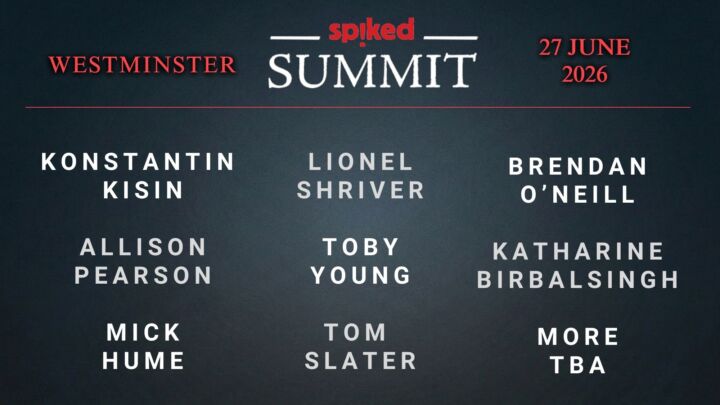
spiked summit 2026
10am-5pm, Saturday 27 June
Emmanuel Centre, London, SW1P 3DW
With Konstantin Kisin, Lionel Shriver, Brendan O'Neill, Katharine Birbalsingh, Toby Young, Allison Pearson, Tom Slater and more
Become a spiked supporter to get a discounted ticket
£80 or £50 for supporters
You’ve hit your monthly free article limit.
Support spiked and get unlimited access.
Support spiked and get unlimited access
spiked is funded by readers like you. Only 0.1% of regular readers currently support us. If just 1% did, we could grow our team and step up the fight for free speech and democracy.
Become a spiked supporter and enjoy unlimited, ad-free access, bonus content and exclusive events – while helping to keep independent journalism alive.
Monthly support makes the biggest difference. Thank you.


Comments
Want to join the conversation?
Only spiked supporters and patrons, who donate regularly to us, can comment on our articles.