How to solve Britain’s energy crisis
The Iran War has laid bare the staggering costs of Net Zero utopianism.
Want unlimited, ad-free access? Become a spiked supporter.
In response to the Iran conflict, fossil fuel prices are yo-yoing faster than the UK prime minister’s policy agenda. Roughly 20 per cent of the world’s supply of oil and natural gas passes through the Strait of Hormuz, a chokepoint separating Iran from the Gulf States. Unfortunately, much of that passage sits squarely within range of Iranian missiles and drones.
Oil prices have risen sharply again after a brief period of tranquility last week. Traders either believed the conflict would end soon, or they thought that alternative supplies would soon come on stream. But both options were always uncertain – particularly the former. Trump’s promise to end the war quickly is, at the end of the day, a Trump promise. There are Persian sand dunes with more consistency and permanence.
Given this uncertain state of affairs, wouldn’t a country with an established oil and gas sector be crazy, bordering on reckless, to stand in the way of developing it as fast as possible? Apparently not. According to UK energy secretary Ed Miliband, the latest war in the Middle East is ‘yet another reminder’ that the ‘only route to energy security and sovereignty’ is Net Zero. It is further proof, Miliband said, that the UK must ‘get off our dependence on fossil-fuel markets, whose prices we do not control, and on to clean homegrown power we do’.
Miliband’s statement shows that the weakest arguments deployed in 2022 – when Russia’s invasion of Ukraine caused global energy prices to skyrocket – are making a return. Fossil fuels are too expensive, no one wants to invest and it’s a depleted basin anyway, we are told. Plus, domestic production can’t affect prices, the future is electric, the public doesn’t like it, a ladder fell over during test drilling and greedy corporations are profiteering. And will no one think of Greta’s sad face as she pines for the fallen ayatollah on her next diesel-yacht jolly to a warzone?
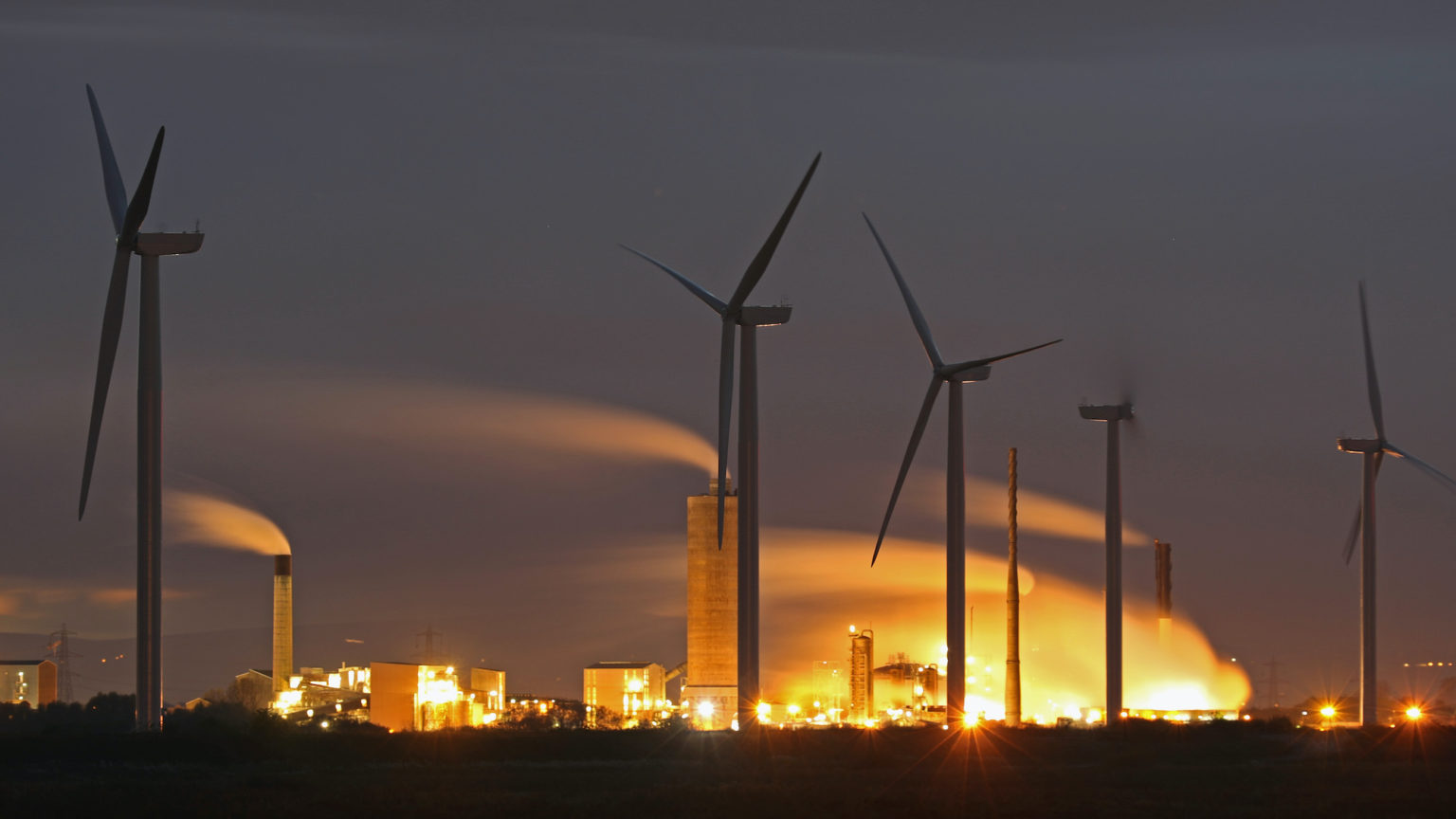
The reality is this. The UK uses oil and gas for around 75 per cent of its energy needs, just over half of which is imported. We will continue to use oil and gas for decades to come, and access to secure supplies remains an imperative, wherever it comes from. The alternative is lights out and heating off in winter, not a utopian counterfactual of nymphs frolicking in meadows around windmills. If resources come from the UK’s own soil or seabeds, we can ensure they are drilled to our own standards, and that we reap the benefits – both through economic activity and tax.
If it’s imported, we cannot. We instead pay the taxes and wages for others and consume a grubbier product, emitting 50 per cent more CO2. This is moronic. ‘Leave it in the ground’ isn’t a policy stance. It is an admission of being so blind in your pursuit of a cleaner, greener world that you’re prepared to deliver a dirtier, greyer one to avoid making adult choices.
But what about our genius Net Zero mission and clean power plan? Surely three to four fossil-fuel crises in 50 or so years are an endorsement of this strategy? Not really. Net Zero means trying to replace gigawatts of reliable power from old nuclear, coal and gas as fast as possible with wind and solar and, much later, any new nuclear power that can get past British regulations. The fly in the ointment – or cod trapped in a fish disco, if you prefer – is that wind and solar power also rely on gas.
By now, it should hardly need stating that weather-dependent power is unreliable and infirm. When the wind isn’t blowing and the sun isn’t shining, our energy is provided by gas – kept on standby at vast expense, to ensure power grids can keep running on overcast and windless days. Renewables also require a vast amount of land and infrastructure. That infrastructure of wire, concrete, steel, solar panels and turbines relies on fossil fuel-intensive manufacturing and mining. This is also true of hypothetical future solutions like batteries and hydrogen, neither of which are remotely viable at scale at present.
This is why our energy prices continued to rise after oil and gas prices fell in 2023-24. It was what the system costs. Selling sunlight and breezes to the public as free energy – without mentioning the cost of capturing, converting, connecting, balancing, storing, financing and backing them up – was always a catastrophic folly.
The obvious low-carbon substitute is nuclear. If we build it under a sensible regulatory regime, it can compete with both gas and older renewables. If we can do that cost-effectively in a decade hence, why load the grid with gas-dependent renewables capacity today? It is the height of absurdity.
So what can be done about the latest, inevitable energy crisis? It would be good if the government had a plan. One where predictable policy levers are pulled in reaction to the length and extent of the higher prices. This does exist at the extremes – there are emergency plans for grid failure, and the civil disorder that may follow. But solutions to exorbitant energy prices caused by the shocks we are now witnessing are thin on the ground. So here are some suggestions.

Short-term, it is easiest to bring down pump prices for transport. With roughly 65 per cent of people commuting by car and over 90 per cent of those not in electric vehicles, cutting fuel duty, cutting the VAT rate from 20 per cent to five per cent and suspending or ending the biofuels mandate would have an immediate impact. That MPs are still debating planned increases in fuel duty in September shows the metropolitan disconnect of current ministers with how most people live their lives.
The most obvious thing to do would be to scrap Labour’s crippling policy on the North Sea oil and gas industry. Ditching the 78 per cent ‘windfall tax’ is common sense, but this alone will not restore investor confidence. The only sensible thing to do is reverse Labour’s ban on new drilling in the North Sea.
The 2008 Climate Change Act, which set legally binding decarbonisation targets, also needs to go. This will avoid never-ending judicial reviews and appeals to international courts that prioritise a right to a hypothetical global temperature over national economic security.
We are in this mess as a result of deliberate political choices that have placed utopian ideals above reality. The goal of UK energy policy should be to have energy supplies that are secure, affordable and abundant – in that order, delivered through a competitive set of energy markets that make efficient choices.
Decarbonisation will only be rational when it doesn’t damage those ends. But that remains a long way off. Britain’s energy crisis, however, is now. Only by abandoning Net Zero will we be able to get ourselves out of it.
Andy Mayer is chief operating officer and energy analyst at the Institute of Economic Affairs.
You’ve hit your monthly free article limit.
Support spiked and get unlimited access.
Support spiked and get unlimited access
spiked is funded by readers like you. Only 0.1% of regular readers currently support us. If just 1% did, we could grow our team and step up the fight for free speech and democracy.
Become a spiked supporter and enjoy unlimited, ad-free access, bonus content and exclusive events – while helping to keep independent journalism alive.
Monthly support makes the biggest difference. Thank you.





Comments
Want to join the conversation?
Only spiked supporters and patrons, who donate regularly to us, can comment on our articles.