Long-read
The reckless adventurism of Trump’s war in Iran
The White House has launched a war with little thought, strategy or rationale.
Want unlimited, ad-free access? Become a spiked supporter.
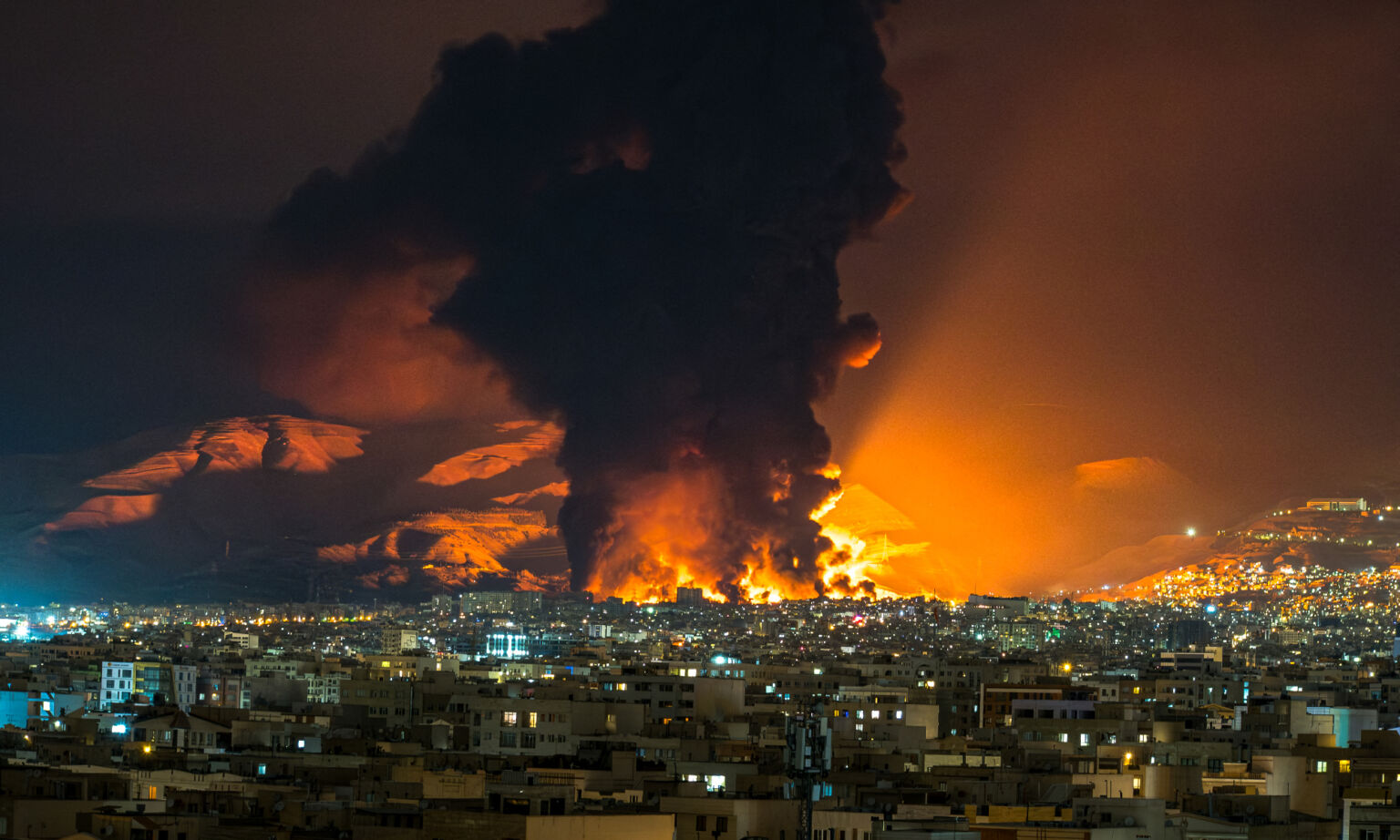
Launched alongside Israel, the United States’ aerial campaign against the Islamic Republic of Iran shows that it retains an extremely powerful military machine. But as the White House’s ever-changing war objectives attest, this act of aggression also shows that America’s political class doesn’t know how to act in the nation’s interests.
The US, after all, is a nation whose economic buoyancy depends increasingly on foreigners continuing to lend it money. It is a nation combining huge military superiority with heavy indebtedness and a hollowed-out industrial and productive base. All this makes it an erratic and dangerous force in international affairs.
The conflict in Iran is a perilous situation for Americans, as well as for the rest of the world. In opposing America’s under-explained and arbitrary actions overseas, the American public shows a shrewder grasp of geopolitics and US national interests than Trump and his team do.
For that is what Washington seems to be incapable of articulating right now – the national interest. The words of Lord Palmerston, the mid-19th-century British prime minister famed for his realism and grasp of national interests, are worth recalling today. In an 1848 speech on the question of Polish independence, Palmerston told parliament that ‘it is our duty not lightly to engage this country in the frightful responsibilities of war’. He emphasised that starting a war against another country is always a ‘frightful responsibility’ for any leader.
No doubt the more ignorant of today’s armchair generals would brand Palmerston a softie and an appeaser. Perhaps they would put him on a par with Neville Chamberlain, the British prime minister who infamously tried to avoid war with the Nazis by striking a deal with Hitler in the late 1930s. But a quick look at history reminds us that the war-fearing Palmerston was an extremely interventionist statesman.
Indeed, Palmerston oversaw three major wars: the Anglo-Egyptian War (1840), the Crimean War (1853-56) and the Second Opium War against China (1856-60). There were also numerous smaller ‘gunboat diplomacy’ interventions, including the famous ‘Don Pacifico Affair’ of 1850, when he ordered a naval blockade of Greece just to force its government to pay compensation to a British subject, David Pacifico.
Palmerston’s record shows that defending a nation’s interests by any means other than war, at least until other options are exhausted, is not a sign of passivity, appeasement or cowardice. Rather, it’s a sign that a leader really is acting in the nation’s interests. It is a recognition that the ‘frightfulness’ of war lies in its inevitable savagery and unpredictability.
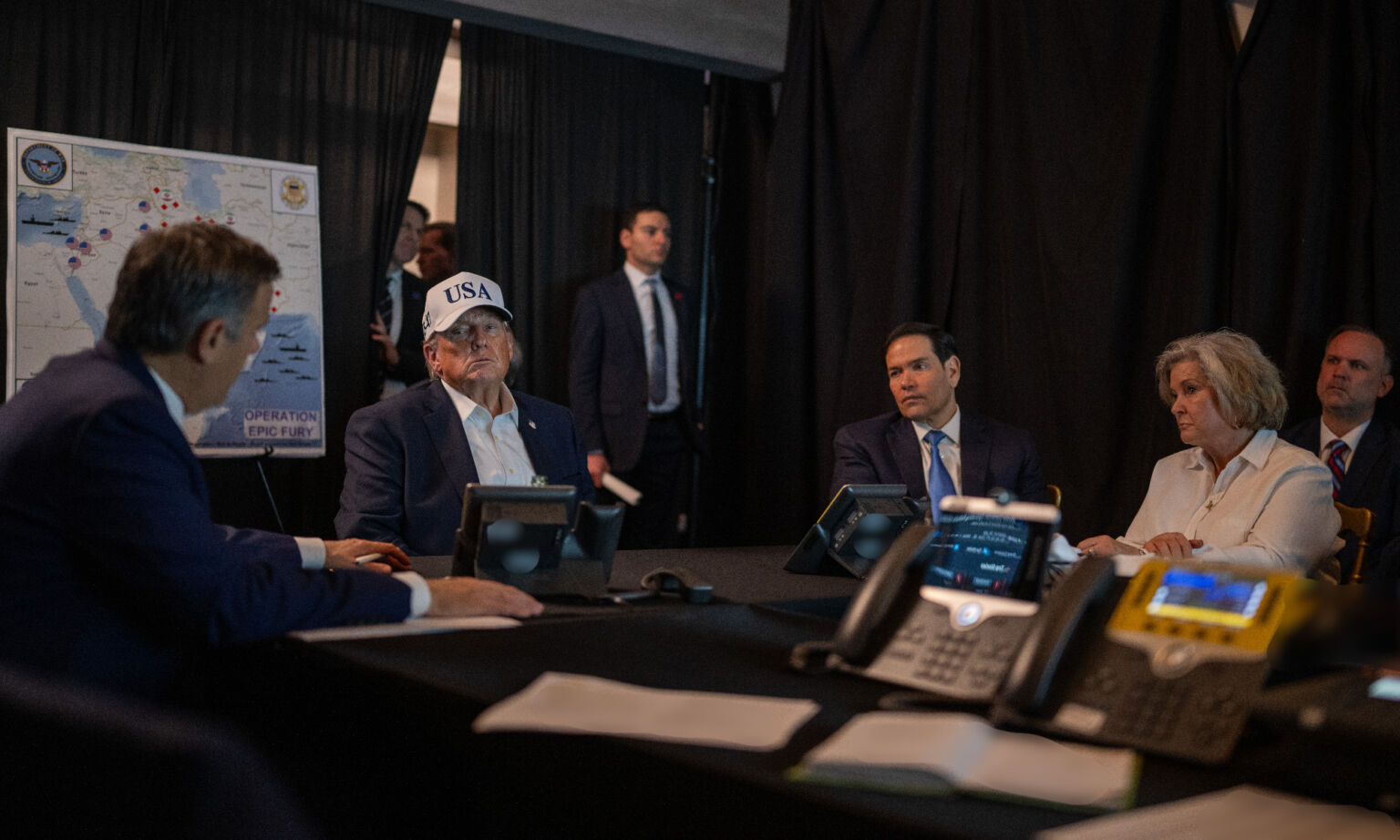
For the sheer unpredictability of war is what Team Trump seems to have ignored. He and assorted members of his administration have talked vaguely of a plan. This week, Trump himself has said the Iran War is ‘very far ahead of schedule’, and ‘very complete’, despite not saying what completion looks like. Yet as Prussian field marshal Helmuth von Moltke put it in 1871, no plan of war can be relied upon beyond the first encounter with the enemy. Uncertain outcomes are intrinsic to warfare, and these can come back to harm the national interest of the protagonists.
It is simply impossible to anticipate the repercussions of a war launched against another nation. This is because the external intervention changes the equilibrium of power within the nation attacked. In the case of Iran, the Islamic Republic may well collapse. There may be a civil war. There may be Balkanisation. Hard-line factions could take control. These are all feasible consequences of this intervention, but they are also unknowable at this stage. What we do know is that there has never been an international war with a perfect, democratic, stable outcome.
That’s why beginning a war is the most consequential decision a leader can ever make. Historically, the soundest judgement has been exercised by those committed to upholding the sovereignty of all nations. Such leaders recognise the importance of setting a very high bar for breaching the sovereignty of another nation, because they know that respecting others’ sovereignty can ensure reciprocal respect for one’s own nation’s sovereignty.

The US seems to have set a very low bar for its military action in Iran. Carl von Clausewitz famously said that ‘war is a mere continuation of policy with other means’. In this sense, war should be seen as a last resort. As Clausewitz cautioned, war ‘is no pastime; no mere passion for venturing and winning; no work of a free enthusiasm: it is a serious means for a serious object’. It is ‘an act of violence intended to compel our opponent to fulfil our will’. Thus, at a minimum, it is essential to be clear on the goal that is being ‘willed’, on what serious object is to be attained.
The US war against Iran fails even this basic test. There really do not seem to be any clear, consistent strategic goals. The conflict was launched amid talk of regime change. Then it was claimed US-Israeli forces struck to stop Iran from developing nuclear weapons. This week, Trump claimed America was simply trying to stop Iran ‘taking over the Middle East’.
Moreover, the intervention is incompatible with the Trump administration’s own grand strategy, as expressed in the National Security Strategy, published in November, and the National Defence Strategy, published at the start of this year. Both documents downplay America’s strategic interest in the Middle East. The National Security Strategy even talks of the importance of having a ‘predisposition to non-interventionism’. It says:
‘Conflict remains the Middle East’s most troublesome dynamic… [but] there is today less to this problem than headlines might lead one to believe. Iran – the region’s chief destabilising force – has been greatly weakened by Israeli actions since 7 October 2023, and President Trump’s June 2025 Operation Midnight Hammer, which significantly degraded Iran’s nuclear programme.’
The document goes on to claim that ‘the days in which the Middle East dominated American foreign policy in both long-term planning and day-to-day execution are thankfully over’.
The war in Iran therefore cuts against the very grain of the White House’s own defence strategy. Trump is now hyping up the ‘imminent’ threat to the US from Iranian nuclear weaponry. But if this threat is so imminent, why was it not clear to the White House three months ago? Could so much credible evidence of Iranian nuclear armament really have been discovered over just the past few weeks? If so, why does the administration continue to hide it from the public?
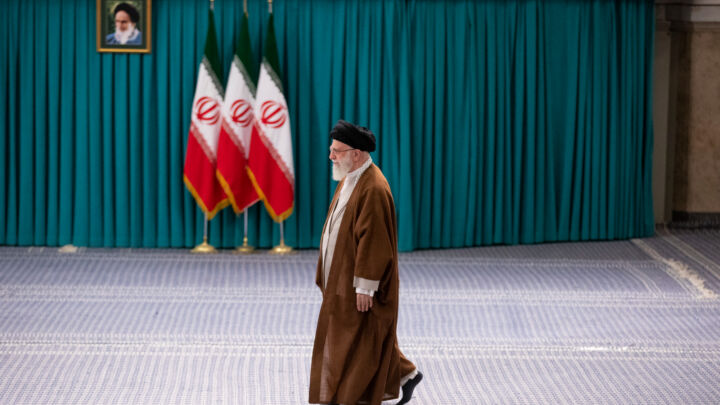
Other rationales the White House has offered for the war do not really stand up either. The war could be in America’s national interest if justified on the grounds of supporting Israel, a close ally. After all, the Jewish State exists under the constant threat of destruction by Iran and its proxies. Ever since the 1979 Iranian Revolution, the authoritarian leadership of the repressive theocracy has consistently expressed a desire to eliminate what it calls the ‘Zionist entity’. Iran’s recently deceased supreme leader, Ali Khamenei, boasted that the Jewish State would no longer exist by 2040. In these circumstances, the Israeli nation has a legitimate right to defend itself by fighting the Islamic regime and its proxies on its borders.
But if anyone thinks Washington went to war in defence of Israel, Trump has a bridge by the Tower of London to sell them. The Trump administration has consistently not delivered on its rhetorical support for Israel. Consider the many times over 2025 that the US president pledged to eradicate Hamas. Yet in that time, the US didn’t even send a warning shot in Hamas’s direction, despite its continued activity in Gaza. On the contrary, it was Trump who pressured Israel to stop its war with Hamas last October because he said the terrorist group was ‘ready for a lasting PEACE’. Trump’s astute judgment, once more…
We should also not forget that Trump forced Israel to stop its war against Iran last year, calling for it to ‘calm down now’. Trump declared at the time that, ‘This is a war that could have gone on for years, and destroyed the entire Middle East, but it didn’t, and never will!’. Now it seems Trump has changed his mind again.
In the White House’s defence and security strategies, there is just one mention of the objective to ‘keep Israel secure’ – at the bottom of the penultimate page of the National Security Strategy. Elsewhere, in the National Defence Strategy, Israel is talked up as a ‘model ally’. This is because it is ‘willing and able to defend itself with critical but limited support from the United States’. This is as much a dig at America’s European NATO allies, and their overreliance on US support, as it is praise for Israel. Hence the Defence Strategy also suggested that if other nations followed Israel’s model, America would no longer be ‘distracted by interventionism, endless wars, regime change and nation building’ – all of which squanders ‘Americans’ will, resources, and even lives in foolish and grandiose adventures abroad’.
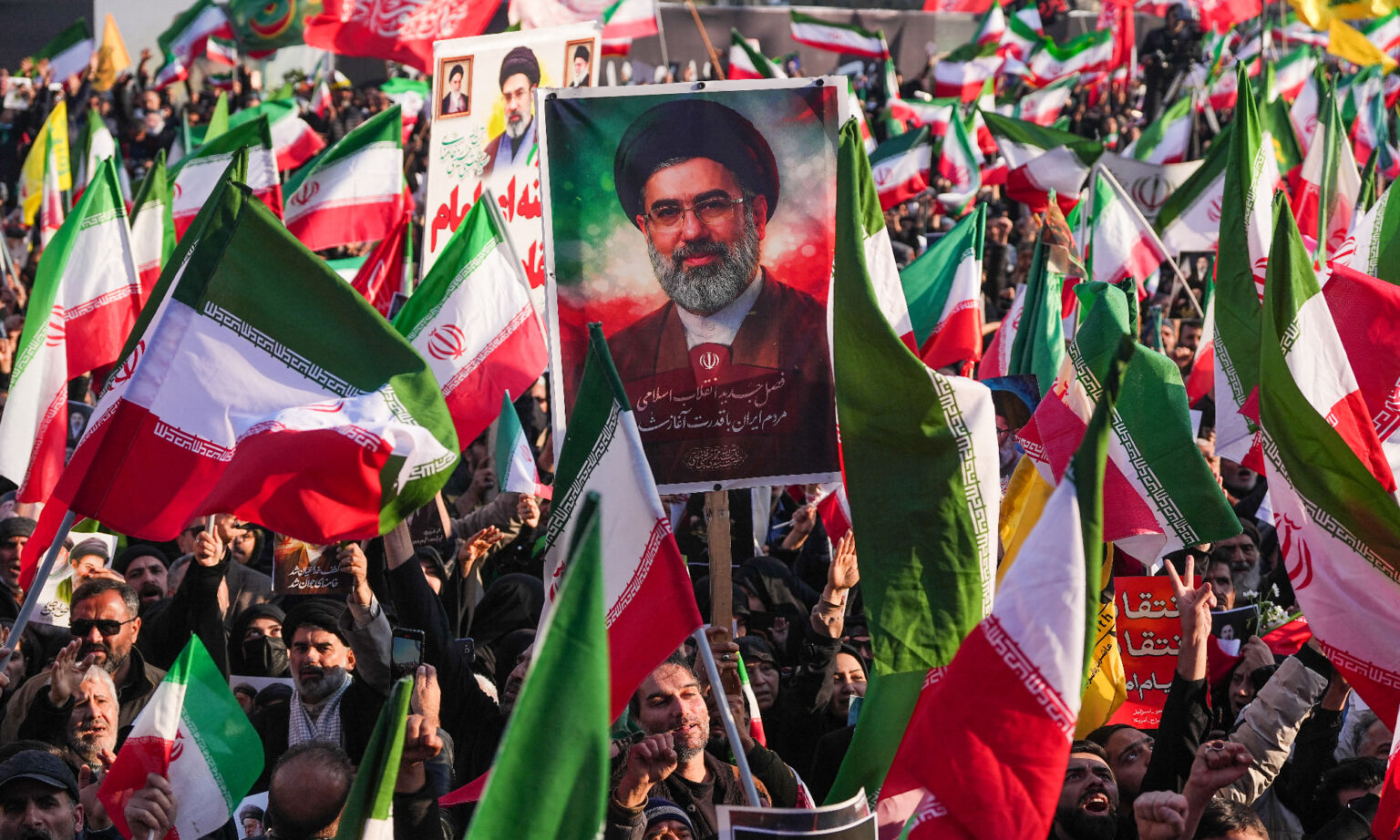
The ink was barely dry on these strategy documents before they were overtaken by the Oval Office’s own foolish adventurism. America’s attack on Iran cannot reasonably be presented as a war to defend its ally, Israel. Because of the war’s uncertainties, there is a chance it could create a regional situation that is far worse for Israel. The appointment of Khamenei’s hardline son, Mojtaba, as the Islamic Republic’s new supreme leader, does not bode well in this regard.
The strategy documents rightly note that Iran was profoundly weakened following Israel’s 12-day war last year. This suggests the US struck Iran because it was relatively defenceless, not because it posed a clear and present danger to America. Iran’s current military vulnerability also contradicts the claim that America is attacking Iran because it is a capable proxy for China – whose rise the US does identify as a strategic threat. If this administration really thought Iran could act as a ‘forward base’ for China, why did it so clearly rule out Middle Eastern intervention?
And what of the US’s rotating wheel of war aims? There do seem to have been three main ones given alongside regime change: destroying Iran’s nuclear capabilities forever; destroying its ability to attack anyone else with missiles and drones; and stopping Iran from funding Islamist terror groups around the world. These are an admirable set of objectives in themselves. But without specifying the means to bring them about, they amount to an empty wish list. Any strategy deserving of the name requires spelling out how its goals are to be realised. This is not a call for a ‘day after’ plan, or for American boots on the ground, which could be even more destabilising. It is simply to point out that calling a wish list a ‘strategy’ doesn’t make it so. Dreaming is easy, but achieving any of those three goals in practice is impossible by external military means alone.
From the air, it is feasible to disrupt and even destroy Iran’s existing nuclear capabilities, ballistic missile and drone technologies, and, potentially, its financial ability to fund anti-Semitic and other terror atrocities abroad. But unless the bombing is never-ending, it can’t stop an Iranian government rebuilding these technologies and capabilities. Wars that aim for what Trump has called the ‘total obliteration’ of Iran’s nuclear and ballistic missile capability would have to be perpetual.
To stop the Islamic Republic from seeking to inflict terror is not attainable by simply changing one Islamist leader for another. It really would need something like the full regime change Team Trump initially mooted at the start of the intervention. It would require overthrowing the anti-Israeli, anti-American, and anti-Western Islamic Republic. But even many in today’s West Wing know full well that attempting external regime change always ends in disaster for the local population, and often for other people, too.
There is an alternative to the American government’s current exercise of its precarious might in the Middle East and beyond. First, stand up resolutely for Israel. In the immediate situation, other nations, including Britain, should ally with Israel to help beef up its air defences to make them even more impregnable than they already are.
Second, other governments, from Lebanon to Britain, should clamp down on Iranian and other Islamist terror cells operating in their own countries. In the UK, an important step to this end would be rejecting the dogma of multiculturalism that has encouraged the living apart of Muslim communities.
Third, other countries should develop non-interventionist ways to assist the Iranian people in getting rid of their theocratic regime, including moral, financial or other practical support.
Only then might it be possible for Iranians to really ‘seize control of their destiny’, to repurpose Trump’s words. Iranians have to be able to act against their brutal government on their own terms. It is their right to choose their own leaders, not to be told what to do by any American president, however well-intentioned or otherwise.
That’s what backing national sovereignty really means – standing up for a people’s right to determine their own future. Right now, that is something the US is signally failing to do.
Phil Mullan is the author of Beyond Confrontation: Globalists, Nationalists and Their Discontents.
You’ve hit your monthly free article limit.
Support spiked and get unlimited access.
Support spiked and get unlimited access
spiked is funded by readers like you. Only 0.1% of regular readers currently support us. If just 1% did, we could grow our team and step up the fight for free speech and democracy.
Become a spiked supporter and enjoy unlimited, ad-free access, bonus content and exclusive events – while helping to keep independent journalism alive.
Monthly support makes the biggest difference. Thank you.




Comments
Want to join the conversation?
Only spiked supporters and patrons, who donate regularly to us, can comment on our articles.