The death of a tyrant
Under Ayatollah Khamenei, the Islamic Republic became one of the most despotic, dangerous regimes on Earth.
Want unlimited, ad-free access? Become a spiked supporter.
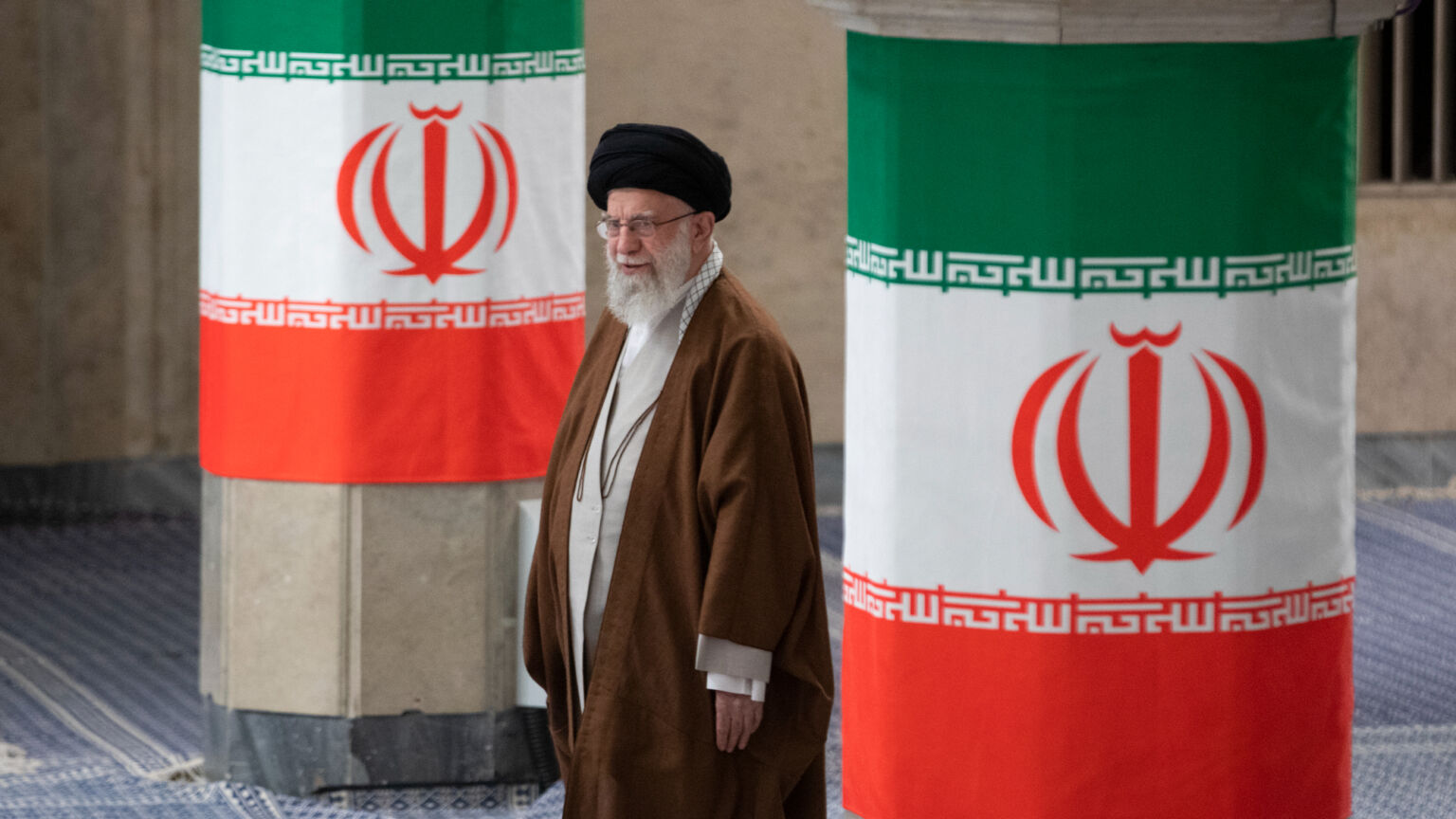
‘Death to the dictator.’ Iranian protesters have chanted this in the direction of Ayatollah Khamenei for years now. On Saturday morning, a US-Israeli airstrike finally made good on their call to arms, killing the Supreme Leader of the Islamic Republic alongside several family members in a compound in the heart of Tehran.
It is a truly momentous event, an inflection point in modern history. We can and must debate the wisdom and morality of this act of US-led ‘regime change’ – historical precedents don’t bode well. But we should be in no doubt as to the wretched, wicked nature of the regime the US seeks to topple.
Khamenei wasn’t a minor despot like Libya’s Colonel Gaddafi, or Iraq’s Saddam Hussein, desperately clinging on to power for power’s sake. He was the longest-serving tyrant in the Middle East, the head less of a nation state than of a brutal theocratic experiment – an Islamist entity founded nearly 50 years ago in lethal, cosmic opposition to the West, as represented by America and Israel.
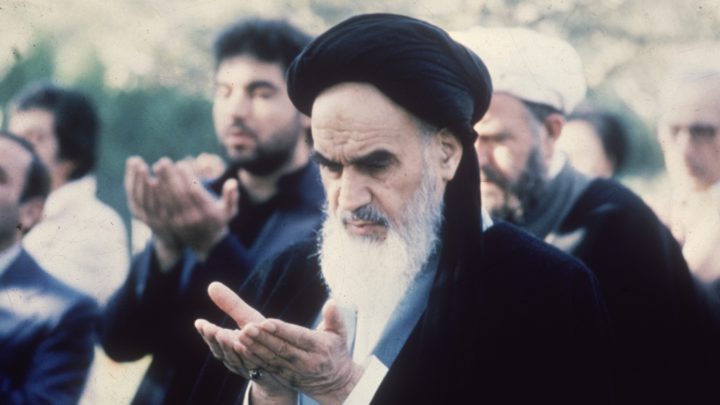
Khamenei’s predecessor and mentor, Ayatollah Khomeini, may have birthed the Islamic Republic in 1979, exploiting the ideological tensions within Iranian Revolution for Islamist ends. But it was Khamenei who entrenched the Islamic Republic. He oversaw the post-Iran-Iraq-war expansion and consolidation of Khomeini’s revolutionary militia, the Islamic Revolutionary Guard Corps (IRCG), turning it into the basis of a parallel clerical-military state – one that effectively ran Iranian affairs and controlled large swathes of the economy. Under Khamenei, the Iranian parliament became a sideshow, politicians mere placemen and dissent a near impossibility.
And at the same time as Khamenei’s regime ruled with an iron Islamist grip at home, it violently promoted its Islamist, anti-Semitic mission abroad. Through arguably the most extensive terror network in the world – from Hezbollah, Hamas and the Houthis to Islamic Jihad and assorted militias in Iraq and Syria – his regime waged its religious war against Jews and America, to the detriment of stability in the Middle East and beyond.
The death of the man who had come to personify the Islamic Republic, whose life was dedicated to its deeply reactionary mission, cannot but herald the end of a dark era.
Born in the city of Mashhad, in north-eastern Iran, in 1939, to a poor, religious family, Khamenei was always a pious, ostentatiously ascetic man – something he would play on in the cult of personality he built around himself as supreme leader. Like many others of his generation, he was seduced by the Islamist cause from early on, framing his opposition to colonial power in cultural, anti-Western and above all anti-Semitic terms. He even translated into Persian the work of Egyptian Islamist Sayyid Qutb, arguably the most influential Islamist thinker of all.
In the decades before the Iranian Revolution, he was a political rather than religious figure, having struggled in seminaries. His anti-Shah agitation during the 1960s and 1970s often landed him in jail and resulted in periods of internal exile. After the 1979 revolution, he reemerged and became a favourite of Khomeini (who he had first met in 1959, attending his classes in Qom), serving two terms as president before being appointed Supreme Leader after Khomeini’s death in 1989.
What he lacked in religious scholarship and charisma he made up for in ruthless political maneuvering. Alongside other hardline members of the clergy, he developed a tight-knit partnership with the IRGC. And so from the 1990s onwards, Khamenei’s reign was marked by an ever-tightening grip on civil society.
After reformist cleric Mohammad Khatami beat Khamenei’s choice in the 1997 elections, he launched a crackdown on even mild challenges to the status quo. He closed down newspapers, jailed key politicians and had his henchmen silence reformers. This pattern of responding to any internal challenge through brutal and increasingly lethal repression increased in intensity throughout his reign. He violently put down student protests in 1999; beat and shot demonstrators during unrest following the disputed 2009 election; and crushed large-scale, increasingly working-class protests with lethal force in 2019, killing hundreds.
The death of Mahsa Amini in 2022, at the hands of the so-called morality police, prompted what were then the most widespread anti-regime protests of his rule. Khamenei responded by killing nearly 600 protesters and arresting more than 20,000. It turned out that was just a foretaste of what he was to visit on anti-regime protesters earlier this year. Officially, the Islamic Republic claims that just over 3,000 people were killed. External observers suggest the real death toll could be over 30,000.
The growth of popular Iranian opposition to the Islamic Republic is not a surprise. Iranians’ living standards have plummeted, and their freedoms crushed, under the reign of the two ayatollahs. The economy is shattered, state-level corruption rife and the most basic of civil liberties non-existent.
At the same time as the Iranian populace has been living in dire straits, Khamenei and his IRGC cronies have been relentlessly and expensively pursuing their Islamist mission abroad. They ploughed billions into supporting a network of Islamist militias – the so-called Axis of Resistance – across the Middle East. They invested an enormous amount of resources into the military and perhaps even more in pursuit of a nuclear-weapons capability. And all the while ordinary Iranians struggle to access water and electricity.
Right from the start, Khamenei was only too happy to neglect the lives of Iranians in the interests of violently promoting the Islamist mission abroad. With Iranian backing, Hezbollah detonated a truck bomb outside the Israeli embassy in Buenos Aires in 1992, killing four Israelis and 25 Argentinians, including children. It struck again in Buenos Aires in 1994, bombing a Jewish community centre, killing 85 people. That was just the start. Since the early 1990s, Iran has backed its proxies to the hilt in their transnational war against the supposedly Satanic forces of America and Israel. Countless lives have been lost and a region torn apart, as Khamenei’s Islamic regime expanded its reach into Iraq during the 2000s, and Syria and Yemen in the 2010s.
It’s possible to argue that the Islamic Republic’s war with the Great and Little Satans has now come home to roost. The current US-Israeli intervention is the latest, most dangerous phase of a conflict started by an Iranian proxy slaughtering hundreds of Israeli Jews over two years ago – Hamas’s pogrom on October 7. And it has now claimed the life of Khamenei himself. He has become the most significant fatality in a war he has done so much to stoke.
Tim Black is associate editor of spiked.
You’ve hit your monthly free article limit.
Support spiked and get unlimited access.
Support spiked and get unlimited access
spiked is funded by readers like you. Only 0.1% of regular readers currently support us. If just 1% did, we could grow our team and step up the fight for free speech and democracy.
Become a spiked supporter and enjoy unlimited, ad-free access, bonus content and exclusive events – while helping to keep independent journalism alive.
Monthly support makes the biggest difference. Thank you.



Comments
Want to join the conversation?
Only spiked supporters and patrons, who donate regularly to us, can comment on our articles.