The persecution of Hamit Coskun
Why was the CPS so desperate to pursue him for burning a Koran?
Want unlimited, ad-free access? Become a spiked supporter.
One of the more disturbing legal cases in recent years has finally been brought to a close. The Crown Prosecution Service’s year-long persecution of Hamit Coskun for burning a copy of the Koran ended in failure at the High Court on Friday. After effectively and repeatedly attempting to punish Coskun for blasphemy, the CPS has finally been sent packing.
It is a rare win for free speech. But the very fact prosecutors were so desperate to convict Coskun, and effectively reintroduce blasphemy laws by the backdoor, should worry us all. In any truly secular and democratic society, Coskun should never have been collared by the authorities in the first place.
It is worth looking at the case in a bit more detail. Coskun arrived in England from Turkey in 2022 as a political asylum seeker. As an Armenian Kurd born and raised in Turkey, he had fled persecution at the hands of the Turkish authorities, and the increasingly theocratic Turkish president, Recep Tayyip Erdoğan.
After his arrival in England, Coskun watched on from afar as Erdoğan eroded secularism and drove Turkey in an Islamist direction. By the beginning of last year, he had had enough. And so, on the afternoon of 13 February, he travelled to the Turkish consulate in Knightsbridge, west London, to make a pointed protest.
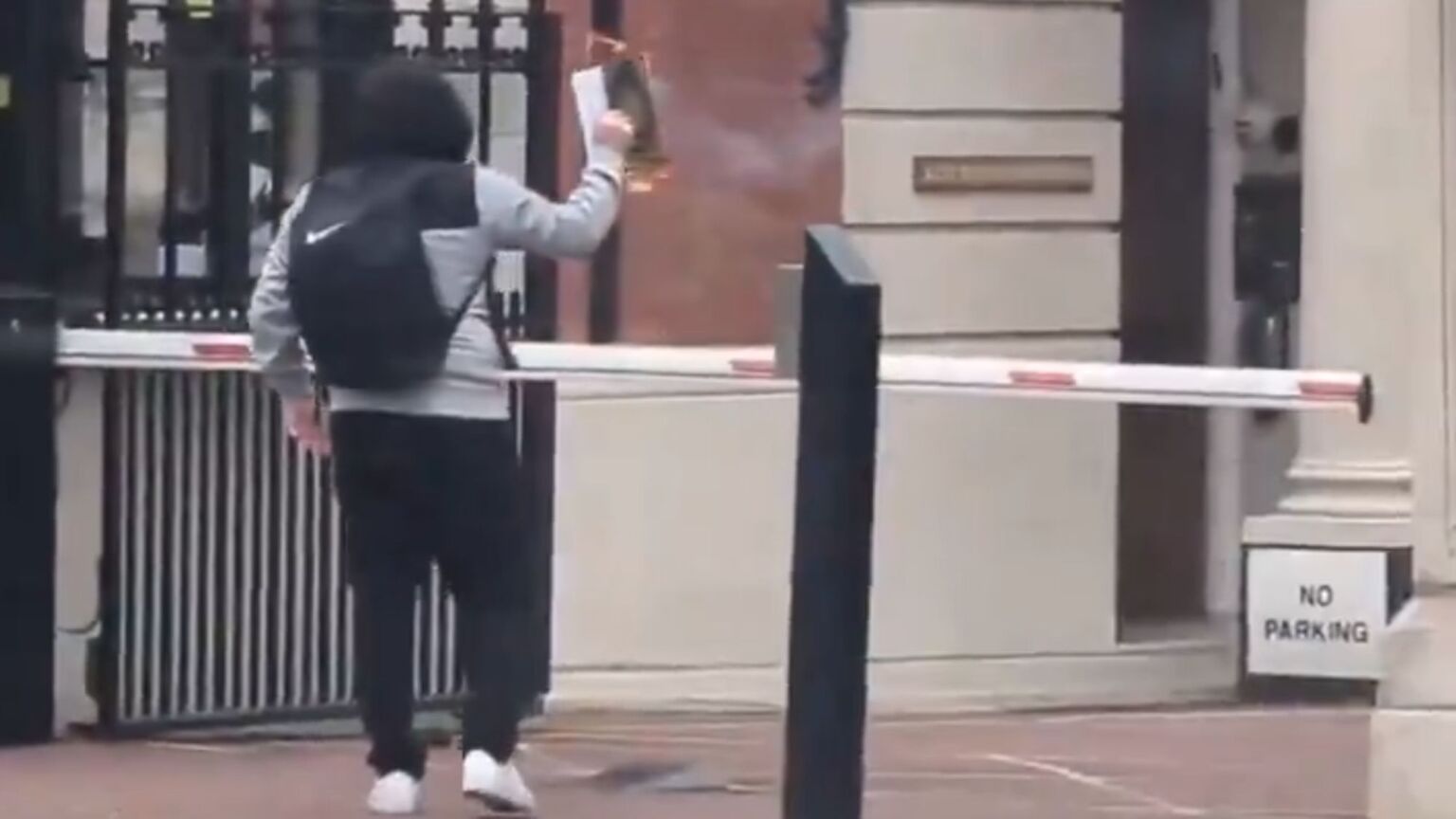
Nothing much happened initially. Coskun set fire to a Koran he had brought with him, and waved it in the direction of the consulate. According to witnesses, he shouted ‘Fuck Islam’ and ‘Islam is the religion of terrorism’. But no one, at first, paid him much attention.
Coskun’s protest would probably have gone unnoticed, were it not for the actions of Moussa Kadri, a 59-year-old Muslim who owned a nearby corner shop. As a recording of the encounter shows, Kadri first rushes towards Coskun, exchanges a few words with him, before disappearing into a nearby building. Minutes later, he returns with a large bread knife. He starts swinging it at Coskun, telling him that he is ‘going to kill’ him, leading Coskun to fall over. Kadri then proceeds to kick him and spit on him while he is prostrate on the ground.
Shortly after this ordeal, another nightmare began – Coskun himself was prosecuted for ‘religiously aggravated disorderly behaviour’. In June, he was convicted in Westminster Magistrates’ Court and fined £240. Disturbingly, the magistrate said Coskun’s assault was proof of how ‘provocative’ his actions had been.

Kadri, on the other hand, was treated almost deferentially. At Southwark Crown Court in September, the judge almost came close to justifying the actions of Coskun’s attacker, saying he had been ‘deeply offended’ by Coskun’s desecration of the ‘Holy Koran’. After pleading guilty to common assault and possessing a knife in public, Kadri was given a suspended sentence and ordered to pay a paltry £150 victim surcharge.
Coskun appealed his conviction, which was rightly overturned in Southwark Crown Court in October. Given blasphemy laws were abolished in England and Wales in 2008, it was a relief to read Justice Bennathan’s judgement:
‘There is no offence of blasphemy in our law. Burning a Koran may be an act that many Muslims find desperately upsetting and offensive. The criminal law, however, is not a mechanism that seeks to avoid people being upset, even grievously upset.’
Yet it seems the CPS didn’t like this verdict one bit. It proceeded to spend hundreds of thousands of taxpayers’ money trying to overturn it and re-convict Coskun. It goes without saying that the CPS had no issue with Kadri’s stunningly lenient sentence.
Any relief at the High Court’s decision this week should therefore be tempered by the actions of the CPS. It should have been acting according to the law, and the secular principles of British society. But instead, it appeared set on convicting Coskun of what amounts to blasphemy.
It is a grim irony that one of the reasons Coskun fled Turkey was precisely because of its lack of religious freedom. ‘I fled to England to flee sectarian politics. Now… I fear it’s followed me here’, Coskun said this week. These words ought to shame a tolerant, supposedly secular nation such as ours.
Hugo Timms is a staff writer at spiked.
You’ve hit your monthly free article limit.
Support spiked and get unlimited access.
Support spiked and get unlimited access
spiked is funded by readers like you. Only 0.1% of regular readers currently support us. If just 1% did, we could grow our team and step up the fight for free speech and democracy.
Become a spiked supporter and enjoy unlimited, ad-free access, bonus content and exclusive events – while helping to keep independent journalism alive.
Monthly support makes the biggest difference. Thank you.





Comments
Want to join the conversation?
Only spiked supporters and patrons, who donate regularly to us, can comment on our articles.