Bring back the insane asylums
The Valdo Calocane case shows how much ‘care in the community’ has failed.
Want unlimited, ad-free access? Become a spiked supporter.
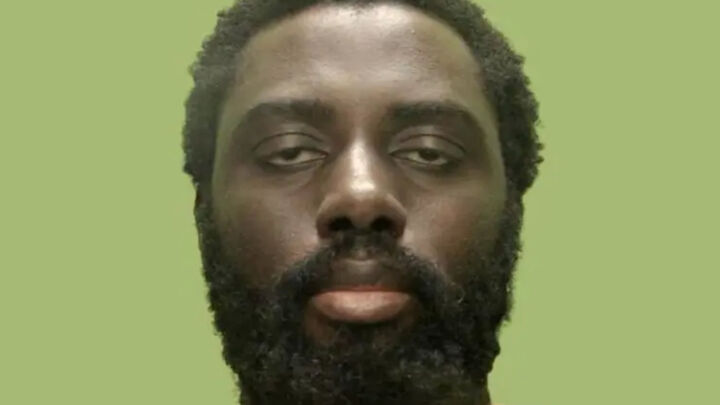
‘Perhaps [he] will end up killing someone.’ These were the prescient words of one psychiatrist involved in the treatment of Valdo Calocane, a paranoid schizophrenic who went on to murder Ian Coates, Grace O’Malley-Kumar and Barnaby Webber in an unprovoked attack in Nottingham on 13 June 2023. As the ongoing inquiry into these tragic events has revealed, the psychiatrist in question had good reason to make such a grave prediction. In the years leading up to the Nottingham incident, Calocane is alleged to have assaulted a police officer, attacked an emergency worker, assaulted two colleagues at a factory and frightened a neighbour so badly that she jumped from a first-floor window, seriously injuring her back.
Press coverage of the inquiry this week has focussed on revelations that Calocane was not sectioned under mental-health legislation because health staff were worried about the ‘over-representation of young black men in custody’. In other words, clinical professionals were more concerned about protecting themselves from allegations of racism than protecting the public from serious violence. This extraordinary disclosure is but the latest chapter in an ongoing saga of ‘protected-characteristic exceptionalism’. It is the same attitude that left grooming-gang victims ignored, allowed male rapists into women’s prisons and permitted adult male migrants to claim they are children.
Yet Valdo Calocane’s skin colour was not the primary reason that he was allowed to remain at large. Calocane was free to kill because Britain’s political and medical establishments have made the deliberate choice to allow dangerous psychiatric patients to live unsupervised.
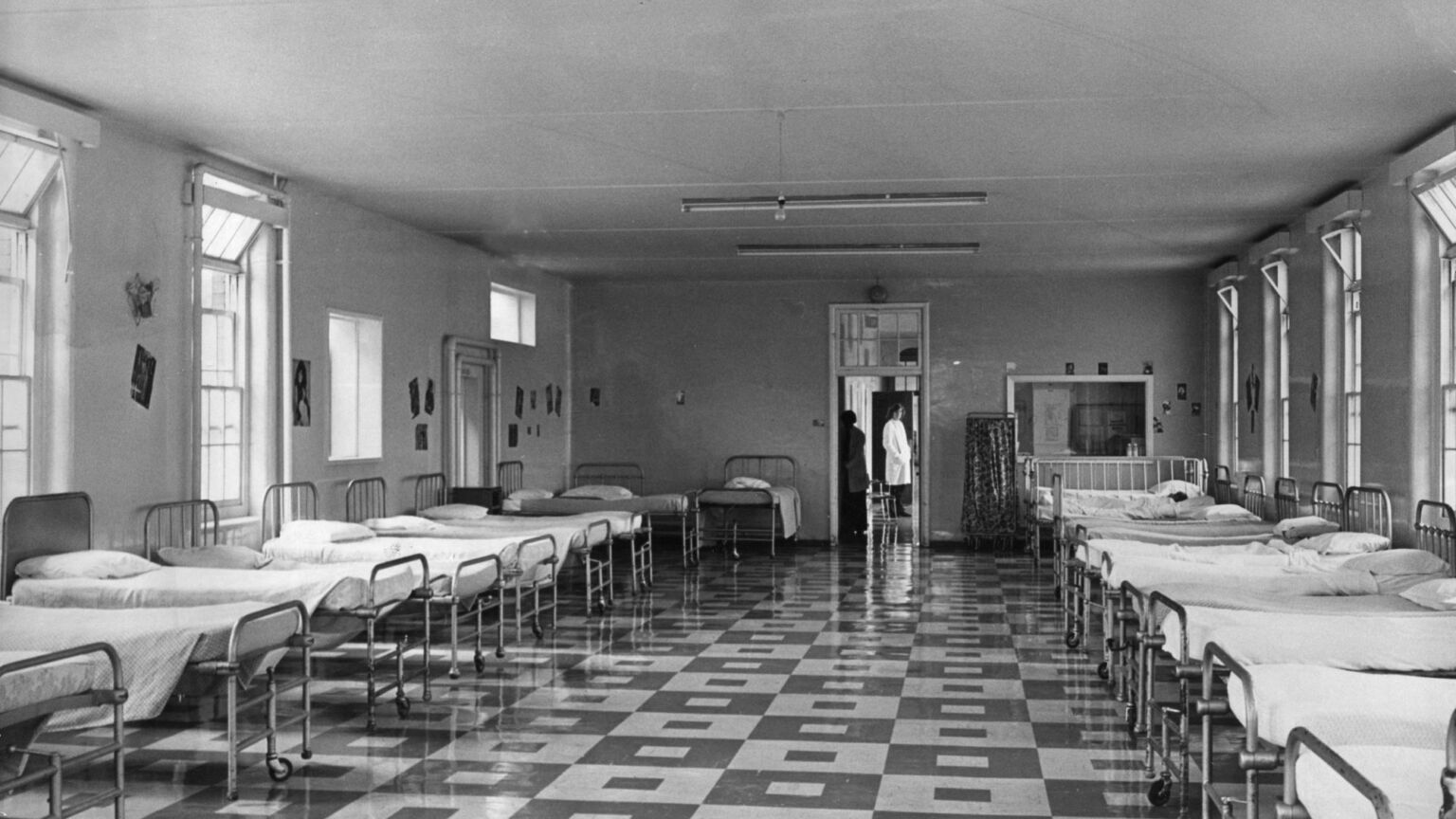
In the past, individuals with psychiatric disorders were detained, often indefinitely. Asylums were built from the Victorian era onwards, and by the 1950s there were around 150,000 secure mental-health beds across the country. Many of these institutions became overcrowded and, sadly, as happens in many residential establishments, abuse occurred. Nevertheless, the purpose of the insane-asylum system was to protect the public from violent crime.
From the early 1960s, everything changed. Treatment of psychiatric patients in Western countries moved away from incarceration and towards a policy of ‘care in the community’. The discovery and promotion of anti-psychotic drugs by a nascent pharmaceutical industry made such a revolution feasible. But it was the cultural climate that enabled this ‘deinstitutionalisation’, as concern for individual autonomy overtook the pursuit of the common good as the organising moral principle of Western liberal democracies.
Left-liberals were not the only proponents of care in the community. Small-state conservatives welcomed the opportunity to close expensive taxpayer-funded institutions; Enoch Powell was a champion for the cause.
From our contemporary perspective, the idea of removing a sick person’s liberty – perhaps for life, and before he or she has even committed a crime – seems deeply distasteful, even barbaric. Yet if Calocane had been detained after his first psychotic episode in 2020, Coates, Webber and O’Malley-Kumar would still be alive.

When it comes to the far-reaching consequences of deinstitutionalisation, Calocane’s crimes are just the tip of the iceberg. Between 2008 and 2018, an average of 69 people a year were murdered in the UK by patients under the care of mental-health services. Over the same time period, more than 4,000 people suffering from schizophrenia and bipolar disorder and living alone ‘in the community’ committed suicide.
In the late 1970s, Britain had around 400 psychiatric beds for every 100,000 people; in 2023, that number was just 22 beds per 100,000. As the number of mental-health inpatients has fallen, rough sleeping has risen. And over the past half a century, Britain’s per-capita prison population has nearly doubled. Identical trends can be seen in countries across the liberal West with the notable exception of Japan, which has 260 mental-health beds per 100,000 and the lowest rate of homelessness in the world.
Care in the community could be more accurately termed ‘neglect in isolation’. The reality is that many people with serious psychiatric disorders cannot be safely ‘managed’ without constant supervision and the capacity to use force if necessary to prevent them from doing harm – either to themselves or others. It is impossible to predict if, or when, a particular patient will turn violent.
As the Nottingham inquiry continues, we will be told that ‘lessons must be learned’ by both the NHS and the police. The left will blame cuts and the right will blame DEI culture for the failure to section Calocane earlier. But until we admit that care in the community has failed, nothing substantial will change. Violent crimes will continue to be committed with diminished responsibility by people who are severely mentally unwell. If we truly want to prevent another tragedy like Nottingham, we must reverse decades of policy and begin the process of re-institutionalisation.
Unfortunately, in today’s political climate, it seems highly unlikely that we will see such a u-turn. Proposing that the state should routinely incarcerate innocent people is akin to heresy. All societies must find a balance between individual freedom and collective security, and liberal democracies like ours have typically allowed the pendulum to swing hard towards personal liberty. But as the case of Valdo Calocane shows us, when the pendulum swings too far, we all become less safe and less free.
Miriam Cates is a GB News presenter, senior fellow at the Centre for Social Justice and a former Conservative MP.
You’ve hit your monthly free article limit.
Support spiked and get unlimited access.
Support spiked and get unlimited access
spiked is funded by readers like you. Only 0.1% of regular readers currently support us. If just 1% did, we could grow our team and step up the fight for free speech and democracy.
Become a spiked supporter and enjoy unlimited, ad-free access, bonus content and exclusive events – while helping to keep independent journalism alive.
Monthly support makes the biggest difference. Thank you.



Comments
Want to join the conversation?
Only spiked supporters and patrons, who donate regularly to us, can comment on our articles.