The problem with ‘relative poverty’
Working-class Brits face genuine hardship, but not the Dickensian destitution that the left seems to imagine.
Want unlimited, ad-free access? Become a spiked supporter.
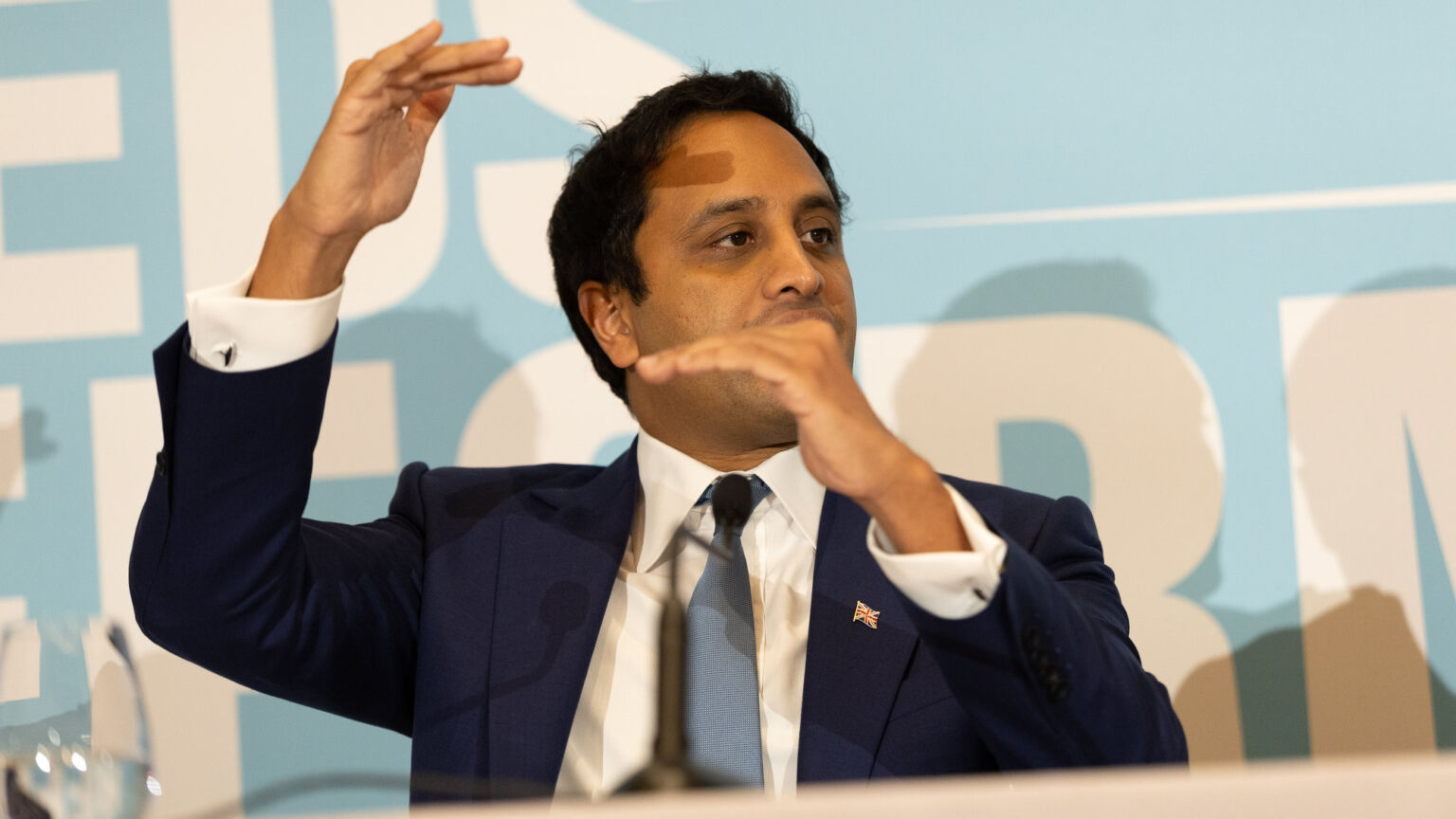
There is something operatic about the way the word ‘poverty’ is deployed in 2026. It is invoked with the gravity of a famine appeal, as though Darlington has quietly become Darfur and Croydon is one failed harvest away from catastrophe. When Reform UK’s Zia Yusuf told Sir Trevor Phillips on Sky News last Sunday that ‘real poverty does not exist in this country’, the metropolitan reaction was instantaneous – outrage on cue, moral denunciation on tap.
Yusuf argued that relative poverty means that ‘you could increase everybody’s incomes 10-fold and that statistic would stay the same’. He added that ‘absolute poverty does exist in very, very small pockets’ and that the focus should be on encouraging social mobility, rather than policies that seek to reduce poverty according to relative measures alone.
Among Yusuf’s loudest critics was Green Party leader Zack Polanski. He treated the remark as evidence of Reform letting ‘the cat out of the bag about who they are… lecturing that poverty and people’s every day struggles with rising bills and rent is exaggerated’. Left-wing publication the Canary went further, telling Yusuf: ‘Shut the fuck up, you oily, little nerd… You sound like a Star Trek android, and not the good one. We can tell you what poverty is, Zia, because most of us here at the Canary have experienced it.’ With prose like that, where to start!
What drives me mad is the way sections of the Russell Group-educated, comfortably insulated liberal class attempt to will absolute poverty into existence through definitional gymnastics. By leaning on concepts like ‘relative poverty’, they construct a permanent moral emergency in a country whose median income is high by global standards. A statistical threshold becomes a humanitarian catastrophe. It’s Dickens reborn.
My maternal grandmother is 89. She grew up in a two-up, two-down in Chadderton, Lancashire, with six siblings. The second bedroom was uninhabitable because there was a hole in the roof. All seven children slept on a single mattress on the floor of their parents’ room. They had an outdoor toilet shared by multiple families and no hot water. My great-grandfather, scarred by the horrors of the Second World War, drank heavily.
We often joke that my grandma is addicted to salt. When she was a child, the only food she could reliably count on was bread with salt or bread with brown sauce. She chose the salt. It wasn’t a preference in the modern sense. It was about survival.
That isn’t a quaint family anecdote. It is a reminder of a childhood shaped by deprivation, in an era when poverty meant malnutrition, when minor infections turned fatal, and when children died from conditions that today are either eradicated or easily treated. When she tells the story, she does so without self-pity. Her life was not an anomaly. Whole communities lived like that.
Meanwhile, my paternal grandparents knew rural, colonial-era Ghana. It was a place without infrastructure, safety nets or reliable public services. When I speak to my 93-year-old grandfather about his childhood, he reminds me thatg while his and my late grandmother’s families sat in the upper tiers of Ghanaian society, related to political leaders and hereditary chieftains, pay was low, infrastructure poor, disease rife and opportunity so limited that emigrating to Britain in the late 1950s – despite the racism and loss of status he would have to face – was still worth it.
Both of my surviving grandparents grew up in what would plainly qualify as absolute poverty in both the historical British and present-day global sense. They raised my parents amid regular power cuts, meaning homework by candlelight and no central heating. Strikes at the docks meant staples like sugar were scarce. This was not Victorian England, it was the 1970s. When I ask my grandparents, despite the economic, political and social challenges Britain has endured since 2008, whether life is better now or when they were children, they answer without pause: ‘Today.’
Official income data for 2023 to 2024 shows that 21 per cent of people in the UK were in relative poverty after housing costs, and 18 per cent were in absolute low income after housing costs. As the Institute for Fiscal Studies explains, relative poverty will always exist in an unequal society because it is defined as income below 60 per cent of the contemporary median. Meanwhile, the UK’s material wealth is substantial by international standards. Latest estimates place UK GDP per capita at around $52,600 in 2024, consistent with high-income OECD economies, but similar to the 2008 figure.
According to the Health Survey for England, around 64 per cent of adults in England were overweight or living with obesity in 2022, 29 percent were obese specifically. Government statistics show that in the most deprived areas, 71.5 per cent of adults are overweight or obese and 35.9 per cent are obese. Clearly, Britain’s deprivation problem is causing ill health, but not malnutrition.

I spend time on the airwaves every week as a broadcaster. The arguments dominating phone-ins are not about war, famine, infant mortality or sanitation. They are about whether it is unfair to fine parents for taking their kids on holiday during term time; whether children should be allowed smart phones; whether people with anxiety or depression should be allowed to queue jump at Alton Towers; whether too many people are going to university. Those are not the debates of a country facing widespread malnourishment or systemic destitution.
If you want to understand ‘real’ poverty, travel to the Global South. Or, if you are lucky enough to have living grandparents, listen to some of their stories. You will hear about hunger that was constant, children who did not survive, and illnesses that killed because there was no healthcare. This is not to deny that hardship exists in the UK – it does, and in one of the richest countries on Earth, this is a significant failure. But we should be honest about scale. As Yusuf said, it exists in ‘very, very small pockets’.
When national debates centre on queue-jumping, smartphone usage and social media, it is a sign of how far we have come within a single lifetime. My grandparents’ Britain was poorer and harsher. Ours, for all its flaws, is markedly more prosperous. For that I am grateful. The reaction to Zia Yusuf’s comments, however, suggests that this sense of perspective is not widely shared by our political and media class.
Albie Amankona is a broadcaster and financial analyst, best known for his work on Channel 5, BBC, ITV and Times Radio. Follow him on X: @albieamankona.
You’ve hit your monthly free article limit.
Support spiked and get unlimited access.
Support spiked and get unlimited access
spiked is funded by readers like you. Only 0.1% of regular readers currently support us. If just 1% did, we could grow our team and step up the fight for free speech and democracy.
Become a spiked supporter and enjoy unlimited, ad-free access, bonus content and exclusive events – while helping to keep independent journalism alive.
Monthly support makes the biggest difference. Thank you.

Comments
Want to join the conversation?
Only spiked supporters and patrons, who donate regularly to us, can comment on our articles.