Jeremy Bowen’s bias is visible from space
The BBC's international editor barely bothers to hide his obvious animus towards Israel.
Want unlimited, ad-free access? Become a spiked supporter.
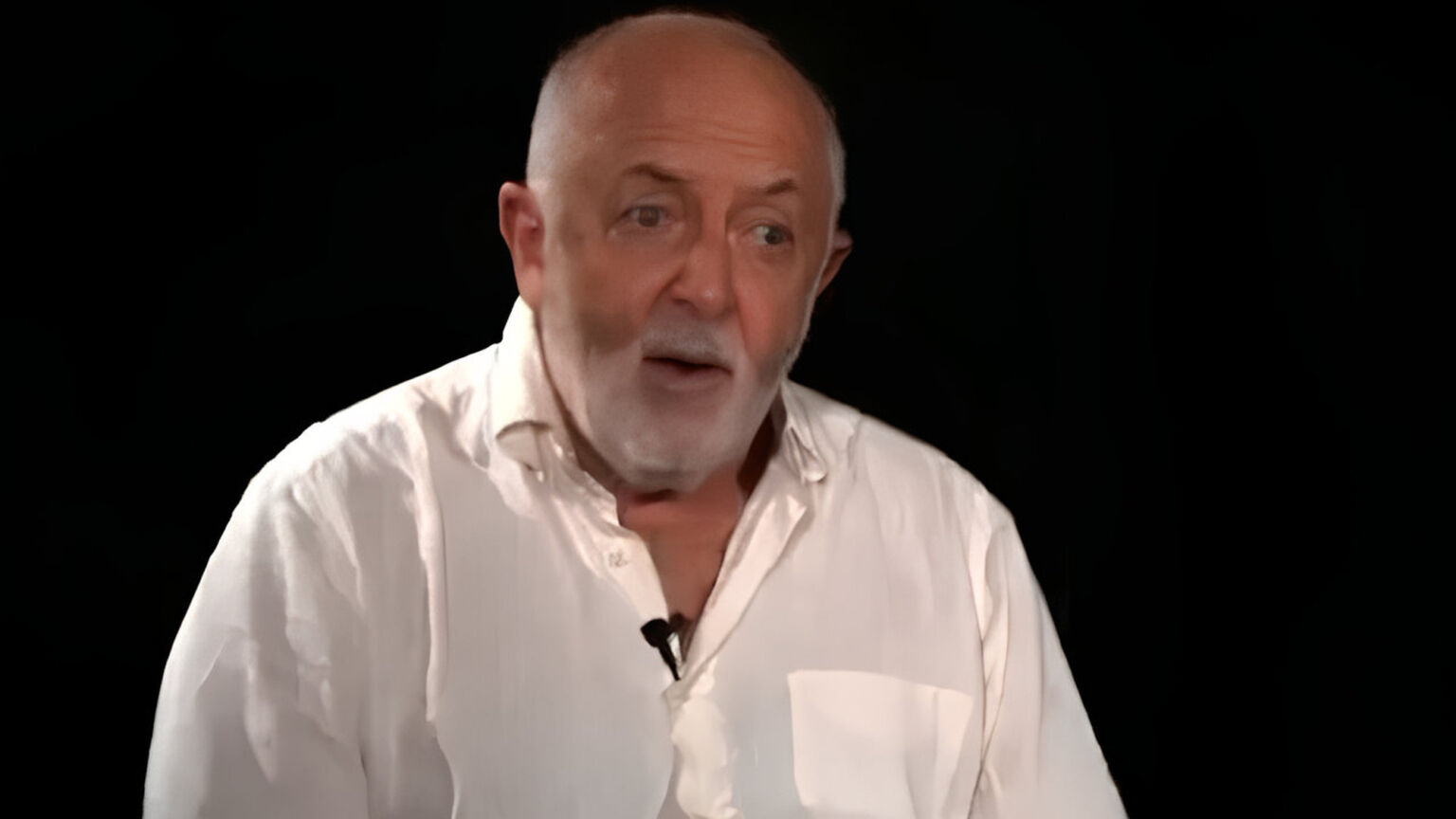
Jeremy Bowen, the BBC’s international editor, recently gave an interview to the Financial Times, giving him the chance to polish his halo. With the weary gravitas of a man who believes his own press cuttings, Bowen insisted he is ‘impartial’ – an objective observer, standing above the fray, untainted by the messy reality of bias.
The problem for Bowen – and for the licence-fee payers forced to fund his sermons – is that his narrative collides with the facts. Mounting evidence suggests that Bowen’s version of impartiality is a hollow façade hiding a systemic and longstanding prejudice against the state of Israel.
If you want to see what ‘impartiality’ looks like in Bowen’s world, look at the numbers. The Asserson Report, a landmark 2024 analysis of the BBC’s coverage of Gaza, identified more than 1,500 breaches of the corporation’s own editorial guidelines, including on impartiality and accuracy, during the first four months alone of the Israel-Hamas war. The report found a persistent institutional pattern of anti-Israel bias, devoting 16 pages specifically to Bowen’s repeated inaccuracy and prejudice. Analysis of the BBC podcast, The Conflict: Israel-Gaza, co-hosted by Bowen and the Lyse Doucet, the BBC’s chief international correspondent, revealed that 90 per cent of the content displayed an anti-Israel or pro-Palestinian bias.
Most damningly, the report highlighted Bowen’s tendency to offer personal opinions that downplay Israeli security concerns, presenting Palestinians as peace-seeking and Israelis as war-hungry. In one notorious broadcast, Bowen dismissed the discovery of Kalashnikov rifles in a Gaza hospital, suggesting that they were just a security precaution. ‘Wherever you go in the Middle East, you see an awful lot of Kalashnikovs’, he said. In Bowen’s bid to preserve the pro-Palestine narrative, even a literal smoking gun showing terrorists present in a hospital can be explained away as a harmless quirk of the region.
It will be of little surprise that Bowen has consistently misrepresented, downplayed or even tried to excuse, Hamas’s use of Palestinian civilians as human shields. Against Israel, Hamas has little choice but ‘to leverage the things that they can leverage in terms of trying to get an edge’, Bowen said in a 2023 podcast episode. In 2014, he claimed to have seen ‘no evidence during my week in Gaza of Israel’s accusation that Hamas uses Palestinians as human shields’. This is despite extensively documented evidence to the contrary, showing that Hamas launches rockets from civilian areas and commandeers civilian infrastructure for military ends, including hospitals and schools.
In fact, you can find examples of Bowen’s bias as far back as 2009, when the BBC Trust found him in breach of impartiality guidelines for a 2007 BBC News article on the 40th anniversary of the Arab-Israeli Six-Day War.
According to monitoring by the Committee for Accuracy in Middle East Reporting and Analysis (CAMERA), Bowen has spent decades perfecting a narrative of Israeli aggression while airbrushing the extent of the threats Israel faces. He has repeatedly platformed voices that dehumanise Israelis while failing to challenge the anti-Semitic ideology that drives Hamas. That isn’t journalism: it’s a curated perspective that treats Jewish security concerns with a shrug of indifference.
The BBC is the most popular news source in the UK, reaching a staggering 94 per cent of adults. When its most senior editors trade in skewed narratives, they shape political discourse, social attitudes and the temperature of national debate. And the price of this is borne by British Jews.
Since 7 October 2023, the UK has endured record levels of anti-Semitic incidents. This has included a lethal terror attack and several foiled terror plots. When coverage of serious conflicts consistently falls short, it exacerbates real-world harms for a minority community already under pressure. The BBC’s tendency to amplify unverified Hamas claims – such as wrongly blaming the infamous al-Ahli hospital blast on Israel without evidence, or quoting Hamas casualty figures without qualification – has fuelled hostility towards Jewish communities.
Perhaps most breathtaking is the arrogance with which Bowen continues to showcase his bias with total impunity. The BBC’s internal accountability mechanisms are essentially a closed loop. The broadcaster is, quite literally, marking its own homework. Apologies and corrections are only issued long after the damage has been done and without significant consequences for repeated breaches.
This brings us to the government’s BBC Charter Review, which is exploring the BBC’s governance, public obligations and funding before a new 10-year charter is granted. The way the BBC works now, where senior figures like Bowen are immune to external scrutiny, is a betrayal of public trust. We need a fundamental reset of the BBC’s culture, including tying the renewal of the charter to demonstrable improvements in impartiality and accuracy.
We ought to remember that the BBC belongs to the public – not to the egos of its editors and correspondents.
Limor Simhony Philpott is a writer, policy adviser and researcher.
You’ve hit your monthly free article limit.
Support spiked and get unlimited access.
Support spiked and get unlimited access
spiked is funded by readers like you. Only 0.1% of regular readers currently support us. If just 1% did, we could grow our team and step up the fight for free speech and democracy.
Become a spiked supporter and enjoy unlimited, ad-free access, bonus content and exclusive events – while helping to keep independent journalism alive.
Monthly support makes the biggest difference. Thank you.


Comments
Want to join the conversation?
Only spiked supporters and patrons, who donate regularly to us, can comment on our articles.